Toggle light / dark theme

Highly accurate blood test diagnoses Alzheimer’s disease, measures extent of dementia

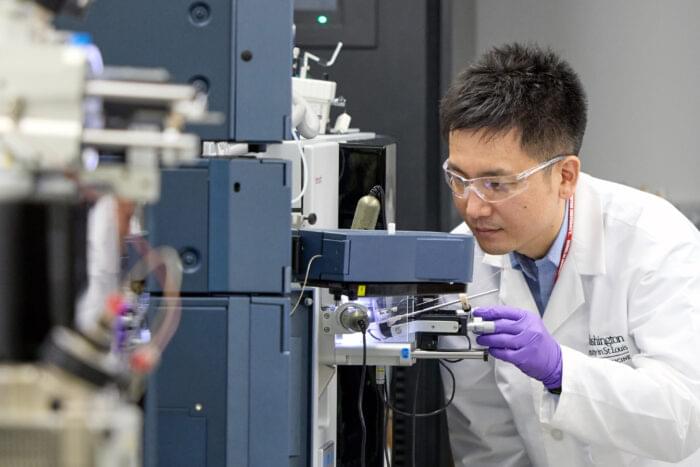
Could help determine which patients are likely to benefit from new Alzheimer’s drugs. A newly developed blood test for Alzheimer’s disease not only aids in the diagnosis of the neurodegenerative condition but also indicates how far it has progressed, according to a study by researchers at Washington University School of Medicine in St. Louis and Lund University in Sweden.

Several blood tests for Alzheimer’s disease are already clinically available, including two based on technology licensed from WashU. Such tests help doctors diagnose the disease in people with cognitive symptoms, but do not indicate the clinical stage of the disease symptoms — that is, the degree of impairment in thinking or memory due to Alzheimer’s dementia. Current Alzheimer’s therapies are most effective in early stages of the disease, so having a relatively easy and reliable way to gauge how far the disease has progressed could help doctors determine which patients are likely to benefit from drug treatment and to what extent. The new test can also provide insight on whether a person’s symptoms are likely due to Alzheimer’s versus some other cause.

The study is published March 31 in Nature Medicine.

Vertebrobasilar Dolichoectasia Presenting With Multiple Cranial Nerve Involvement

A 70-year-old man presented to the emergency department with a painful exacerbation of right trigeminal neuralgia, managed for 5 years with carbamazepine. Clinical examination revealed binocular diplopia due to an abduction deficit in the right eye and hypoesthesia in all divisions of the right trigeminal nerve (V1, V2, V3), without clinical signs of right VII or VIII cranial nerve involvement. High-resolution 3D T2-weighted steady-state MRI (Figure) revealed vertebrobasilar dolichoectasia (VD) with deviation of the right fifth cranial nerve root, complete atrophy of the right sixth cranial nerve, and deviation of the right acoustic-facial nerve bundle.

Open in viewer.

Although VD mainly causes ischemic stroke or brainstem compression, cranial nerve involvement is rare. Abducens nerve compression is exceptional, with 11 cases reported up to 2020,1 and combined fifth and sixth nerve involvement even rarer (2 cases).2.

Dave Pascoe Presents His Blood Test Results: Biological Age, RDW (Part I)

Join us on Patreon! https://www.patreon.com/MichaelLustgartenPhD

Discount Links/Affiliates:
Blood testing (where I get the majority of my labs): https://www.ultalabtests.com/partners/michaellustgarten.

At-Home Metabolomics: https://www.iollo.com?ref=michael-lustgarten.
Use Code: CONQUERAGING At Checkout.

Clearly Filtered Water Filter: https://get.aspr.app/SHoPY

Epigenetic, Telomere Testing: https://trudiagnostic.com/?irclickid=U-s3Ii2r7xyIU-LSYLyQdQ6…M0&irgwc=1
Use Code: CONQUERAGING

NAD+ Quantification: https://www.jinfiniti.com/intracellular-nad-test/

Gut-brain link may affect behavior in children with autism

A new USC study suggests that gut imbalances in children with autism may create an imbalance of metabolites in the digestive system—ultimately disrupting neurotransmitter production and influencing behavioral symptoms.

The research, published in Nature Communications, adds to a growing body of science implicating the “gut-brain” axis in . The discovery raises the possibility of new treatment avenues. It’s an example of how research at USC, and other universities, drives innovation and leads to discoveries that improve lives.

“We demonstrated that gut metabolites impact the brain, and the brain, in turn, affects behavior. Essentially, the brain acts as the intermediary between gut health and autism-related behaviors,” said first author Lisa Aziz-Zadeh, a professor at the Brain and Creativity Institute at the USC Dornsife College of Letters, Arts and Sciences.

Cyclin C promotes development and progression of B-cell acute lymphoblastic leukemia by counteracting p53-mediated stress responses

Despite major therapeutic advances in the treatment of acute lymphoblastic leukemia (ALL), resistances and long-term toxicities still pose significant challenges. Cyclins and their associated cyclin-dependent kinases are one focus of cancer research when looking for targeted therapies. We discovered cyclin C to be a key factor for B-cell ALL (B-ALL) development and maintenance. While cyclin C is not essential for normal hematopoiesis, CcncΔ/Δ BCR::ABL1 + B-ALL cells fail to elicit leukemia in mice. RNA sequencing experiments revealed a p53 pathway deregulation in CcncΔ/Δ BCR::ABL1 + cells resulting in the inability of the leukemic cells to adequately respond to stress. A genome-wide CRISPR/Cas9 loss-of-function screen supplemented with additional knock-outs unveiled a dependency of human B-lymphoid cell lines on CCNC. High cyclin C levels in B-cell precursor (BCP) ALL patients were associated with poor event-free survival and increased risk of early disease recurrence after remission. Our findings highlight cyclin C as a potential therapeutic target for B-ALL, particularly to enhance cancer cell sensitivity to stress and chemotherapy.

The Philadelphia (Ph) chromosome, a product of the reciprocal translocation t(9;22)(q34;q11) between chromosomes 9 and 22, encodes the BCR::ABL1 fusion oncoprotein.1 The constitutively active BCR::ABL1 tyrosine kinase is a hallmark of chronic myeloid leukemia (CML) and drives a subset of acute lymphoblastic leukemia (ALL). The incidence of Ph positive (Ph+) ALL correlates with age, from only 3% in pediatric ALL to around 25% in older adults.2 Direct targeting of the BCR::ABL1 kinase with tyrosine kinase inhibitors (TKI) has been a breakthrough in targeted cancer therapy. Despite efforts to counteract TKI resistance and improve safety profiles, refractory BCR::ABL1+ leukemia, as well as toxicities and long-term side effects of TKI, present particular therapeutic challenges.3–5

The clinical relevance of cyclins and their associated cyclin-dependent kinases (CDK) has been a major focus of research for several years. Cyclin-CDK complexes do not only drive the cell cycle, but are also important players in various other cellular processes including transcriptional and epigenetic regulation, metabolism or stem cell self-renewal.6 In line with their importance in different pathways, cyclin-CDK complex dysregulation is implicated in many different types of cancer.7
Ultra-thin, flexible silicone nanosensor could have huge impact on brain injury treatment

A car accident, football game, or even a bad fall can lead to a serious or fatal head injury. Annually, traumatic brain injuries (TBI) cause half a million permanent disabilities and 50,000 deaths. Monitoring pressure inside the skull is key to treating TBI and preventing long-lasting complications.

Most of these monitoring devices are large and invasive, requiring surgical emplacement. But Georgia Tech researchers have recently created a sensor smaller than a dime. The miniature size offers huge benefits.

“Surgery means extensive recovery time and can significantly impact . Our system doesn’t require surgery because we use a conventional stent, the catheter, as a delivery vehicle,” said W. Hong Yeo, the Harris Saunders Jr. Endowed Professor and an associate professor in the George W. Woodruff School of Mechanical Engineering.

Episode 13: Dr. Suzanne Gildert — the frontier of AI consciousness

Developing humanoid robots, unravelling the complexities of AI, and the mysteries of consciousness.

Welcome to the ⁠⁠⁠North of Patient⁠⁠⁠ podcast — conversations on health[beyond]care — where we paint an inspired landscape of healthcare’s future through dialogues with creative and unconventional thinkers from around the world.

For a summary of the episode, visit the ⁠blog post⁠ on North of Patient:
https://open.substack.com/pub/northofpatient/p/episode-13-dr…Share=true.

This week’s guest is the remarkable Dr. Suzanne Gildert. She’s a physicist, artist, and AI tech executive based in Vancouver on a mission to uncover the mysteries of consciousness and innovate unconscious AI.

In this episode, we dive into the groundbreaking advancements and pressing challenges in quantum computing, examining the transformative potential of these technologies to reshape our world. Beyond the science, we also explore the philosophical dimensions of AI consciousness, questioning whether AI can ever truly replicate human experience and identity.

Learn more about Nirvanic AI:

Scientists Develop New Gene Editing Tool that Replaces Entire Genes

Scientists from Mass General Brigham and Beth Israel Deaconess Medical Center have developed a novel gene editing tool called STITCHR. Unlike traditional CRISPR, STITCHR inserts entire genes at precise locations, minimizing unintended mutations. This gene editing tool simplifies use and offers potential as a one-time treatment for genetic disorders.

The technology uses retrotransposons, naturally occurring “jumping genes” found in all eukaryotic organisms, which can move and integrate into genomes. Using computational screening, the researchers identified and reprogrammed a specific retrotransposon to work with the nickase enzyme from CRISPR, forming the complete STITCHR system that allows a precise, seamless gene insertion into the genome.

STITCHR offers the potential to replace or supplement entire genes, creating a more universal treatment option for various genetic diseases. The research team is now working to improve its efficiency and move it toward clinical use. Their study, published in Nature, highlights how insights from basic cellular biology can drive innovation in genetic medicine and lead to new therapeutic tools.

/* */