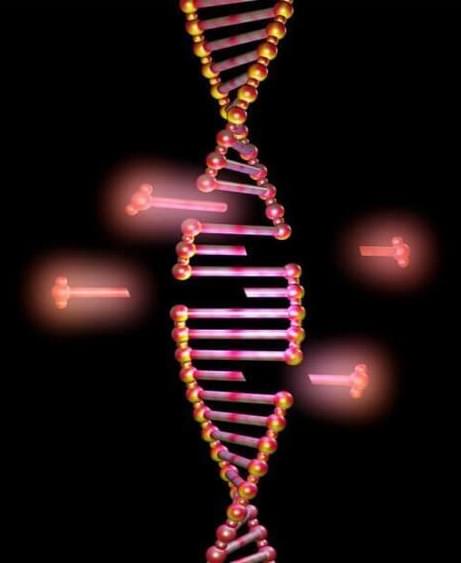
He explored the possibility of using gene therapy or gene editing—technologies that were dominating headlines for their ability to tackle other rare genetic disorders. But scientists told him those approaches would be difficult to implement for Dravet. Instead, a newfangled idea called transfer RNA (tRNA) therapy seemed like it might be the answer.
Drug Discovery tRNA therapies could help restore proteins lost in translation.
A new class of therapies based on transfer RNA could treat forms of cystic fibrosis, muscular dystrophy, genetic epilepsies, and more by.
Experiments with dummy heads and masks. Credit: TU Wien
Tiny droplets loaded with viruses disappear more slowly after exhalation than previous models suggested. Experiments and simulations by TU Wien (Vienna) can now explain this.
It is easier to get infected in winter than in summer — this is true for the Corona pandemic, for influenza, and for other viral diseases. Relative humidity plays an important role in this. Outdoors, it is much higher outside in winter than in summer, as can be seen from the fact that our breath condenses into droplets in the cold air.
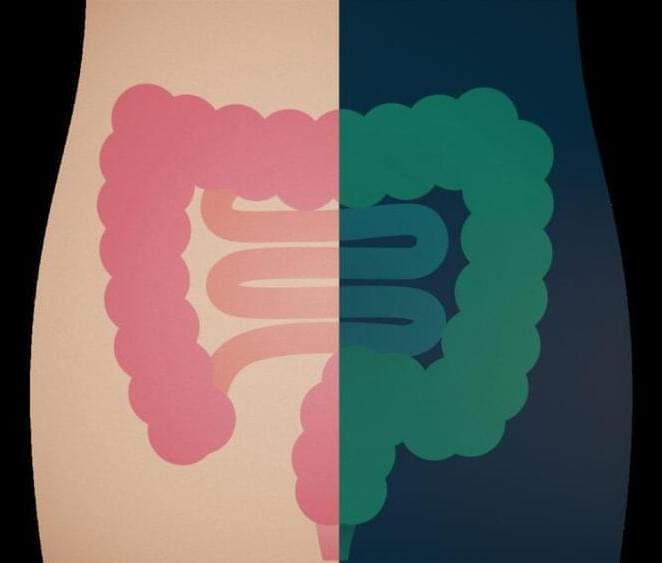
But are these microbiome perturbations unique to specific psychiatric conditions, or is there a more common gut bacteria signature shared amongst several conditions?
This is the video of Harold Katcher’s presentation to the London Futurists. It was a great discussion, be sure to check it out.
#haroldkatcher #antiaging #rejuvenation #futurism
It has been known for some time that young blood plasma can confer beneficial effects on various organs in mice, although the mechanisms and implications remained unclear. A recent breakthrough experiment is attracting more attention to this area of research: rats treated with a blood plasma mixture known as E5 subsequently had their effective biological age measured by epigenetic clocks, involving 593 tissue samples. The result was a halving of the epigenetic ages of blood, heart, and liver tissue, and a lesser reduction (still statistically significant) in the epigenetic age of the hypothalamus. This has been heralded as the single most dramatic age-reversal experiment in mammals to date.
On Saturday 18th September, the lead designer of these experiments, Dr Harold Katcher, joined London Futurists to present his analysis of the findings, his own distinctive theories of aging, and his expectation for future research and applications. He also answered questions about his new book, “The Illusion of Knowledge: The paradigm shift in aging research that shows the way to human rejuvenation”, which is available at https://www.amazon.co.uk/Illusion-Knowledge-paradigm-researc…09C7JNB64/
The event was introduced and moderated by David Wood, Chair of London Futurists.
SpaceX CEO Elon Musk helped achieve the St. Jude Children’s Research Hospital fundraising goal of the Inspiration4 spaceflight, just hours after his company returned the crew from orbit.
Inspiration4 commander Jared Isaacman, a billionaire entrepreneur who purchased the flight from SpaceX, donated $100 million personally to St. Jude. The Inspiration4 mission had raised another $60.2 million in donations, before Musk pledged to contribute $50 million himself – pushing the campaign’s total raised to more than $210 million.
Dr. Engkvist did his PhD in computational chemistry at Lund University followed by a postdoc at Cambridge University.
After working for two biotech companies Dr. Engkvist joined AstraZeneca in 2004. He currently leads the Molecular AI department, where the focus is to develop novel methods for ML/AI in drug design 0 productionalize the methods and apply the methods to AstraZeneca’s small molecules drug discovery portfolio.
Dr. Engkvist’s main research interests are deep learning based molecular de novo design, synthetic route prediction and large scale molecular property predictions, and he has published over 100 peer-reviewed scientific publications.
Thanks to CRISPR, gene therapy and “designer babies” are now a reality. The gene editing Swiss army knife is one of the most impactful biomedical discoveries of the last decade. Now a new study suggests we’ve just begun dipping our toes into the CRISPR pond.
CRISPR-Cas9 comes from lowly origins. It was first discovered as a natural mechanism in bacteria and yeast cells to help fight off invading viruses. This led Dr. Feng Zhang, one of the pioneers of the technology, to ask: where did this system evolve from? Are there any other branches of the CRISPR family tree that we can also harness for gene editing?
In a new paper published last week in Science, Zhang’s team traced the origins of CRISPR to unveil a vast universe of potential gene editing tools. As “cousins” of CRISPR, these new proteins can readily snip targeted genes inside Petri dishes, similar to their famous relative.