Toggle light / dark theme

Depression shown to be both cause and consequence of poor health

A large international study led by researchers at the Department of Medical Epidemiology and Biostatistics, Karolinska Institutet, shows that major depressive disorder (MDD) not only increases risk for a wide range of diseases and social problems, but is also partly driven by factors such as loneliness, obesity, smoking, and chronic pain.

The study, published in Nature Mental Health, applied to systematically test which traits are causes, and which are consequences, of depression. The findings highlight the double burden of MDD: it both arises from and contributes to poor health, making prevention and treatment particularly urgent.

“We show that depression sits at the center of a web of health problems,” says Joëlle Pasman, research associate at Amsterdam UMC and Karolinska Institutet, who led the study. “It is not only a debilitating condition in itself but also increases the risk of many diseases, while at the same time being triggered by social, behavioral, and medical factors.”
Scorpion-inspired pressure sensors let robots feel their surroundings

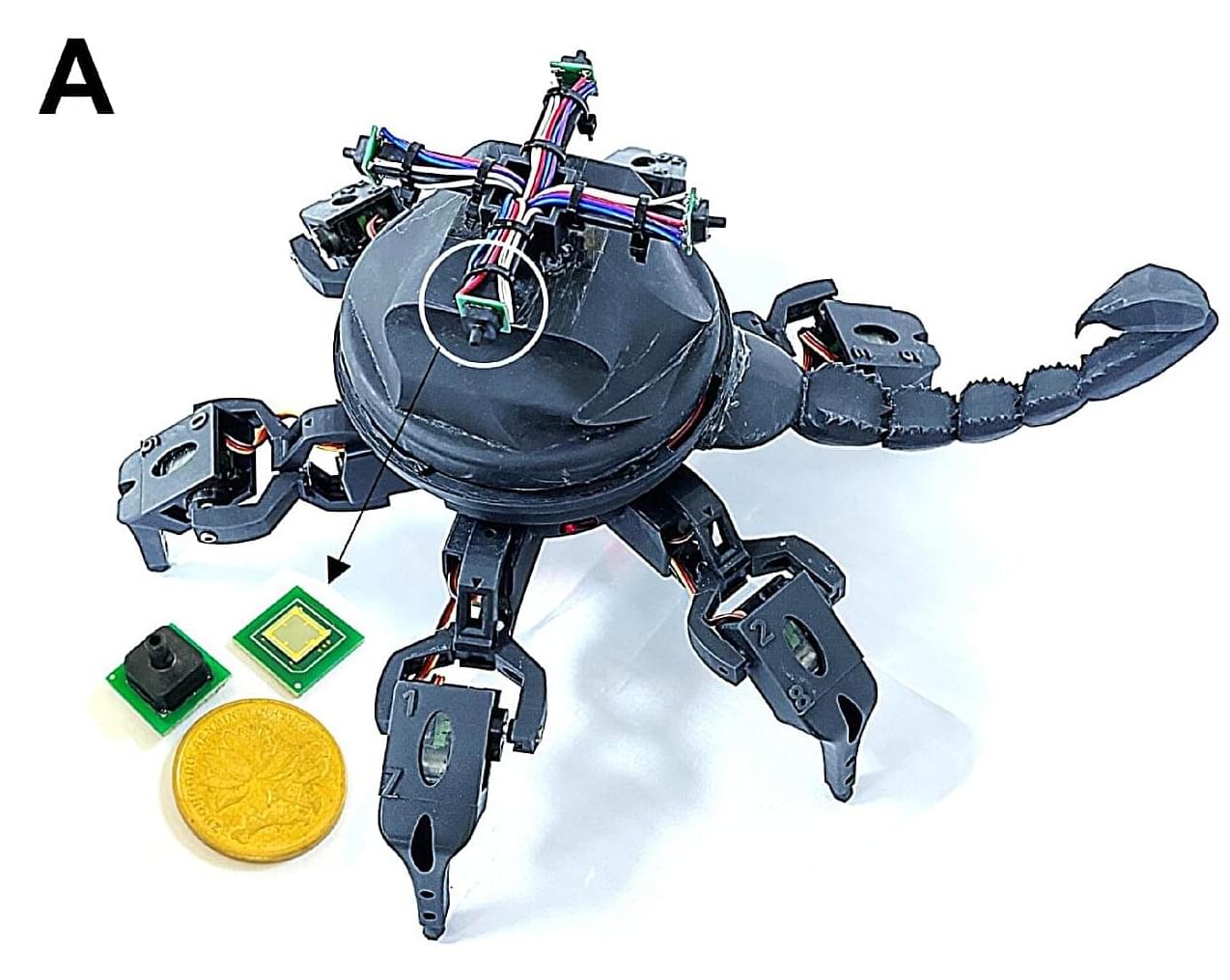
Nature, the master engineer, is coming to our rescue again. Inspired by scorpions, scientists have created new pressure sensors that are both highly sensitive and able to work across a wide variety of pressures.

Pressure sensors are key components in an array of applications, from and industrial control systems to robotics and human-machine interfaces. Silicon-based piezoresistive sensors are among the most common types used today, but they have a significant limitation. They can’t be super sensitive to changes and work well across a range of pressures at the same time. Often, you have to choose one over the other.

Zigzag graphene nanoribbons create ‘string light’ configuration for tomorrow’s electronics

Organic chemistry, the chemistry of carbon compounds, is the basis of all life on Earth. However, metals also play a key role in many biochemical processes. When it comes to “marrying” large, heavy metal atoms with light organic compounds, nature often relies on a specific group of chemical structures: porphyrins. These molecules form an organic ring; in its center, individual metal ions such as iron, cobalt, or magnesium can be “anchored.”

The porphyrin framework forms the basis for hemoglobin in human blood, photosynthetic chlorophyll in plants, and numerous enzymes. Depending on which metal is captured by the porphyrin, the resulting compounds can display a wide range of chemical and physical properties. Chemists and materials scientists have long sought to exploit this flexibility and functionality of porphyrins, including for applications in .

However, for —even molecular ones—to function, they must be connected to each other. Wiring up individual molecules is no easy task. But this is precisely what researchers at Empa’s nanotech@surfaces laboratory have achieved, in collaboration with synthetic chemists from the Max Planck Institute for Polymer Research.

Reproducing Rejuvenation: Inside the Pig Plasma Longevity Experiments

Could pig plasma fractions really rejuvenate aging rats? Join me as I interview Nicolás and Nina from the Rejuvenation Science Institute (Brazil), who are working to reproduce the headline-creating “pig plasma rejuvenation” results. We explore the origins, science, controversies, challenges, and hopes surrounding this research—plus their plans for the next breakthrough longevity experiment and open science collaboration.
https://www.rejuvenescimento.org/english.
https://www.rejuvenescimento.org/newshttps://journals.tmkarpinski.com/inde… Timestamps 00:00 – Introduction: The Pig Plasma Rat Rejuvenation Debate 02:00 – Origins: Why try to reproduce these results? 08:30 – What is being injected? Fraction preparation explained 15:40 – Acute toxicity and safety results: did the rats survive? 26:00 – The next experiment: timelines, scale-up, and open science goals Find me on Twitter — / eleanorsheekey Support the channel through PayPal — https://paypal.me/sheekeyscience?coun… through Patreon — / thesheekeyscienceshow Please note that The Sheekey Science Show is distinct from Eleanor Sheekey’s teaching and research roles. The information provided in this show is not medical advice, nor should it be taken or applied as a replacement for medical advice. The Sheekey Science Show and guests assume no liability for the application of the information discussed. Icons in intro; “https://www.freepik.com/free-photos-v…Background“Background vector created by freepik — www.freepik.com.
https://journals.tmkarpinski.com/inde

Timestamps.
00:00 – Introduction: The Pig Plasma Rat Rejuvenation Debate.
02:00 – Origins: Why try to reproduce these results?
08:30 – What is being injected? Fraction preparation explained.
15:40 – Acute toxicity and safety results: did the rats survive?
26:00 – The next experiment: timelines, scale-up, and open science goals.

Find me on Twitter — / eleanorsheekey.

Support the channel.
through PayPal — https://paypal.me/sheekeyscience?coun
through Patreon — / thesheekeyscienceshow.

Please note that The Sheekey Science Show is distinct from Eleanor Sheekey’s teaching and research roles. The information provided in this show is not medical advice, nor should it be taken or applied as a replacement for medical advice. The Sheekey Science Show and guests assume no liability for the application of the information discussed.

Icons in intro; \.

Immunotherapy drug eliminates aggressive cancers in clinical trial

Over the past 20 years, a class of cancer drugs called CD40 agonist antibodies have shown great promise—and induced great disappointment. While effective at activating the immune system to kill cancer cells in animal models, the drugs had limited impact on patients in clinical trials and caused dangerously systemic inflammatory responses, low platelet counts, and liver toxicity, among other adverse reactions—even at a low dose.

But in 2018, the lab of Rockefeller University’s Jeffrey V. Ravetch demonstrated it could engineer an enhanced CD40 agonist antibody so that it improved its efficacy and could be administered in a manner to limit serious side effects. The findings came from research on mice, genetically engineered to mimic the pathways relevant in humans. The next step was to have a clinical trial to see the drug’s impact on cancer patients.

Now the results from the phase 1 clinical trial of the drug, dubbed 2141-V11, have been published in Cancer Cell. Of 12 patients, six patients saw their tumors shrink, including two who saw them disappear completely.


The researchers demonstrate that an engineered antibody improves a class of drugs that has struggled to make good on its early promise.

/* */