In theory, the immune system can recognize cancer cells as foreign and destroy them. In practice, this is often difficult, particularly after a tumor has become established in the body.
And even when immune cells, especially certain killer T cells, make it into a tumor, they face a hostile environment. This can include molecules that can disable T cells, low oxygen, and a lack of nutrients for energy. The end result is often a dysfunctional state known as T-cell exhaustion.
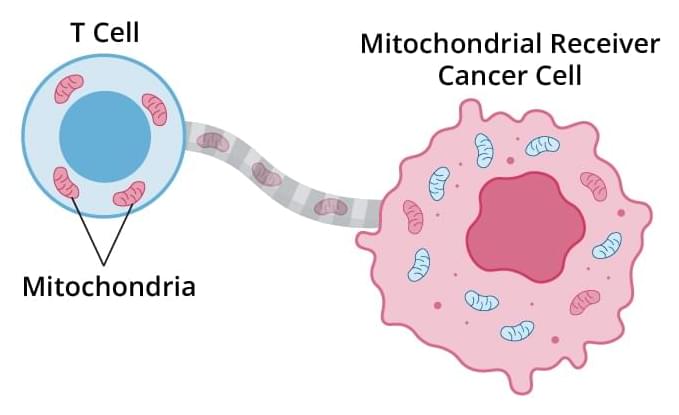
Now, a new study has confirmed the existence of yet another way that tumors can thwart T cells. In some tumors, a subset of cancer cells can act like a thief siphoning fuel from a car’s gas tank: they drain mitochondria —the tiny structures within cells that produce energy—from T cells and use them for their own energy needs.
Quanta Magazine’s coverage of biology in 2023, including important research progress into the nature of consciousness, the origins of our microbiomes and the timekeeping mechanisms that govern our lives and development.\ \ Read about more breakthroughs from 2023 at Quanta Magazine: https://www.quantamagazine.org/the-bi…\ \ 00:05 The Investigation of Consciousness\ Our minds are constantly taking in new external information while also creating their own internal imagery and narratives. How do we distinguish reality from fantasy? This year, researchers discovered that the brain has a “reality threshold” against which it constantly evaluates processed signals. \ - Original story with links to research papers can be found here: https://www.quantamagazine.org/is-it–…\ \ 04:30 Microbiomes Evolve With Us\ This year, scientists provided clear evidence that the organisms in our microbiome —the collection of bacteria and other cells that live in our guts and elsewhere on our body — spread between people, especially those with whom we spend the most time. This raises the intriguing possibility that some illnesses that aren’t usually considered communicable might be.\ – Original story with links to research papers can be found here: https://www.quantamagazine.org/global…\ \ 08:43 How Life Keeps Time\ The rate at which an embryo develops and the timing of when its tissues mature vary dramatically between species. What controls the ticking of this developmental clock that determines an animal’s final form? This year, a series of careful experiments suggest that mitochondria may very well serve dual roles as both the timekeeper and power source for complex cells.\ - Original story with links to research papers can be found here: https://www.quantamagazine.org/what-m…\ \ - VISIT our Website: https://www.quantamagazine.org \ - LIKE us on Facebook: / quantanews \ - FOLLOW us Twitter: / quantamagazine \ \ Quanta Magazine is an editorially independent publication supported by the Simons Foundation: https://www.simonsfoundation.org/
Surveys from business leaders show that they are now doing mass layoffs due to adoption of AI.
A recent survey of 750 business leaders reveals a growing trend: AI replacing jobs. In 2023, 37% of these leaders acknowledged AI-induced layoffs, with 44% expecting more in 2024. Major companies like Paytm and Google are at the forefront, integrating AI to enhance efficiency but at the cost of human jobs. Paytm’s recent layoffs post AI implementation and Google’s potential restructuring of its ad sales unit due to AI advancements highlight this shift.\ \ #ai #job #layoffs \ \ About Channel: \ \ WION The World is One News examines global issues with in-depth analysis. We provide much more than the news of the day. Our aim is to empower people to explore their world. With our Global headquarters in New Delhi, we bring you news on the hour, by the hour. We deliver information that is not biased. We are journalists who are neutral to the core and non-partisan when it comes to world politics. People are tired of biased reportage and we stand for a globalized united world. So for us, the World is truly One.\ \ Please keep discussions on this channel clean and respectful and refrain from using racist or sexist slurs and personal insults.\ \
The CHOOSE system, an innovative approach combining brain organoids and genetics, transforms autism research by allowing detailed analysis of mutations and their effects on brain development.
Does the human brain have an Achilles heel that ultimately leads to Autism? With a revolutionizing novel system that combines brain organoid technology and intricate genetics, researchers can now comprehensively test the effect of multiple mutations in parallel and at a single-cell level within human brain organoids.
This technology, developed by researchers from the Knoblich group at the Institute of Molecular Biotechnology (IMBA) of the Austrian Academy of Sciences and the Treutlein group at ETH Zurich, permits the identification of vulnerable cell types and gene regulatory networks that underlie autism spectrum disorders. This innovative method offers unparalleled insight into one of the most complex disorders that challenge the human brain with implications that bring autism clinical research much-needed hope.
A new paper in the journal Genome Biology and Evolution, published by Oxford University Press, finds that genetic material from Neanderthal ancestors may have contributed to the propensity of some people today to be “early risers,” the sort of people who are more comfortable getting up and going to bed earlier.
Human Evolution and Genetic Adaptation
All anatomically modern humans trace their origin to Africa around 300 thousand years ago, where environmental factors shaped many of their biological features. Approximately seventy thousand years ago, the ancestors of modern Eurasian humans began to migrate out to Eurasia, where they encountered diverse new environments, including higher latitudes with greater seasonal variation in daylight and temperature.
These compounds can kill methicillin-resistant Staphylococcus aureus (MRSA), a bacterium that causes deadly infections.
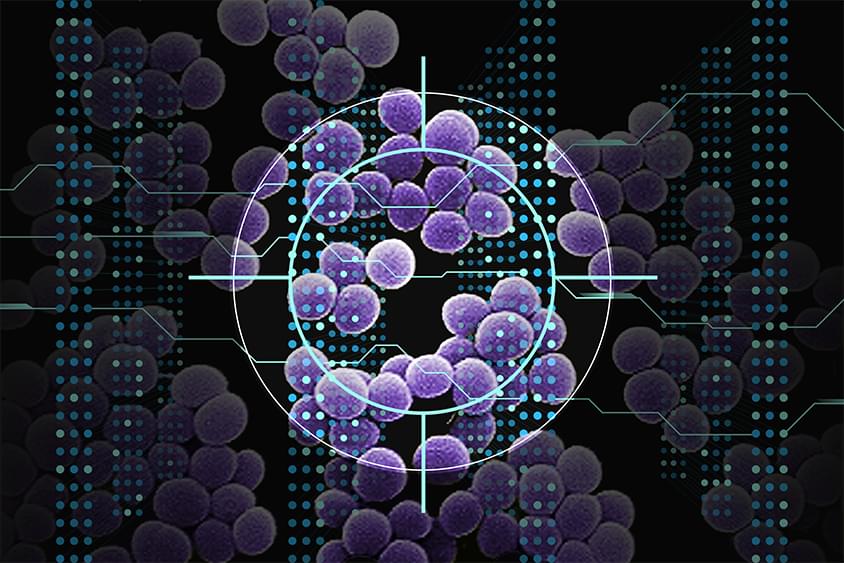
Using artificial intelligence, MIT researchers discovered a class of compounds that can kill methicillin-resistant Staphylococcus aureus (MRSA), a drug-resistant bacterium that causes more than 10,000 deaths in the U.S. each year.
The holiday season means presents galore — but in the case of at-home DNA tests, some gifts may be better left unopened.
As experts told USA Today, the prevalence of self-serve DNA testing has made it much more likely that people discover painful family secrets — for instance, that one or both of your parents are not your genetic relatives — upon getting their results.
Booyah, fellow interneters. In this episode Tesla Optimus gets an upgrade to generation 2. Droids get used to voice commands, robot dogs go sprinting, and of course where would we be without the neuromorphic cyborg supercomputer with human brain cells. This and more right here, right now! I’m Nick, let’s kick it!\ \ It is with the warmest feeling in our hearts that we thank you for staying with us. Your support and loyalty light up our path like Christmas lights. We also wish you ringing laughter, sincere gettogethers, warm embraces, unexpected surprises and bright, unforgettable moments. And to kick off these moments we are announcing a contest which will be held on December 26\ 🎄✨ https://youtube.com/live/8rRhlyyfrSI?…\ \ 0:00 beginning\ 0:32 Merry Christmas\ 1:24 Tesla news: new robot and Cybertruck\ 4:09 The Digit robot understands humans\ 5:07 The H1 humanoid robot is already on sale\ 6:11 Robots work, not humans\ 6:38 Four-legged robot mule\ 7:39 The fastest four-legged robot\ 8:34 The world’s first neuromorphic supercomputer\ 9:51 Сyborg computer with a living organoid brain\ 11:20 3D printing organs inside the body\ 12:25 Robots conduct experiments and create medicines \ 13:11 OpenAI creates a defense against superintelligent AI\ 14:35 ESA’s mission to Mars\ \ 🚀 Dive into the latest Tesla breakthroughs as we explore the new Optimus robot’s unique features and the eagerly awaited Cybertruck updates. Discover what sets Optimus apart from its counterparts, and join us as we analyze Morgan Stanley’s market predictions. Is it all just media hype, or is Tesla truly reshaping the future of technology? Let’s find out!\ \ Optimus Unleashed: Get the lowdown on how Tesla’s robot is becoming more human-like with improved agility, sensitivity, and design, mimicking the sleek style of a Model S.\ Cybertruck’s Debut: From its industrial aesthetics to Elon Musk’s quirky sense of humor, learn how the Cybertruck is more than just a vehicle—it’s a statement!\ Market Movements: Delve into Morgan Stanley’s explosive predictions for Tesla’s stock and discuss how AI and robotics could revolutionize the global labor market.\ Digit Speaks: Discover how the humanoid robot from Agility Robotics understands natural language, and ponder over the future of human-robot interaction.\ Unitree’s H1 Bot: A deep dive into the capabilities of this humanoid robot, set to revolutionize various industries with its advanced features and modularity.\ ANYmal in Action: Explore how this autonomous robot is taking over industrial inspections and what it means for the future of human labor.\ Barry the Robot Mule: Uncover the versatility of this pack robot and how it’s set to assist in construction, rescue missions, and more.\ Speedy HOUND: Meet the fastest four-legged robot that’s breaking records and setting new standards in robotics.\ DeepSouth — The Supercomputer: Learn about the world’s first neuromorphic supercomputer and its potential to unlock new horizons in AI.\ Ethical Tech Frontiers: From organ printing to cyborg computers, join us as we discuss the latest advancements and the ethical dilemmas they bring.\ Automating Science: Find out how XtalPi and ABB Robotics are transforming biochemistry labs with GoFa cobots.\ OpenAI’s Vigilance: Understand OpenAI’s strategy in defending against superintelligent AI threats and what it means for the future of technology.\ ESA’s Mars Mission: Gear up for the European Space Agency’s ambitious mission to Mars with the Rosalind Franklin rover and its quest to uncover signs of life.\ \ In this video, we’ll be discussing the evolution of ChatGPT to GPT5 | A new era of AI or the end of humanity? | Tech News | Pro Robots.\ \ chatGPT has long been a popular chatbot platform for businesses and organizations. Recently, the company has released a new platform called GPT5 which is claimed to be more advanced and robust than previous versions of the chatbot platform. In this video, we’ll be discussing the pros and cons of GPT5 and how it may change the future of AI. So whether you’re a robot lover or fearing for the future of humanity, be sure to check out this video and let us know what you think!\ \ #prorobots #ai #artificialintelligence #technology2021 #technologyfuture #Tesla, #OptimusRobot, #Cybertruck, #AI, #Robotics, #TechnologyUpdates