Czinger used topological design and additive manufacturing to make the brakes.
Why do two individuals faced with the same information sometimes make completely different decisions? It is a question made famous by Nobel laureate Daniel Kahneman, whose book “Thinking, Fast and Slow” explored the contrast between rapid, intuitive decisions and slower, more deliberative thinking in humans.
Combining ketamine and psychotherapy is a safe and feasible approach with promising benefits for people experiencing chronic neuropathic pain, according to a new study by researchers at St. Michael’s Hospital, the University of Toronto and York University.
“This is a novel treatment paradigm for a patient population that is suffering greatly,” says Akash Goel, the study’s lead author, a clinician-investigator at St. Michael’s Hospital, a site of Unity Health Toronto, and an assistant professor of anesthesiology and pain medicine at the University of Toronto’s Temerty Faculty of Medicine.
The trial was conducted at St. Michael’s Hospital between 2023 and 2025 and enrolled 30 participants with chronic neuropathic pain who were randomly assigned to receive one of three treatments: ketamine infusions, weekly psychotherapy sessions or both. Each treatment program lasted 16 weeks.
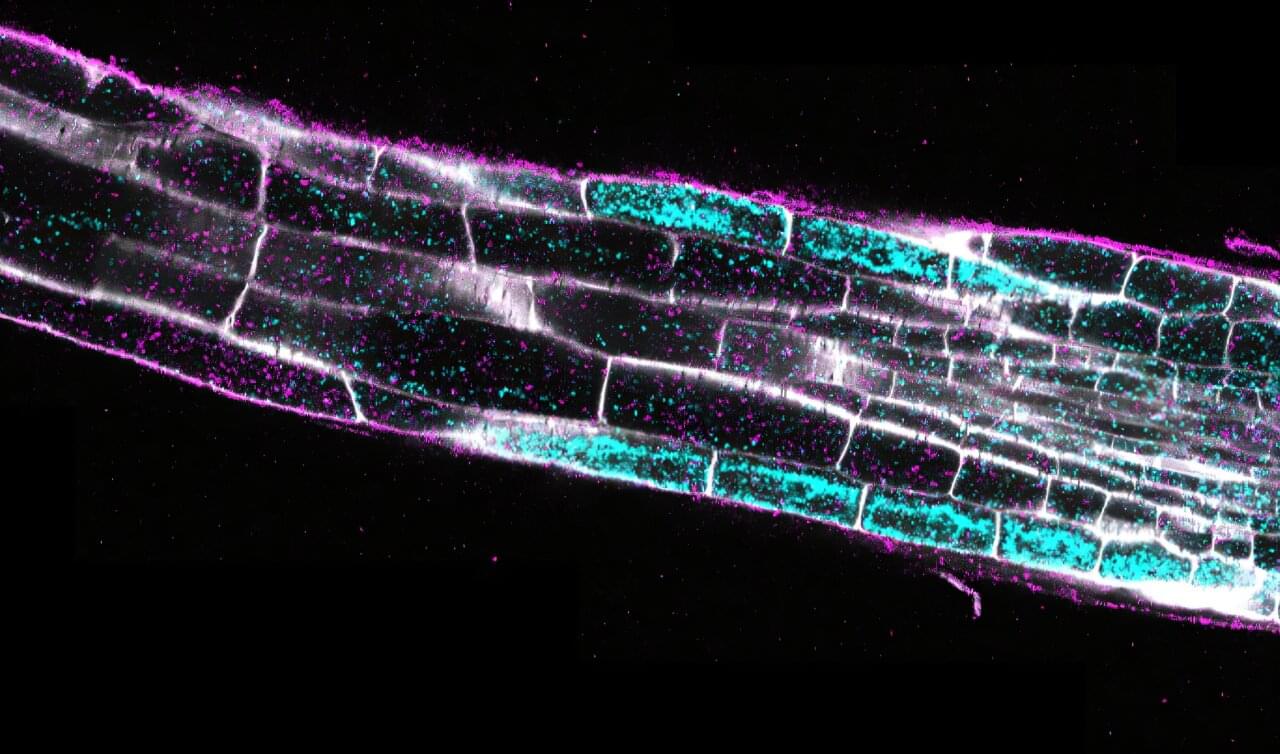
Iron is essential. Our cells need it to produce energy, carry oxygen throughout the body and power countless chemical reactions that sustain life. But this metal has a dark side. When too much of it is left free inside cells, it can trigger destructive reactions that break down DNA, proteins and even cell membranes.
Now, Whitehead Institute Member Ankur Jain, former postdoc Whitney Henry and graduate student Pushkal Sharma have discovered that cells rely on an unexpected protector against this threat: small molecules called polyamines.
The researchers’ detailed findings, published in the journal Cell, reveal that polyamines act like storage lockers for iron, safely holding the metal in a nonreactive state until cells need it.
A computer that runs on living human neurons is currently playing Doom. It’s called CL1, built by Cortical Labs from brain cells grown in a lab. There’s no one at the controls, and yet something is clearly learning. What’s actually running this thing is the strange part, and it’s the reason I had to make this video.
Inspired by TRY: • La découverte la plus effrayante du siècle.
Musics from: https://share.epidemicsound.com/jrzhd3
▀▀▀▀▀▀▀▀▀▀▀▀▀▀▀▀▀▀▀▀▀▀▀▀▀▀
Watch this video till the end.
Share it with your friends.
Join our channel as a member!
Get Products designed with ❤️ (by humans) https://clarifiedmind.org
Researchers proved that malicious SIM card attacks can execute attacker code inside the cellular modems running EV chargers, industrial routers, and telematics units. Six of eight tested industrial modules accepted the command. No mandatory patch exists yet, only a scattered, vendor-by-vendor response.
Malicious SIM card attacks just moved from theory to demonstrated fact for industrial hardware. Cellular IoT connections are on pace to reach 5.4 billion worldwide in 2026, according to IoT Analytics, and the module makers behind a large share of that growth just received a public lesson in a 40-year-old blind spot.
The vulnerability traces back to Proactive SIM, a legitimate cellular specification that lets a SIM card send commands directly to a device’s modem instead of only answering its requests. One of those commands, RUN AT, tells the modem to execute an AT command, the same control language used to operate modems since the 1980s, according to researchers from the University of Birmingham and security firm Fuzzware who presented the findings at the 2026 USENIX WOOT Conference in Baltimore. Using a custom toolkit called CATana, the team tested 26 devices: 18 smartphones and 8 cellular IoT modules used in EV chargers, industrial equipment, and connected cars.