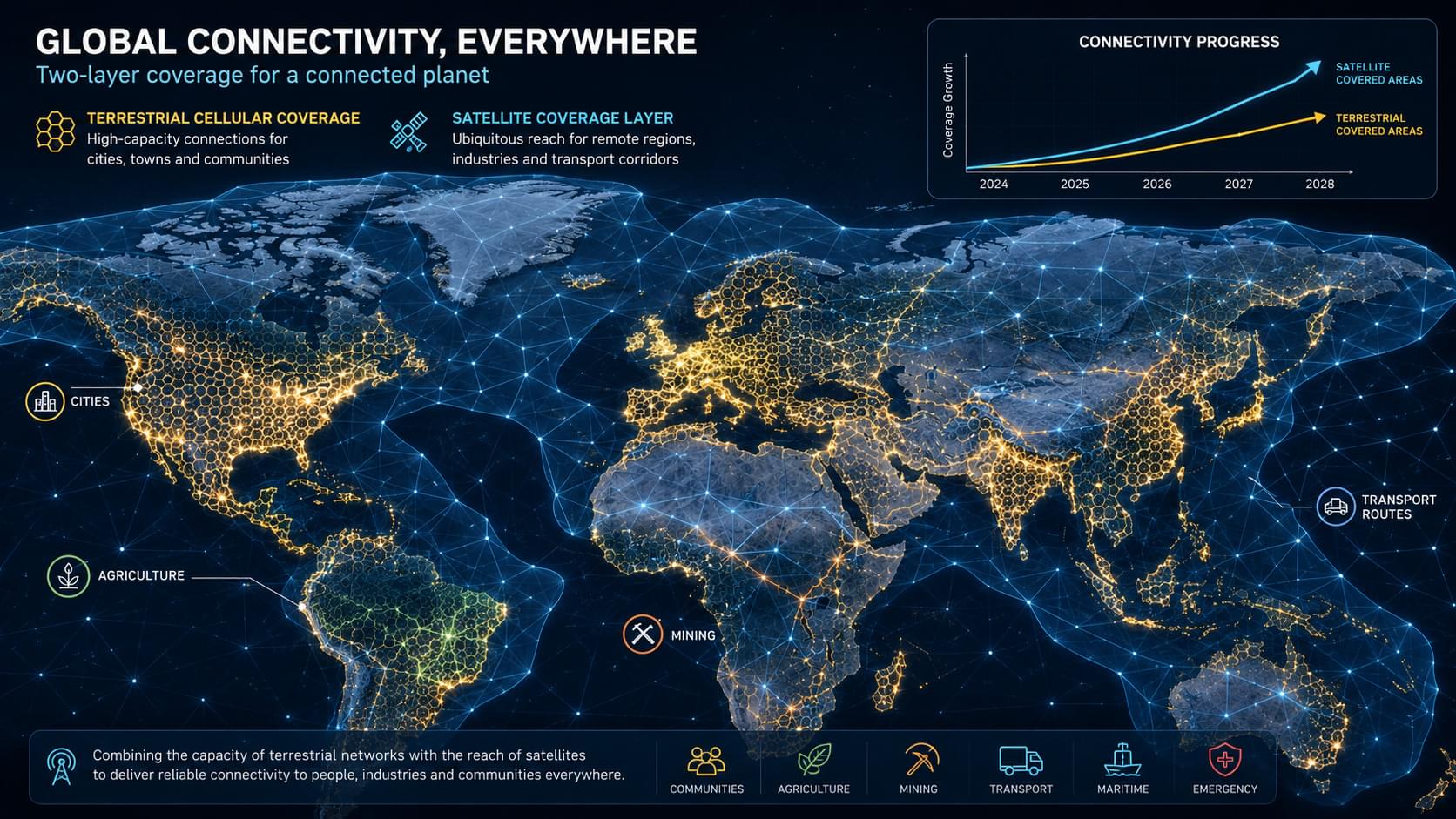
A global survey of 600 IoT decision-makers found that 91% plan to adopt direct-to-device (D2D) satellite connectivity within 18 months. But organizations already blending satellite and cellular report increased progress at a rate 16 points higher than terrestrial-only users, 86% versus 70%. The gap already exists. Most buyers are still treating adoption as a future decision rather than a current one.
D2D satellite connectivity is heading toward near-universal adoption on paper, but the buyers who already made the move are quietly pulling ahead of everyone still planning to. Viasat and Vanson Bourne surveyed 600 IoT decision-makers across agriculture, energy, transport and logistics, mining, and utilities, and found that organizations blending satellite and cellular connectivity report increased progress at 86%, compared with 70% for organizations relying on terrestrial-only networks, according to IoT Tech News’ coverage of the report.
The headline figure from the Viasat-commissioned study, conducted by Vanson Bourne, is that 91% of decision-makers plan to adopt D2D IoT devices within 18 months, with 69% planning adoption within 12 months and 32% within just six, according to Viasat’s own release. That number is genuinely significant. D2D satellite connectivity, enabled by 3GPP’s Release 17 standard for narrowband non-terrestrial networks, lets a device with a standard cellular chipset connect to satellite without a separate terminal, gateway, or bespoke hardware, removing what used to be the single biggest cost barrier to satellite IoT.