The goal of Kidney Project is to overcome scarcity and engineer a limitless supply of implantable artificial kidneys to improve the lives of patients with renal failure.
Science may one day give us a way to replace damaged and diseased parts of the body with artificial replacements – but reproducing organs and tissues in the lab isn’t easy.
That’s especially true for networks of blood vessels, which at the level of fine, thread-like capillaries are microscopic – these capillaries can be as small as 0.005 millimeters (34 times thinner than a human hair), and only let blood cells through in single file.
Researchers led by a team from MIT have now published a study in PNAS that details a way of engineering blood vessels in the lab with significantly greater precision than before.
Researchers found no significant association between chronotype and FibroScan-derived liver fat or stiffness in 119 medication-naïve adults with overweight or obesity. The exploratory findings cannot exclude smaller effects, particularly for fibrosis, and require confirmation in larger longitudinal studies.
A parasite carried by billions of people worldwide often causes harmful infections during pregnancy and in immunocompromised individuals and is a leading infectious cause of blindness in South America. Once it enters the body, it can rapidly multiply, spreading from one cell to the next.
This single-celled organism, Toxoplasma gondii, belongs to the same group of microbes as the parasite that causes malaria and many other parasites of humans and animals. Cats are Toxoplasma’s main host, but it can infect most warm-blooded mammals, including humans, who typically become infected through contact with cat feces or by consuming undercooked meat or contaminated produce.
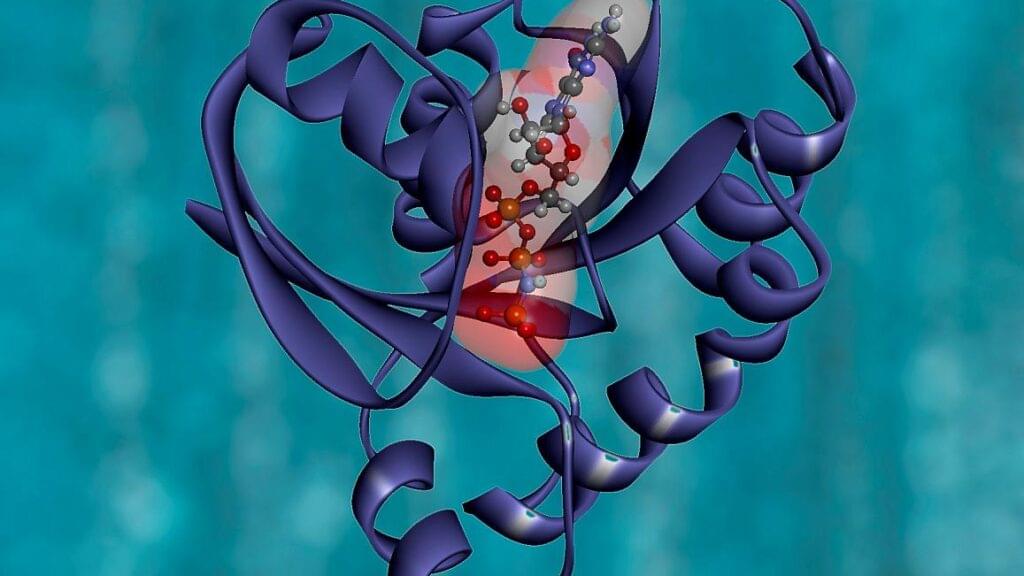
The parasite’s ability to survive and spread inside a host depends on its capacity to precisely control which proteins it makes and when. Proteins are the molecular machinery that carries out all of the parasite’s functions, from invading and manipulating host cells to making new copies of the pathogen that spread to other cells and hosts.
Hours later, on the advice of a sister who worked in law enforcement, she fished her soiled leggings out of the garbage and took them back to the store to report what had happened. A clerk listened to her account and, not seeming to realize that MR understood Spanish, shouted to a colleague in a backroom: “Tenemos otra.”
“We’ve got another one.”
Over the next several weeks and months, MR would learn not only that there had been reports of similar incidents at the same store in the same timeframe – one that had been shared on social media and at least one other she heard about anecdotally from shopping center employees – but that masturbating in front of female customers at branches of Dollar Tree was fast becoming a national phenomenon, a disturbing new form of sexual assault that men were documenting and bragging about in dark corners of the internet.