Over the course of 23 years.
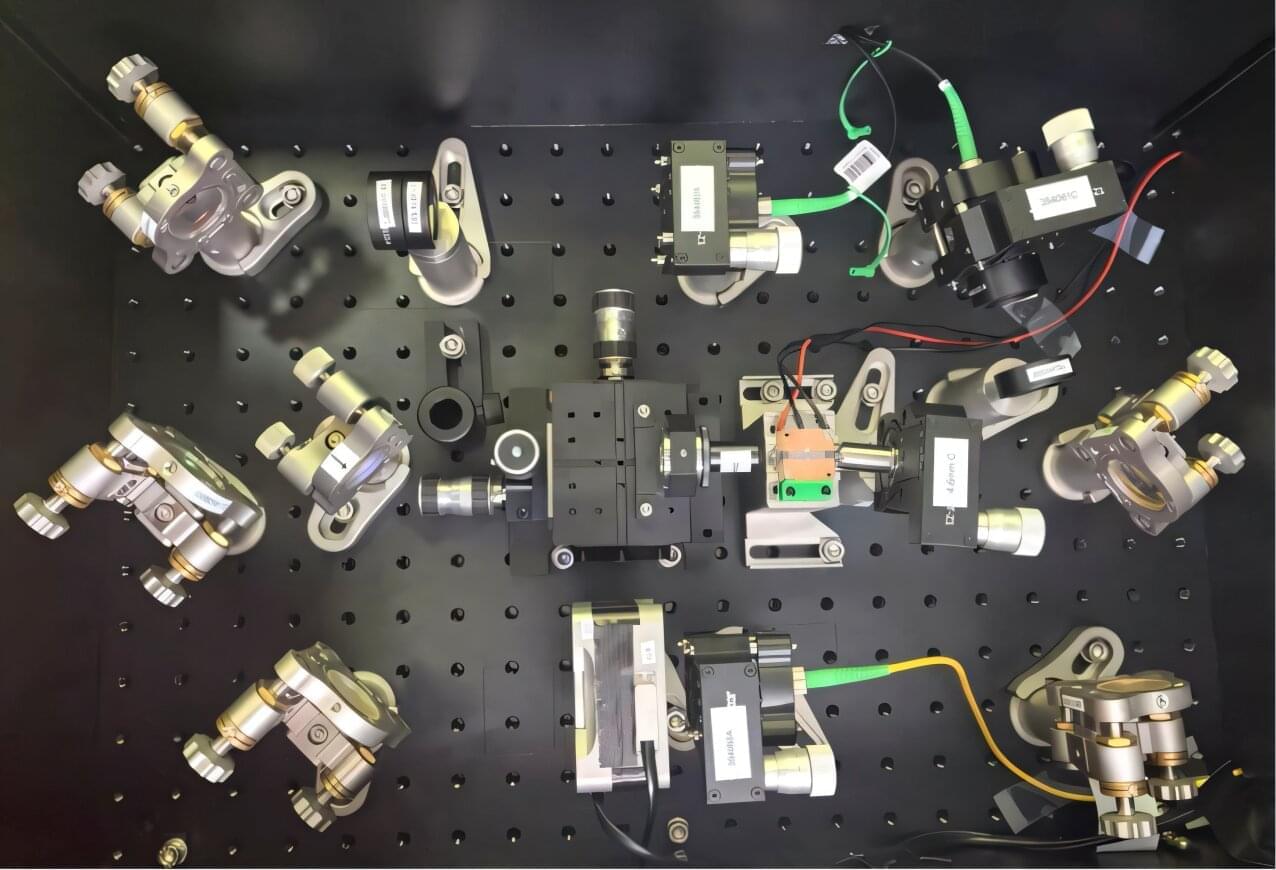
A new fluorescence microscopy technique that generates super-resolution images from a single camera exposure could help researchers study rapid movements within cells that are difficult to capture with existing methods.
Super-resolution microscopy has transformed cell biology by allowing scientists to see cellular structures and details that are too small to be imaged clearly with conventional light microscopes. Some methods achieve super-resolution by combining information from hundreds or thousands of image frames taken over time.
However, this works best when biological samples like cells or tissues have been fixed, or preserved with chemicals. Otherwise, structures like mitochondria, microtubules and DNA—which are constantly moving, changing and interacting—appear blurry using existing super-resolution techniques.
An international team of scientists has successfully tested an innovative in vivo CAR-T therapy, JY231, capable of treating severe autoimmune diseases with a single intravenous infusion. Published in the New England Journal of Medicine, the experimental treatment uses a harmless genetically modified viral vector to deliver genetic instructions directly into a patient’s T-lymphocytes, reprogramming them to target and destroy defective B-cells that produce autoantibodies. In a clinical trial involving 16 patients with treatment-resistant conditions such as multiple sclerosis, myasthenia gravis, and myopathy, the therapy demonstrated over 99% accuracy. Within two months, patients’ bone marrow began producing healthy immune cells, and after six months of observation, participants exhibited significant clinical improvements, including the elimination of chronic fatigue and the partial restoration of cognitive and muscular functions. Researchers are now preparing for large-scale randomized trials to definitively confirm the method’s long-term safety and efficacy.
Among 16 patients with refractory neurologic autoimmune disorders, lentiviral CD19 CAR T-cell therapy was associated with manageable side effects, complete B-cell depletion, and preliminary clinical improvement across disease groups.
We’re sharing a solution to the Navier–Stokes existence and smoothness problem, one of the Millennium Prize Problems. This proof, produced by an internal OpenAI system, shows that the dynamics of the Navier-Stokes equations for fluid motion can develop a singularity in finite time. We’re sharing both a writeup of the proof and a formalization in Lean.
The Millennium Prize Problems (opens in a new window) represent some of the deepest questions at the frontier of mathematics. The question of whether smooth three-dimensional fluid motion can break down has remained unresolved for roughly 90 years.
SPATA, Greece (AP) — The world’s most endangered tigers have started a family in Greece, offering hope for a predator rapidly vanishing from the wild.
Three 2-month-old Sumatran tiger cubs received identification microchips and their first vaccinations Tuesday at a zoo near Athens, as part of a global effort to build a backup population.
The Sumatran tiger, classified as critically endangered, is found only on the Indonesian island of Sumatra, which is slightly larger than Sweden.