Toggle light / dark theme

Get the latest international news and world events from around the world.

Log in for authorized contributors

Could ChatGPT be conscious? | Roger Penrose, Sabrina Gonzalez, Max Tegmark

Roger Penrose, Sabrina Gonzalez Pasterski, and Max Tegmark discuss consciousness, quantum physics, and the possibility of a sentient superintelligent A.I.

Could ChatGPT be conscious?

With a free trial, you can watch the full debate NOW at https://iai.tv/video/cracking-the-code-for-thought?utm_sourc…ed-comment.

The idea that the brain is computational has, from the outset, been central to neuroscience. Like a computer, the brain is a problem-solving machine that stores memories and processes information. But despite the advances in AI, many challenge whether this analogy captures the essence of the mind. Computers use transistors to build elementary logic gates, enabling them to store files exactly, in 0s and 1s. They are precise and repeatable. Human brains, in contrast, are biological—the neurons do not operate as simple logic gates, but have thousands of inputs, and their output is dependent on past activity and their current internal state. Remove a computer’s processor, and it breaks. But humans can survive with only one brain hemisphere. Fundamentally, brains think, they have perception, and are conscious.

Is it a mistake to see the mind as computational? Are computers, at root, limited machines with little in common with the sophistication of living things? Or have computers and mathematics uncovered the essential character of thought—and perhaps even the cosmos itself?

#consciousness #quantum #neuroscience #quantumphysics #ai #artificialintelligence.

Yuval Noah Harari: Why advanced societies fall for mass delusion

Become a Big Think member to unlock expert classes, premium print issues, exclusive events and more: https://bigthink.com/membership/?utm_… Become a Big Think member to unlock Yuval’s full class, AI and the Future of Civilization: https://bigthink.com/my-classes/ai-an

Up next, Yuval Noah Harari: How to safeguard your mind in the age of junk information ► • Yuval Noah Harari: How to safeguard your m…

“The problem is in our information. Humans, yes, we are generally good and wise, but if you give good people bad information, they make bad decisions.”

Human history is a paradox: we accumulate knowledge at astonishing speed, while remaining vulnerable to deception, superstition, and the stories that steer entire civilizations.

From the first clay tablets to today’s global media systems, the structures that carry our ideas have always shaped what societies can build, believe, and destroy. That paradox is even more important in the age of AI, says Yuval Noah Harari.

0:00 If humans are so smart, why are we on the verge of destruction?

A lysosome switch could reshape research on cancer and neurodegenerative disease

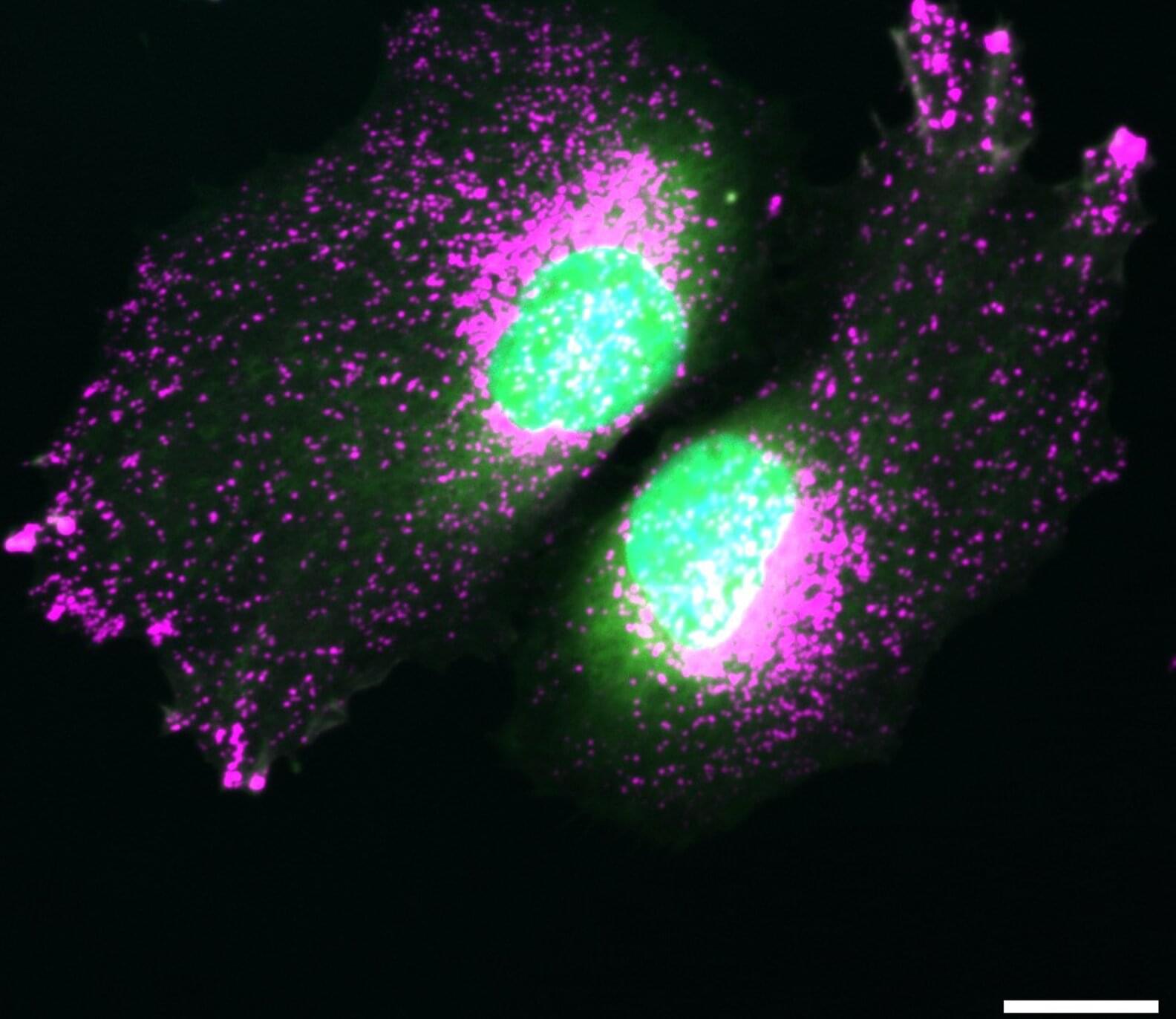
An international research team from Bielefeld University and the Leibniz-Forschungsinstitut für Molekulare Pharmakologie (FMP) has uncovered a previously unknown regulatory mechanism in human cells. For the first time, they demonstrate how a key molecular switch regulates the cell’s “recycling centers.” The findings, published in Nature Communications, provide important insights into the understanding of cancer and neurodegenerative diseases.

Lysosomes are the control centers for the metabolism of cells and tissues, including the brain. They break down defective proteins and other macromolecules into their basic building blocks. At the same time, they determine whether a cell grows or switches into an energy-saving mode. In doing so, they play a key role in health and disease.

A research team led by Prof. Dr. Markus Damme of Bielefeld University and Prof. Volker Haucke, Director of the Leibniz-Forschungsinstitut für Molekulare Pharmakologie (FMP), has now jointly elucidated a key mechanism underlying this regulation.

Cost-Effectiveness of Adjuvant Immunotherapy in Cancer Treatments: A Systematic Review

Adjuvant immunotherapy is increasingly integrated into cancer care to reduce recurrence and improve survival. However, its high cost raises critical concerns regarding affordability and economic value across diverse health system contexts.

This review outlines health gains and economic value, and identifies where future research, pricing reform, or prioritization are needed to support evidence-informed policymaking and sustainable use of immunotherapy in cancer treatment pathways.


Question Is adjuvant immunotherapy cost-effective across cancer types?

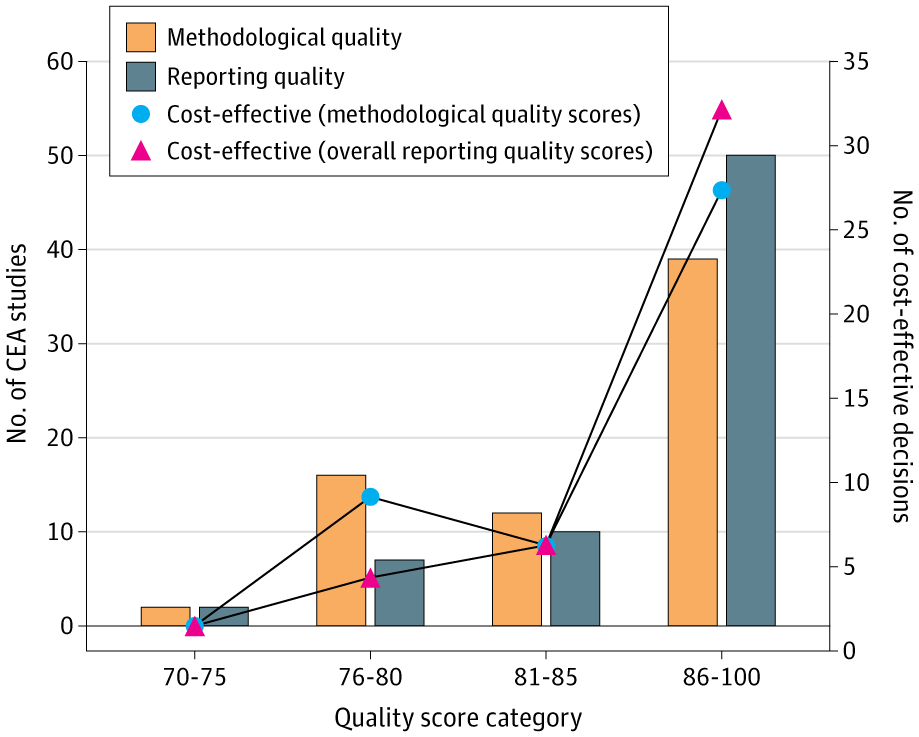
Findings This systematic review including 69 economic evaluations (2015−2025) found that adjuvant checkpoint inhibitors, usually single-agent, were associated with higher quality-adjusted life-year/life-year gains and were determined to be cost-effective by 40 studies (58%), with the strongest signals in non−small cell lung cancer and melanoma, particularly in early-stage/high-risk populations, and for some combination regimens. Industry-funded studies more frequently reported cost-effective decisions and findings were sensitive to drug prices, model assumptions, and country-specific willingness-to-pay thresholds.

Meaning These findings suggest that adjuvant immunotherapy can offer good value for money in selected high-risk settings; decisions should be indication-specific, aligned with local health technology assessment thresholds, and supported by price negotiation or managed-entry agreements.

Artificial Intelligence Isn’t the Problem We Should Fear

Artificial intelligence is often discussed as a technological threat, yet the deeper challenge lies not within the machines themselves, but within the values guiding how humanity chooses to use this unprecedented form of power.

Throughout history, every major leap in automation has multiplied productivity while simultaneously concentrating influence in the hands of those who control it. The emergence of artificial intelligence represents the most powerful form of automation ever created, capable of reshaping economies, redefining work, and transforming the nature of human connection itself.

This conversation explores how AI amplifies existing human systems rather than replacing them, why questions of power, wealth, authenticity, and trust are becoming more important than technological capability, and how the future shaped by artificial intelligence will ultimately reflect human intentions rather than machine decisions.

The technology is neutral. The outcome is not.

#AI #ArtificialIntelligence #Future #Technology #MoGawdat

Read more

/* */