Toggle light / dark theme

Get the latest international news and world events from around the world.

Log in for authorized contributors

Extra robotic thumb lets wearers complete two-handed tasks with one hand

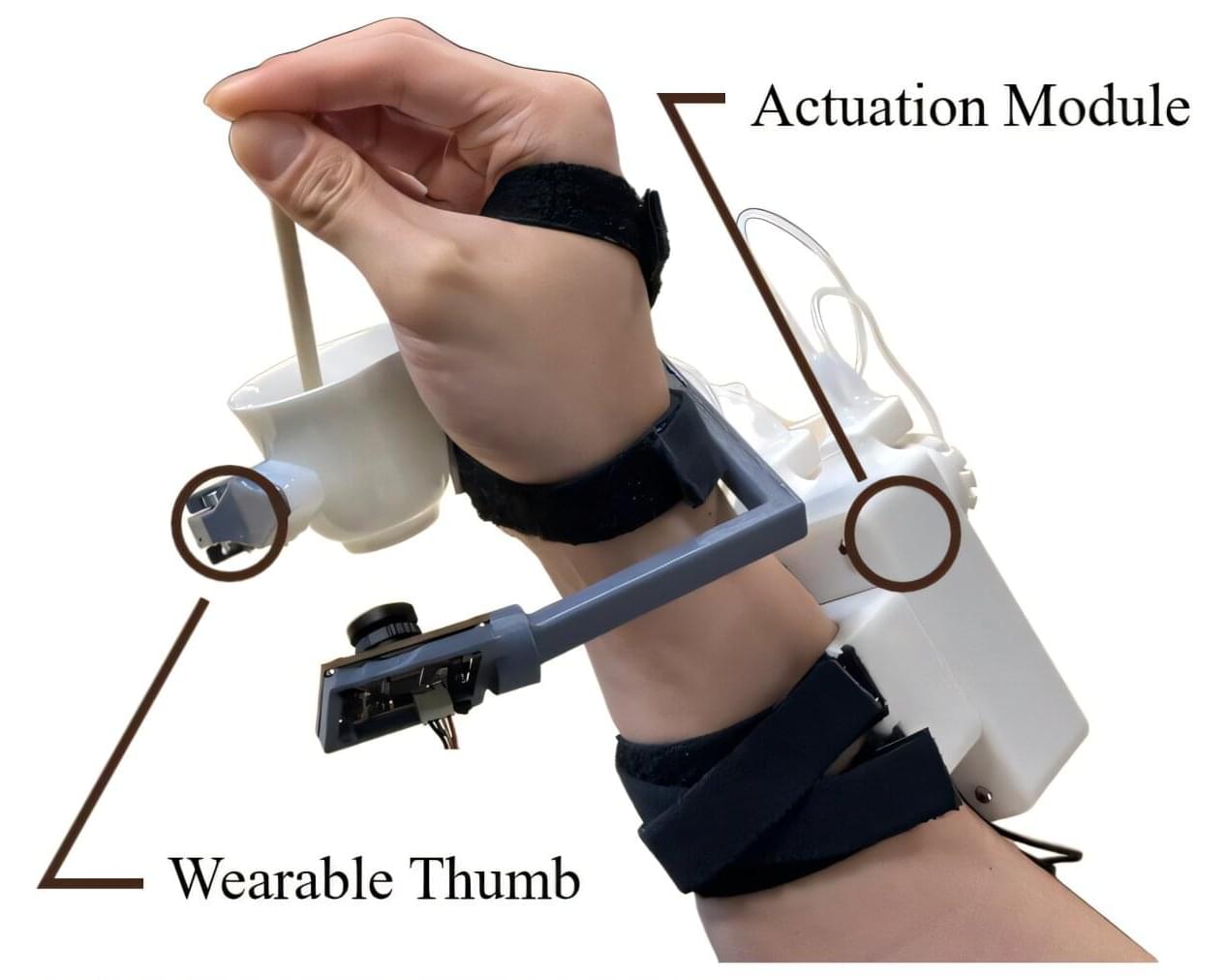
To complete many everyday tasks and chores, humans typically use both of their hands. For instance, when opening a bottle, they use one hand to hold the bottle and the other to twist its cap. Researchers at the University of California San Diego recently developed EgoThumb, a robotic thumb that could allow people to complete some tasks that generally require both hands using only one.

Their proposed robotic system, introduced in a preprint posted on arXiv, captures images with a small camera, which are then analyzed by an artificial intelligence (AI) algorithm trained to plan the thumb’s movements.

“The initial inspiration came from soldering wires,” Jiawei Fu, co-first author of the paper, told Tech Xplore.
Attention Required!

$7.5 BILLION IN AI CHIPS, AND AN ALLEGED CHINESE INTELLIGENCE OPERATION

This story keeps getting more complicated.

According to reporting by The Information and Reuters, a business network associated with Chinese businesswoman Alice Huang (also known as Huang Le) allegedly facilitated approximately $7.5 billion in Nvidia chip shipments, involving roughly 240,000 processors, including H100, H200, and A100 accelerators.

The story has three interconnected dimensions: a personal relationship, an alleged intelligence operation, and a complex international chip-distribution network.

THE PEOPLE AND THE NETWORK

At the center is Alice Huang, a Chinese businesswoman whose professional background reportedly includes finance and investment management.

U.S. intelligence officials reportedly suspected that she was working for China’s Ministry of State Security (MSS), an allegation that has not been publicly established.

Her business network involved several companies, including:

Did Scientists Just Witness a Key Step in the Origin of Complex Life?

A recent headline suggested a breakthrough: “First Contact” That May Have Led to Complex Life on Earth Finally Witnessed by Scientists. 1

Have researchers witnessed experimental support for the origin of complex life? Is the biblical account of creation now in question? Are there bacteria from Asgard on earth? Let’s see what the paper claims.

Einstein’s Equations Reveal Gravity Can Break And Reconnect Like Magnetic Fields

Everywhere you go in the Universe, gravity exists.

It’s inextricably woven into its fabric, forming stars and planets, and choreographing the dance of galaxies.

It’s what keeps our world together and us upon it – yet even after more than a century of studying gravity by way of Einstein’s theory of general relativity, scientists are still discovering surprising new ways it can behave.

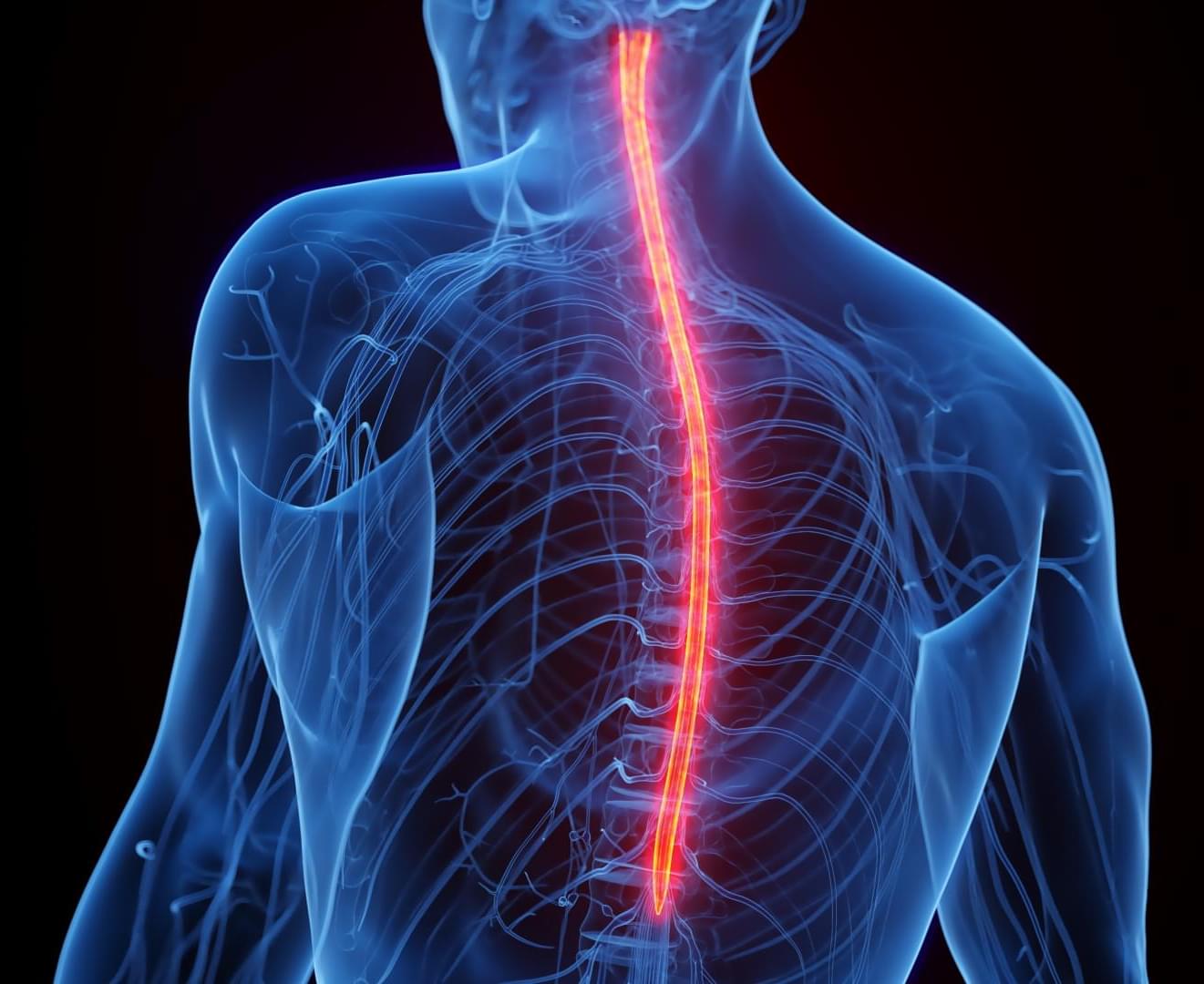
Spinal cord injury can reshape gut microbes that influence whole-body health

Scientists exploring the links between a spinal cord injury, inflammation and immune function have turned their attention to a genome-level analysis of the gut microbial community, with early study results offering hints at potential new approaches to aid healing.

In mice, refeeding a strain of bacteria that was depleted after spinal cord injury (SCI) lowered inflammation and stabilized weight loss. A second study identified 19 microbial species in the mouse gut with the strongest links to the body’s loss of nitrogen after SCI, which is associated with muscle wasting in humans.

Beyond these preliminary findings, the extensive genome-based mapping of microbial communities positions the research team from The Ohio State University to broaden understanding of the gut’s role in injury complications—as well as possible protective activities—when the central nervous system is disrupted.

Introducing Claude Fable 5.2 and Claude Mythos 5.2

The consensus in physical robotics just took a massive shift—but the real story is far more nuanced than the hype suggests. ⚙️💡

Six months ago, the prevailing orthodoxy was clear: text/code LLMs lacked spatial grounding, and end-to-end Vision-Language-Action (VLA) or world models were the *only* path to physical control. Then came Claude Fable 5.2, setting new state-of-the-art scores on RoboDojo—a simulated two-arm manipulation benchmark—and demonstrating impressive zero-shot spatial planning on un-trained tasks.

Naturally, many rushed to claim LLMs had solved physical manipulation. But if you look closer at real-world physical tests—beyond clean simulation environments—the picture changes fast.

In a recent informal physical tabletop test, an LLM-guided robotic arm was set up to play checkers. The result? 64 misses and multiple dropped tokens.

Why the stark disconnect between benchmark performance and physical reality? It comes down to the fundamental divide between high-level spatial reasoning and real-world motor execution:

🧠 What LLMs Get Right (The High-Level Brain)

* Strategic Spatial Logic: Fable 5.2 excels at abstract spatial priors (gravity, leverage, multi-step ordering) and long-horizon in-context error recovery. It easily decides *what* moves to make.

30 Minutes on a Vibrating Mattress Shifted Alzheimer’s-Linked Proteins in a Small Trial

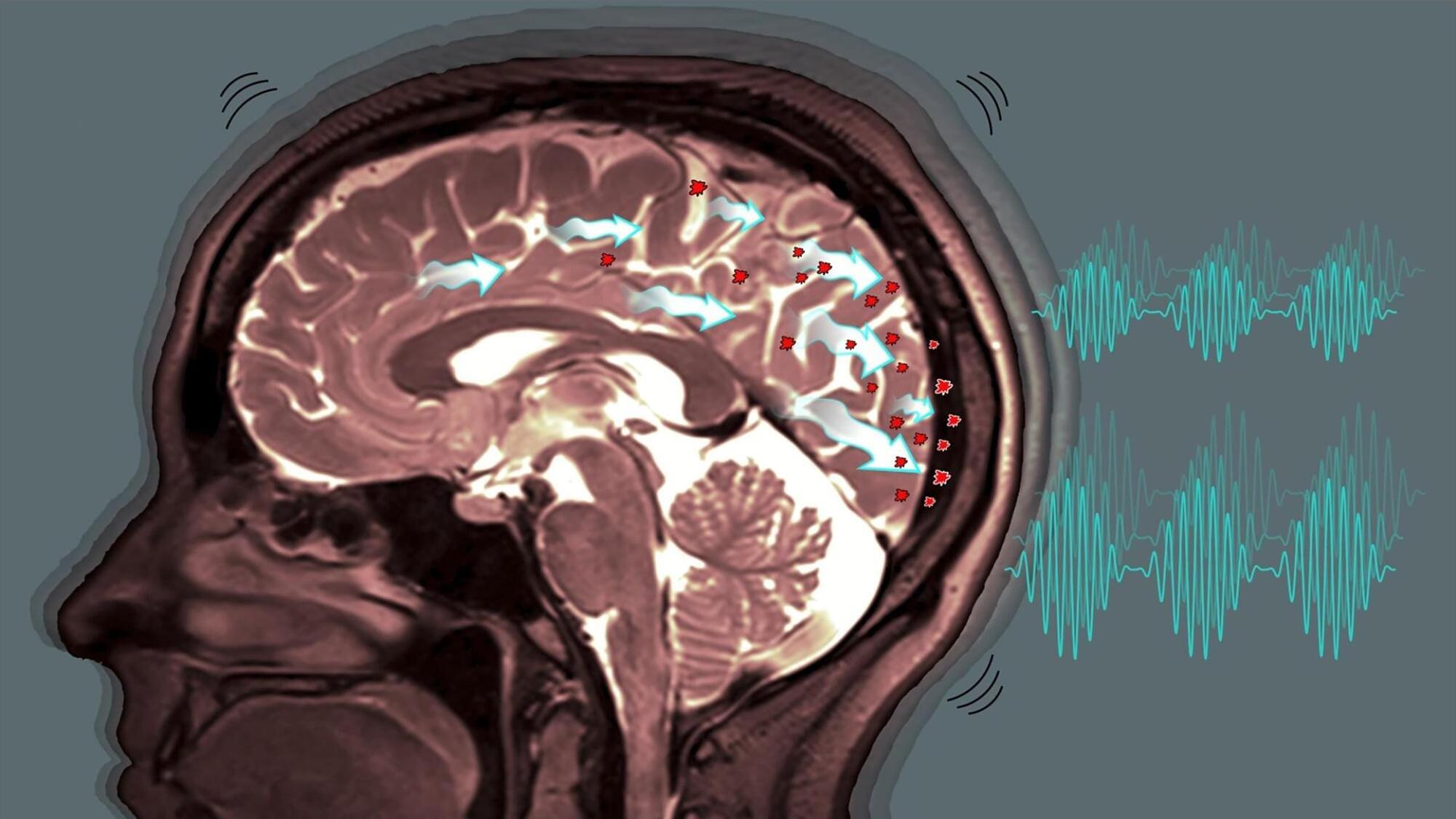
Put this down as one of the more unusual approaches to Alzheimer’s treatment that we’ve come across to date: having patients lie on a vibrating mattress to clear out waste proteins that could be building up in the brain.

These vibrations are designed to mimic the brain’s natural garbage disposal system, which runs mainly at night.

Blood pressure in the brain drops, and slow pulses then clear out anything that shouldn’t be there, ready for the morning.

The Gurzhi Effect Reaches Three Dimensions

Measurements on micrometer-scale cadmium samples provide definitive evidence of an unusual charge-transport regime in a 3D metal.

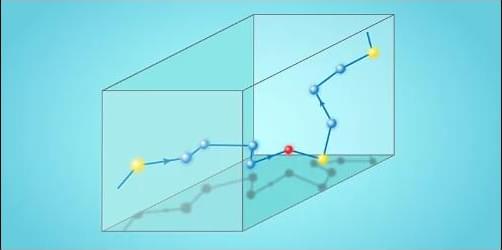
In an ordinary metal, electrons undergo collisions with impurities, phonons (lattice vibrations), and material boundaries. By removing momentum from the electrons, these collisions determine the metal’s conductivity. One of these types of collisions—between electrons and phonons—becomes more frequent at high temperatures, further impeding the electron flow and decreasing the metal’s conductivity as it warms. But more than 60 years ago, the physicist Radii Gurzhi predicted that, under certain circumstances, some metals might behave more like classical liquids, in which thermal energy reduces the fluid’s internal resistance to flow, or viscosity, causing conductivity to increase with temperature [1]. Despite having been studied theoretically for decades, the so-called Gurzhi effect was only recently confirmed in graphene [2], following tentative observations in potassium [3].