Spaceflight can reproduce some changes associated with later life within weeks, offering clues about muscle loss, frailty and recovery.


Neurodegeneration is a pathological condition in which nervous system or neuron losses its structure, function, or both leading to progressive neural degeneration. Growing evidence strongly suggests that reduction of plasmalogens (Pls), one of the key brain lipids, might be associated with multiple neurodegenerative diseases, including Alzheimer’s disease (AD). Plasmalogens are abundant members of ether-phospholipids. Approximately 1 in 5 phospholipids are plasmalogens in human tissue where they are particularly enriched in brain, heart and immune cells. In this study, we employed a scheme of 2-months Pls intragastric administration to aged female C57BL/6J mice, starting at the age of 16 months old. Noticeably, the aged Pls-fed mice exhibited a better cognitive performance, thicker and glossier body hair in appearance than that of aged control mice. The transmission electron microscopic (TEM) data showed that 2-months Pls supplementations surprisingly alleviate age-associated hippocampal synaptic loss and also promote synaptogenesis and synaptic vesicles formation in aged murine brain. Further RNA-sequencing, immunoblotting and immunofluorescence analyses confirmed that plasmalogens remarkably enhanced both the synaptic plasticity and neurogenesis in aged murine hippocampus. In addition, we have demonstrated that Pls treatment inhibited the age-related microglia activation and attenuated the neuroinflammation in the murine brain. These findings suggest for the first time that Pls administration might be a potential intervention strategy for halting neurodegeneration and promoting neuroregeneration.
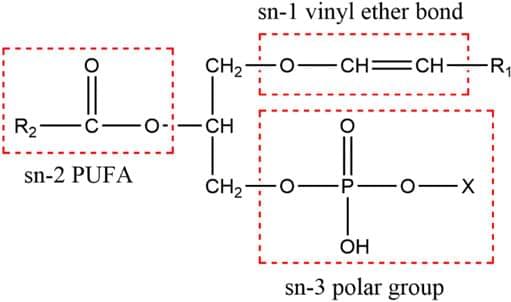
Plasmalogens (Pls) are a special type of vinyl ether-bonded phospholipids actively participating in structure and function of biological membranes. Approximately 20% of phospholipids are plasmalogens in human tissue, where they are particularly rich in the brain, heart, and immune cells (Lessig and Fuchs 2009; Braverman and Moser 2012). In brain, ethanolamine plasmalogens (PlsEtns) constitute approximately 60 and 80% of the total ethanolamine phospholipids in gray and white matter, respectively (Macala et al., 1983). Pls are also concentrated in specialized membranes, such as sarcolemma, myelin, and synaptic vesicles (Post et al., 1988; Takamori et al., 2006; Poitelon et al., 2020). Reduced levels of PlsEtns have been found to be associated with aging (Pradas et al., 2019) and several neurodegenerative diseases, including Alzheimer’s disease (AD) (Guan et al., 1999; Han et al., 2001; Goodenowe et al., 2007; Wood 2010; Wood et al., 2015; Yamashita et al.

A team of researchers proved a simple mathematical law — the “linearity theorem” — that lets engineers predict, in advance and with precision, exactly how compressing an AI model will affect its intelligence. No more guess-and-check. No more crossing your fingers and hoping a 70-billion-parameter model doesn’t collapse into gibberish after compression.
A global research team just proved a simple mathematical law that lets engineers shrink massive AI models onto ordinary laptops and phones — without guessing, and without dumbing them down.

In the theory of partial differential equations (PDEs), an important problem is analyzing whether there is loss of regularity in finite time, even when there is smooth initial data. This is known as singularity formation, or blowups. A famous one is whether fluid dynamics represented by Navier-Stokes equations experiences such blowups, and is one of the unsolved Millennium prize problems.
A closely related problem is known as the Euler problem and it represents inviscid flow, i.e., it lacks the viscosity term present in the Navier-Stokes equation. Intuitively the lack of viscosity makes it easier for blowups to happen, but it is still an open problem if such blowups occur in free space (R^3).
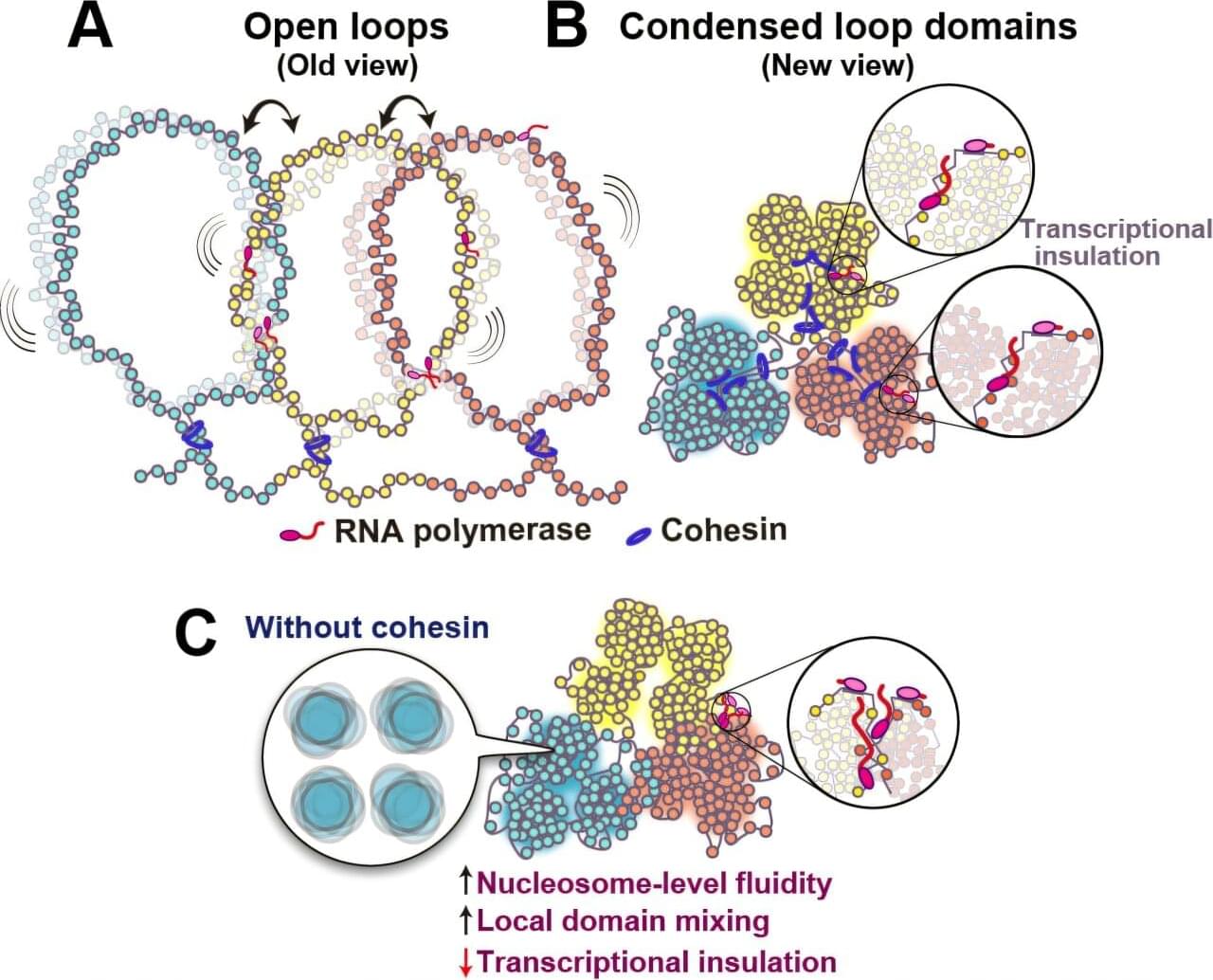
The human genome is about two meters (6.6 feet) long, yet it is folded inside a cell nucleus only about 10 micrometers in diameter. To fit into this tiny space, DNA is wrapped around histone proteins to form nucleosomes, which are further organized into chromatin. For decades, chromatin has often been described in two simple forms: euchromatin, which is active, open and accessible, and heterochromatin, which is more compact and repressed.
However, a new study from an international team led by Kazuhiro Maeshima, a professor at the National Institute of Genetics, ROIS (Research Organization of Information and Systems) and SOKENDAI, has challenged this simple textbook view. The researchers demonstrated that euchromatin in living human cells is not merely open and loose but forms dynamic condensed domains. This domain organization helps prevent the mixing of neighboring domains.
The team further found that cohesin, a ring-shaped protein complex best known for organizing genome architecture, prevents local mixing between these condensed euchromatic domains for proper gene regulation in living human cells. The study was published in Nature Genetics on Sept. 8, 2026.
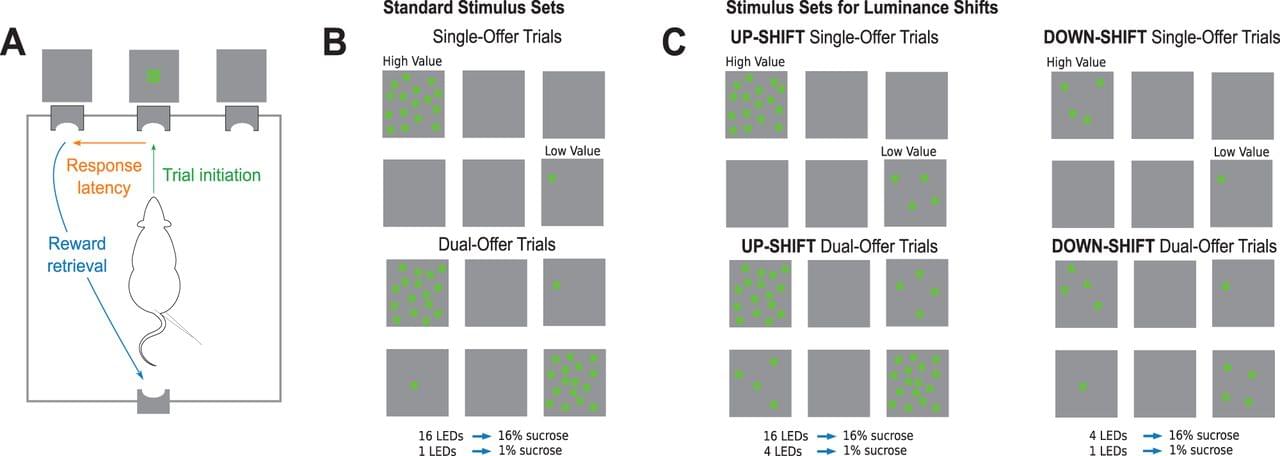
Studies of visual discrimination in rodents can confound the effects of cue salience with reward value making it difficult to determine which factor guides choice behavior. We examined this issue by testing how changes in relative salience affect decision dynamics in rats (nine females and five males) performing a two-alternative forced-choice task with visual cues associated with high or low sucrose rewards. After initial training with high-and low-luminance cues, we introduced a novel cue of intermediate luminance as a “luminance shift” test. The intermediate luminance cue substituted for either the brighter or dimmer cue and had the same reward value as the replaced cue. We found that while rats maintained a preference for the higher-value option, the introduction of a perceptually more similar cue reduced choice preference and eliminated latency differences compared with baseline.

A surprising immune system signal may help explain why zebrafish can regenerate damaged spinal cords so effectively. Researchers found that certain neutrophils release Il-4, which calms harmful inflammation and allows injured nerve fibers to grow again. Without these cells, healing stalled, but adding Il-4 restored regeneration. Scientists now want to know whether the same mechanism could someday be harnessed to improve spinal cord repair in humans.
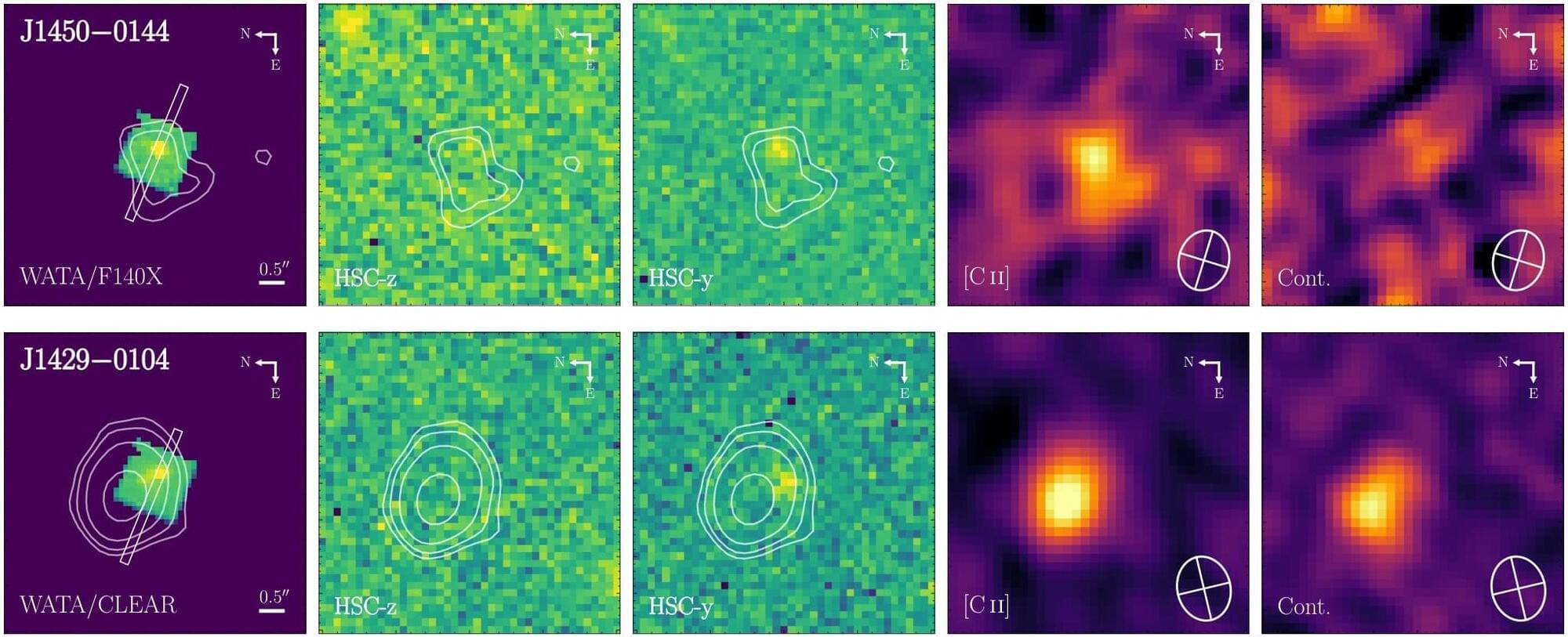
A new study finds that two early-universe objects thought to be faint quasars are actually extraordinarily luminous galaxies powered by bursts of star formation. James Webb Space Telescope observations of the galaxies, seen when the universe was less than a billion years old, reveal signatures of extremely massive stars, including some potentially more than 200 times the mass of the sun. The paper outlining this discovery was posted to the arXiv preprint server on Aug. 18.
There’s a luminosity range where ultraviolet-bright galaxies and faint quasars become impossible to tell apart using standard discovery techniques. Both can show blue ultraviolet continua and prominent hydrogen Lyman-alpha emission lines, and low-sensitivity discovery spectra alone cannot distinguish which is which.
This ambiguity affects how astronomers count quasars and extremely bright, actively star-forming galaxies in the early universe. During their quasar searches, astronomers have detected a significant number of UV-bright galaxy candidates in the Subaru High-z Exploration of Low-Luminosity Quasars survey (SHELLQs).