Every thought, memory, and feeling we experience depends on trillions of tiny connection points in the brain called synapses. These are the junctions where one neuron passes signals to another, forming the vast communication network known as the connectome—the brain’s wiring diagram. Although scientists have developed powerful tools to increase or decrease neural activity, directly redesigning the brain’s physical wiring has remained far more difficult.
A research team has now developed a molecular tool that makes such structural editing possible. The new platform, called SynTrogo (Synthetic Trogocytosis), enables researchers to induce astrocytes to selectively remodel synaptic connections in a targeted brain circuit.
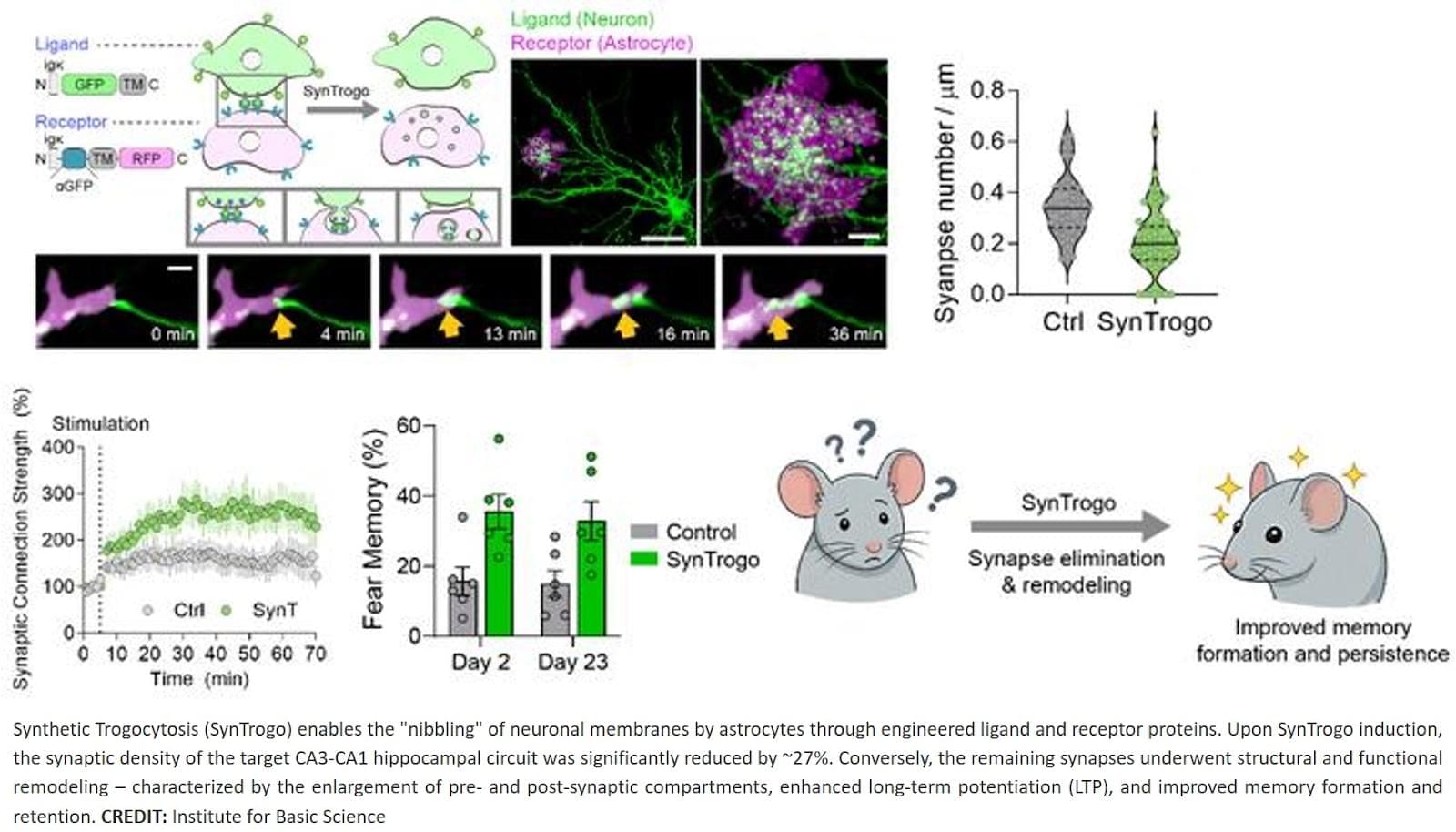
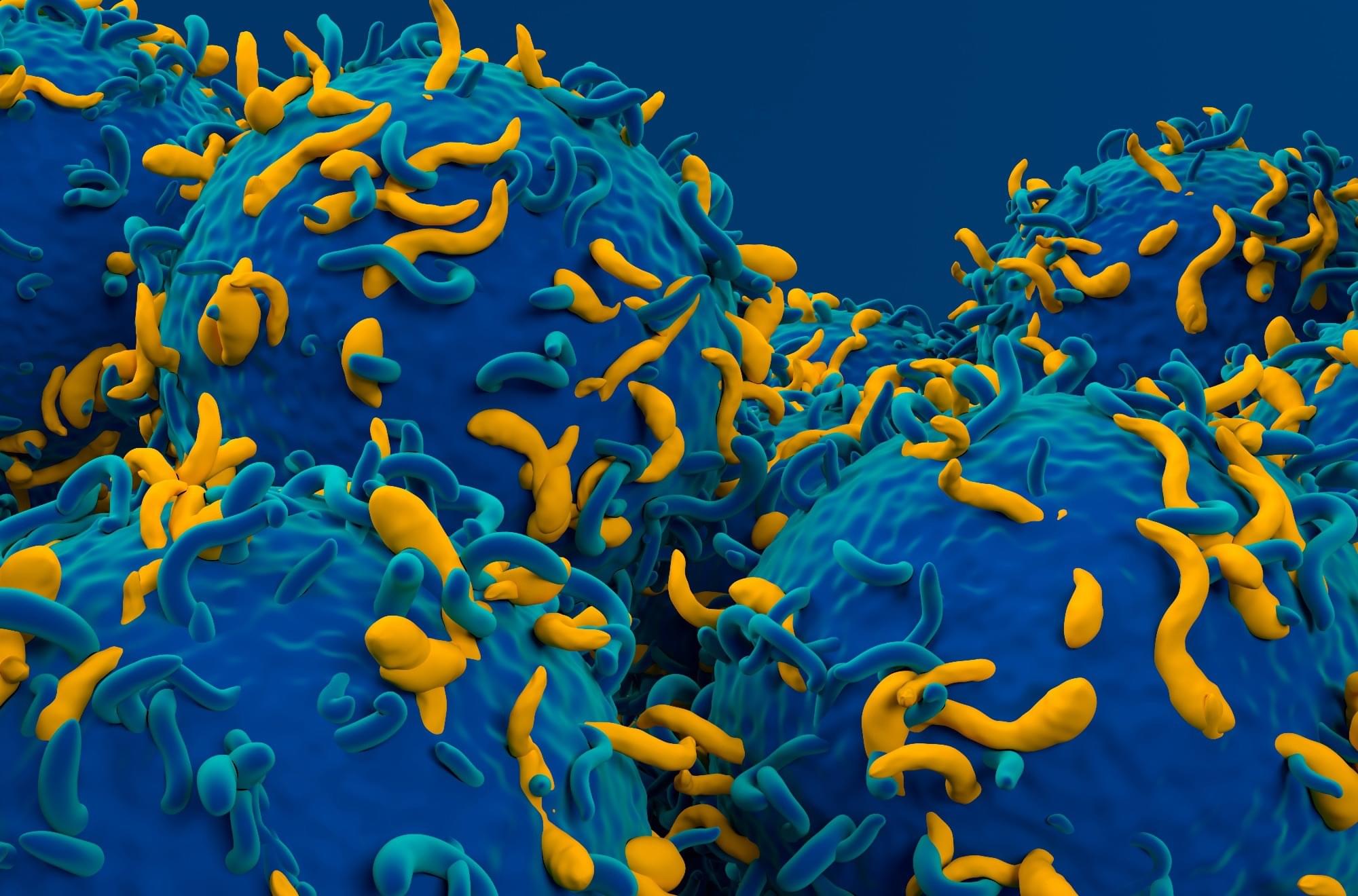
The system works like a molecular lock-and-key mechanism. Neurons in the target circuit are engineered to display a molecular “tag” on their surface (a lock), while nearby astrocytes are engineered with a matching binding partner (a key). When the two cells come into contact, the astrocyte is induced to “nibble” part of the neuronal membrane and nearby synaptic material through a trogocytosis-like process—a form of partial cellular uptake seen in several biological systems. By harnessing this process synthetically, the researchers created a way to selectively reduce synaptic connectivity in a defined neural circuit.
The team then asked whether these cellular changes translated into behavioral effects. In contextual fear-conditioning experiments, mice with SynTrogo-modified hippocampal circuits showed stronger memory than control animals. They displayed enhanced recall both two days after learning and 23 days later, indicating improvements in both recent and remote memory. Importantly, these mice also remained capable of extinction learning—the process by which previously learned fear responses are reduced when they are no longer appropriate—suggesting that SynTrogo strengthened memory without sacrificing cognitive flexibility.
Further analysis suggested that SynTrogo may place synapses into a more plastic, learning-ready state. Before learning, AMPA receptor-mediated synaptic responses were reduced, but after fear conditioning they recovered to control-like levels. This implies that the remodeled circuit may be particularly poised for experience-dependent strengthening when new learning occurs.