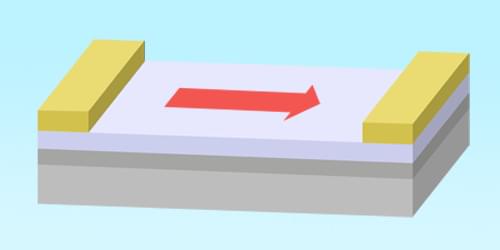
Researchers demonstrate control over the Josephson diode effect in a device that connects two superconducting materials with a topological insulator.
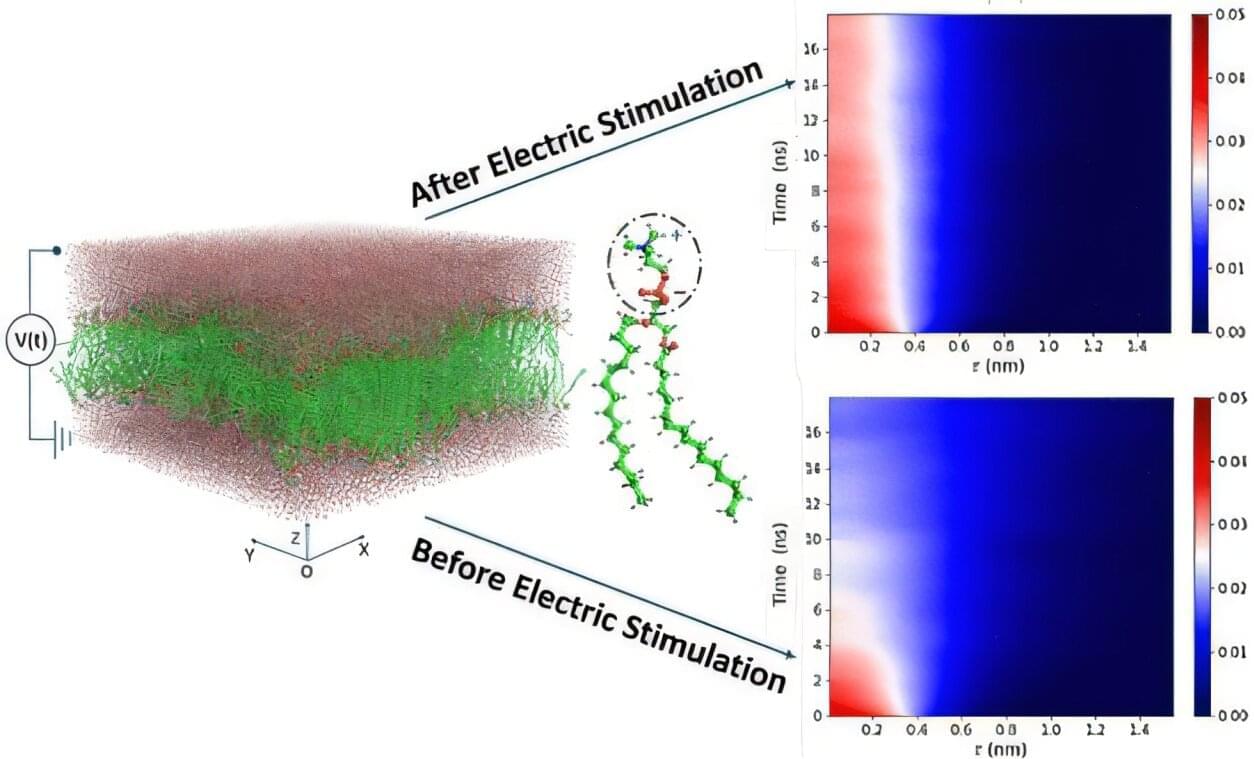
The science of memories has been pursued and studied since the days of ancient Greece and Aristotle. Today, research conducted by Dima Bolmatov, assistant professor in the Department of Physics & Astronomy at Texas Tech University, is considering how memories are stored on a cellular level.
Bolmatov’s research centers on lipid bilayers, membranes that serve as a continuous barrier around cells. These membranes, he noted, were traditionally viewed as passive barriers.
“I began to see that they behave more like dynamic, adaptive materials,” he stated. “They respond to electrical stimulation, retain history and exhibit collective behavior. This realization suggests that membranes themselves may participate in information processing, bridging physics and biology in a fundamentally new way.”
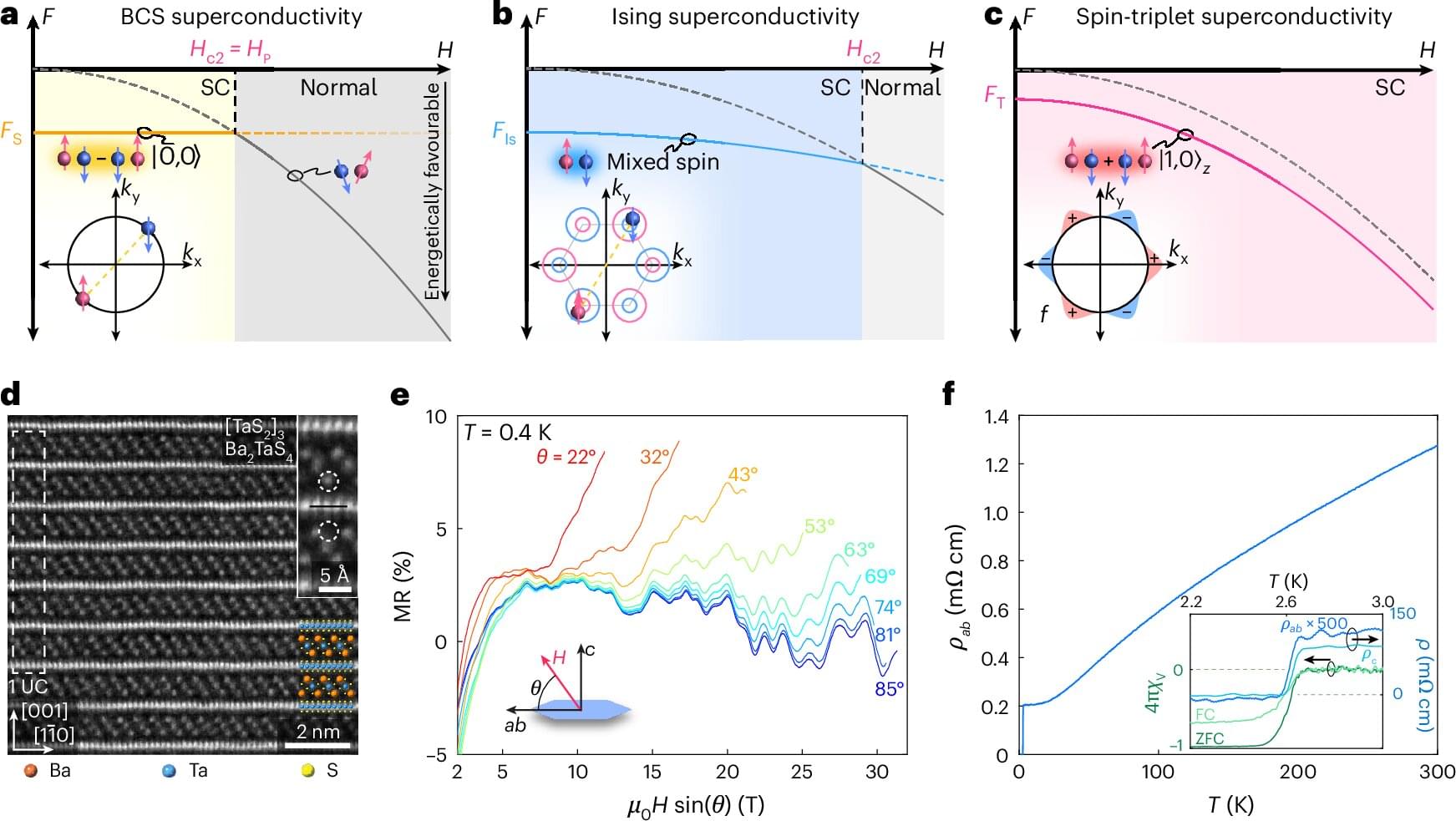
Superconductors, materials that can conduct electricity with a resistance of zero, have proved to be highly promising for the development of quantum technologies, medical imaging devices, particle accelerators and other advanced technologies. These materials can be divided into two broad categories: conventional and unconventional superconductors.
In conventional superconductors, the formation of electron pairs (i.e., Cooper pairs) that underpin superconductivity occurs at low temperatures, prompted by interactions between electrons and lattice vibrations. Unconventional superconductors, on the other hand, typically enter the superconducting phase at higher temperatures.
In unconventional superconductors, the formation of cooper pairs is prompted by other physical phenomena beyond electron-phonon interactions, such as magnetic fluctuations, interactions between electrons or other unknown mechanisms. Electrons in most superconductors form so-called spin-singlet pairs, pairs of electrons with an opposite intrinsic angular momentum (i.e., spin), which have a total spin of zero.
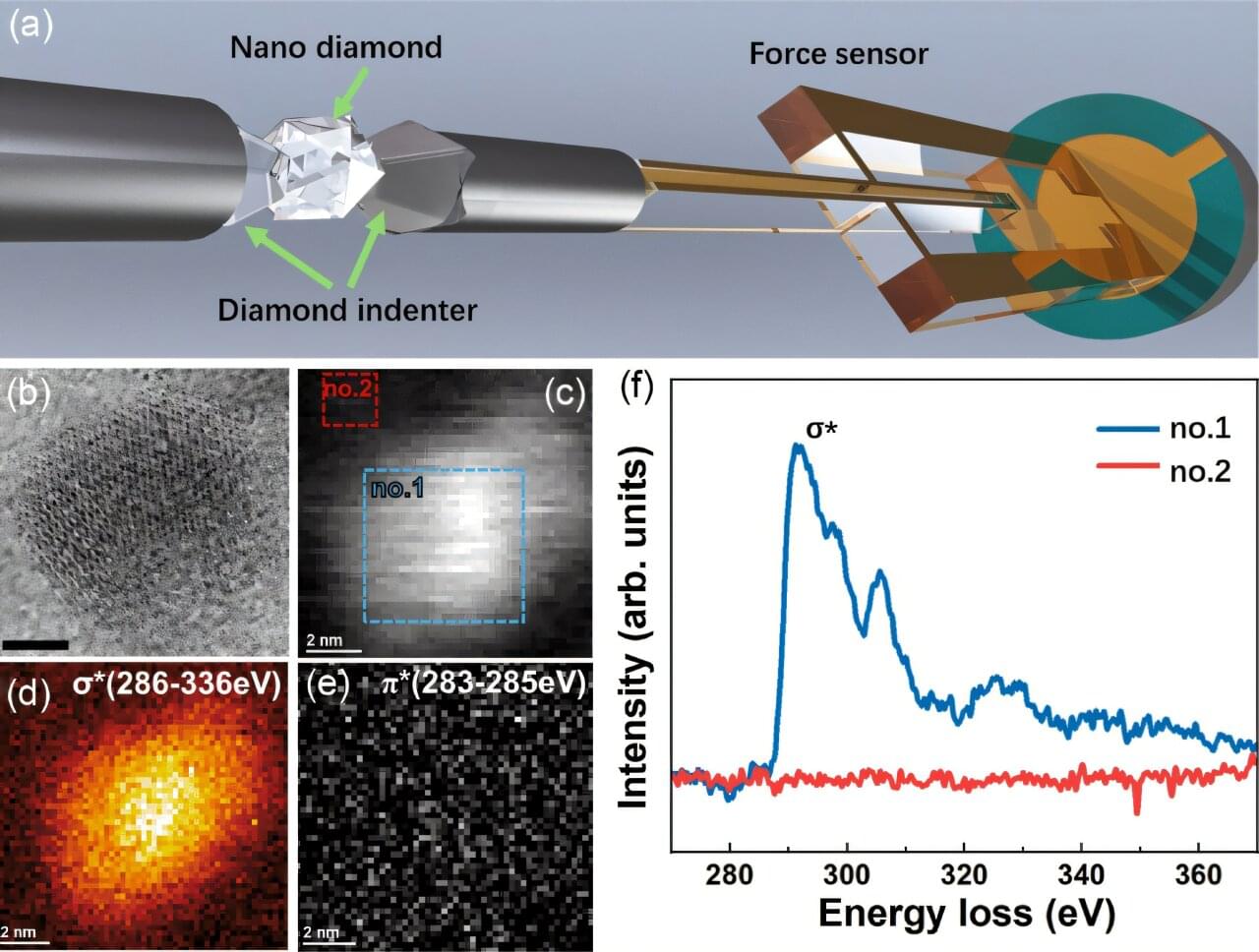
Diamond is among the hardest naturally occurring substances on Earth, but if you shrink it down to the nanoscale, it is surprisingly elastic. And that could be useful for a host of applications such as quantum computing. In a paper published in the journal Physical Review X, Chongxin Shan at Zhengzhou University in China and colleagues studied diamonds as small as four nanometers across to see how they respond to pressure.
Scientists already know that nanodiamonds, which are thousands of times smaller than a grain of sand, can survive being stretched or squeezed in ways that destroy a regular diamond. But nobody knew how.
So the team placed individual nanodiamonds (ranging from 4 to 13 nanometers across) inside a transmission electron microscope between two diamond indenters and compressed them. These were connected to a sensor that measured how strongly each nanodiamond resisted being squeezed while a high-resolution camera imaged diamond atoms as they moved. The researchers backed up their observations with computer simulations.
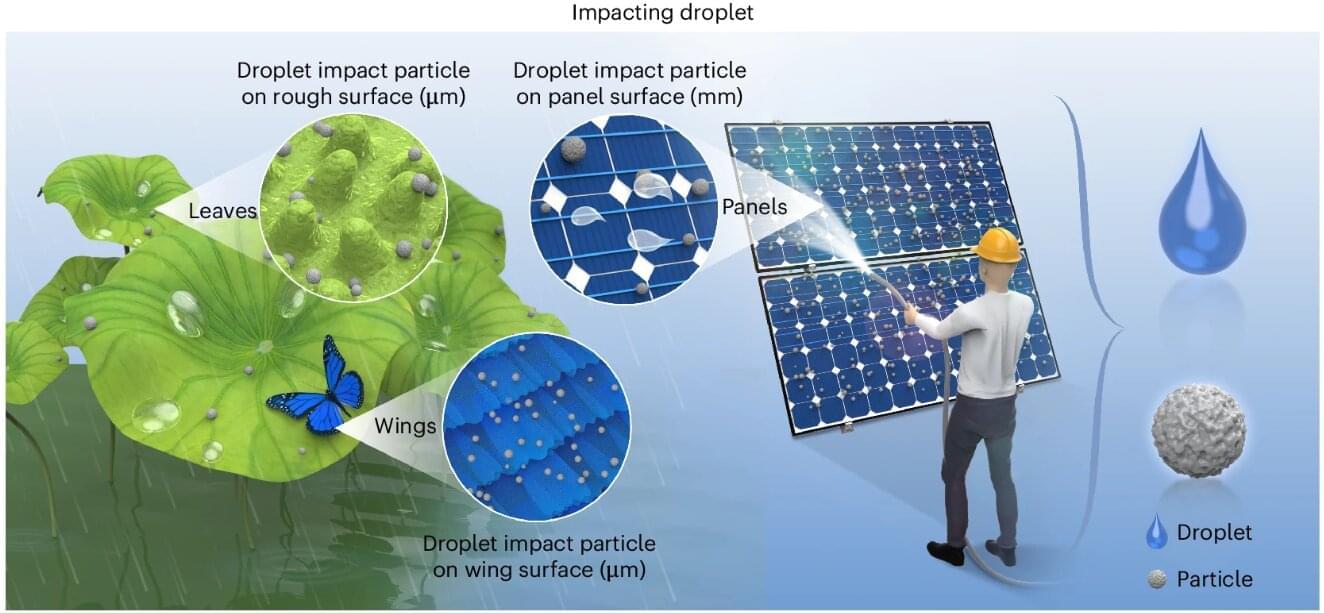
With the rapid expansion of the global solar energy industry, the number of solar panels has surged in recent years. However, pollutants accumulating on panel surfaces can significantly reduce energy conversion efficiency while traditional cleaning methods are highly water-intensive.
In response to this challenge, an international research team led by the Department of Mechanical Engineering at City University of Hong Kong (CityUHK) has successfully developed a breakthrough technology, called “liquid droplet mops,” that uses only a minimal amount of water to effectively remove dust and pollutants from solar panel surfaces, significantly enhancing cleaning efficiency while conserving water.
The study was led by Professor Steven Wang, Associate Vice President (Resources Planning) and Associate Professor in the Department of Mechanical Engineering and the School of Energy and Environment. The project was conducted in collaboration with Professor Omar Matar from the Department of Chemical Engineering at the Imperial College London. The findings are published in Nature Sustainability.

Scientists have found a way to boost terahertz technology using particles thousands of times smaller than a grain of sand. Research published in Scientific Reports by Loughborough University’s Emergent Photonics Research Center shows how a sparse layer of nanoparticles can make materials that produce terahertz radiation more efficient.
Terahertz radiation sits between microwaves and infrared on the electromagnetic spectrum and has a range of potential uses. It can “see” through materials like clothing or plastic and detect chemical fingerprints, with applications in security screening, medical imaging, materials testing, and wireless communications.
But existing devices are limited by how efficiently they can generate terahertz waves.

Using the Canadian Hydrogen Intensity Mapping Experiment (CHIME), an international team of astronomers has performed radio observations of FRB 20220912A—a highly active source of repeating fast radio bursts. Results of the monitoring campaign, published April 10 on the preprint server arXiv, could help us better understand the nature of these enigmatic sources.
Fast radio bursts (FRBs) are intense bursts of radio emission lasting milliseconds showcasing the characteristic dispersion sweep of radio pulsars. The physical nature of these bursts is yet unknown, and astronomers consider a variety of explanations ranging from synchrotron maser emission from young magnetars in supernova remnants to cosmic string cusps.
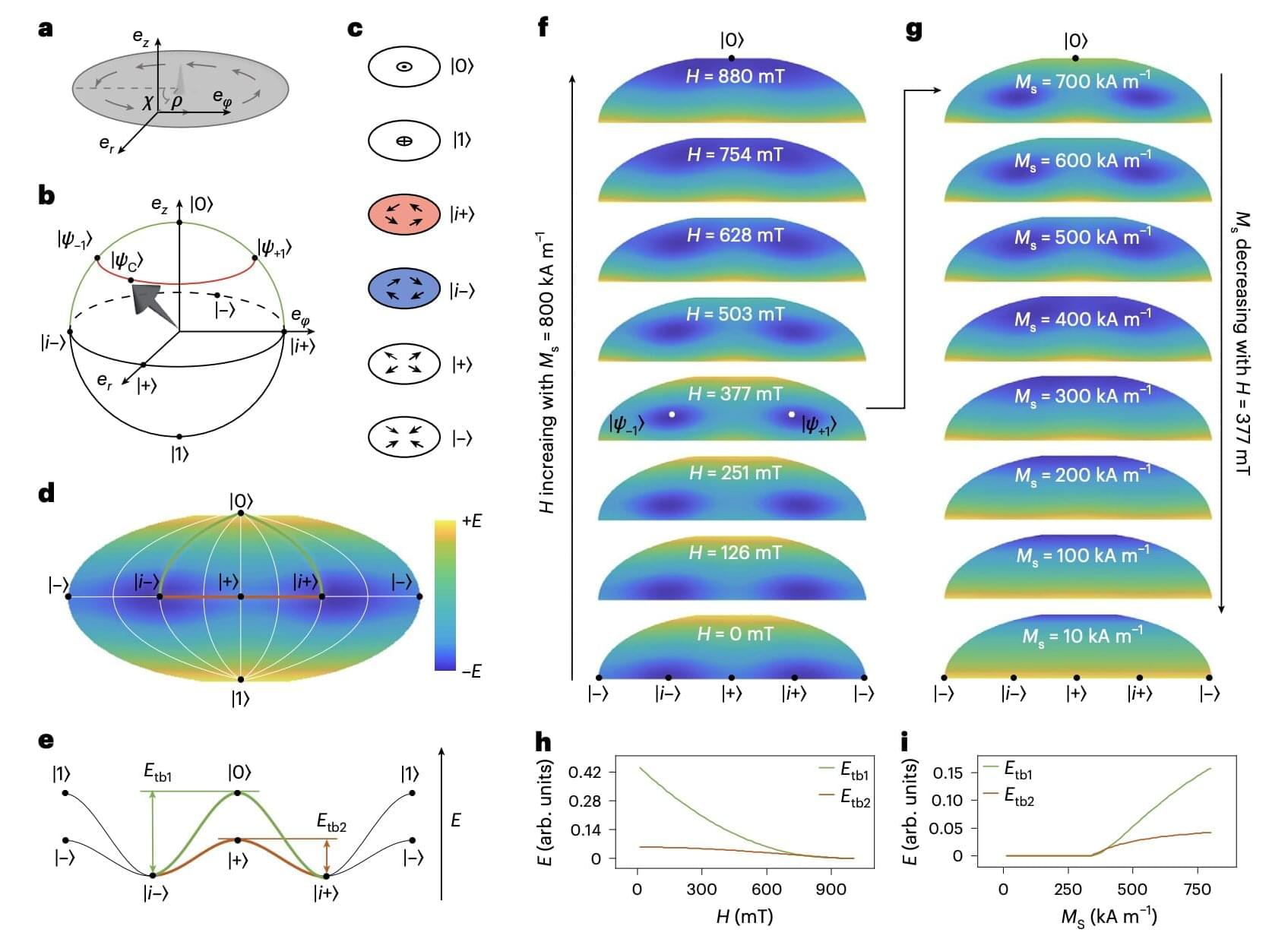
Spintronics are devices that operate leveraging the spin, an intrinsic form of angular momentum, of electrons. The ability to switch magnetic states is central to the functioning of these devices, as it ultimately allows them to represent binary digits (i.e., “0” and “1”) when processing or storing information.
Some of these devices rely on magnetic vortices, nanoscale whirlpool-like patterns of magnetization that influence the alignment of spins. These vortices possess a property known as helicity, which is essentially the direction in which they rotate.
Reliably switching the helicity of magnetic vortices could open new possibilities for both neuromorphic computing systems, devices that mimic the brain’s neural organization, and multi-state memories. So far, however, this has proved challenging, mainly because it requires a synchronized wave-like rotation of spins without disrupting the geometric structure of vortices.
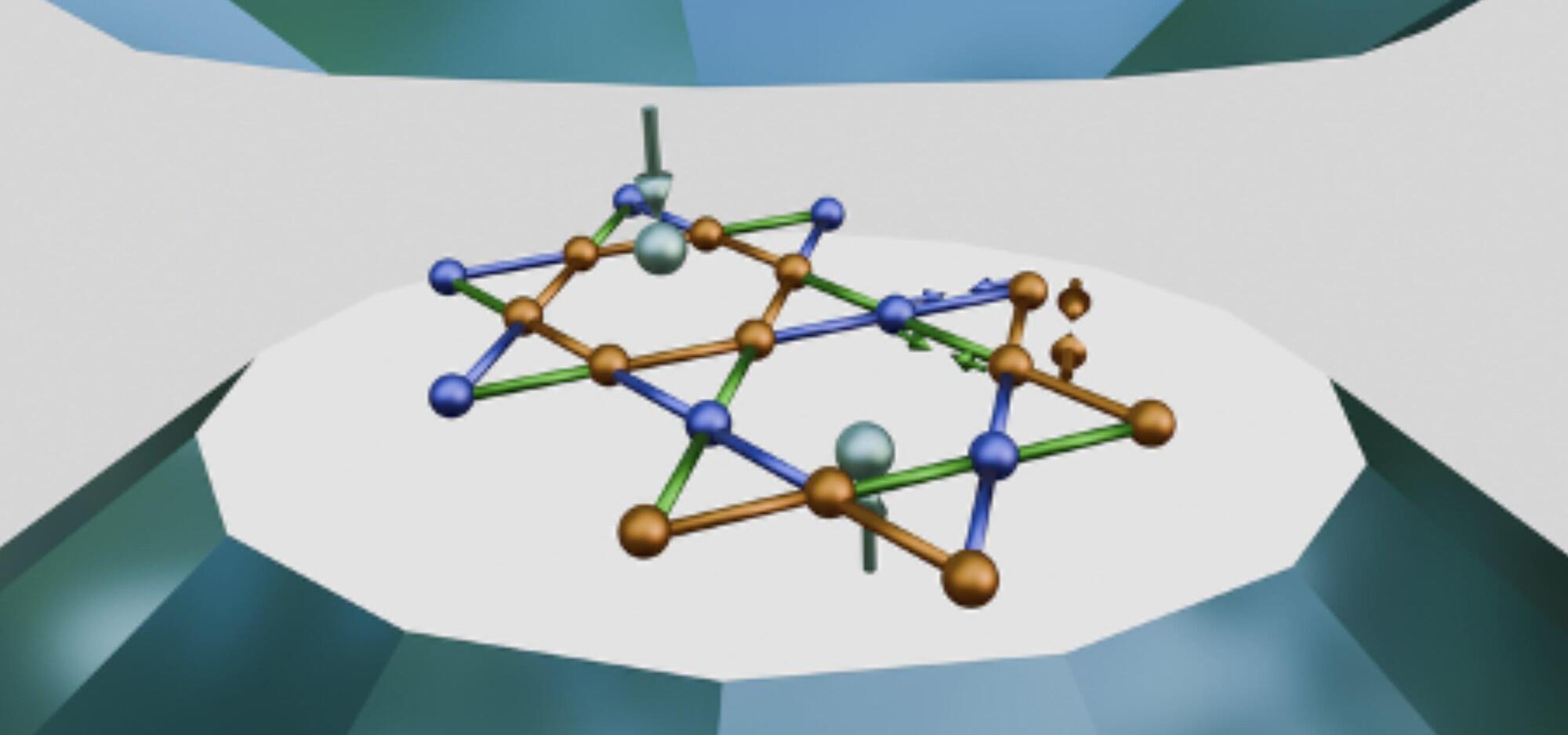
A quantum spin liquid is a phase of matter in which the magnetic moments in a material do not align or freeze, even at temperatures close to absolute zero (i.e., at 0 K). The experimental realization of this highly dynamic state could have important implications for the development of quantum computers and other technologies that operate leveraging quantum mechanical effects.
Previous studies have collected evidence that a quantum spin liquid phase emerges in various materials, including herbertsmithite, α-RuCl3, and EtMe3Sb[Pd(dmit)2]2. However, so far none of these materials have been conclusively confirmed to host this state.
Researchers at University Paris-Saclay-CNRS, University of Stuttgart and other institutes in Europe gathered evidence of quantum spin liquid-like behavior in a recently discovered material called Y-kapellasite. Their paper, published in Physical Review Letters, shows that this material is a promising experimental platform for studying exotic states of matter, particularly those driven by quantum magnetism.
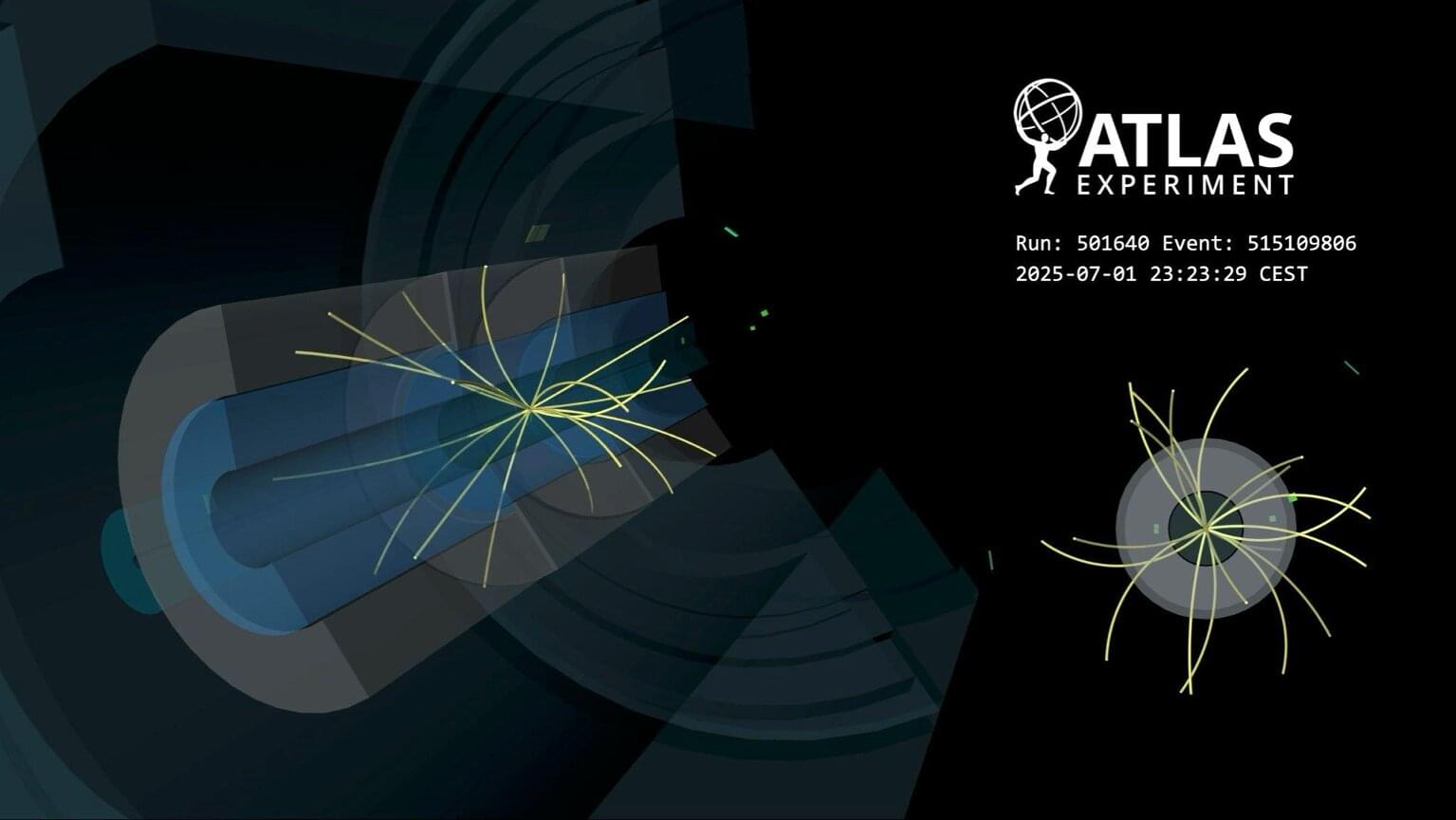
Tens of kilometers above Earth’s surface, high-energy particles from outer space constantly strike the atmosphere, creating showers of energetic secondary particles that rain down from the sky. Approximately one of these particles passes through your head every second, but the “cosmic rays” that produce them are still not fully understood. In a recent paper posted to the arXiv preprint server, the ATLAS Collaboration describes how its first measurement of proton–oxygen collisions at the LHC could help us learn more about them.
Cosmic rays were discovered over a century ago by physicist Victor Hess in experiments conducted aboard hot-air balloons. Today, astrophysicists use detectors on the ground to image cosmic-ray showers and computer simulations of the showers to understand that data.
However, these simulations depend on properties of the strong force—one of the fundamental forces of the universe—which is difficult to accurately model. Current simulations disagree with one another, making it difficult for astrophysicists to interpret their measurements of cosmic rays.