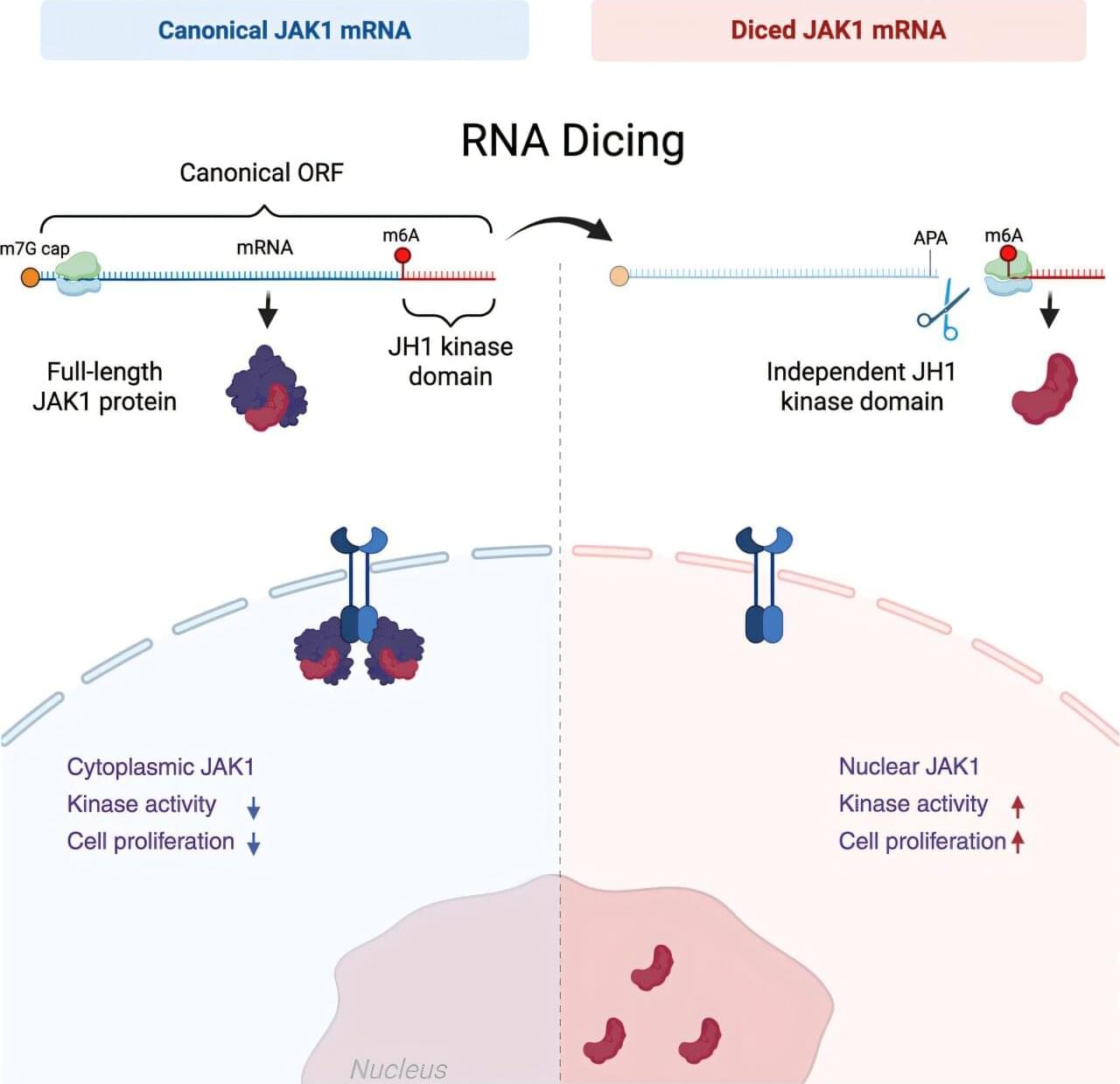
Scientists have uncovered an unexpected way cells can generate cancer-driving proteins—by cutting RNA into shorter, functional fragments rather than following the standard blueprint. This process, newly termed as “RNA dicing,” enables the production of a truncated form of the JAK1 protein that remains highly active and can promote tumor growth, particularly when normal gene function is disrupted.
The finding challenges conventional views of how genetic information is translated and points to a previously unrecognized mechanism that could influence cancer progression and response to targeted therapies.
The process by which cells turn genes into proteins has long been understood as precise and tightly controlled. But new research shows that cells can unexpectedly cut RNA into shorter fragments that still produce functional proteins, sometimes with harmful consequences.