Low levels of replicating Epstein-Barr viruses might be the main driver of the autoimmune condition multiple sclerosis. This may mean that targeting them would be as effective as suppressing the immune system, with fewer side effects
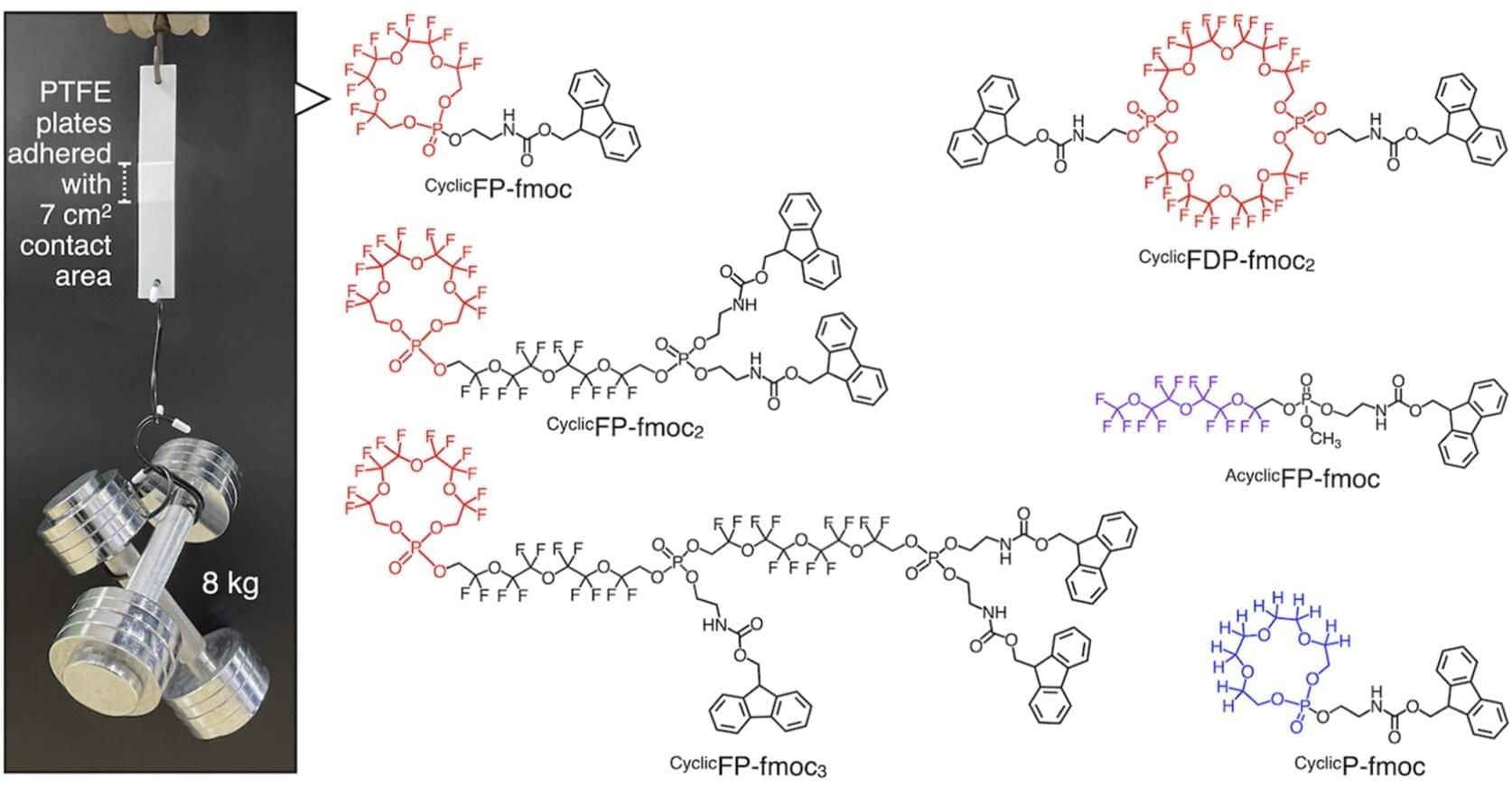
In a research lab at the University of Tokyo, scientists have developed a new kind of glue. It’s incredibly strong and highly stretchable, yet it washes away completely with a little alcohol.
Materials scientists have long been on the hunt for a strong glue that is also easily removable. The reason is that when it comes to adhesive strength and flexibility, there is often a trade-off. Although strong glues have an incredible grip, they are often brittle and difficult to remove without leaving residue. Weak glues, on the other hand, are easy to remove, but they aren’t strong enough for demanding jobs.
This new glue is so strong that it can even bond to nonstick surfaces like Teflon, but all it takes is a little washing with ethanol to completely remove it without leaving any residue.
Welcome to functional immortality, folks.
I say functional rather than absolute because no one will ever REALLY live FOREVER. Even if we can reverse aging and become immune to all diseases (which is exactly what is happening right now even as I write this) there will still be accidents, suicides, wars, and murders. — Still…a BILLION years would be enough for me.
What about you?
A new study reveals that mature cells retain the ability to transform into stem cells after injury. The regenerative process, driven by macrophages, may offer new strategies for repairing damaged tissues.
This video breaks down exactly how China went from launching a national smart hospital initiative back in 2014 to deploying AI inside over three hundred hospitals by 2025, and eventually opening the world’s first fully integrated AI hospital in March 2026. You’ll see how AI triage systems, robotic pharmacies, and real-time diagnostic assistants are changing what a hospital visit actually looks like, and how this compares to healthcare systems elsewhere that are still struggling with weeks-long appointment waits and fax machines. Whether you find this exciting or concerning, this is a story about where healthcare technology is headed next, and it’s already happening.
A micro-drone designed to locate and eradicate mosquitoes has passed an important milestone. Tornyol Systems shared a video where the eponymous autonomous drone chalked up its first live air-to-air kill. For some reason (perhaps demonstration visibility), the 40g (1.4 ounce) drone’s first confirmed kill on video features a moth. Tornyol boldly claims that the demo shows a significant stride has been made “towards completely eradicating mosquitoes.”
Tornyol Systems co-founder Alex Toussaint shared the above Tweet, congratulating the engineering team that has worked alongside him on the project. On the company website, there is a mosquito-hostile manifesto laid out, which provides insight into the company’s primary drone development goal.
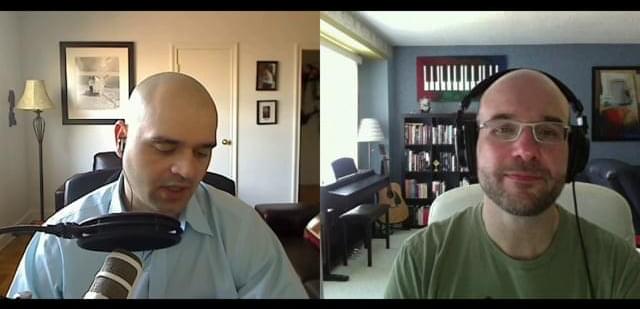
Fourteen years ago, I sat down with George Dvorsky for almost 1 hour and 40 minutes. We argued about everything: transhumanism and the paleo diet, animal uplift and non-human person rights, mass extinction, SETI, and whether alien intelligence would be friendly or hostile.
One quote from that conversation has stayed with me ever since. Robert A. Heinlein:
“A human being should be able to change a diaper, plan an invasion, butcher a hog, conn a ship, design a building, write a sonnet, balance accounts, build a wall, set a bone, comfort the dying, take orders, give orders, cooperate, act alone, solve equations, analyze a new problem, pitch manure, program a computer, cook a tasty meal, fight efficiently, die gallantly. Specialization is for insects.”
In 2012, that sounded like a provocation. In 2026, in the age of AI, it sounds like a survival strategy. When machines out-specialize us at everything, what is left for humans? Perhaps precisely this: to be generalists. To be whole.
Was George right then? Is Heinlein right now?
Watch the full interview and judge for yourself: [ https://snglrty.co/4pU2ZtQ](https://snglrty.co/4pU2ZtQ)
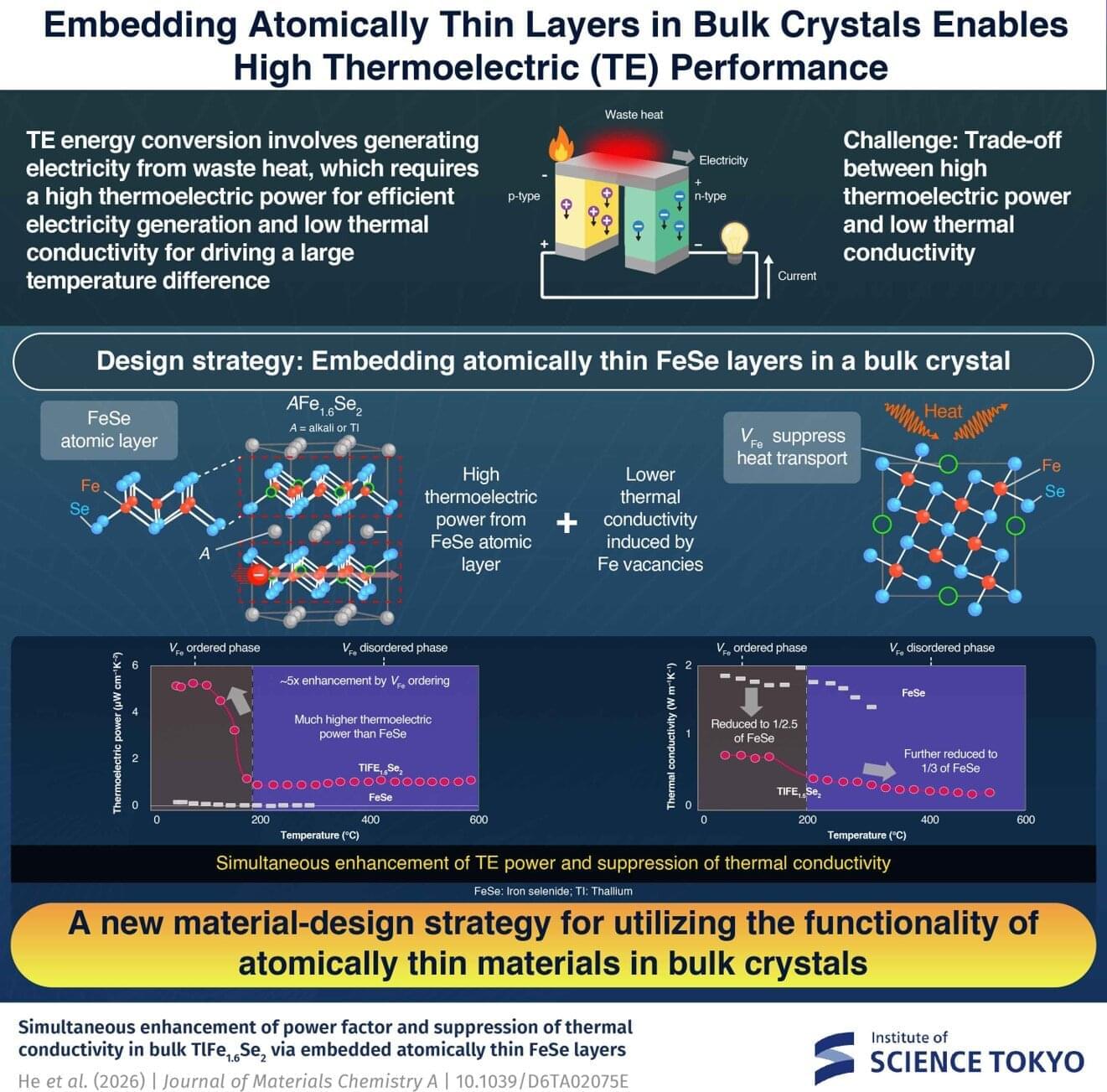
Developing thermoelectric materials that efficiently convert waste heat into electricity remains challenging because high electrical performance and low thermal conductivity are difficult to achieve simultaneously. Researchers at Science Tokyo developed a layered crystal, TlFe1.6 Se2, that embeds atomically thin iron selenide (FeSe) layers within a bulk material. The crystal combines a high thermoelectric power factor with exceptionally low thermal conductivity, demonstrating a promising strategy for designing next-generation materials for waste heat energy recovery.
Thermoelectric technology, which converts waste heat from factories, automobiles and power plants into electricity, is expected to play an important role in building a carbon-neutral society. In thermoelectric power generation, electricity is produced using a temperature difference across a material.
To achieve high power generation performance, materials must efficiently convert heat into electrical power while maintaining the temperature difference that drives power generation. However, these two requirements are generally difficult to satisfy simultaneously. Establishing new material design strategies that combine high thermoelectric performance with low thermal conductivity has therefore been a major challenge.
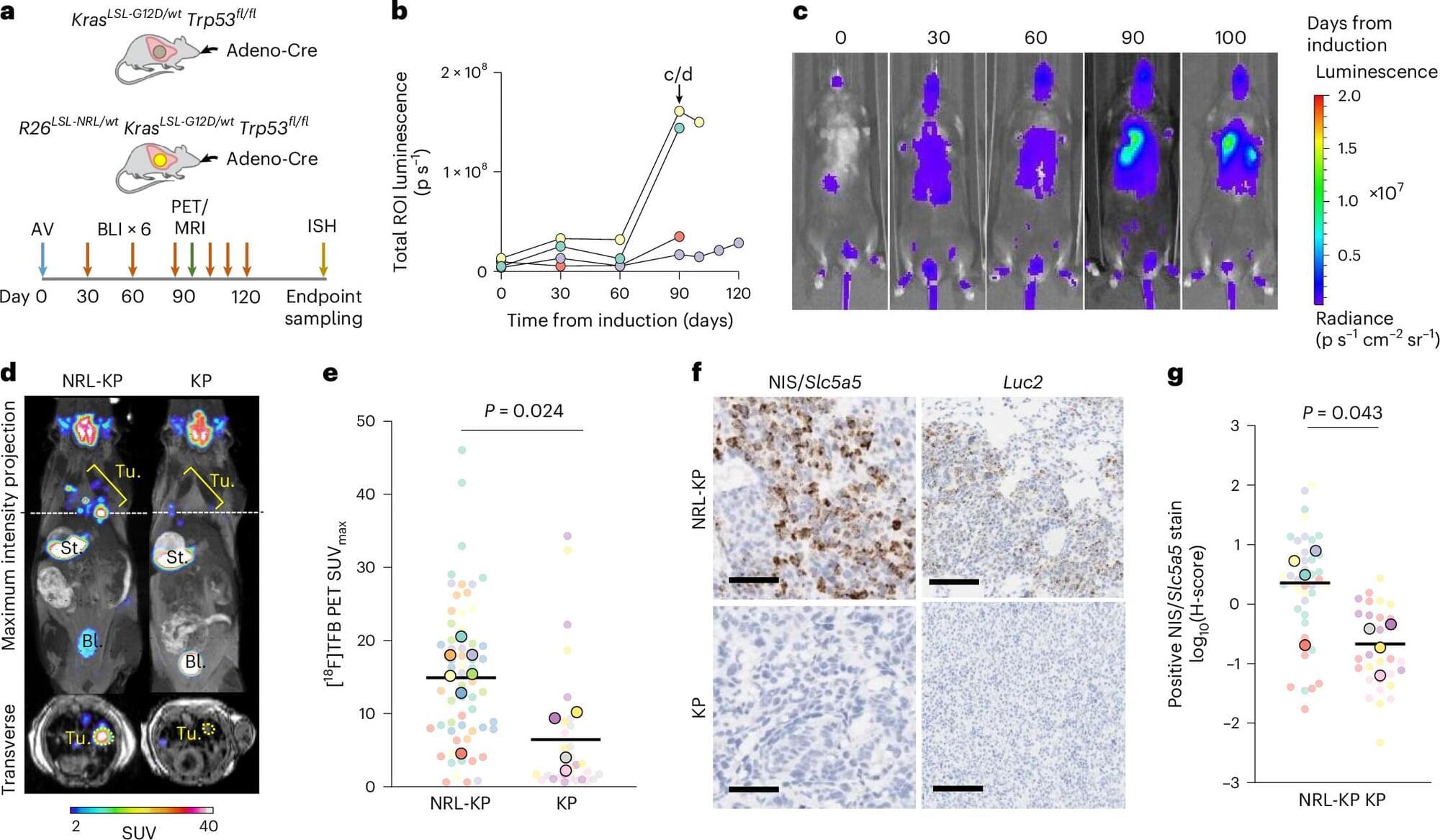
One of the biggest challenges in cancer research has been linking the “big picture” seen in medical scans with the microscopic biology that drives tumor growth and dictates how patients respond to treatment. Now, by combining multiple imaging techniques (PET scans, bioluminescence and fluorescence), scientists can detect tumors across the whole body simultaneously, pinpoint key targets and then examine those tumors in detail, including the surrounding cells and tissue.
Study lead Professor David Lewis of the Cancer Research UK Scotland Institute and University of Glasgow said, This exciting technology allows us to build a clearer map of how cancer behaves at both a holistic and microscopic level.
It allows researchers to follow tumors in the body, identify the lesions that matter and then zoom in to study those cancer cells and their environment, giving us new information about cancer that we can take forward into better and more precise treatments.