
Toggle light / dark theme

Get the latest international news and world events from around the world.

Log in for authorized contributors

Scientists Uncover New Clues Behind the “Suicide Headache” Mystery

Cluster headache causes extreme pain, but its origins remain unclear. New research links the disorder to genetics, inflammation, and tobacco smoke exposure.

Unlike an ordinary headache, a cluster attack typically erupts without warning and causes excruciating pain around one eye. Episodes can last from 15 minutes to three hours and often return at similar times each day. The severity of the condition has led to its troubling nickname, the “suicide headache.”

Scientists have long suspected that both genes and environmental exposures contribute to cluster headaches. Two studies from Karolinska Institutet in Sweden have now examined those influences from different angles, revealing signs of inflammation, altered gene regulation, and increased exposure to toxic substances.
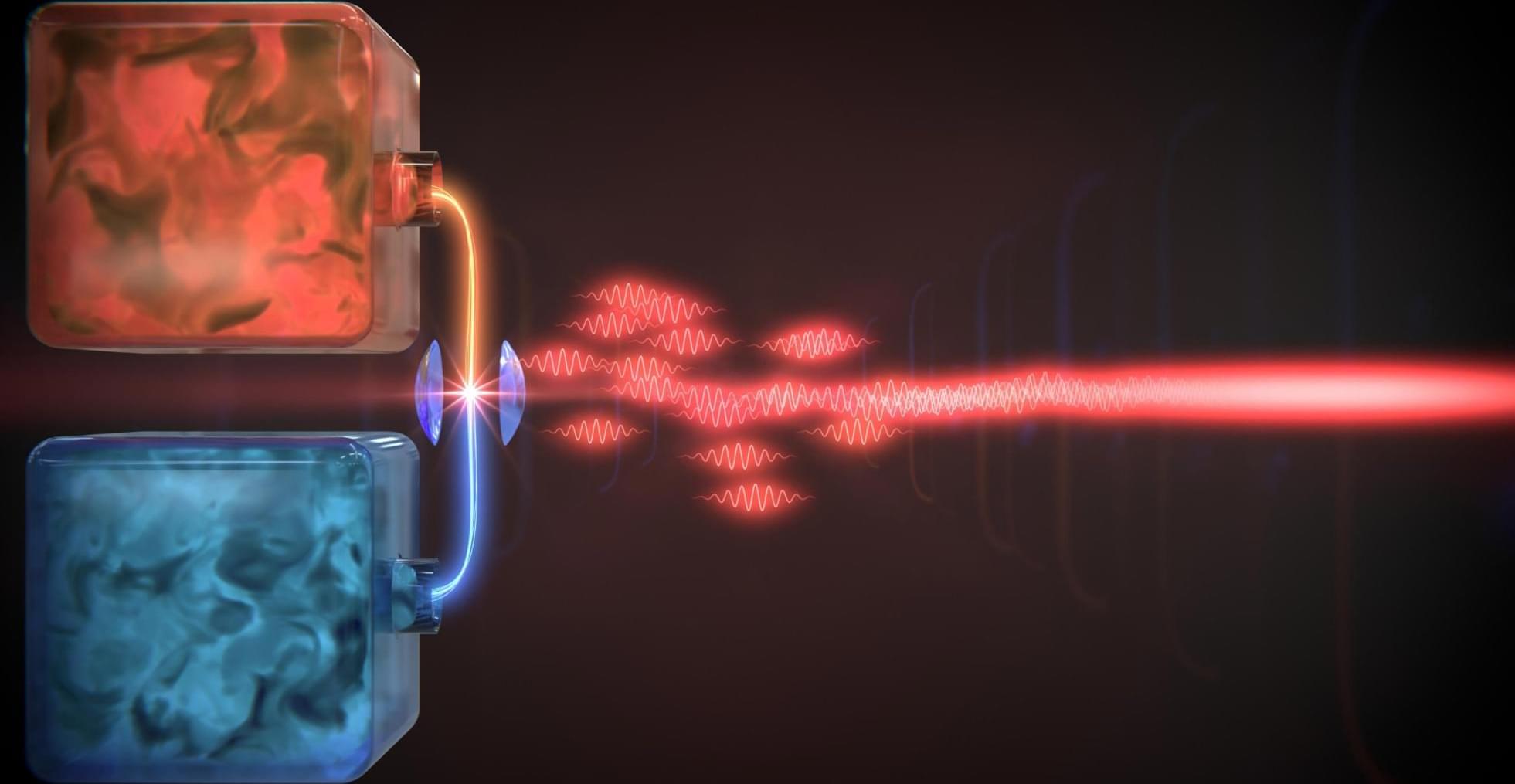
Physicists Find Useful Energy Hiding in Quantum “Waste Heat”

A new theoretical approach helps connect quantum physics with classical thermodynamics by clarifying what counts as heat and useful work in tiny quantum machines.

When a machine is reduced to a single atom and particles of light, even basic concepts such as heat and useful work become difficult to define. This problem sits at the intersection of thermodynamics and quantum physics, and researchers at the University of Basel in Switzerland have developed a theoretical framework that brings the two descriptions into agreement.

Thermodynamics and quantum physics emerged to explain very different scales of nature. Thermodynamics took shape in the 19th century to describe machines such as steam engines, while quantum physics arose in the early 20th century to explain atoms and subatomic particles. Modern quantum technologies now bring those worlds together because tiny systems built from atoms and light particles (photons) can absorb, transform, and release energy, effectively operating as miniature quantum machines.

Largest-Ever Physics Survey Raises New Doubts About Our Model of the Universe

Physicists around the world remain deeply divided on key mysteries of the universe, from dark matter to quantum gravity. The standard cosmological model failed to gain majority support, and no leading theory dominated the survey results.

The largest survey ever conducted among physicists worldwide reveals surprisingly little agreement on some of the field’s biggest mysteries, including black holes, dark matter, and the unresolved effort to unite Einstein’s theory of gravity with quantum mechanics.

Even the leading explanation for how the universe expands, known as ΛCDM (Lambda Cold Dark Matter), failed to win majority support. One reason may be findings from the Dark Energy Spectroscopic Instrument (DESI) last year, which suggested dark energy could change over time, challenging the standard model’s assumption that it remains constant.

Scientists Discover the 7 Stages a Meteoroid Goes Through Before Hitting Earth

An analysis of 75 meteorite falls identified seven distinct processes that occur as space rocks melt, break apart, and slow down before reaching the ground.

A space rock entering Earth’s atmosphere does far more than simply “burn up.” By examining 75 meteorite falls recorded in videos and photographs, researchers identified seven distinct stages that shape the transformation from incoming space rock to meteorite.

Their results show that melting and fragmentation, rather than evaporation alone, determine how these objects shed mass, lose speed, and eventually reach the ground. The findings were published in Meteoritics & Planetary Science.

Hackers breach F5 BIG-IP APM devices to deploy Linux rootkit

A Linux rootkit targeting devices in F5 BIG-IP APM environments can intercept PHP file loading and inject a fileless web shell directly into memory, avoiding the need to write malicious code to disk.

The malware shows signs of being a second-stage payload that was likely deployed after exploiting CVE-2025–53521, a critical remote code execution (RCE) flaw that F5 Networks reclassified from a DoS problem in March.

Sophos researchers analyzed a sample and noted that, while it enables “on-demand server-side code execution” typically associated with webshells, it achieves this through “deeper Linux-and Apache-specific tradecraft.”