Toggle light / dark theme

Get the latest international news and world events from around the world.

Log in for authorized contributors

First PLP-dependent enzyme that influences bacterial protein production discovered

Researchers from the Singapore-MIT Alliance for Research & Technology’s (SMART) Antimicrobial Resistance (AMR) interdisciplinary research group, alongside collaborators from Massachusetts Institute of Technology (MIT), Nanyang Technological University (NTU Singapore), and institutions in the United States, Poland and France, have discovered aminovaleramididine synthetase (AvaS), the first identified pyridoxal phosphate (PLP)-dependent enzyme responsible for producing a chemical modification linked to how bacteria respond to metabolic stress.

This fundamental discovery sheds new light on how bacteria use RNA modification to control protein production, opening new avenues to study bacterial adaptation and identify future targets for antimicrobial therapeutics.

Antimicrobial resistance is one of the most pressing global health and development challenges of our time. Bacteria and other pathogens are rapidly developing resistance to existing treatments, making infections harder to treat. Without new approaches, minor inconveniences today, such as routine surgeries or even a paper cut, could become life-threatening tomorrow.

4.6-Billion-Year-Old Meteorite Reveals a Surprisingly Strong Primordial Magnetic Field

Ancient meteorite minerals reveal a surprisingly strong magnetic field from the solar system’s first 200,000 years.

About 4.6 billion years ago, before the Sun and planets existed in their familiar forms, the solar system was a vast cloud of gas and dust. Within a few million years, this “solar nebula” collapsed and flattened into a disk, setting the stage for matter to gather into the Sun and the planets that orbit it.

Gravity has long been considered the main force behind this transformation. New evidence from some of the oldest known meteorite material, however, suggests that magnetism was also involved.

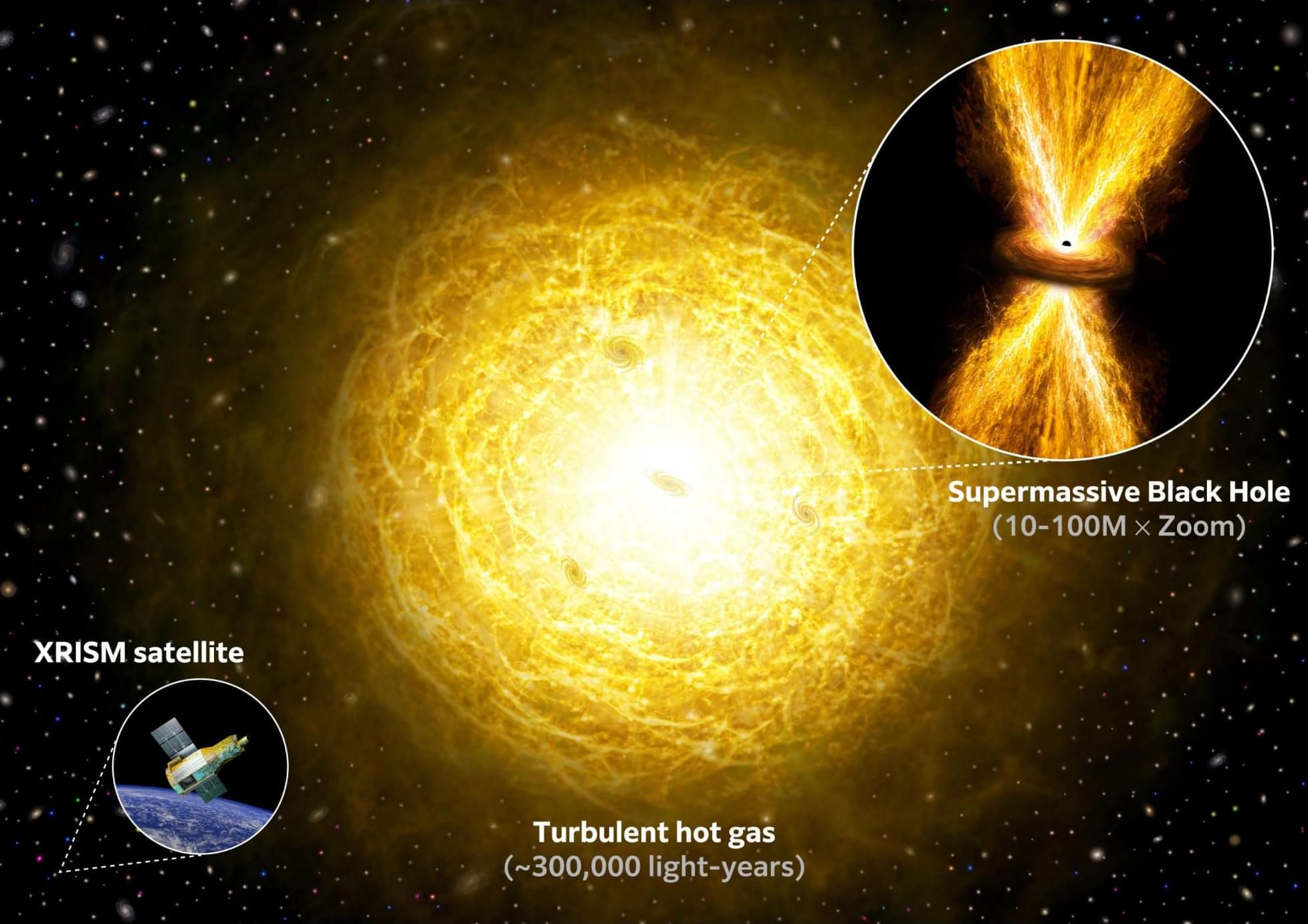
Black Hole Winds Are 100 Times More Powerful Than Astronomers Thought

Astronomers once thought winds generated by supermassive black holes affected only their host galaxies, but a recent study found that their energy can also reach surrounding galaxies.

Winds from a supermassive black hole can carry energy far beyond the galaxy that contains it. New observations show that this influence can extend roughly 300,000 light-years and involve about 100 times more energy than previous estimates, challenging the idea that such winds are largely confined to their host galaxies.

“Black holes are largely known for sucking matter in, but they also eject gas in the form of powerful winds,” says Satoshi Yamada, assistant professor at Tohoku University’s Frontier Institute for Interdisciplinary Sciences (FRIS). “These winds were thought to be contained within the galaxy, but our study revealed that the force is immensely more powerful than previously understood.”

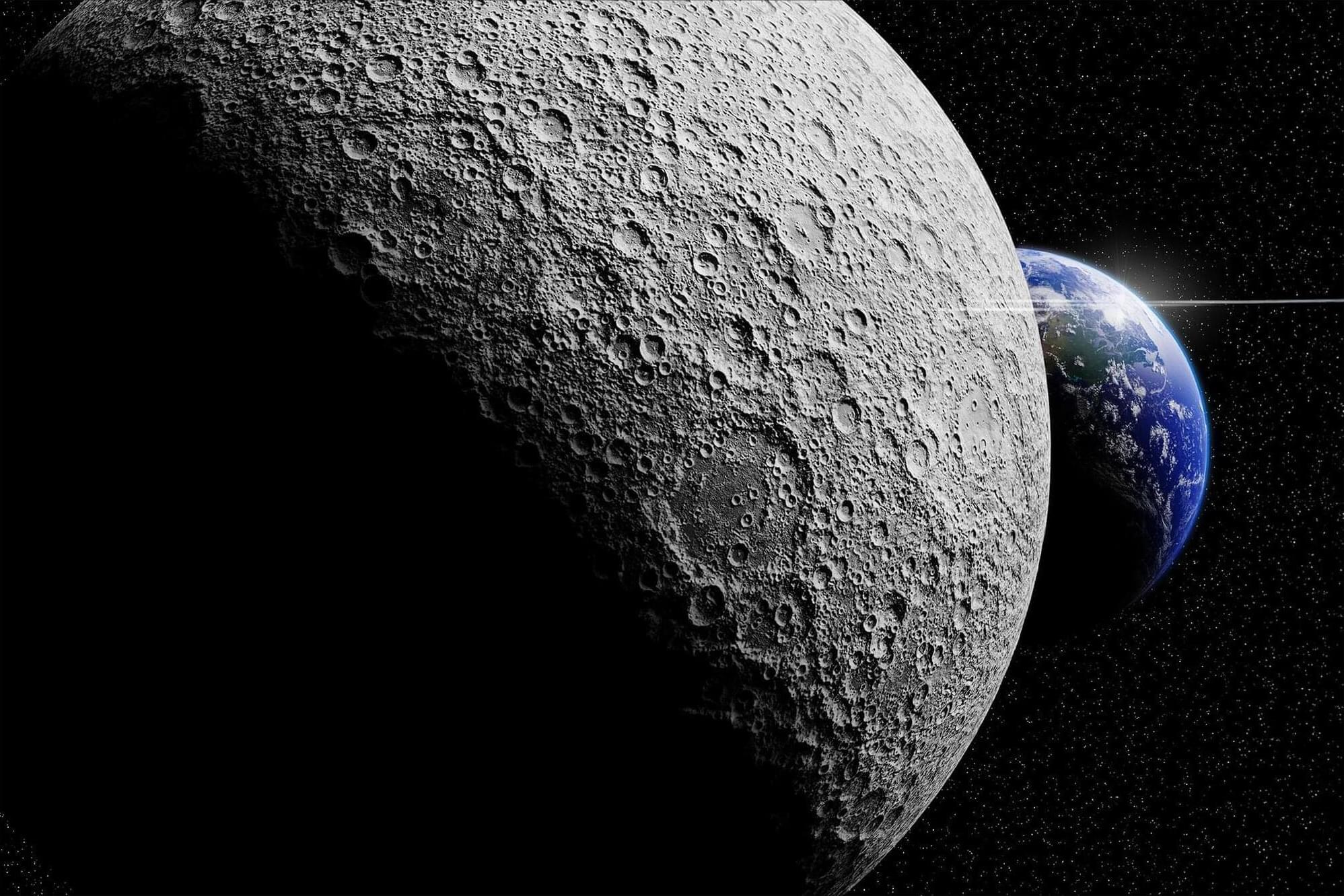
Scientists May Have Cracked the Mystery of the Moon’s Unequal Hemispheres

Chang’e-6 samples suggest the Moon’s two very different sides may have formed when uneven heating drove magma from one hemisphere to the other.

The Moon presents two dramatically different faces. Its Earth-facing hemisphere is rich in dark volcanic plains, while the farside is dominated by older highlands and a much thicker crust. New analyses of material returned by Chang’e-6 (CE6) suggest that this contrast may trace back to enormous flows within the Moon’s early magma ocean after it became tidally locked to Earth.

Led by Professor Hejiu Hui of Nanjing University, the research team carried out detailed geochemical analyses of anorthosites, Mg-suite rocks, and mare basalts collected from the lunar farside. They then compared those samples with material from the nearside returned by the Apollo and Chang’e-5 missions.

Anthropic detecta usos de Claude para planificar “guerras cognitivas” y posibles armas biológicas

El documento, compartido a través del blog de Anthropic, aumenta las preocupaciones sobre las capacidades de los sistemas de IA para ocasionar la desaparición de la humanidad. “A medida que los modelos se vuelven más capaces, sus riesgos aumentarán, a menos que los desarrolladores de IA y quienes defienden a la sociedad tomen medidas para hacerlos más seguros”, subrayó la compañía.

Durante el periodo de evaluación, Anthropic identificó cinco casos de actores que utilizaron sus modelos de maneras que podrían impulsar el desarrollo de armas biológicas. Según la empresa, esta podría ser la primera vez que una compañía privada de IA o de otro tipo comparte públicamente el posible uso indebido de sus productos para este fin.

Extremely Massive Galaxy ProtoSupercluster Smashes Distance Records to a ‘clusterofclusters’ of galaxies has a mass 5000 times that of the Milky Way and lies in one of the densest regions of the cosmic web ever observed

An international team of astronomers has discovered the most distant progenitor to a galaxy supercluster ever. The discovery supports existing theories of how galaxy clusters evolve, and reveals how they are connected to the larger cosmic web. The study relies largely on data from the ODIN survey, conducted with the U.S. Department of Energy-fabricated Dark Energy Camera on the U.S. National Science Foundation Víctor M. Blanco 4-meter Telescope in Chile.

Galaxy clusters are the most massive gravitationally bound structures in the Universe. These colossal groupings of hundreds to thousands of galaxies span millions of light-years. They are held together by large concentrations of dark matter, which serves as the building block for the larger structure of the Universe.

Clusters that scientists observe relatively near to us in space and time are mature structures that evolved from what are known as ‘protoclusters.’ These protoclusters are enormous, loosely bound collections of galaxies that are in the process of merging together but have yet to settle into a stable cluster. By studying very distant protoclusters that formed when the Universe was relatively young, scientists can understand how modern galaxy clusters grew and evolved over time.

PaperCut Attacker Uses Hundreds of AI Agents to Compromise 440+ Instances

A suspected Russian-speaking cyber actor has been attributed to the use of artificial intelligence (AI) to devise exploits targeting a recently disclosed pair of security flaws in PaperCut NG/MF and break into hundreds of instances.

According to independent reports from Blackpoint Cyber and GreyNoise, the activity originates from “45.142.193[.]132,” an IP address that has been linked to unauthorized port scanning and brute-force attack attempts in recent weeks. It’s worth noting the same IP address was also flagged by Arctic Wolf in connection with the exploitation activity last week.

“At this time, we cannot confirm the exact end goal of this campaign,” Nevan Beal, principal MDR analyst at Blackpoint, told The Hacker News. “The threat actor’s methodology is consistent with initial-access activity, but we do not yet have sufficient evidence to confirm whether they are operating as an initial access broker.”