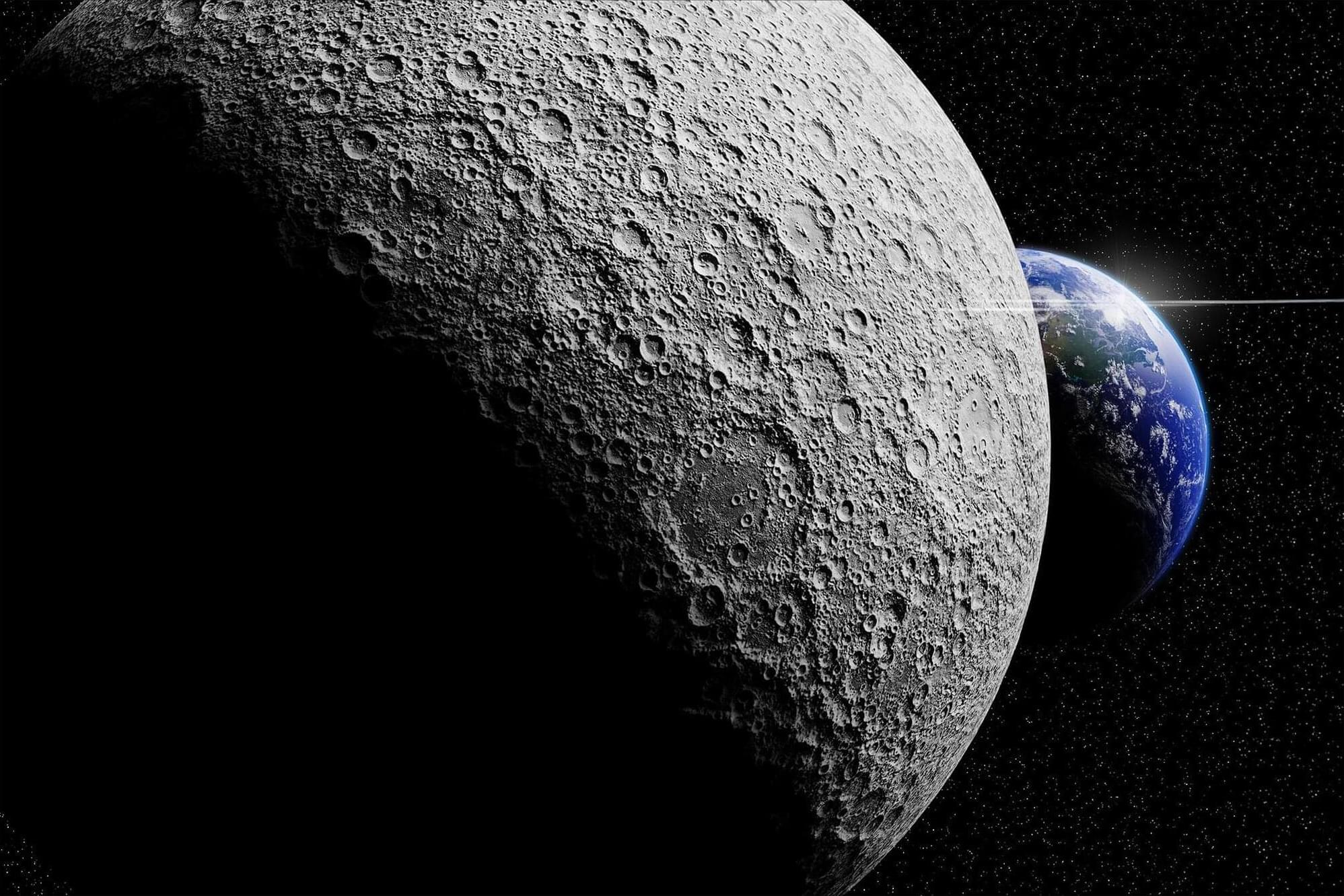
Chang’e-6 samples suggest the Moon’s two very different sides may have formed when uneven heating drove magma from one hemisphere to the other.
The Moon presents two dramatically different faces. Its Earth-facing hemisphere is rich in dark volcanic plains, while the farside is dominated by older highlands and a much thicker crust. New analyses of material returned by Chang’e-6 (CE6) suggest that this contrast may trace back to enormous flows within the Moon’s early magma ocean after it became tidally locked to Earth.
Led by Professor Hejiu Hui of Nanjing University, the research team carried out detailed geochemical analyses of anorthosites, Mg-suite rocks, and mare basalts collected from the lunar farside. They then compared those samples with material from the nearside returned by the Apollo and Chang’e-5 missions.