Toggle light / dark theme

Get the latest international news and world events from around the world.

Log in for authorized contributors

Bringing it all into focus—computational microscope captures 25.2 billion pixels per second across a wide field of view

When designing microscopes, optical engineers have long faced a trade-off between speed, field of view and resolution. But improving one of these properties typically comes at the expense of another. Now, a UC Berkeley–led team of researchers has found a way to address this challenge, opening the door to new possibilities in the field of microscopy.

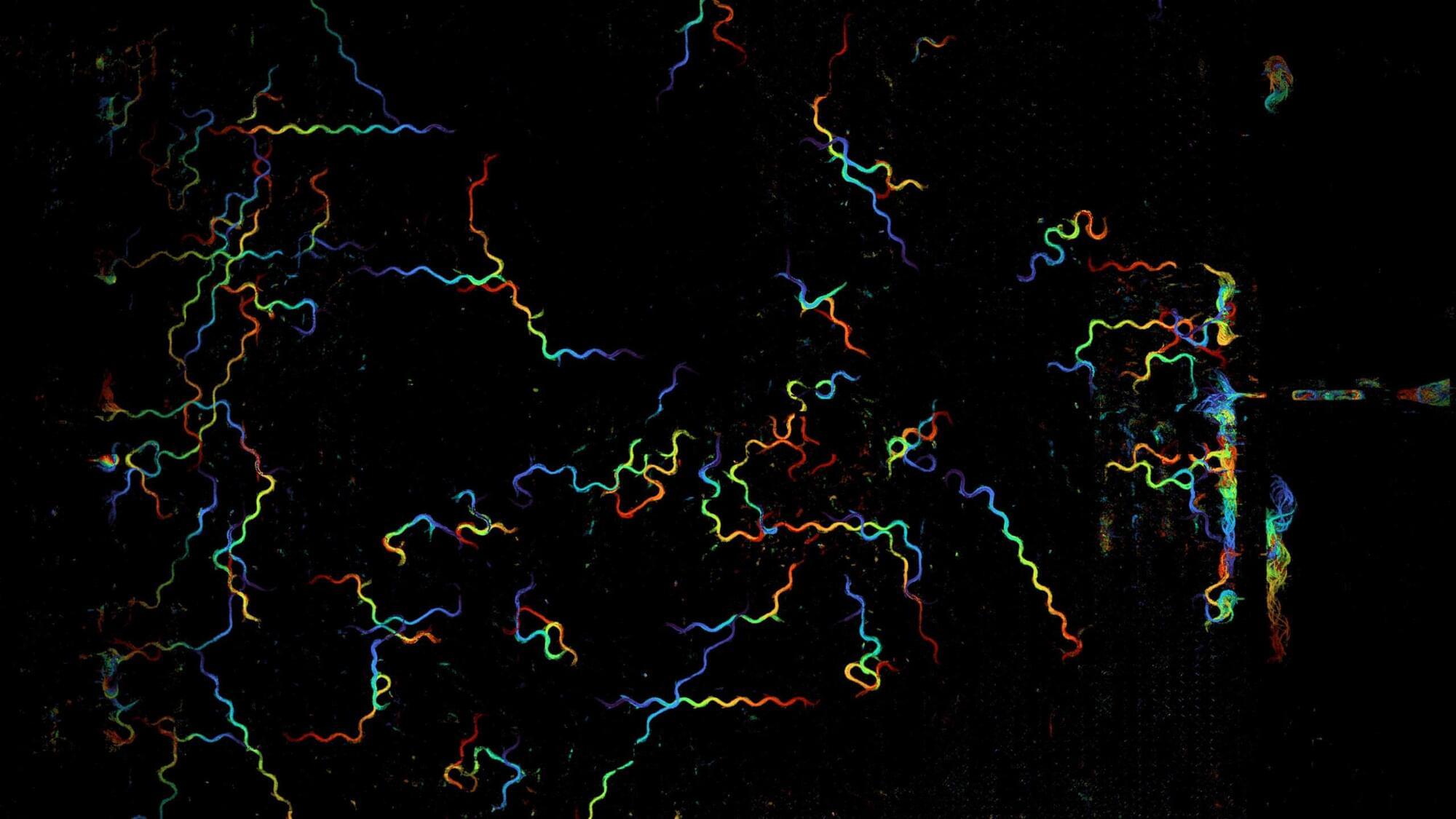
In a study published in Nature Photonics, researchers designed a computational microscope capable of capturing micron-scale resolution across multi-centimeter areas at faster-than-video rates. Using an array of 48 camera sensors and computational imaging “tricks,” their new microscope was able to capture videos at a rate of 25.2 billion pixels per second—an unprecedented combination of highly detailed magnification, wide field of view and high-speed imaging.

“This is really a breakthrough in the field of computational microscopy,” said Laura Waller, professor of electrical engineering and computer sciences and the study’s principal investigator. “With our microscope, we were able to achieve 3-micron resolution across 5 square centimeters at 120 frames per second, which isn’t possible with traditional ways. It’s the largest space-bandwidth time product of any practical microscope we know of.”
Key principle to boost efficiency of artificial photosynthesis and next-generation semiconductors

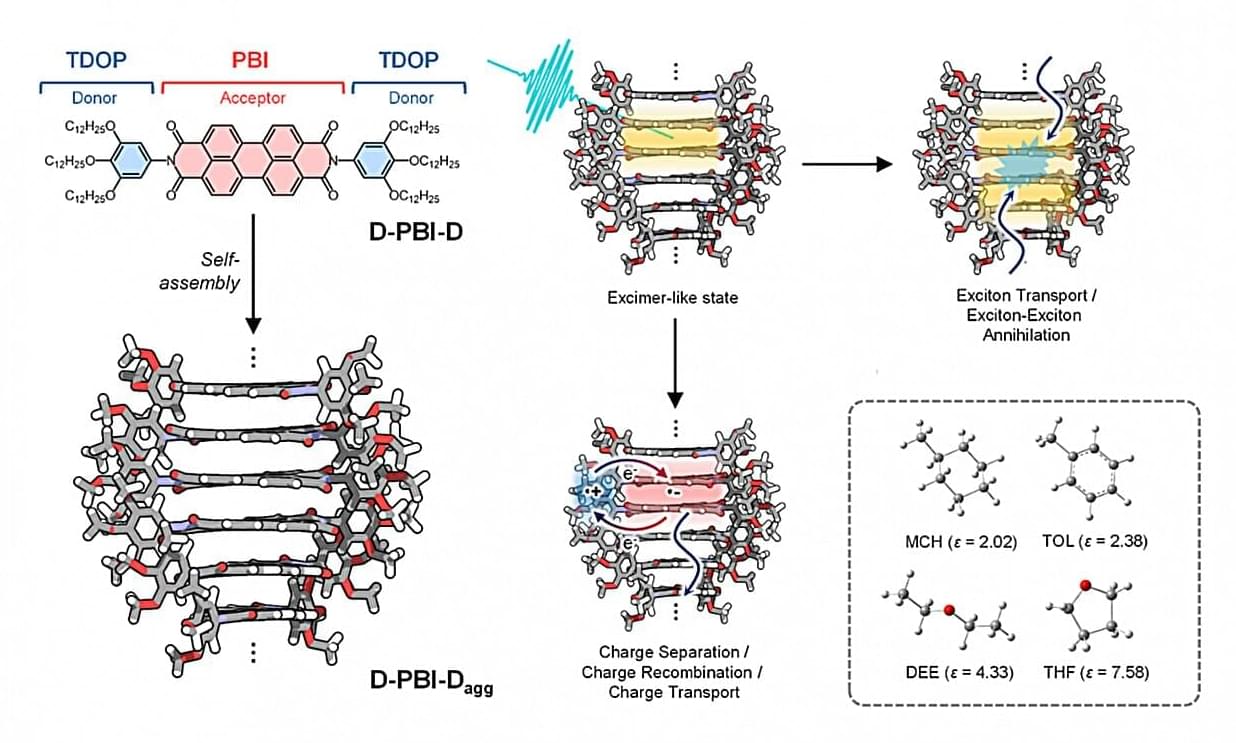
A research team led by Taeyeon Kim, a professor in the Department of Chemistry at Sungkyunkwan University, in collaboration with a team from Yonsei University, has identified a new principle that controls charge separation, a phenomenon that plays a central role in both plants’ generation of electrical energy (photosynthesis) and next-generation molecular semiconductor devices.

The findings were published in Nature Communications.

When plants absorb sunlight to generate energy, they rapidly separate and transfer charge within their internal structures. Inspired by this process, the scientific community has long sought to develop next-generation energy devices such as artificial photosynthesis systems and organic solar cells. Molecular aggregate structures formed by densely stacked “perylene bisimide (PBI),” an organic semiconductor molecule known for its excellent electron-accepting properties, have drawn particular research attention. However, the complex environment created by tightly clustered molecules has made it difficult to precisely determine how the surrounding environment alone affects charge transfer.

Unusual metal oxide shows signs of magnetism under lattice strain in ultrathin layers

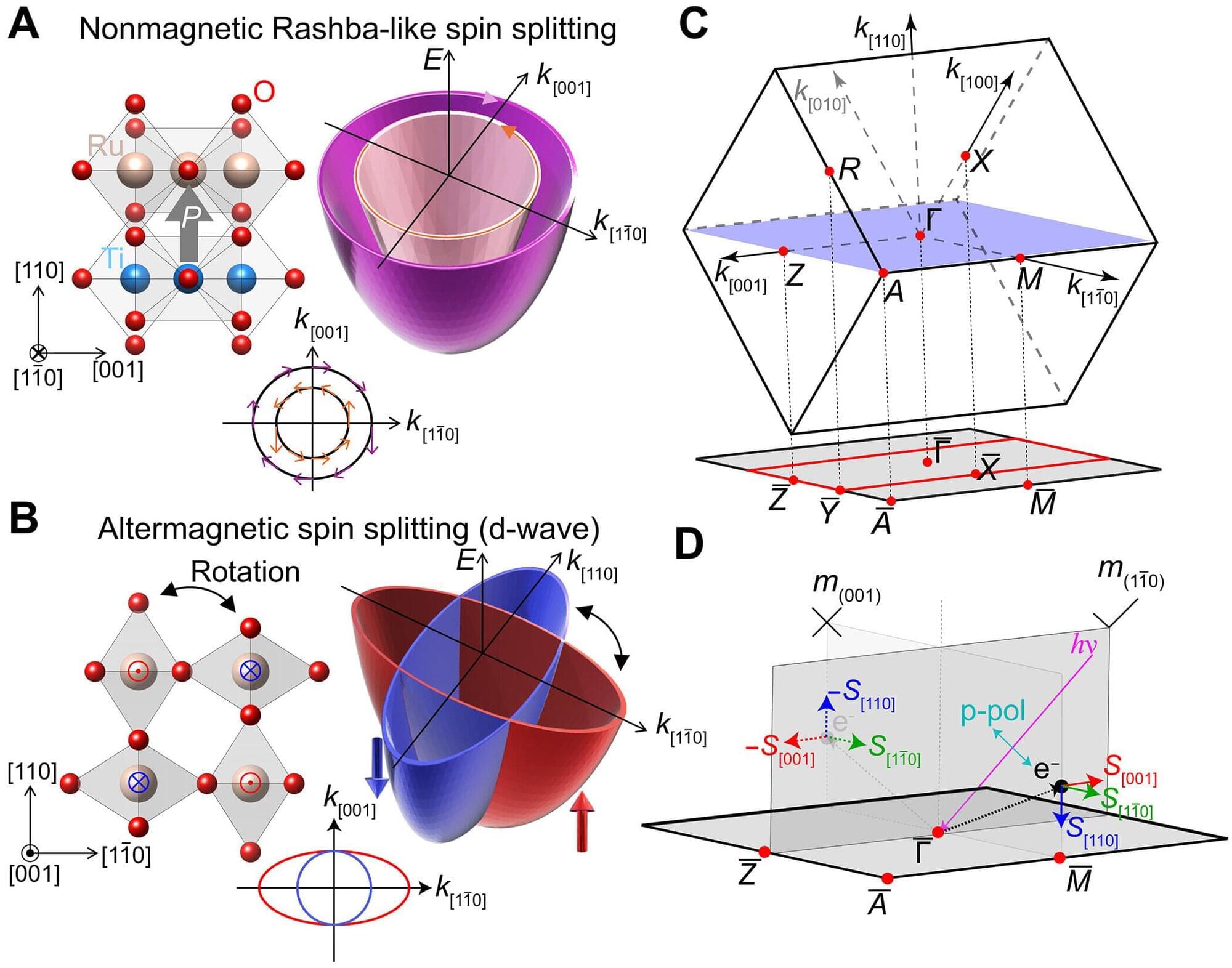
Ruthenium dioxide (RuO2) is a metal oxide that commonly serves as an important metallic conductor, quantum material and industrial electrocatalyst. While there have been debates surrounding the magnetic properties of RuO2, it is generally thought to be nonmagnetic in its bulk form. But now, a new study, published in Science Advances, has found that very thin layers of RuO2 can become magnetic when its lattice is placed under strain.

RuO2 is known for its unusual magnetic properties, which have led some researchers to propose that it may be an altermagnet —a material with magnetic order but little or no overall magnetization. Most previous studies have examined bulk RuO2 crystals or thicker, relaxed films and have reported conflicting findings on magnetic order. Earlier studies linked RuO2 to magnetic order, unusual Hall effects and efficient spin-charge conversion, while later studies found no magnetic order in bulk or relaxed films.

While one study reported the absence of altermagnetic properties down to 5 nanometers of RuO2 thickness, a fully strained ultrathin regime below about 4 nanometers had not been directly studied with both momentum and spin resolution.

World’s First Photonic Time Crystal Can Reshape Light in Trillionths of a Second

A world-first photonic time crystal can reshape light almost instantly, opening a path toward ultrafast optical technology.

An international research team has created the first experimentally demonstrated all-optical photonic time crystal (PTC), a material whose optical behavior can be altered strongly and repeatedly over extremely short periods of time.

The work, carried out by scientists from École Polytechnique, Collège de France, and Helmholtz-Zentrum Dresden-Rossendorf (HZDR), was published in Nature. The researchers used HZDR’s TELBE superradiant terahertz source to push the material into a previously unexplored form of light-matter interaction in the terahertz range.

Chinese Threat Actor Uses Leaked DarkSword Kit to Deploy GHOSTBLADE on iOS

An unknown Chinese-speaking threat actor has been observed running a campaign targeting Apple iOS devices by leveraging a publicly leaked version of the DarkSword exploit kit.

Attack surface management platform Censys said it identified the threat actor running more than 100 web properties, most of which are fake Amazon Web Services (AWS) sign-in pages on a domain that also hosts the exploit toolkit.

“The hosting concentrates in Hong Kong but reaches into Japan, the United States, and Europe,” Censys researcher Aidan Holland said in an analysis published on July 31, 2026.

18 Malicious npm Packages Deliver CrossPlatform RAT to Alibaba Tool Users

Cybersecurity researchers have discovered a new set of malicious npm packages that target users of Alibaba developer tools with a cross-platform remote access trojan (RAT) as part of a sophisticated, targeted software supply chain attack targeting Chinese-speaking environments.

One of the packages in question is “lib-mtop,” an unscoped package with the same name as a private Alibaba package under the “@ali” scope. Although the npm package was first published sometime in November 2023 with no functionality, three new versions (v1.0.1, v1.0.2, and v1.0.3) were uploaded earlier this March and April.

It’s currently not clear if this was the result of a maintainer account takeover or the project developer opting to go rogue. Regardless of how the malicious changes were pushed, the newly added changes feature a loader that’s designed to fetch a remote JavaScript payload using curl and then execute it.

INC Ransomware Emerges as Dominant Actor Exploiting SonicWall SMA 1000 Flaws

INC Ransomware operation has emerged as the “dominant threat actor” exploiting the recently disclosed security flaws in SonicWall Secure Mobile Access (SMA) 1,000 series VPN appliances.

In a report published over the weekend, Resecurity said it observed the INC Ransomware accelerating its activity since the beginning of August 2026, listing multiple victims on its data leak site. Per statistics listed on Ransomware. Live, the group has claimed 885 victims to date, with the most recent victim listed on August 2, 2026.

The attacks are suspected to involve the exploitation of CVE-2026–15409 and CVE-2026–15410, which could be chained to facilitate arbitrary command execution and take over susceptible devices. Fixes for the vulnerability pair were released by SonicWall in mid-July 2026.

Hotel Wi-Fi attacks use custom malware to breach Microsoft 365 accounts

Microsoft has linked a global campaign targeting hospitality Wi-Fi networks to the Russian threat actor Midnight Blizzard, also known as APT29.

The activity was previously disclosed in a report from cybersecurity company ReliaQuest, which detailed how the attacker changed DNS settings on Wi-Fi devices to steal Microsoft 365 accounts.

Besides attributing the campaign to Russian hackers tracked as Storm-2945 — a sub-cluster of Midnight Blizzard, Microsoft identified two malware families called CornFlake and ChocoShell with capabilities for persistent access, credential theft, surveillance, and data exfiltration.

New Pass-ta-key attacks let malware hijack Google-synced passkeys

Security researchers have discovered three attacks that allow malware on already-compromised Windows devices to abuse Google Password Manager’s synced passkeys to take over accounts, bypass user verification, and extract passkey private keys.

Passkeys are a passwordless authentication method that uses cryptographic keys stored on a user’s device to sign in to online accounts.

They are considered safer than passwords because they cannot be guessed, reused, or easily stolen through phishing, while also allowing users to authenticate with a PIN or biometrics, such as a fingerprint or facial recognition.