Toggle light / dark theme

Get the latest international news and world events from around the world.

Log in for authorized contributors

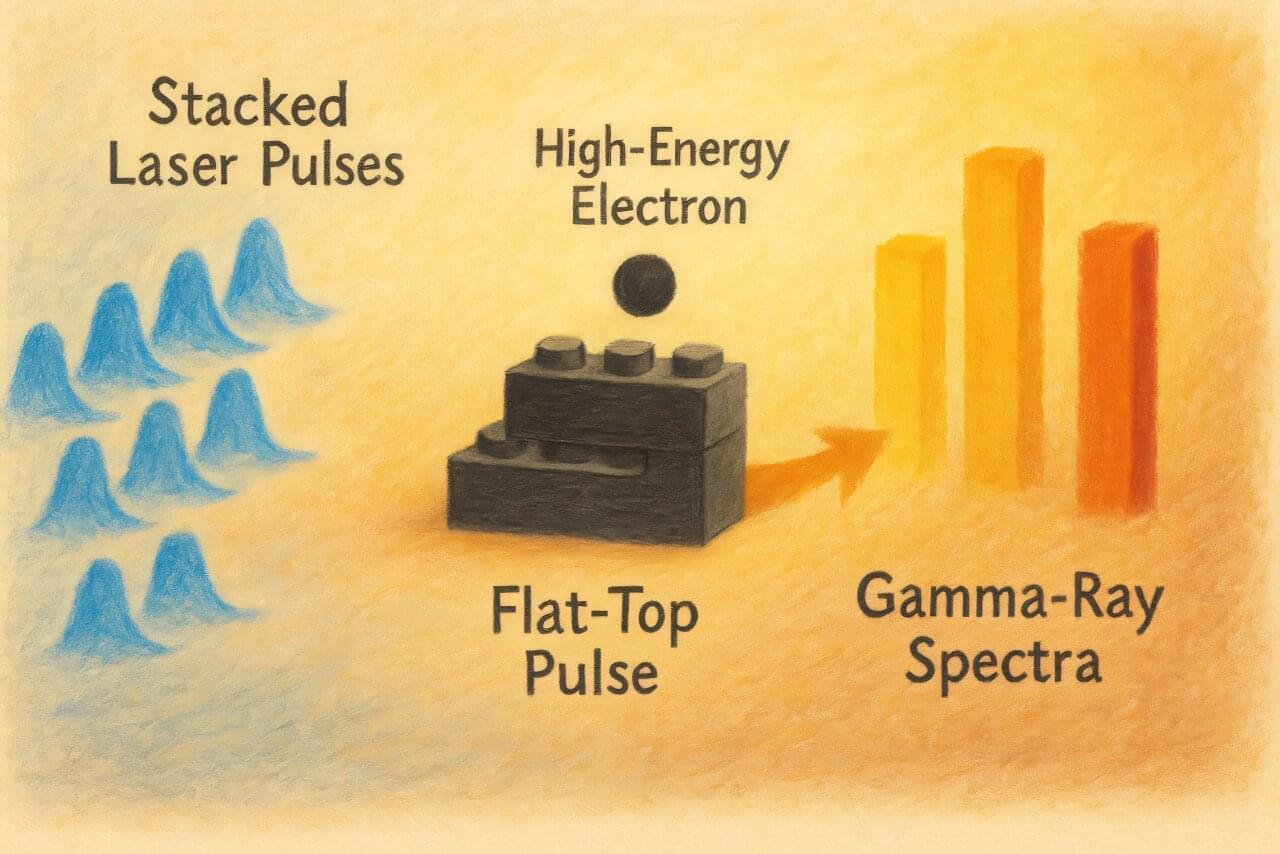
Researchers harness nonlinear Compton scattering to create sharper, multicolor gamma-ray beams

Researchers from Skoltech, MEPhI, and the Dukhov All-Russian Research Institute of Automation have proposed a new method to create compact gamma-ray sources that are simultaneously brighter, sharper, and capable of emitting multiple “colors” of gamma rays at once.

This opens up possibilities for more accurate medical diagnostics, improved material inspection, and even the production of isotopes for medicine directly in the laboratory. The work has been published as a Letter in the journal Physical Review A.

Gamma rays produced using lasers and electron beams represent a promising technology, but until now they have had a significant drawback: the emission spectrum was too “blurred.” This reduced brightness and precision, limiting their applications in areas where clarity is crucial—such as scanning dense materials or medical imaging.
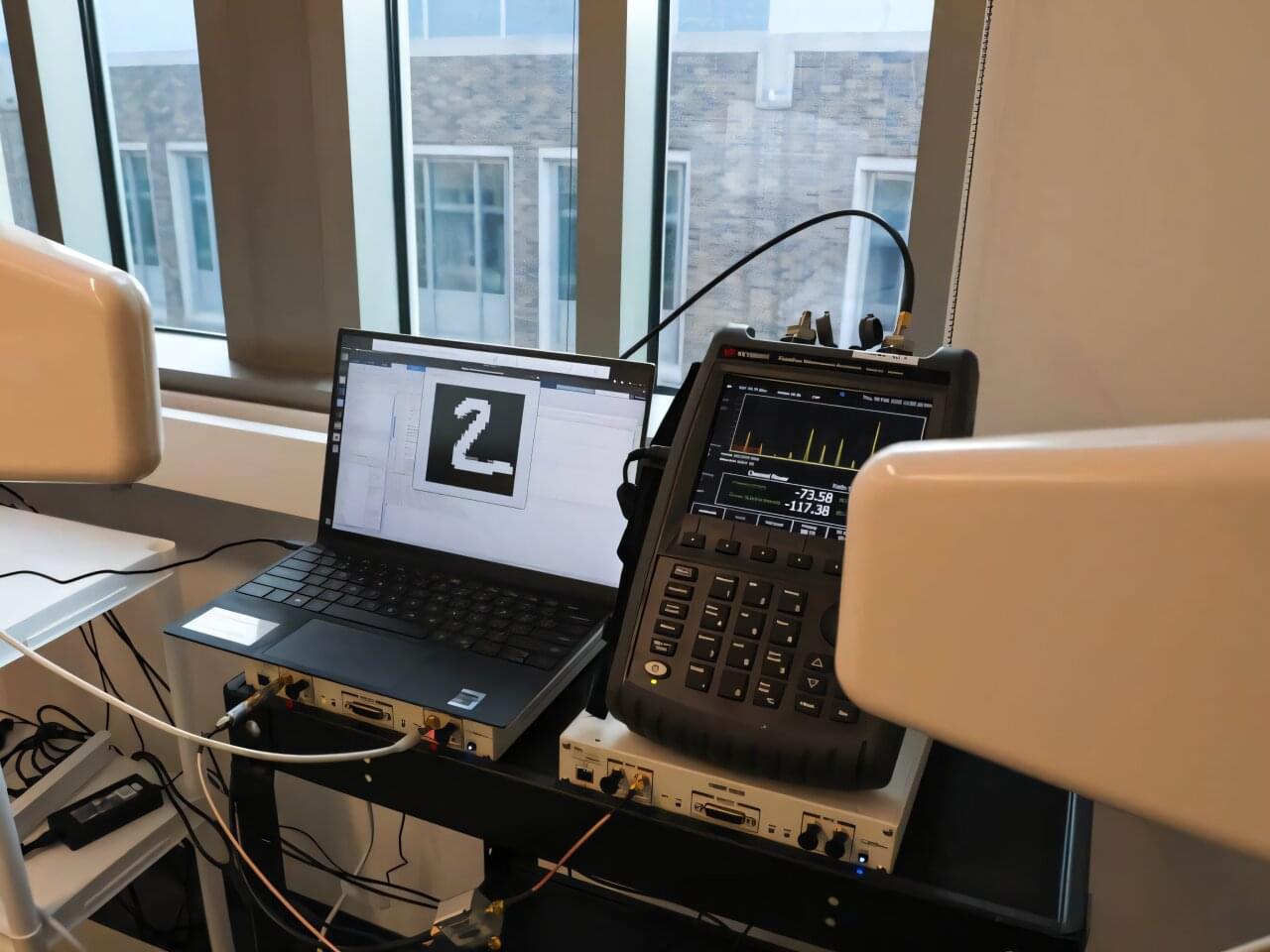

Radio waves enable energy-efficient AI on edge devices without heavy hardware

As drones survey forests, robots navigate warehouses and sensors monitor city streets, more of the world’s decision-making is occurring autonomously on the edge—on the small devices that gather information at the ends of much larger networks.

But making that shift to edge computing is harder than it seems. Although artificial intelligence (AI) models continue to grow larger and smarter, the hardware inside these devices remains tiny.

Engineers typically have two options, neither are ideal. Storing an entire AI model on the device requires significant memory, data movement and computing power that drains batteries. Offloading the model to the cloud avoids those hardware constraints, but the back-and-forth introduces lag, burns energy and presents security risks.

New Clues Suggest Life’s Building Blocks Were Sorted in Space Before Reaching Earth

New research suggests that amino acids, the fundamental components of life, may have arrived on Earth carried by interstellar dust grains, possibly contributing to the origins of life as we know it. In a study published in the Monthly Notices of the Royal Astronomical Society, Stephen Thompson, I

Astronomers Weigh “Cotton Candy” Planets and Solve a Cosmic Mystery

Astronomers have captured an exceptionally rare view of young planets in mid-transformation, revealing how bloated, giant worlds may shrink into the most common planets in the galaxy. Astronomers have been startled in recent years by a striking pattern around Sun-like stars. Many of them host a p

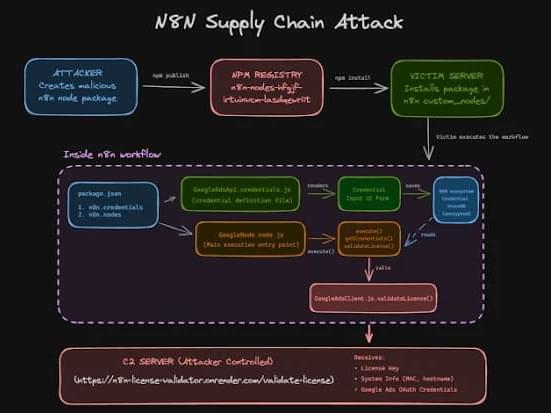
N8n Supply Chain Attack Abuses Community Nodes to Steal OAuth Tokens

N8n has also warned about the security risk arising from the use of community nodes from npm, which it said can introduce breaking changes or execute malicious actions on the machine that the service runs on. On self-hosted n8n instances, it’s advised to disable community nodes by setting N8N_COMMUNITY_PACKAGES_ENABLED to false.

“Community nodes run with the same level of access as n8n itself. They can read environment variables, access the file system, make outbound network requests, and, most critically, receive decrypted API keys and OAuth tokens during workflow execution,” researchers Kiran Raj and Henrik Plate said. “There is no sandboxing or isolation between node code and the n8n runtime.”

“Because of this, a single malicious npm package is enough to gain deep visibility into workflows, steal credentials, and communicate externally without raising immediate suspicion. For attackers, the npm supply chain offers a quiet and highly effective entry point into n8n environments.”

/* */