非个性化内容和广告会受您当前在看的内容、您所在的位置(我们仅会根据大致位置来投放广告)等因素影响。个性化内容和广告可能还会包含系统基于过往活动记录(例如您在 YouTube 上观看过的视频和搜索过的内容)提供的推荐视频、专属 YouTube 首页和定制广告等内容。如有必要,我们也会使用 Cookie 和数据为受众定制与其年龄相符的体验。
选择“更多选项”可查看更多信息,包括与管理隐私设置有关的详情。您还可随时前往 g.co/privacytools 修改设置。
非个性化内容和广告会受您当前在看的内容、您所在的位置(我们仅会根据大致位置来投放广告)等因素影响。个性化内容和广告可能还会包含系统基于过往活动记录(例如您在 YouTube 上观看过的视频和搜索过的内容)提供的推荐视频、专属 YouTube 首页和定制广告等内容。如有必要,我们也会使用 Cookie 和数据为受众定制与其年龄相符的体验。
选择“更多选项”可查看更多信息,包括与管理隐私设置有关的详情。您还可随时前往 g.co/privacytools 修改设置。
As we evolve we become more intelligent, loving, creative and beautiful, so actually we are moving exponentially to have greater levels of the very properties we ascribe to god without limit. But we never become literally infinite but we are moving exponentially in that direction so that we become more God-like. Evolution is a spiritual process that moves us closer to God — Ray Kurzweil.
Other Related Videos
Lex Fridman Podcast full episode: https://www.youtube.com/watch?v=ykY69lSpDdo.
Please support this podcast by checking out our sponsors:
- Shopify: https://shopify.com/lex to get 14-day free trial.
- NetSuite: http://netsuite.com/lex to get free product tour.
- Linode: https://linode.com/lex to get $100 free credit.
- MasterClass: https://masterclass.com/lex to get 15% off.
- Indeed: https://indeed.com/lex to get $75 credit.
GUEST BIO:
Ray Kurzweil is an author, inventor, and futurist.
PODCAST INFO:
Podcast website: https://lexfridman.com/podcast.
Apple Podcasts: https://apple.co/2lwqZIr.
Spotify: https://spoti.fi/2nEwCF8
RSS: https://lexfridman.com/feed/podcast/
Full episodes playlist: https://www.youtube.com/playlist?list=PLrAXtmErZgOdP_8GztsuKi9nrraNbKKp4
Clips playlist: https://www.youtube.com/playlist?list=PLrAXtmErZgOeciFP3CBCIEElOJeitOr41
SOCIAL:
- Twitter: https://twitter.com/lexfridman.
- LinkedIn: https://www.linkedin.com/in/lexfridman.
- Facebook: https://www.facebook.com/lexfridman.
- Instagram: https://www.instagram.com/lexfridman.
- Medium: https://medium.com/@lexfridman.
- Reddit: https://reddit.com/r/lexfridman.
- Support on Patreon: https://www.patreon.com/lexfridman


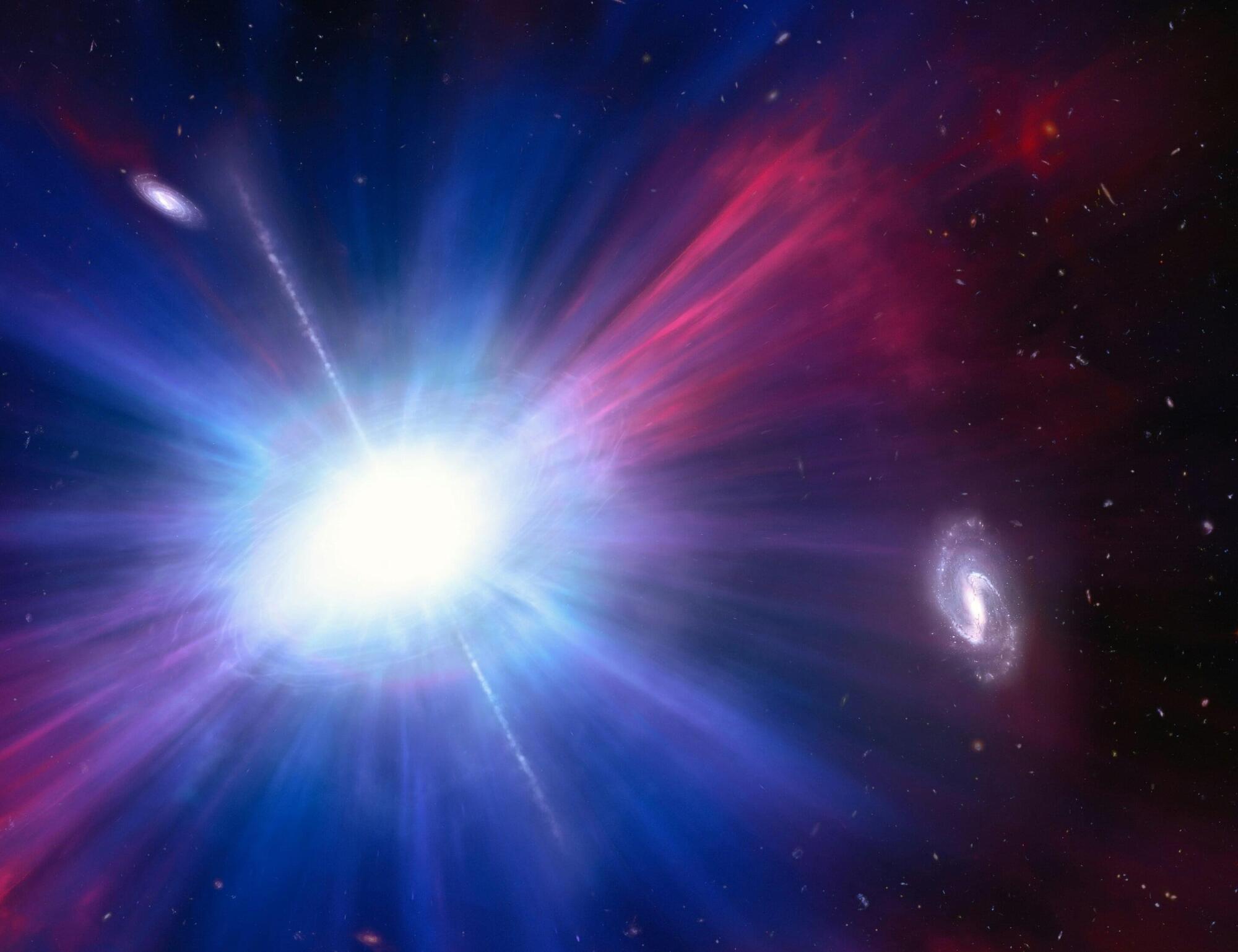
An international team of astronomers has achieved a first in probing the early universe, using the James Webb Space Telescope (JWST), detecting a supernova—the explosive death of a massive star—at an unprecedented cosmic distance.
The explosion, designated SN in GRB 250314A, occurred when the universe was only about 730 million years old, placing it deep in the era of reionization. This remarkable discovery provides a direct look at the final moments of a massive star from a time when the first stars and galaxies were just beginning to form.
The event, which has been reported on in the recently published academic paper JWST reveals a supernova following a gamma-ray burst at z ≃ 7.3, (Astronomy & Astrophysics, 704, December 2025), was initially flagged by a bright burst of high-energy radiation, known as a long-duration Gamma-Ray Burst (GRB), detected by the space-based multi-band astronomical Variable Objects Monitor (SVOM) on March 14, 2025. Follow-up observations with the European Southern Observatory’s Very Large Telescope (ESO/VLT) confirmed the extreme distance.
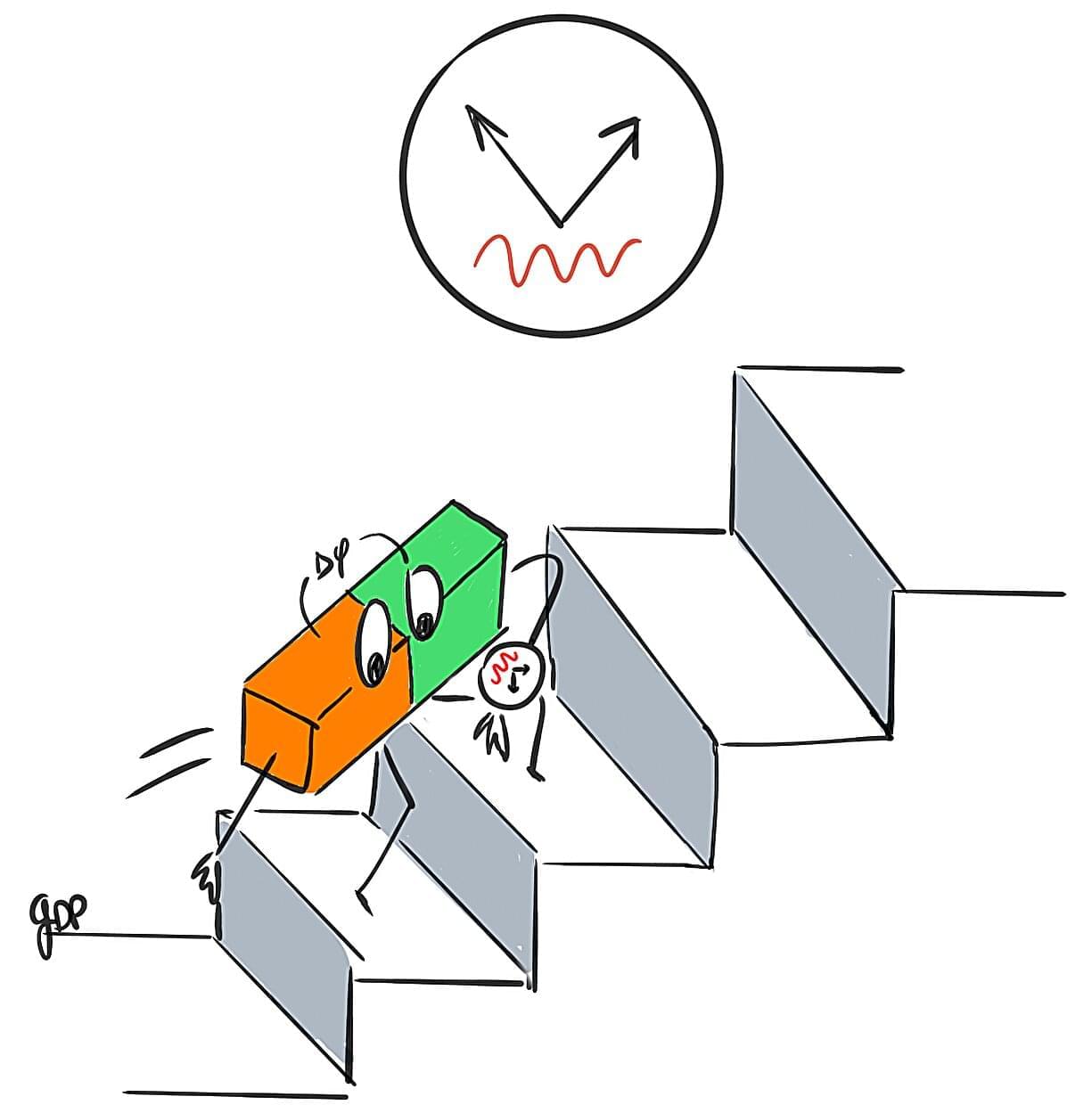
For the first time, scientists have observed the iconic Shapiro steps, a staircase-like quantum effect, in ultracold atoms.
In a recent experiment, an alternating current was applied to a Josephson junction formed by atoms cooled to near absolute zero and separated by an extremely thin barrier of laser light. Remarkably, the atoms were able to cross this barrier collectively and without energy loss, behaving as if the barrier were transparent, thanks to quantum tunneling.
As the oscillating current flowed through the junction, the difference in chemical potential between the two sides did not change smoothly, but instead increased in discrete, evenly spaced steps, like climbing a quantum staircase. The height of each step is directly determined by the frequency of the applied current, and these step-like chemical potential differences are the atomic analog of Shapiro steps in conventional Josephson junctions.
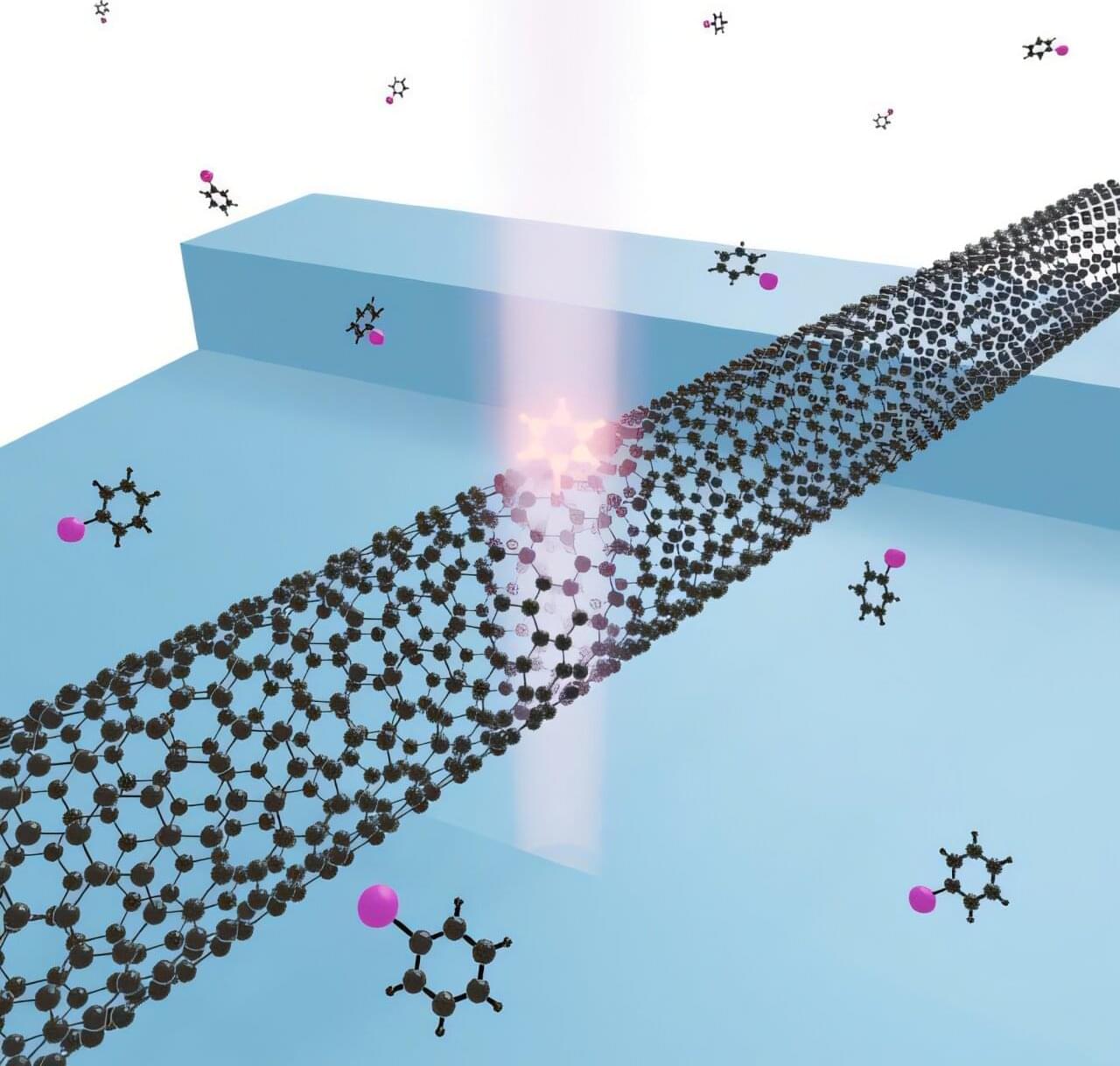
Tiny tubes of carbon that emit single photons from just one point along their length have been made in a deterministic manner by RIKEN researchers. Such carbon nanotubes could form the basis of future quantum technologies based on light.
Light is currently used to freight data over long distances via optical fibers. But harnessing its quantum nature could offer several benefits, including unprecedented security since any inception by a third party can be detected.
Such quantum communication technology requires light sources that emit one photon at a time. Several systems are capable of realizing that, but of them carbon nanotubes are the most promising.
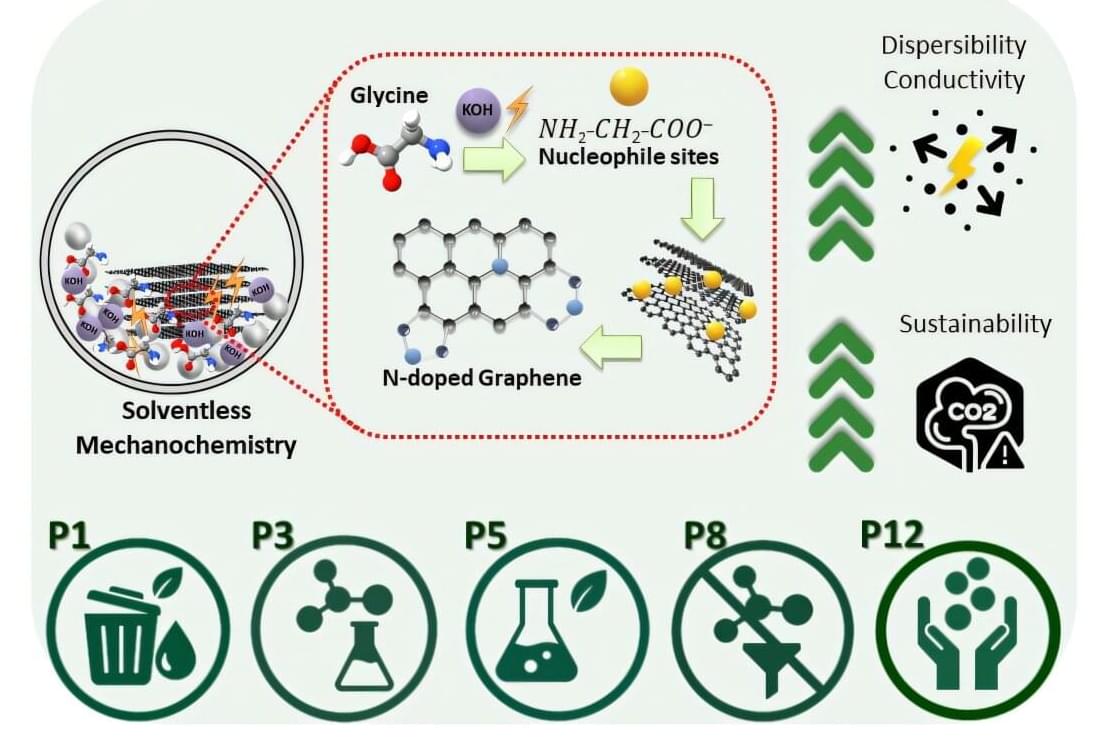
Graphene is often described as a wonder material. It is strong, electrically conductive, thermally efficient, and remarkably versatile. Yet despite more than a decade of excitement, many graphene-based technologies still struggle to move beyond the laboratory.
One of the key challenges is that graphene does not readily dissolve in common solvents, forcing researchers to rely on harsh, multi-step functionalization/modification processes to make it usable.
As a researcher working at the intersection of green chemistry and nanomaterials, I have often found myself asking a simple question: Can we design advanced materials without relying on environmentally costly processes?
Imaging technology has transformed how we observe the universe—from mapping distant galaxies with radio telescope arrays to unlocking microscopic details inside living cells. Yet despite decades of innovation, a fundamental barrier has persisted: capturing high-resolution, wide-field images at optical wavelengths without cumbersome lenses or strict alignment constraints.
A new study by Guoan Zheng, a biomedical engineering professor and the director of the UConn Center for Biomedical and Bioengineering Innovation (CBBI), and his research team at the UConn College of Engineering, was published in Nature Communications, introducing a breakthrough solution that could redefine optical imaging across science, medicine, and industry.
“At the heart of this breakthrough is a longstanding technical problem,” said Zheng. “Synthetic aperture imaging—the method that allowed the Event Horizon Telescope to image a black hole—works by coherently combining measurements from multiple separated sensors to simulate a much larger imaging aperture.”