A cross-sectional study of Chinese college students found ADHD symptoms were associated with internet addiction, with insomnia and executive dysfunction acting as mediating factors. Moderate and high physical activity levels were also linked with lower internet addiction symptoms, although causality cannot be inferred.
Circadian rhythm controls hepatic lipid and glucose metabolism, but it is not known if diurnal patterns exist in functional processes governing intrahepatic lipid accumulation in humans.
By studying metabolism across day and night in human participants, the researchers show that metabolic dysfunction-associated steatotic liver disease (MASLD) is a nighttime disease driven by upregulated hepatic and peripheral insulin resistance with lower plasma insulin levels at night, secondary to reduced insulin secretion and elevated insulin clearance.
These daily patterns persist after weight loss, suggesting that nighttime metabolic dysfunction is a key driver of liver fat accumulation. sciencenewshighlights ScienceMission https://sciencemission.com/MASLD-is-a-diurnal-disease
By studying metabolism across day and night in human participants, Marjot et al. show that MASLD is a nighttime disease driven by poor insulin action and low insulin levels. These daily patterns persist after weight loss, suggesting that nighttime metabolic dysfunction is a key driver of liver fat accumulation.
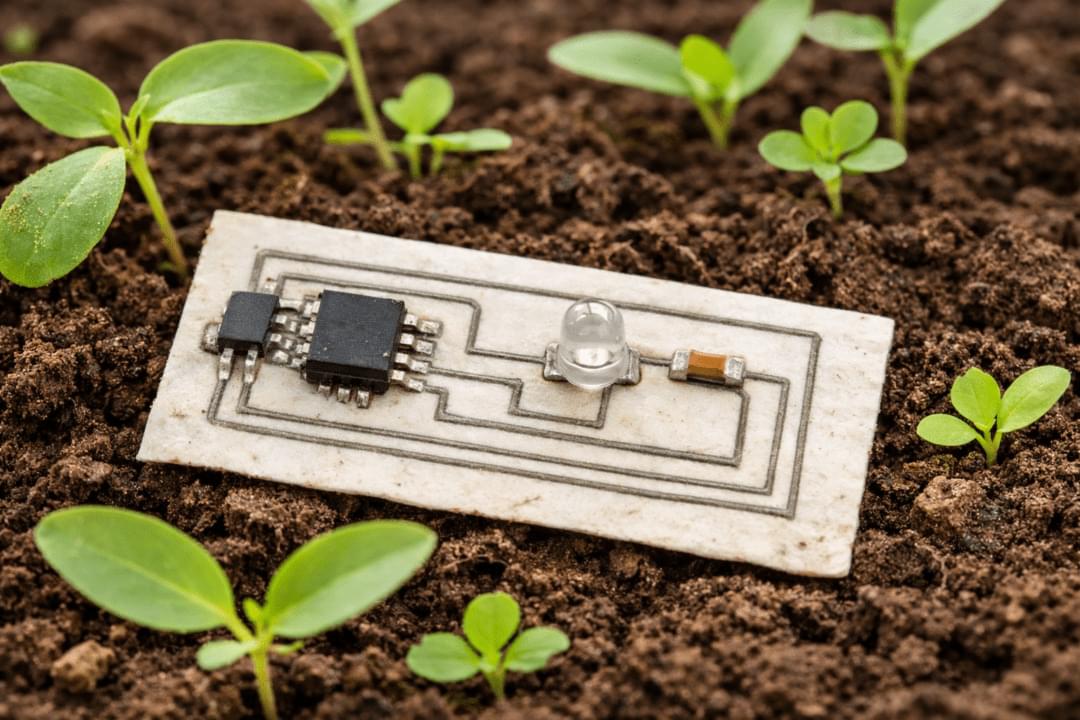
Researchers at the University of Glasgow have developed an almost entirely biodegradable PCB using zinc conductors and bio-derived substrate materials. The work aims to reduce the environmental impact of electronic waste by replacing conventional copper-based PCBs in applications designed for short operational lifetimes.
For eeNews Europe readers, the research is relevant as it explores alternative PCB materials and manufacturing methods that could be applied to disposable and low-duty-cycle electronics, including sensing and IoT-related devices.
The approach differs from conventional PCB fabrication, which typically involves etching copper from a full sheet. Instead, the researchers use what they describe as a growth and transfer additive manufacturing process, depositing conductive material only where tracks are required. According to the team, this reduces metal usage and avoids the use of harsh chemical etchants.
Alzheimer’s disease is often measured in statistics: millions affected worldwide, cases rising sharply, costs climbing into the trillions. For families, the disease is experienced far more intimately. “It’s a slow bereavement,” says Cold Spring Harbor Laboratory Professor Nicholas Tonks, whose mother lived with Alzheimer’s. “You lose the person piece by piece.”
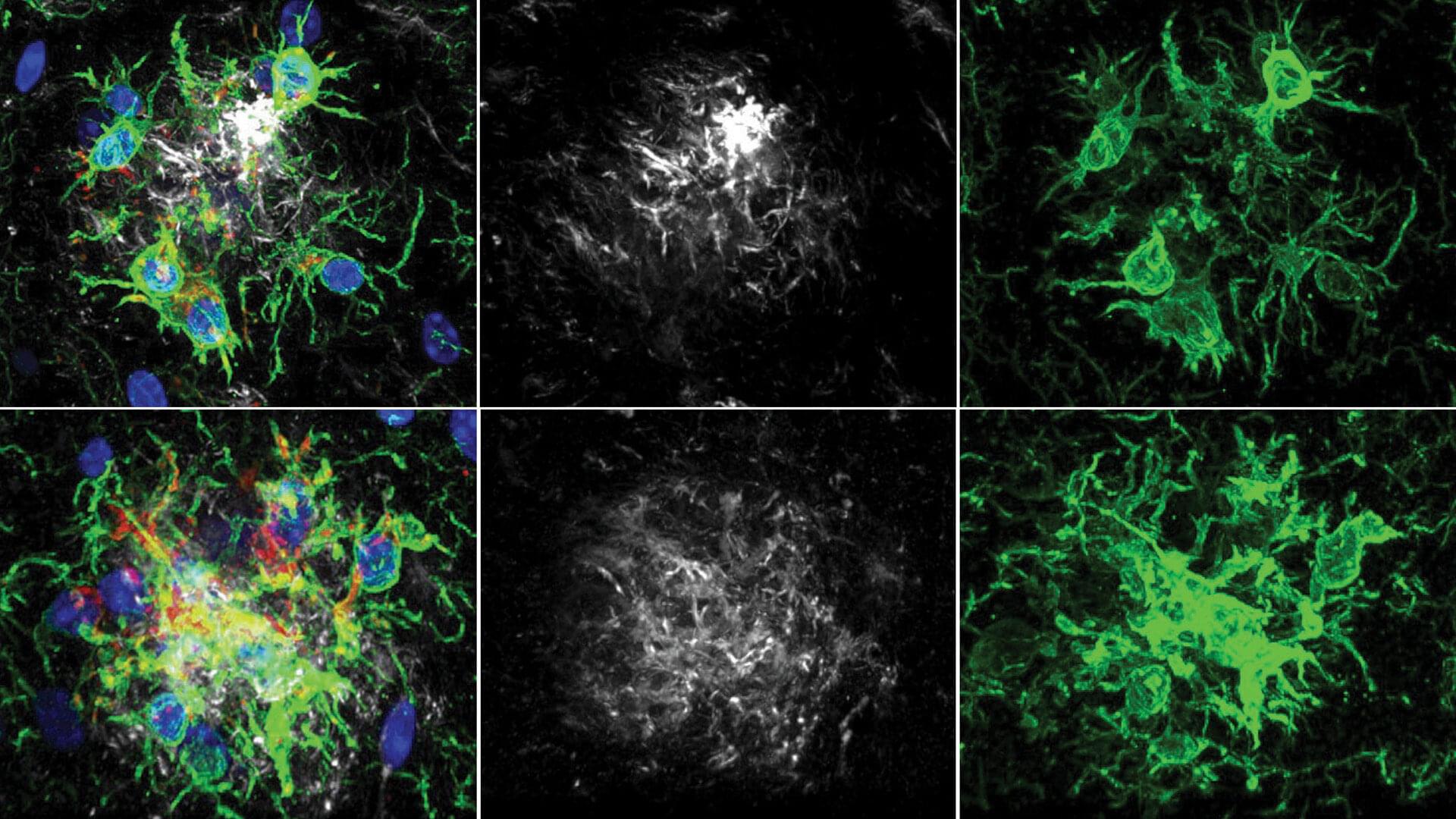
There’s a lot of discussion about how the neurodegenerative disorder may be caused by a buildup of “plaque” in the brain. When someone refers to this plaque, they’re talking about amyloid-β (Aβ), a peptide that occurs naturally but can accumulate and come together. This is known to promote Alzheimer’s disease development.
Now, Tonks, graduate student Yuxin Cen, and postdoctoral fellow Steven Ribeiro Alves have discovered that inhibiting a protein called PTP1B improves learning and memory in an Alzheimer’s disease mouse model. The findings are published in the journal Proceedings of the National Academy of Sciences.
There are currently no widely accepted, industry-wide standards for managing reproductive health risks in space, the study notes. The researchers highlight unresolved questions around preventing inadvertent early pregnancy during missions, understanding the fertility impacts of microgravity and radiation, and setting ethical boundaries for any future reproduction-related research beyond Earth.
“If reproduction is ever to occur beyond Earth,” the study notes, “it must do so with a clear commitment to safety, transparency and ethical integrity.”
This research is described in a paper published Feb. 3 in the journal Reproductive Biomedicine Online.
Using single-cell epigenomic profiling of immune cells from 110 individuals, researchers show that genetic variation and environmental exposures shape the human immune system through distinct DNA methylation mechanisms. Genetic effects concentrate within gene bodies of memory cells, while environmental exposures primarily remodel regulatory regions in naive immune cells.
AI companies are looking to spend trillions of dollars on data centers to power their increasingly resource-intensive AI models — an astronomical amount of money that could threaten the entire economy if the bet doesn’t pay off.
As the race to spend as much money as possible on AI infrastructure rages on, companies have become increasingly desperate to keep the cash flowing. Firms like OpenAI, Anthropic, and Oracle are exhausting existing debt markets — including junk debt, private credit, and asset-backed loans — in increasingly desperate moves, as Bloomberg reports, that are raising concerns among investors.
“The numbers are like nothing any of us who have been in this business for 25 years have seen,” Bank of America managing head of global credit Matt McQueen told Bloomberg. “You have to turn over all avenues to make this work.”
In this Mind-Body Solution Colloquia, Michael Levin and Robert Chis-Ciure challenge one of neuroscience’s deepest assumptions: that cognition and intelligence are exclusive to brains and neurons.
Drawing on cutting-edge work in bioelectricity, developmental biology, and philosophy of mind, this conversation explores how cells, tissues, and living systems exhibit goal-directed behavior, memory, and problem-solving — long before neurons ever appear.
We explore: • Cognition without neurons. • Bioelectric networks as control systems. • Memory and learning beyond synapses. • Morphogenesis as collective intelligence. • Implications for AI, consciousness, and ethics.
This episode pushes neuroscience beyond the neuron, toward a deeper understanding of mind, life, and intelligence as continuous across scales.
Allowing AI to talk to itself helps it learn faster and adapt more easily. This inner speech, combined with working memory, lets AI generalize skills using far less data.