Toggle light / dark theme

Get the latest international news and world events from around the world.

Log in for authorized contributors

Parent-Led Early Intervention in Very Preterm Infants and Executive Function at School Age: Secondary Analysis of a Randomized Clinical Trial

Enhanced developmental intervention (EDI), initiated in the neonatal intensive care unit and continued at home for 2 years, improved executive function at school age among very preterm children compared with usual care.

All executive domains assessed showed better performance with EDI, especially for design fluency. These findings support sustained neurodevelopmental benefit for Preterm children, with implications for long-term outcomes.


Question What are the long-term effects of an enhanced early intervention on the executive functions of children born preterm?

Findings In this secondary analysis of a randomized clinical trial among 80 very low-birth-weight preterm children, it was observed that parent-led early intervention improved executive function.

Meaning Early intervention may strengthen cognitive skills, such as attention, self-regulation, and problem-solving, which could improve academic, emotional, and social outcomes, highlighting the importance of early intervention for long-term developmental success.

Targeting CDK2 for cancer therapy

How CDK2 inhibitors halt cancer cell division👇

✅G1 arrest in p16INK4A-high, cyclin E–high tumors (A, left). In tumors with high p16INK4A and cyclin E, catalytic CDK2 inhibitors block phosphorylation of key CDK2 substrates, including RB and nucleolin, and reduce signals from CDK activity sensors. This suppresses E2F transcriptional activity, leading to reduced cyclin A expression and failure to enter S phase. The net result is a G1 cell-cycle arrest, driven by effective shutdown of the RB–E2F axis.

✅4N accumulation when p16INK4A is absent (A, right). In tumors lacking p16INK4A, CDK2 catalytic inhibition alone does not efficiently block RB phosphorylation or early G1 molecular events. Instead, cells continue through S phase and accumulate with 4N DNA content, indicating arrest later in the cycle (post-replication). In this context, adding a CDK4/6 inhibitor can mimic the p16INK4A state, restore RB dephosphorylation, repress E2F, and shift cells toward a G1 arrest, highlighting the importance of dual CDK control of RB.

✅Catalytic inhibition vs genetic depletion of CDK2 (B). Genetic loss of CDK2 is often tolerated because cells can compensate using cyclin A–CDK1 to complete G2/M. In contrast, catalytic CDK2 inhibitors trap CDK2 in inactive complexes with cyclins, which may interfere with normal handoff to CDK1 and other cell-cycle processes. This leads to accumulation of cells with 4N DNA content, reflecting a block after DNA replication.

✅Why the outcomes differ. These findings suggest that CDK2 has roles beyond simple kinase activity—its inactive, cyclin-bound state under catalytic inhibition may disrupt network dynamics differently than complete protein loss. The precise mechanisms of the 4N arrest are still being investigated and may involve defects in S/G2 transitions, replication stress responses, or mitotic entry control.

✅Therapeutic implication. Tumor response to CDK2 inhibitors depends strongly on p16INK4A status, cyclin E levels, and RB pathway integrity. This supports combination strategies (CDK2 + CDK4/6 inhibition) in selected cancers and emphasizes the need for biomarker-guided patient stratification.


Dietary methionine mitigates immune-mediated damage by enhancing renal clearance of cytokines

Nutritional strategy to prevent immune-mediated damage.

Excessive immune response with the inflammatory cytokine and chemokine production may lead to tissue damage.

With Yersinia pseudotuberculosis infection in mic, the researchers found that dietary methionine enhances kidney filtration and promotes urinary excretion of inflammatory cytokines during infection and protects against anorexia, wasting, blood-brain barrier dysfunction, and lethality.

Mechanistically, methionine and its metabolite S-adenosyl methionine (SAM) activate renal mTORC1 signaling, promoting renal growth and enhanced glomerular filtration function.

By improving cytokine clearance, this pathway mitigates immune-mediated damage and reveals a nutritional strategy to promote cooperative defenses. sciencenewshighlights ScienceMission https://sciencemission.com/Dietary-methionine


Troha et al. found that dietary methionine enhances kidney filtration and promotes urinary excretion of inflammatory cytokines during infection. By improving cytokine clearance, this pathway mitigates immune-mediated damage and reveals a nutritional strategy to promote cooperative defenses.

Engineered nanobodies improve respiratory defenses in preclinical study

In a multi-institutional study published today in Nature Nanotechnology, researchers from The University of Texas MD Anderson Cancer Center reported that engineered bispecific nanobodies successfully strengthened mucosal defenses in the respiratory tract, improving protection against influenza infection and reducing SARS-CoV-2 transmission in vivo.

Wen Jiang, M.D., Ph.D., associate professor of Radiation Oncology, has been researching different nanotechnologies for their potential use in delivering cancer therapies. That research has led to work with Liming Zhou, M.D., a postdoctoral student, and the late Charles Chan, Ph.D., assistant professor of surgery at Stanford Medicine.

‘Smart’ crystals self-repair at —320°F, could unlock new space tech

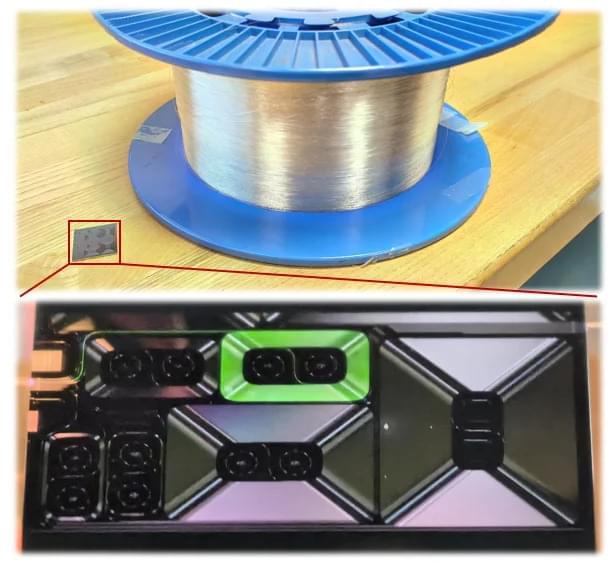
The team, led by NUY Abu Dhabi’s Panče Naumov, developed a material they dubbed smart molecular crystals. In a paper published in the journal Nature Materials, they outlined the observation process that allowed them to identify the material’s impressive properties.

During experiments, they observed that the material could be mechanically damaged in extreme cold and then repair itself. Importantly, it also recovered its ability to transmit light after being damaged. This is essential for low-temperature flexible optical and electronic devices.

According to a press statement, the material can restore its structure even at temperatures as low as −196°C (−320°F), the boiling temperature of liquid nitrogen. The material also remains functional throughout a wide temperature range, going up to 150°C (302°F).

Filics secures €13.5M to expand and roll out its robotics platform

Morten E. Iversen, partner at Sandwater, said that Filics technology offers not only substantial space efficiency but also a flexible, scalable path to the automation of warehouses:

For Sandwater, it represents a transformative solution that can redefine warehouse operations—reducing space needs, boosting productivity, and achieving a smaller footprint through a smart hardware/software combination. We have been truly impressed by the team.

The Filics Unit will be further developed for use in floor block warehouses by the end of 2025, enabling up to 66 per cent space savings to be achieved. In the medium term, the company plans to develop the technology further to enable fully autonomous truck loading in under five minutes.

Scalable ion concentration polarization dialyzer for peritoneal dialysate regeneration

Year 2025 portable dialysis machine.


Where (C: molar concentration, R: ideal gas constant, T: absolute temperature).

While ED uses both cation and anion exchange membranes to remove charged components, it cannot purify neutral species because they are not affected by the electric field (Fig. 1 A). Therefore, its application as a dialyzer is limited by its inability to simultaneously remove neutral urea and positively charged creatinine. Despite their merits, none of these techniques can simultaneously purify a wide size-range of target species, spanning from salt ions to biomolecular contaminants, in a single-step process. In contrast, one of the nanoelectrokinetic phenomenon, the ion concentration polarization (ICP) based purification technology [28,29,30,31,32], as reported recently, aligns with these criteria, owing to its distinctive electrical filtration capabilities and scalability. Briefly, the perm-selectivity of nanoporous membranes initiates an electrolyte concentration polarization on both sides of the membrane. In the case of cation-selective membranes, an ion depletion zone forms on the anodic side of the membrane [33, 34]. Charged species reroute their trajectories along the concentration gradients near this ion depletion zone, serving as a pivotal site for the purification of a broad range of contaminants.

In this study, for portable PD, we firstly proposed a scalable ICP dialysate regeneration device. ICP removes cationic components through the cation exchange membrane, anionic components by electrostatic repulsion and neutral species through an electrochemical reaction at the electrode (Fig. 1B). When urea, a neutrally charged body toxin, begins to undergo direct oxidation at the electrode inlet, the concentration of urea around the electrode decreases. The urea concentration profile exhibits a decrease closer to the electrode, and as urea diffuses towards the electrode vicinity, a chain reaction of direct oxidation occurs. As a result, a purified dialysate could be continuously obtained by extracting a stream from the ion depletion zone. Micro-nanofluidic dialysate regeneration platform was upscaled in two-and three-dimensional directions using a commercial 3D printer as shown in Fig. 1C.

/* */