Toggle light / dark theme

Get the latest international news and world events from around the world.

Log in for authorized contributors

Researchers design a pioneering drug capable of reversing cognitive decline in Alzheimer’s disease in animal models

A team from the Institute of Neurosciences of the University of Barcelona (UBneuro) has designed and validated in animal models an innovative compound with a pioneering mechanism of action for the treatment of Alzheimer’s disease. Unlike current drugs, which mainly remove beta-amyloid plaques that accumulate in the brain, this new experimental drug reprogrammes the neuronal epigenome by correcting alterations in gene expression that contribute to the progression of the disease. The results of this study, published in Molecular Therapy, open the door to an epigenetic-based therapeutic strategy to fight Alzheimer’s disease.

“The compound FLAV-27 represents an innovative and promising approach to Alzheimer’s disease, with the potential to modify the disease process, as it acts not only on its symptoms or a single pathological biomarker, but directly on its underlying molecular mechanisms,” says Aina Bellver, a researcher at the UB Institute of Neurosciences (UBneuro) and first author of the paper.

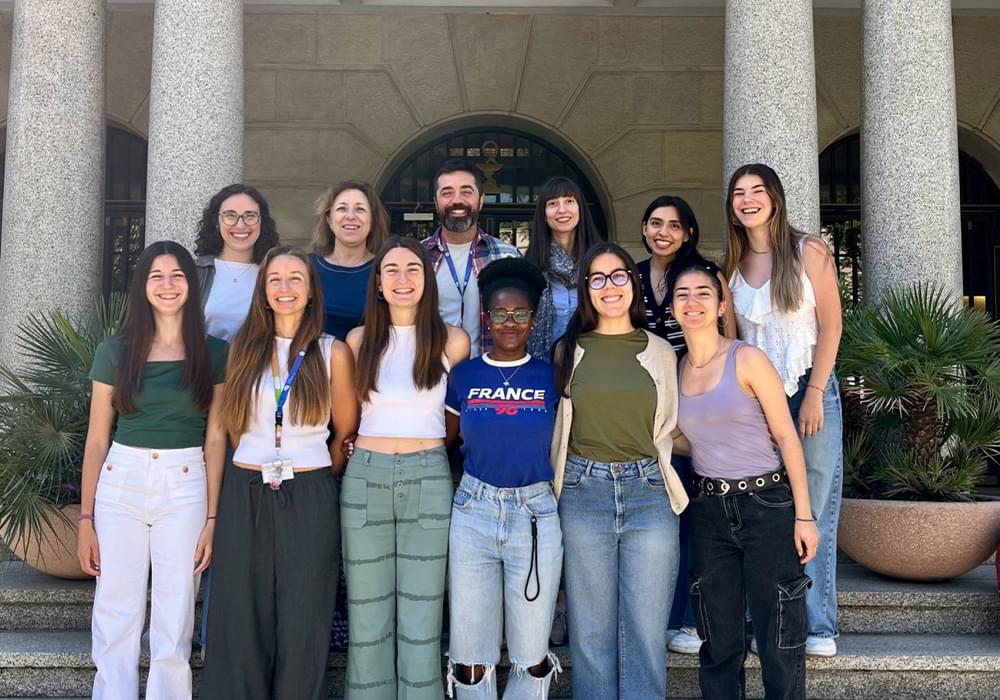
The study was led by Christian Griñán and Mercè Pallàs, UBneuro researchers and Professors from the Faculty of Pharmacy and Food Sciences. Th work was performed with the participation of researchers from the CIBER Area for Neurodegenerative Diseases (CIBERNED), as well as the UB Institute of Biomedicine (IBUB), the Institute of Nutrition and Food Safety (INSA-UB), the August Pi i Sunyer Biomedical Research Institute (IDIBAPS) and other national and international institutions.
Neuro-symbolic AI could slash energy use while dramatically improving performance

Power usage by AI and data center systems in the U.S. is extraordinary by any measure. The International Energy Agency estimates U.S. AI and data centers used about 415 terawatt hours of power in 2024—more than 10% of that year’s nationwide energy output—and it’s expected to double by 2030.

Seeking to head off this unsustainable path of power consumption, researchers at the School of Engineering have developed a proof-of-concept for efficient AI systems that could use 100 times less energy than current ones, while at the same time providing more accurate results on tasks.

The approach developed in the laboratory of Matthias Scheutz, Karol Family Applied Technology Professor, uses neuro-symbolic AI—a combination of conventional neural network AI with symbolic reasoning similar to the way humans break down tasks and concepts into steps and categories.

OpenAI is throwing everything into building a fully automated researcher

For anyone Waiting on or Counting on an AI co scientist — co researcher, looks like we are about two years out, mid 2028, i believe…


An exclusive conversation with OpenAI’s chief scientist, Jakub Pachocki, about his firm’s new grand challenge and the future of AI.

Brain-inspired nanoelectronic device could cut AI hardware energy use by 70%

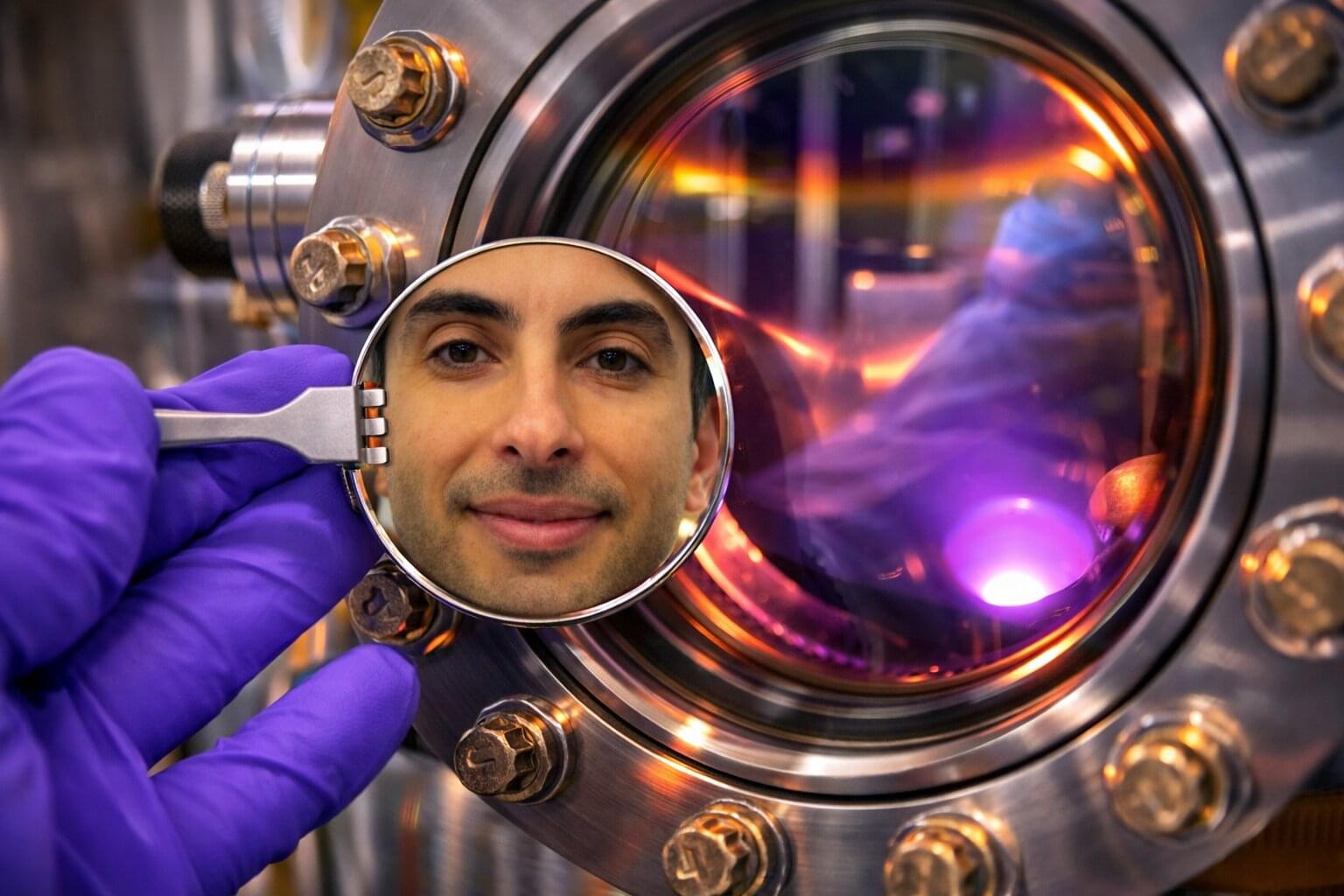
Researchers have developed a new kind of nanoelectronic device that could dramatically cut the energy consumed by artificial intelligence hardware by mimicking the human brain. The researchers, led by the University of Cambridge, developed a form of hafnium oxide that acts as a highly stable, low-energy “memristor”—a component designed to mimic the efficient way neurons are connected in the brain. The results are reported in the journal Science Advances.

Current AI systems rely on conventional computer chips that shuttle data back and forth between memory and processing units. This constant movement consumes large amounts of electricity, and global demand is exploding as AI adoption expands across industries.

Brain-inspired, or neuromorphic, computing is an alternative way to process information that could reduce energy use by as much as 70% by storing and processing information in the same place, and doing so with extremely low power. Such a system would also be far more adaptable, in the same way our own brains are able to learn and adapt.

Parallel realities solve this time travel paradox | Jim Al-Khalili

Become a Big Think member to unlock expert classes, premium print issues, exclusive events and more: https://bigthink.com/membership/?utm_

Time is the one thing every human being experiences identically, or so we assume.

Physicist Jim Al-Khalili dismantles that assumption, explaining how velocity and gravity don’t just affect clocks but actually alter the rate at which time passes for the person experiencing it.

Preorder Jim Al-Khalili’s forthcoming book, On Time: The Physics That Makes the Universe, here: https://www.amazon.com/Time-Physics-T?tag=lifeboatfound-20

About Jim Al-Khalili: Jim is a multiple award-winning science communicator renowned for his public engagement around the world through writing and broadcasting and a leading academic making fundamental contributions to theoretical physics, particularly in nuclear reaction theory, quantum effects in biology, open quantum systems and the foundations of quantum mechanics. Jim is a theoretical physicist at the University of Surrey where he holds a Distinguished Chair in physics as well as a university chair in the public engagement in science. He received his PhD in nuclear reaction theory in 1989 and has published widely in the field. His current interest is in open quantum systems and the application of quantum mechanics in biology.

About Jim Al-Khalili:

CARTA: Human Brain Specializations Related to Language and Theory of Mind with James Rilling

Humans excel at transmitting ideas, skills, and knowledge across generations, and at building on those competencies in a cumulative manner. James Rilling, Professor of Psychology at Emory University, explores how the transmission of our cumulative culture is assumed to depend on both language and mental perspective-taking, or theory of mind. If humans have specialized abilities in these domains, we must have neurobiological specializations to support them. Our research has used comparative primate neuroimaging to attempt to identify such specializations. The arcuate fasciculus is a white matter fiber tract that links Wernicke’s and Broca’s language areas. It is known to be involved in multiple, high level linguistic functions such as lexical semantics, complex syntax, and speech fluency. Using diffusion weighted imaging and tractography, we have demonstrated human specializations in the size and trajectory of the arcuate fasciculus that may partially explain human linguistic abilities. Theory of Mind depends on a set of cortical regions that belong to a neural network known as the default mode network that is functionally connected, highly active at rest, and deactivated by attention-demanding cognitive tasks. We and others have used functional neuroimaging to show that chimpanzees and other primates appear to have a default mode network that is similar to that of humans. However, the non-human primate default mode network seems to have weaker connectivity between certain key nodes, suggesting that these connections could play a role in human theory of mind specializations. Recorded on 02/27/2026. [3/2026] [Show ID: 41329]

Donate to UCTV to support informative & inspiring programming:
https://www.uctv.tv/donate.

Learn more about anthropogeny on CARTA’s website:
https://carta.anthropogeny.org/

More videos from: CARTA — The Idea Organ.
(https://www.uctv.tv/carta-idea-organ)

Explore More Science & Technology on UCTV
(https://www.uctv.tv/science)
Science and technology continue to change our lives. University of California scientists are tackling the important questions like climate change, evolution, oceanography, neuroscience and the potential of stem cells.

UCTV is the broadcast and online media platform of the University of California, featuring programming from its ten campuses, three national labs and affiliated research institutions. UCTV explores a broad spectrum of subjects for a general audience, including science, health and medicine, public affairs, humanities, arts and music, business, education, and agriculture. Launched in January 2000, UCTV embraces the core missions of the University of California — teaching, research, and public service – by providing quality, in-depth television far beyond the campus borders to inquisitive viewers around the world.

Why Antimatter Engines Could Launch In Your Lifetime

Thanks to Displate for sponsoring the video. Get a great Displate deal using my link https://displate.com/l/spacetime or my discount code spacetime.

Discounts:
1–2 Displate: 33%off.
3+ Displates: 38% off.

Valid on Textra.
Not valid on Lumino and Limited Edition.

Antimatter drives sound like science fiction, but they may not be as far as you think. There’s a version that could, just maybe, launch within your lifetime.

Sign Up on Patreon to get access to the Space Time Discord!
/ pbsspacetime.

Check out the Space Time Merch Store.

This is how faster than light signalling could work

Go to https://ground.news/sabine to get 40% off the Vantage plan and see through sensationalized reporting. Stay fully informed on events around the world with Ground News.

In this video I explain why I think it’s wrong to believe that the speed of light is an impossible to overcome limit. I am afraid that this is the biggest mistake that physicists are making, that indeed our entire species is making. And it’s all due to physicists’ misunderstanding quantum mechanics.

👕T-shirts, mugs, posters and more: ➜ https://sabines-store.dashery.com/
💌 Support me on Donorbox ➜ https://donorbox.org/swtg.
👉 Transcript with links to references on Patreon ➜ / sabine.
📝 Transcripts and written news on Substack ➜ https://sciencewtg.substack.com/
📩 Free weekly science newsletter ➜ https://sabinehossenfelder.com/newsle… Audio only podcast ➜ https://open.spotify.com/show/0MkNfXl… 🔗 Join this channel to get access to perks ➜ / @sabinehossenfelder 📚 Buy my book ➜ https://amzn.to/3HSAWJW #science #physics #speedoflight.
👂 Audio only podcast ➜ https://open.spotify.com/show/0MkNfXl
🔗 Join this channel to get access to perks ➜
/ @sabinehossenfelder.
📚 Buy my book ➜ https://amzn.to/3HSAWJW

#science #physics #speedoflight

/* */