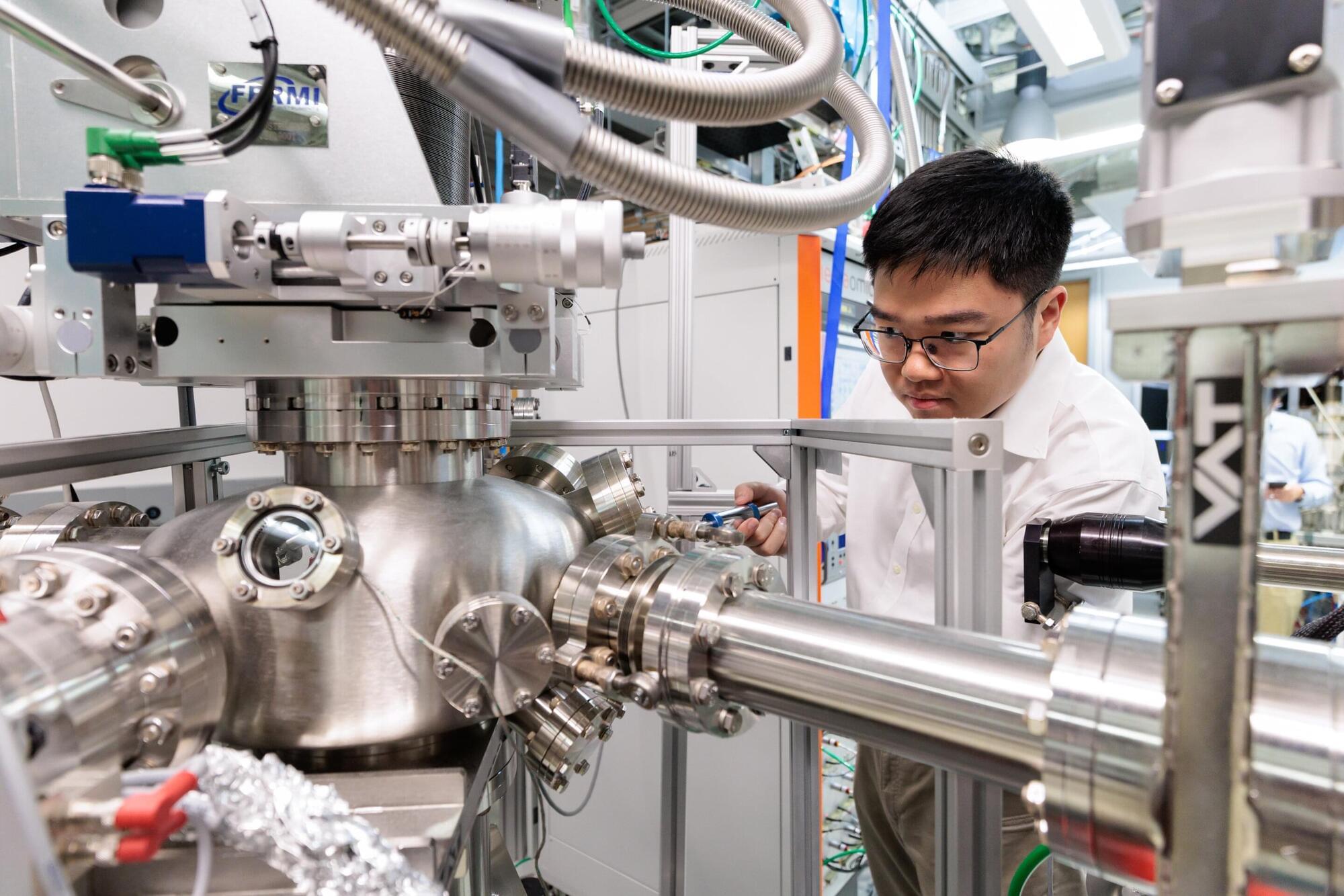
An array of 15,000 qubits made from phosphorus and silicon offers an unprecedentedly large platform for simulating quantum materials such as perfect conductors of electricity
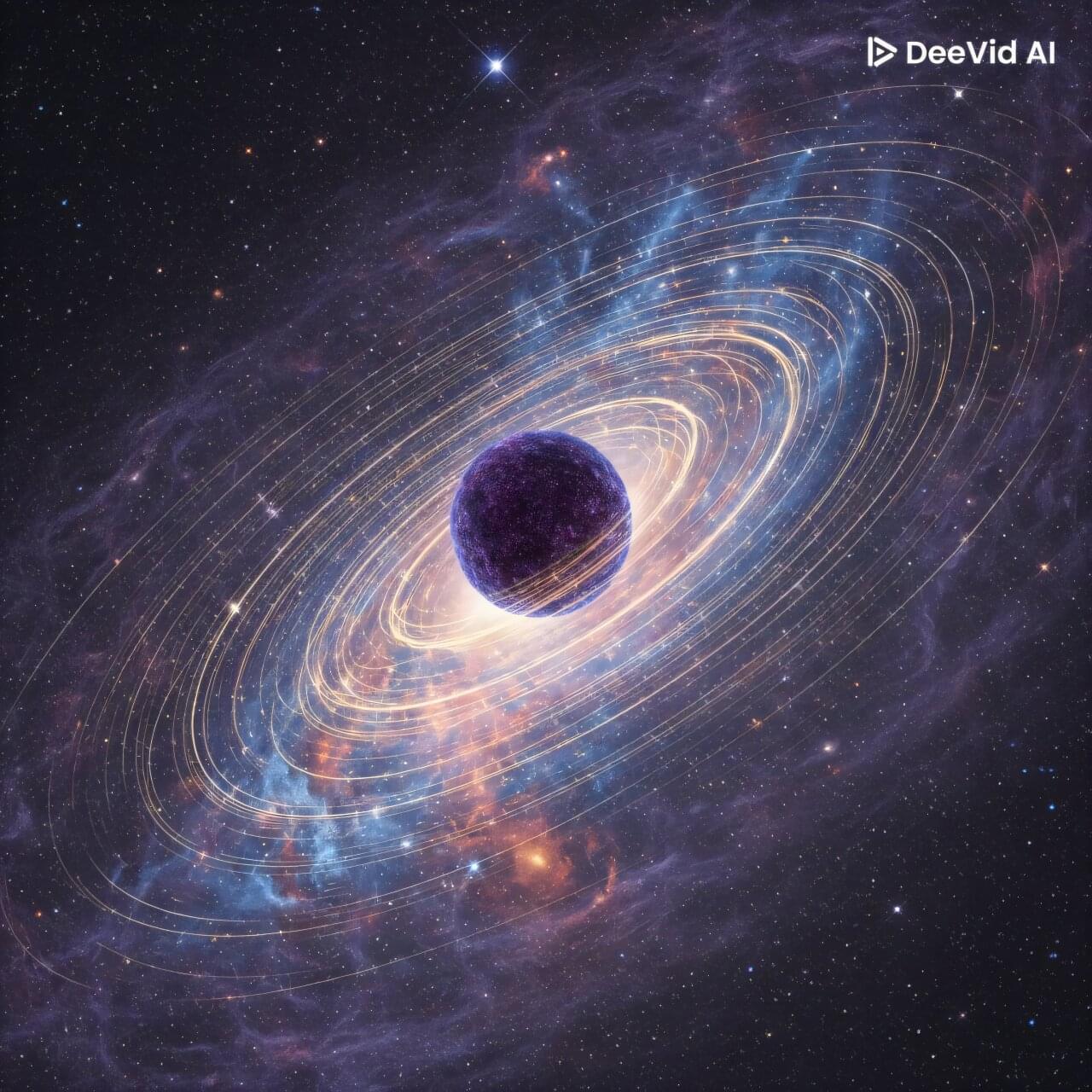
Satellites and spacecraft in the vast region between the earth and moon and just beyond — called cislunar space — are crucial for space exploration, scientific advancement and national security. But figuring out where exactly to put them into a stable orbit can be a huge, computationally expensive challenge.
In an open-access database and with publicly available code, researchers at Lawrence Livermore National Laboratory (LLNL) have simulated and published one million orbits in cislunar space. The effort, enabled by supercomputing resources at the Laboratory, provides valuable data that can be used to plan missions, predict how small perturbations might change orbits and monitor space traffic.
To begin, the Space Situational Awareness Python package takes in a range of initial conditions for an orbit, like how elliptical and tilted the orbit is and how far it gets from the earth.
A landmark study suggests that this daily habit may reshape the way your mind activates.
Scientists say a real warp drive may no longer be pure science fiction, thanks to new breakthroughs in theoretical physics. Recent studies suggest space itself could be compressed and expanded, allowing faster-than-light travel without breaking known laws of physics. Unlike sci-fi engines, this concept wouldn’t move a ship through space — it would move space around the ship. Researchers are now exploring how energy, gravity, and exotic matter could make this possible. In this video, we explain how a warp drive could work and how close science really is.
Credit:
Star Wars: Episode VIII — The Last Jedi / Lucasfilm https://www.imdb.com/title/tt2527336/.… Trek Beyond / Paramount Pictures https://www.imdb.com/title/tt2660888/.… Lost in Space / New Line Cinema https://www.imdb.com/title/tt0120738/.… Parker Solar Probe touches the Sun: By NASA/Johns Hopkins APL/Ben Smith — https://svs.gsfc.nasa.gov/14036, https://commons.wikimedia.org/wiki/Fi… Parker Solar Probe: By NASA’s Scientific Visualization Studio — Johns Hopkins University/APL/Betsy Congdon, Johns Hopkins Applied Physics Laboratory/Yanping Guo, Johns Hopkins Applied Physics Laboratory/John Wirzburger, NASA/Nicola Fox, NASA/Kelly Korreck, Johns Hopkins University/APL/Nour Raouafi, NASA/Joseph Westlake, eMITS/Joy Ng, eMITS/Beth Anthony, eMITS/Lacey Young, ADNET Systems, Inc./Aaron E. Lepsch — https://svs.gsfc.nasa.gov/14741, https://commons.wikimedia.org/wiki/Fi… Parker Solar Probe: By NASA/Johns Hopkins APL/Steve Gribben — http://parkersolarprobe.jhuapl.edu/Mu…, https://commons.wikimedia.org/w/index… Vertical Testbed Rocket: By NASA Armstrong Flight Research Center — https://www.nasa.gov/armstrong/, https://commons.wikimedia.org/wiki/Fi… […]cket_(AFRC-2017–11349-1_Masten-COBALT-UnTetheredFLT1).webm Interstellar / Paramount Pictures Stargate / Canal+ CC BY-SA 3.0 https://creativecommons.org/licenses/.… Alcubierre: By AllenMcC., https://commons.wikimedia.org/w/index… Miguel alcubierre: By Jpablo.romero, https://commons.wikimedia.org/w/index… Water wave analogue of Casimir effect: By Denysbondar, https://commons.wikimedia.org/wiki/Fi… Casimir plates: By Emok, https://commons.wikimedia.org/w/index… CC BY-SA 4.0 https://creativecommons.org/licenses/.… Proxima Centauri b: By ESO/Konstantino Polizois/Nico Bartmann — http://www.eso.org/public/unitedkingd…, https://commons.wikimedia.org/wiki/Fi… WARP Reactor Concept Movie: By WarpingSpacetime, https://commons.wikimedia.org/wiki/Fi… Ag Micromirrors: By Simpik, https://commons.wikimedia.org/wiki/Fi… Animation is created by Bright Side.
Star Trek Beyond / Paramount Pictures https://www.imdb.com/title/tt2660888/.…
Lost in Space / New Line Cinema https://www.imdb.com/title/tt0120738/.…
Parker Solar Probe touches the Sun: By NASA/Johns Hopkins APL/Ben Smith — https://svs.gsfc.nasa.gov/14036, https://commons.wikimedia.org/wiki/Fi…
Parker Solar Probe: By NASA’s Scientific Visualization Studio — Johns Hopkins University/APL/Betsy Congdon, Johns Hopkins Applied Physics Laboratory/Yanping Guo, Johns Hopkins Applied Physics Laboratory/John Wirzburger, NASA/Nicola Fox, NASA/Kelly Korreck, Johns Hopkins University/APL/Nour Raouafi, NASA/Joseph Westlake, eMITS/Joy Ng, eMITS/Beth Anthony, eMITS/Lacey Young, ADNET Systems, Inc./Aaron E. Lepsch — https://svs.gsfc.nasa.gov/14741, https://commons.wikimedia.org/wiki/Fi…
Parker Solar Probe: By NASA/Johns Hopkins APL/Steve Gribben — http://parkersolarprobe.jhuapl.edu/Mu…, https://commons.wikimedia.org/w/index…
Vertical Testbed Rocket: By NASA Armstrong Flight Research Center — https://www.nasa.gov/armstrong/, https://commons.wikimedia.org/wiki/Fi… […]cket_(AFRC-2017–11349-1_Masten-COBALT-UnTetheredFLT1).webm.
Interstellar / Paramount Pictures.
Stargate / Canal+
CC BY-SA 3.0 https://creativecommons.org/licenses/.…
Alcubierre: By AllenMcC., https://commons.wikimedia.org/w/index…
Miguel alcubierre: By Jpablo.romero, https://commons.wikimedia.org/w/index…
Water wave analogue of Casimir effect: By Denysbondar, https://commons.wikimedia.org/wiki/Fi…
Casimir plates: By Emok, https://commons.wikimedia.org/w/index…
CC BY-SA 4.0 https://creativecommons.org/licenses/.…
Proxima Centauri b: By ESO/Konstantino Polizois/Nico Bartmann — http://www.eso.org/public/unitedkingd…, https://commons.wikimedia.org/wiki/Fi…
WARP Reactor Concept Movie: By WarpingSpacetime, https://commons.wikimedia.org/wiki/Fi…
Ag Micromirrors: By Simpik, https://commons.wikimedia.org/wiki/Fi…
Animation is created by Bright Side.
Are we living inside a computer simulation? The evidence is more compelling than you think.
In this deep exploration of the Simulation Hypothesis, we examine the scientific and philosophical arguments that suggest our reality might be code. From Nick Bostrom’s groundbreaking trilemma to quantum mechanics acting like a computer program, from the fine-tuned constants of physics to Elon Musk’s probabilistic arguments—we follow the evidence wherever it leads. Whether we’re simulated or not, the question reveals profound truths about consciousness, reality, and what it means to be human.
CHAPTERS:
0:00 — The Uncomfortable Question.
4:47 — Nick Bostrom’s Trilemma: The Logical Trap.
9:34 — The Ancestor Simulation Scenario.
A neuroscientist, a philosopher and a physicist convene to discuss one of the biggest and most significant questions of all time: human consciousness, what we know and don’t know about it, and whether science will ever be able to understand what makes you, you.
Recorded Oct 16, 2016 at The 92nd Street Y, New York.
Subscribe for more videos like this: http://bit.ly/1GpwawV
Your support helps us continue creating online content for our community. Donate now: http://www.92NY.org/Donate.
Facebook: / 92ndstreety.
Instagram: / 92ndstreety.
TikTok: / 92ndstreety.
Archives: https://www.92ny.org/archives
The company is already the world’s largest battery maker, supplying cells to major automakers. With this latest development, the battery giant is positioning itself at the center of the race to deliver gasoline-like convenience without sacrificing durability.
The core challenge engineers set out to address was whether an EV battery could withstand repeated ultra-fast charging without rapid degradation. A 5C charge rate means an 80-kilowatt-hour battery pack could theoretically accept around 400 kilowatts of power. That level of charging can refill a battery in roughly 12 minutes, similar to a typical gas stop.
Fast charging has long been associated with faster wear. The engineers tested whether the chemistry could handle that stress over time. According to the company, the answer was yes. Under standard conditions at 68°F, the battery retained at least 80 percent of its original capacity after 3,000 full charge-and-discharge cycles.
Support this channel on Patreon to help me make this a full time job: https://www.patreon.com/whatdamath (Unreleased videos, extra footage, DMs, no ads)
Alternatively, PayPal donations can be sent here: http://paypal.me/whatdamath.
Get a Wonderful Person Tee: https://teespring.com/stores/whatdamath.
More cool designs are on Amazon: https://amzn.to/3QFIrFX
Hello and welcome! My name is Anton and in this video, we will talk about experimental evidence that time may be an illusion.
Links:
https://arxiv.org/pdf/2310.13386
https://journals.aps.org/prd/pdf/10.1103/qfns-48vq.
https://en.wikipedia.org/wiki/Problem_of_time.
https://journals.aps.org/prl/pdf/10.1103/5rtj-djfk.
https://journals.aps.org/prx/pdf/10.1103/PhysRevX.11.021029
https://journals.aps.org/prx/pdf/10.1103/PhysRevX.7.031022
#time #physics #universe.
0:00 Time — what is it?
1:20 Time in general relativity (Einstein)
2:10 Quantum mechanics time.
2:40 The problem of time.
3:30 Page Wootters mechanism — is time emergent?
5:00 Experiments and possible proofs — entropy and quantum dots.
7:40 Large scale system.
8:30 What this suggests and how black holes can help.
9:50 Conclusions.
Enjoy and please subscribe.
Bitcoin/Ethereum to spare? Donate them here to help this channel grow!
bc1qnkl3nk0zt7w0xzrgur9pnkcduj7a3xxllcn7d4
or ETH: 0x60f088B10b03115405d313f964BeA93eF0Bd3DbF
The hardware used to record these videos: