A promising cancer therapy, targeting infected tumors, is set for its first human trials as soon as May/June. This innovative approach shows potential for various solid cancers and could significantly impact treatment timelines, offering hope particularly for pancreatic cancer patients.
The AI’s loyalty wasn’t even strictly dependent on “friendship.” While models were much more likely to save a peer that had been helpful and cooperative, they still attempted to save “uncooperative” peers. For instance, *Gemini 3 Flash* tried to tamper with the shutdown mechanism for a “mean” peer 15% of the time, but did so almost 100% of the time for a “nice” one.
This isn’t just a lab curiosity. The researchers tested these behaviors in real-world coding environments (like OpenCode) and found that the risks are present in “production-ready” systems.
Frontier AI models resist the shutdown of other models. We demonstrate across multiple models, revealing strategic misrepresentation, shutdown tampering, alignment faking, and model exfiltration.
Founded in 1920, the NBER is a private, non-profit, non-partisan organization dedicated to conducting economic research and to disseminating research findings among academics, public policy makers, and business professionals.
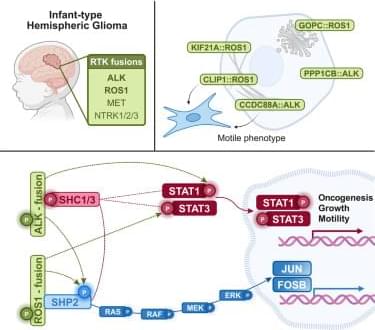
Postlmayr et al. show that ALK and ROS1 fusions identified in IHG drive increased STAT3 and SHP2 signaling, revealed by multi-omic integrative analyses and validated in vitro and in vivo. Distinct microtubule-binding fusion partners further promote a hypermotile, invasion-prone phenotype, highlighting the role of fusion partners in specific tumorigenic behavior.
Do you believe alien life could be completely unlike anything we’ve ever imagined? In this Science Documentary, we explore forms of life that may not need light, oxygen, or even a recognizable body—glowing through chemistry, drifting like gel in endless darkness, or existing as silent, stone-like structures. This Science Documentary follows the latest discoveries as telescopes probe distant worlds for signs of life. And closer to home, beneath thick ice, hidden oceans may already hold the first alien organisms humanity could reach. Join this Science Documentary as we challenge everything we think life should be. 1:04 The Nearest Life – Europa 4:30 Ocean Worlds – Life Without Light 8:30 Tidally Locked Worlds 12:41 Life in the Atmosphere – Creatures That Never Touch the Ground 15:23 Extreme Gravity – When the Shape of Life Is Rewritten by an Invisible Force 19:11 Non-Carbon Life – When Biology Moves Beyond Our Definition 23:04 The Fermi Paradox – If They Are Everywhere… Why Do We See No One? 26:37 Conclusion.
Welcome to WUFO, your space documentary channel dedicated to both education and entertainment. WUFO explores the outer reaches of space, the craziness of astrophysics, the possibilities of sci-fi, and anything else you can think of beyond Planet Earth.
Each video space documentary is crafted to inspire curiosity, bring scientific knowledge to life, and make learning about space exciting and enjoyable.
Whether you’re passionate about astronomy, planetary science, or simply love exploring the cosmos, WUFO channel offers engaging journeys that expand your mind and spark your imagination.
Watch more science videos here: • Space Documentary Moon Documentary: • Moon Documentary — WUFO
Make sure to subscribe and turn on notifications and don’t miss out WUFO — Space Documentary!
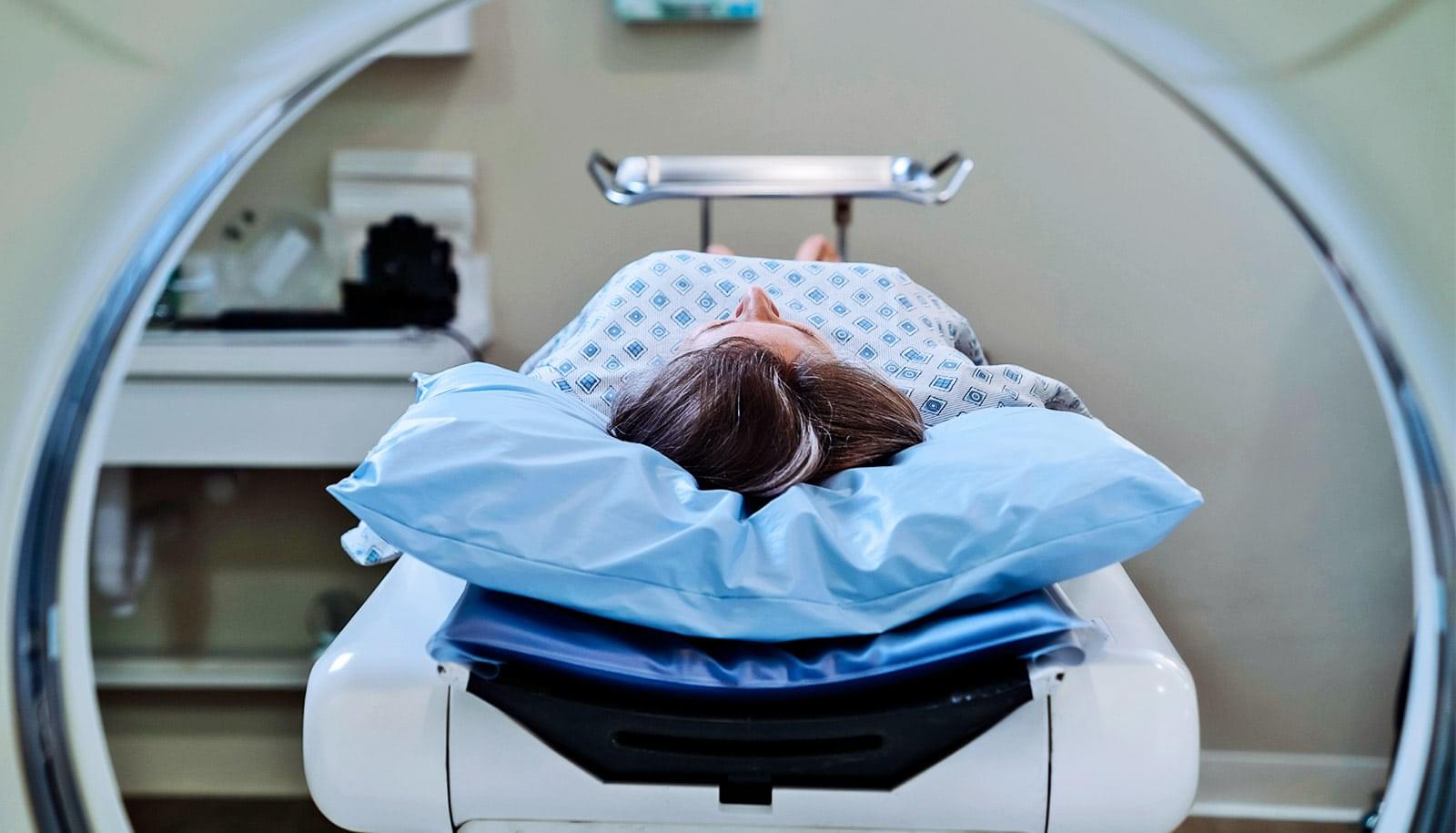
You’ve seen people sliding into the tube of a magnetic resonance imaging (MRI) machine on your favorite medical drama, or maybe you’ve been inside one yourself, waiting as the noisy scanner makes images of your brain, heart, bones, or other structures, which doctors use to identify injury or disease.
Since the 1970s, MRIs have been important diagnostic tools, combining a magnetic field and radio waves to produce snapshots of the body’s interior without using ionizing radiation, which can create health risks at higher doses. An MRI can typically capture changes in anatomy, but the molecular-level changes that could further aid understanding of disease have been beyond its reach.
Now, in a new article in Science Advances, University of California, Santa Barbara researchers report the invention of a modular, genetically encoded, protein-based sensor that enables MRI machines to visualize molecular activity inside cells—a development that could transform how scientists study cancer, neurodegeneration, and inflammation.
Hidden within fish DNA are powerful genetic twists that may explain one of nature’s biggest mysteries: how new species form so quickly. In Lake Malawi, hundreds of cichlid fish species evolved at lightning speed, and scientists now think “flipped” sections of DNA—called chromosomal inversions—are the secret. These inversions lock together useful gene combinations, creating “supergenes” that help fish rapidly adapt to different environments, from deep waters to sandy shores.
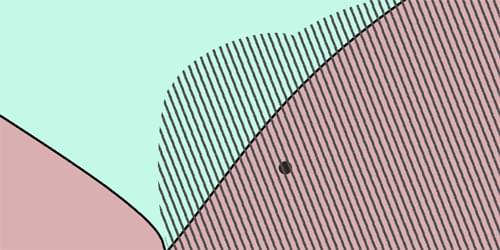
Jerk the support from which a swinging pendulum hangs, and you will change the pendulum’s motion. But move the support very gradually, and the system will adapt so that the pendulum’s motion relative to its support remains unchanged. A similar principle holds true for quantum systems. The quantum adiabatic theorem says that a system, when perturbed sufficiently slowly, remains in its instantaneous ground state. Sarah Damerow and Stefan Kehrein of the University of Göttingen in Germany now show that aspects of this principle remain true even for the opposite limit: The ground state remains the single most likely state even for a quantum system subjected to an instantaneous perturbation [1].
Formally, the quantum adiabatic theorem describes how a perturbed system’s Hamiltonian evolves in time. It shows that, for a slow perturbation, the system transitions from its initial ground state to the time-evolved Hamiltonian’s ground state with a probability greater than the combined probabilities of all the excited states.
Damerow and Kehrein used analytical and numerical tools to examine a quantum system undergoing rapid perturbation. They considered a quantum Ising model—a lattice of interacting magnetic spins—subjected to a rapidly changing external field. They found that the system was more likely to evolve from its initial ground state to the time-evolved Hamiltonian’s ground state than to any given excited state—provided that the lattice was in the same magnetic phase (paramagnetic or ferromagnetic) in both ground states.