Toggle light / dark theme

Get the latest international news and world events from around the world.

Log in for authorized contributors

Chiral nanowires can actively change electron spin direction

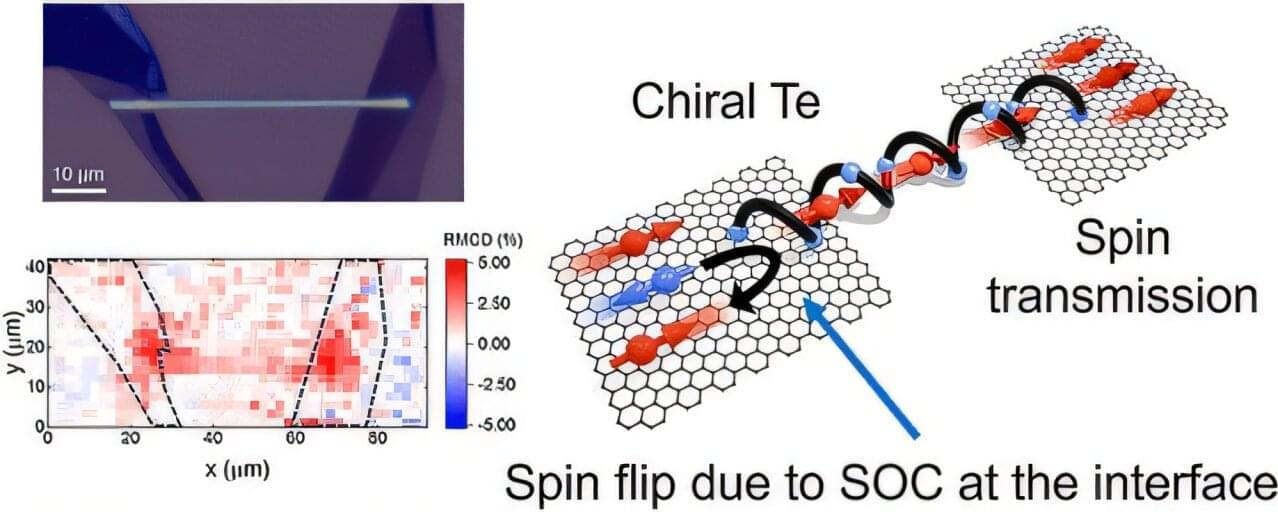
The phenomenon where electron spins align in a specific direction after passing through chiral materials is a cornerstone for future spin-based electronics. Yet, the precise process behind this effect has remained a mystery—until now.

An international team of researchers, affiliated with UNIST, has directly observed how electron spins behave in real space, providing a fresh understanding of this complex interaction. The findings were published in ACS Nano.

Professors Noejung Park and Seon Namgung from the Department of Physics at UNIST, in collaboration with Professor Binghai Yan from Pennsylvania State University, conducted the study. Their work confirms that chiral materials actively change the spin orientation of electrons, overturning the long-held belief that these materials simply filter spins without affecting their direction.
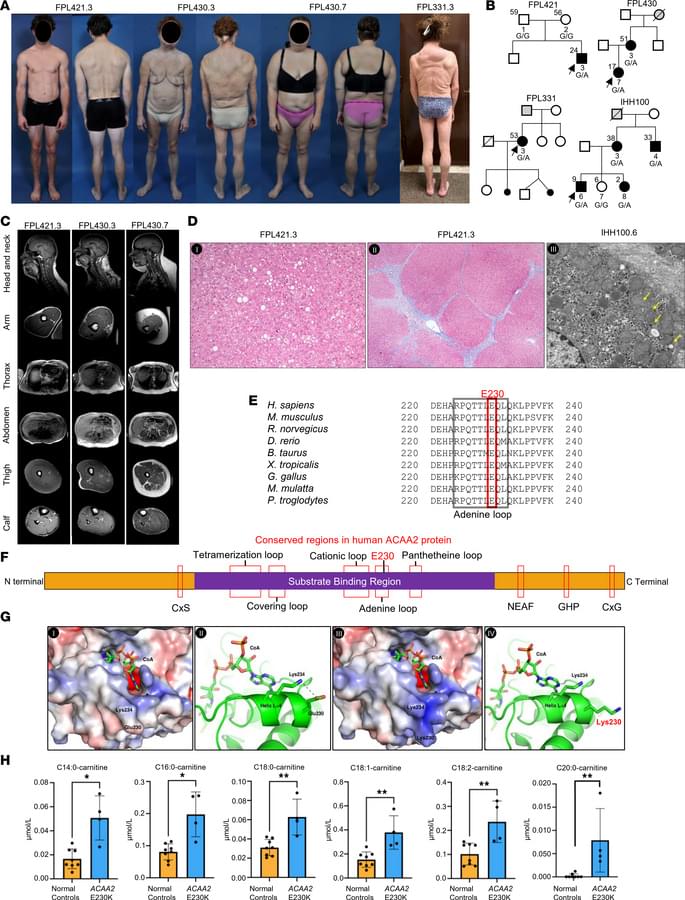
Clinical features, pedigrees, MRI, and liver pathology of patients carrying heterozygous p.Glu230Lys

This Research Letter describes a new molecular basis for lipodystrophy syndromes.

Abhimanyu Garg & team report on a variant in ACAA2 that causes hepatitis and hypoglycemia during infancy and lipodystrophy during adulthood accompanied by elevated plasma long chain acylcarnitines.


Address correspondence to: Abhimanyu Garg, 5,323 Harry Hines Boulevard, Dallas, Texas 75,390, USA. Phone: 214.648.2895; Email: [email protected].

Find articles by Simha, V. in: | Google Scholar

1Mayo Clinic, Rochester, Minnesota, USA.

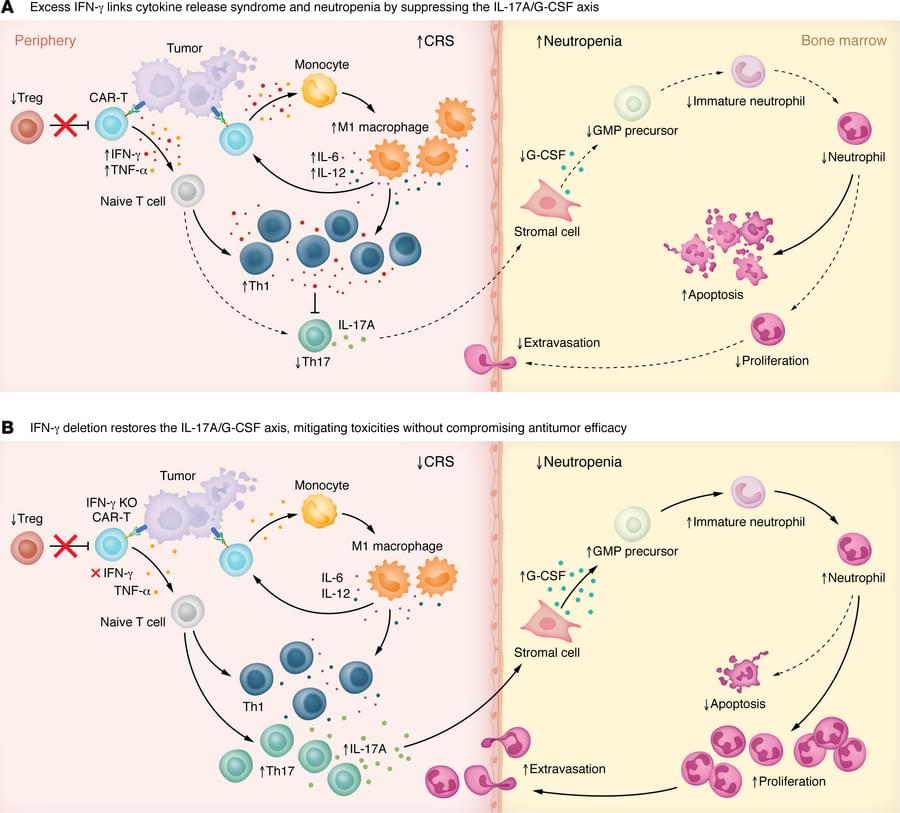
Abstract: Fanning the flames: IFN-γ fuels CAR-T inflammation and cytopenia:

A Commentary by Stefanie R. Bailey & Marcela V. Maus on Payal Goala et al.: https://doi.org/10.1172/JCI194631


1Division of Pediatric Hematology/Oncology, Department of Pediatrics, Department of Microbiology, Immunology and Cancer Biology, University of Virginia, Charlottesville, Virginia, USA.

2Cellular Immunotherapy Program, Mass General Cancer Center, Krantz Family Center for Cancer Research, Massachusetts General Hospital, Department of Medicine, Harvard Medical School, Boston, Masschusetts, USA.

Address correspondence to: Marcela V. Maus, 149 13th Street, Room 3.216, Charlestown, Massachusetts, 2,129, USA. Email: [email protected].

An IL-12 partial agonist sustains intratumoral lymphocyte activation and detoxifies systemic IL-12 therapy

IL-12 is a promising tumor immunotherapy, but its therapeutic use is limited by acute NK cell-associated toxicity. Koliesnik et al. report the discovery of STK-026, an IL-12-Fc partial agonist that preferentially drives effector function in T cells, which express high levels of IL-12 receptors, and avoids NK cell-associated toxicity.

Aivela Takes a Different Spin on the Health-Tracking Smart Ring

Smart rings are no longer novel. A few hidden superpowers, however, might make them interesting again.

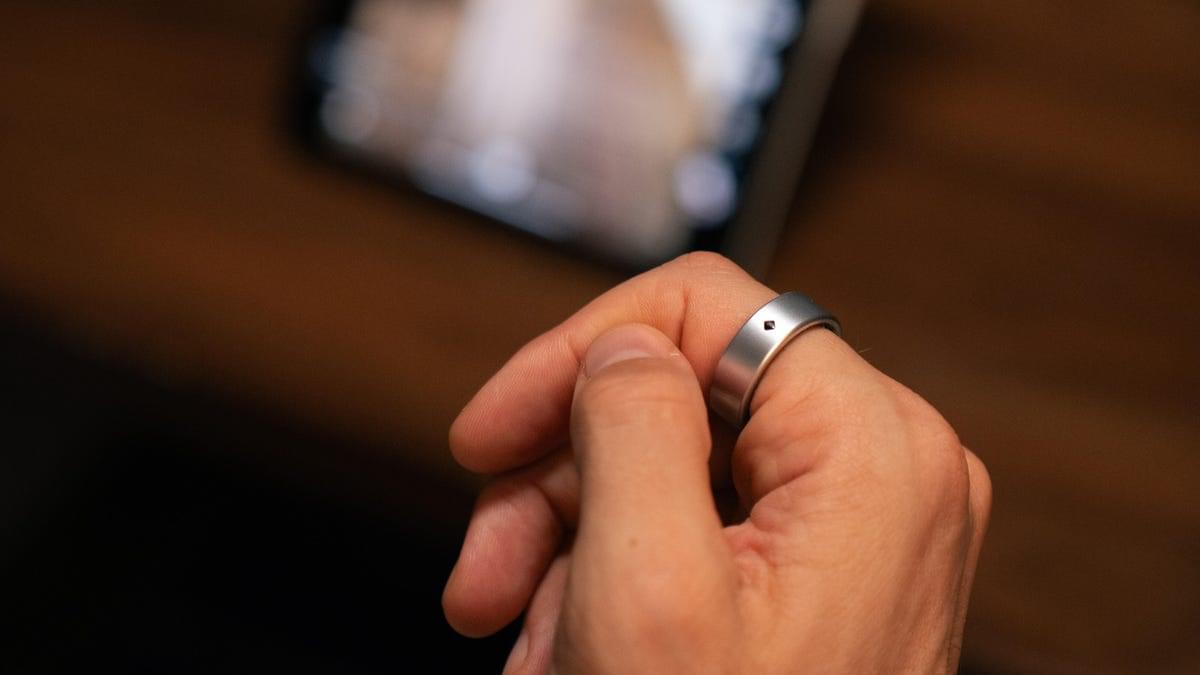
Most devices are increasingly focused on biometric tracking. The Aivela Ring Pro aims to stand out with stealth gesture and touch controls. With a stealth flick, swipe or slide of the finger, you can control music playback, adjust volume, trigger the camera, advance slide decks, scroll and more on your phone.

Launched at CES 2026, the Ring Pro resembles many of its competitors, including the Oura Ring and Samsung’s Galaxy Ring. There’s only so much you can do with ring design after all. It has the familiar metallic (scratch-resistant) finish, a slightly thicker top profile and sensors lining the interior. The primary visual cue indicating something different is a small diamond-shaped engraving at the center, which signals the location of the touchpad.

A Hidden Brain Signal Can Predict Alzheimer’s Years Before Diagnosis

A subtle change in brain wave activity could predict Alzheimer’s disease more than two years before diagnosis, according to a new study.

The signal could prove to be a sensitive biomarker of cognitive decline.

Using a noninvasive imaging technique called magnetoencephalography (MEG), neuroscientists at Brown University in the US and Spain’s Complutense University of Madrid and University of La Laguna analyzed the resting brain wave activity of 85 patients diagnosed with mild cognitive impairment.

Tiny tech, big AI power: What are 2-nanometer chips?

Taiwan’s world-leading microchip manufacturer TSMC says it has started mass producing next-generation “2-nanometer” chips.

AFP looks at what that means, and why it’s important:

What can they do? The computing power of chips has increased dramatically over the decades as makers cram them with more microscopic electronic components.

/* */