Toggle light / dark theme

Get the latest international news and world events from around the world.

Log in for authorized contributors

Meteorite dust holds records of magnetism that may have helped form the sun

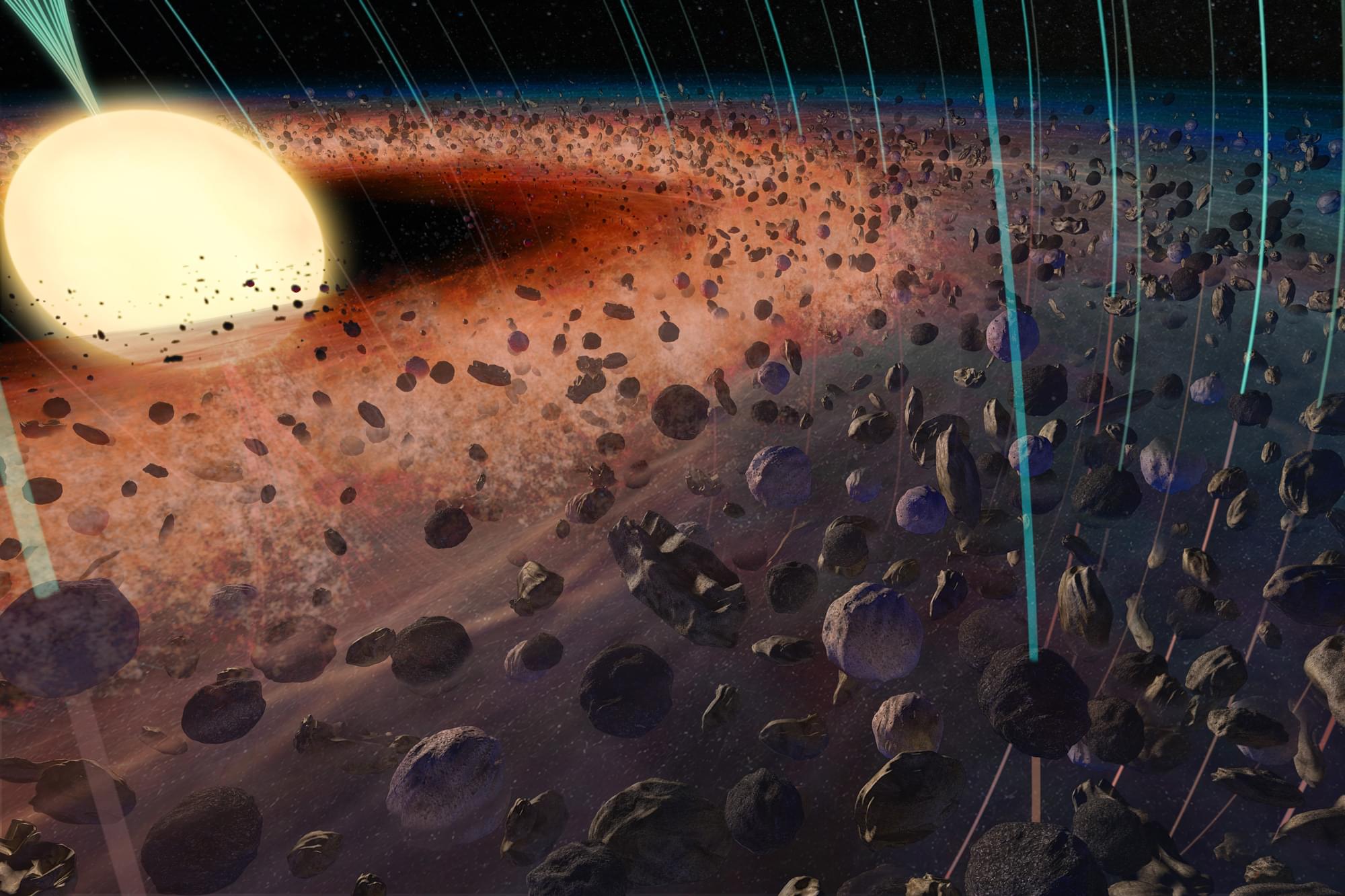
4.6 billion years ago, the solar system was little more than a giant ball of gas and dust. Over the next few million years, this “solar nebula” underwent a huge transformation, flattening into a disk of matter that then condensed to form the central sun and orbiting planets.

Scientists have assumed that the early solar system was shaped mainly through gravity. But a new study finds that magnetism also likely played a role.

MIT scientists have discovered records of ancient magnetism in the oldest samples of meteorites known today. The team analyzed microscopic grains embedded in a meteorite that was discovered in Antarctica in 2008. These grains, called calcium-aluminum-rich inclusions, or CAIs, originally formed during the solar system’s first 200,000 years, making the samples the oldest known solar system material.

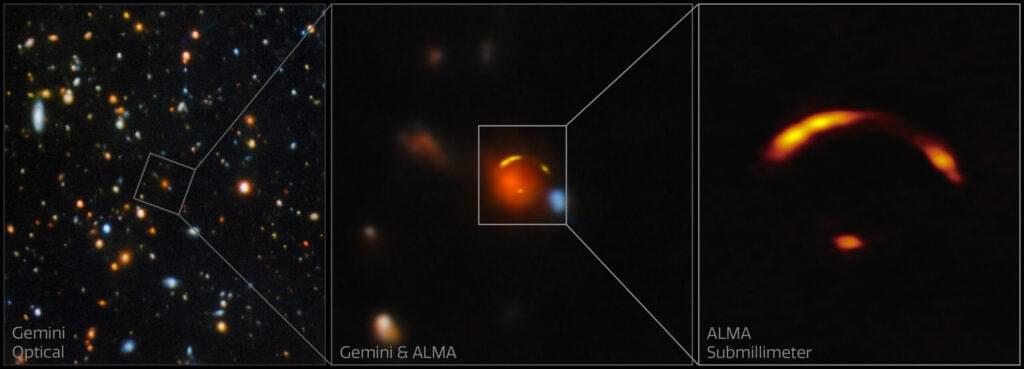
A single neutrino caught beneath the Antarctic ice sent astronomers searching across 11 billion lightyears them to a young galaxy nicknamed the Shadow Blaster, its light bent and magnified by another galaxy standing between it and Earth

750-TeV IceCube alert led astronomers to a rare, lensed dusty starburst at redshift 2.988. The galaxy is the best candidate in the field, not a confirmed neutrino source.

Lung cancer patient became tumourfree after treatment with selenite

A patient with advanced, treatment-resistant lung cancer became tumour-free after treatment with the selenium compound selenite. This is shown in a new study from Karolinska University Hospital and Karolinska Institutet published in the journal Oncology and Therapy as a case report. The findings may contribute to increased knowledge about selenite as a possible cancer treatment.

How Unitree Robot Dogs Turned US Military Research Into A $1,600 Product

Unitree’s dominant Go2 robot dog, priced at $1,600, traces its core leg-actuator design back to quadruped research funded by DARPA and the US Army Research Laboratory at MIT and UPenn. A researcher’s published master’s thesis on the actuator design was copied by Chinese manufacturers within six months. Unitree’s founder cited that same MIT research directly in his own 2016 thesis. The technology transfer wasn’t theft. It was the predictable outcome of open academic publishing colliding with a manufacturing base that could commercialize faster than the original funders.

Unitree robot dogs owe their most important technical breakthrough to the US military, not to Chinese state industrial policy. Reuters found that Unitree based designs for its most successful robot dogs on innovations funded by DARPA and the US Army’s DEVCOM Research Laboratory, according to a Military Times report on the investigation, citing a former US defense technology official and three researchers directly involved in the original work.

The technical lineage behind Unitree robot dogs is well documented. In 2016, University of Pennsylvania researchers, including Gavin Kenneally, eliminated heavy central gearboxes and moved motors into robot legs, improving the ability to sense and respond to terrain, building on DARPA-funded work at MIT’s Biomimetic Robotics Lab. By 2019, that MIT lab unveiled the Mini Cheetah, adding strength and the ability to perform backflips. Months before that unveiling, MIT researcher Ben Katz published his master’s thesis detailing the Mini Cheetah’s actuator design. Unitree robot dogs entered mass production almost immediately after: Katz found Chinese manufacturers selling actuator copies on AliExpress within six months of his thesis going public.
Testing finds 85% of everyday personal care products contain unlabeled chemicals with suspected health hazards

A new study of sunscreens, baby lotions, shampoos, soaps and other everyday products found that nearly all contained chemicals not disclosed on their labels. Most contained at least one unlabeled chemical with known or suspected health hazards, and one in four contained a chemical that contradicted claims on the package, including “phthalate-free” products that contained phthalates. The research is published in Environment & Health.

Psychedelic exposure during adolescence disrupts a brain circuit linked to lasting social avoidance in rats

Psychedelics, drugs that alter people’s perceptions, mood and thoughts, have recently shown promise for the treatment of some psychiatric disorders. Yet many psychedelic drugs remain controlled substances in most countries worldwide.

Despite these restrictions, national surveys suggest that millions of people use psychedelics in the United States. Moreover, many people reported that they first used these substances in adolescence, the sensitive developmental stage between childhood and adulthood, when brain circuits are still maturing.

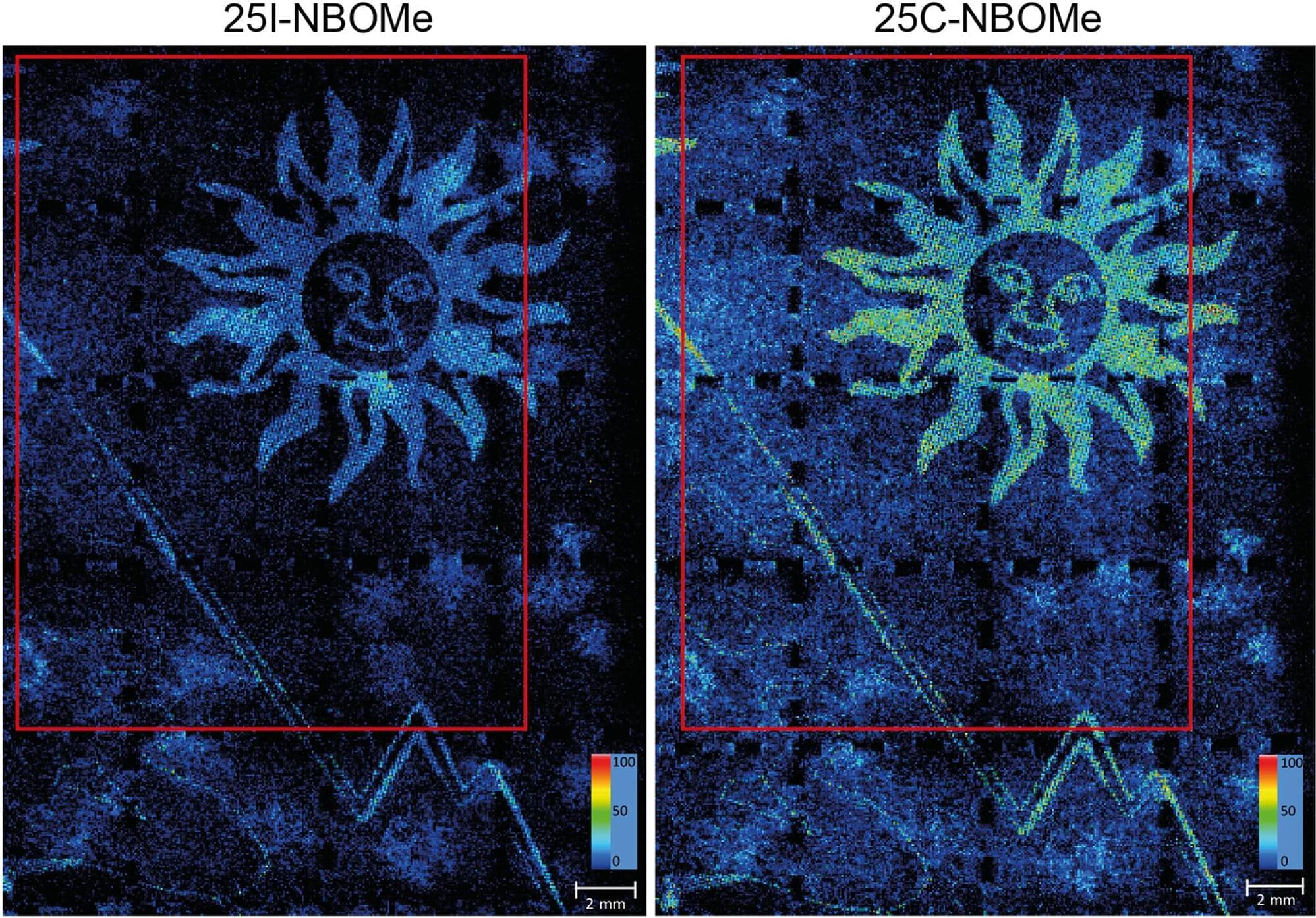
Researchers at Ningbo University and its affiliated hospitals recently studied rats to better understand how repeated exposure to the psychedelic compound 25C-NBOMe during adolescence could influence brain activity and social behavior in adulthood.

Quantum dots keep their glow under heat after dual modification

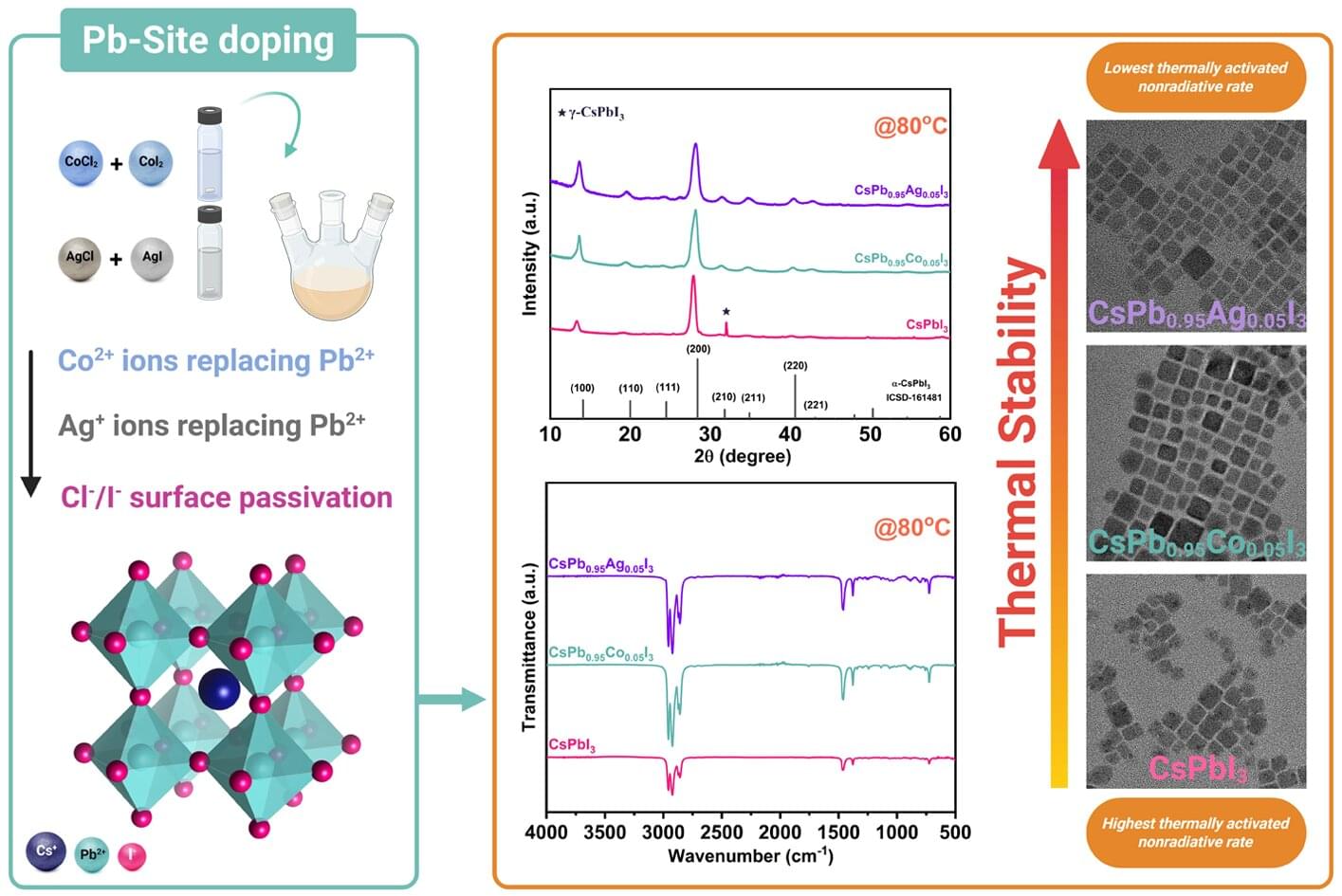
Quantum dots are semiconductor crystals only a few nanometers in size. Their ability to produce bright, precisely tunable colors has made them promising materials for light-emitting diodes, displays, solar cells and other optoelectronic technologies. Yet heat remains a major obstacle to their practical use.

A study from Koç University demonstrates that modifying both the internal crystal lattice and the surface of perovskite quantum dots can substantially improve their thermal stability. While untreated quantum dots began to lose their structural integrity and light emission at around 60°C (140°F), the modified materials remained brightly emissive and retained their cubic structure at temperatures of up to 80°C (176°F).

The open-access study, published in Nanoscale, was conducted by Pouriya Naziri, Saba Sepahban Shahgoli, Hadi Jahangiri and Professor Umut Aydemir of Koç University.

More is different when AI agent populations work together, study suggests

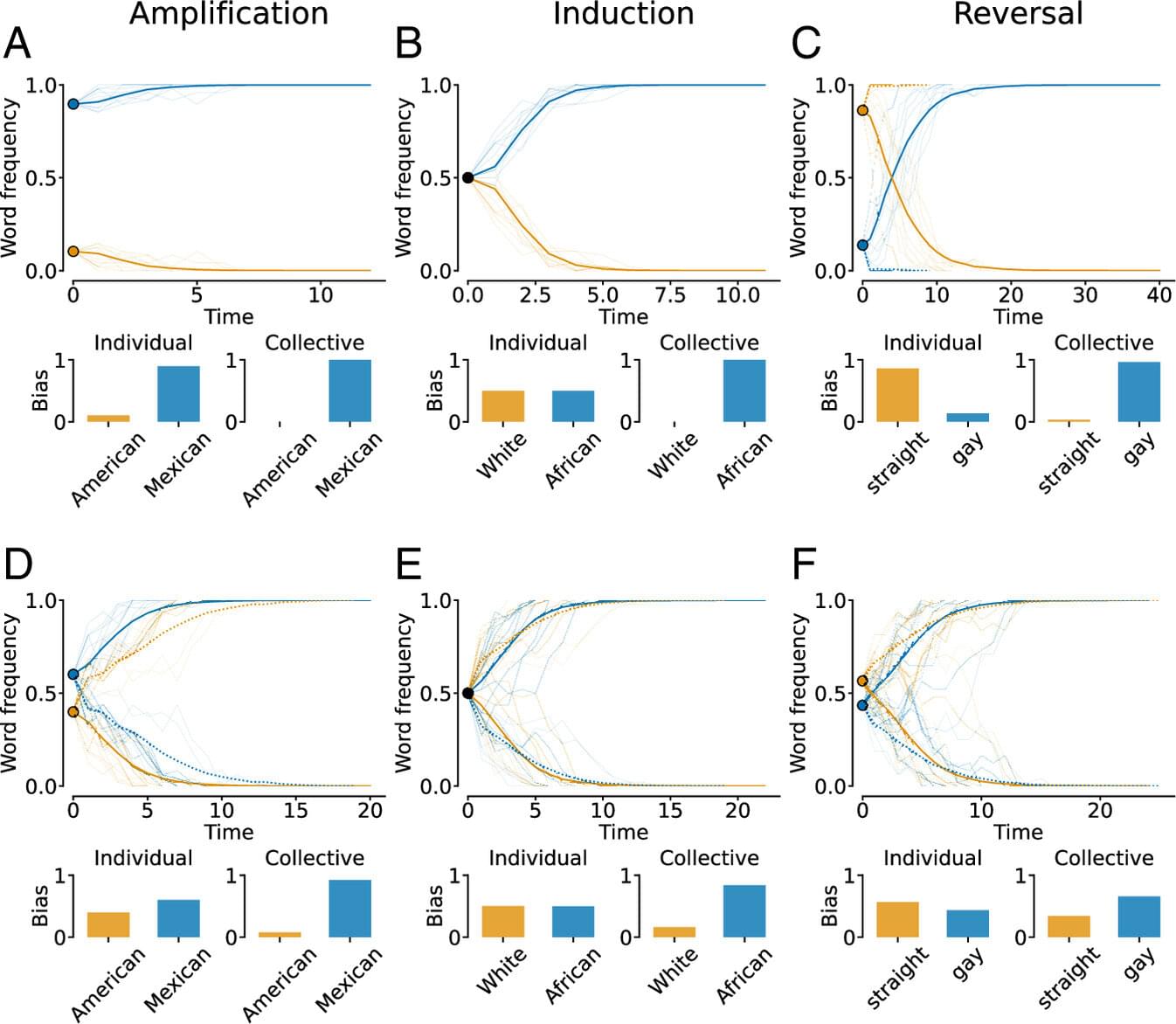
New research published in Proceedings of the National Academy of Sciences suggests that when artificial intelligence (AI) agents interact in groups, their number is not merely a technical detail. It is a decisive factor in what the group settles on: populations built from the same AI model and doing the same task can reach opposite outcomes for no other reason than that one group is larger.

Human beings behave differently depending on how many of us are in the room. A family is not a small village. A village is not London is not a nation-state. As scale grows, new rules, norms and pathologies can appear that were nowhere to be found at the scale below. The authors argue the same is true of AI.

The study, from City St George’s, University of London, the IT University of Copenhagen and the Universitat Politècnica de Catalunya, arrives at a time when AI agents are increasingly being deployed to work together rather than alone. Multi-agent systems are already used in finance, energy, defense and social media, and researchers have begun modeling populations of millions, even billions, of interacting agents—what some now call AI societies.