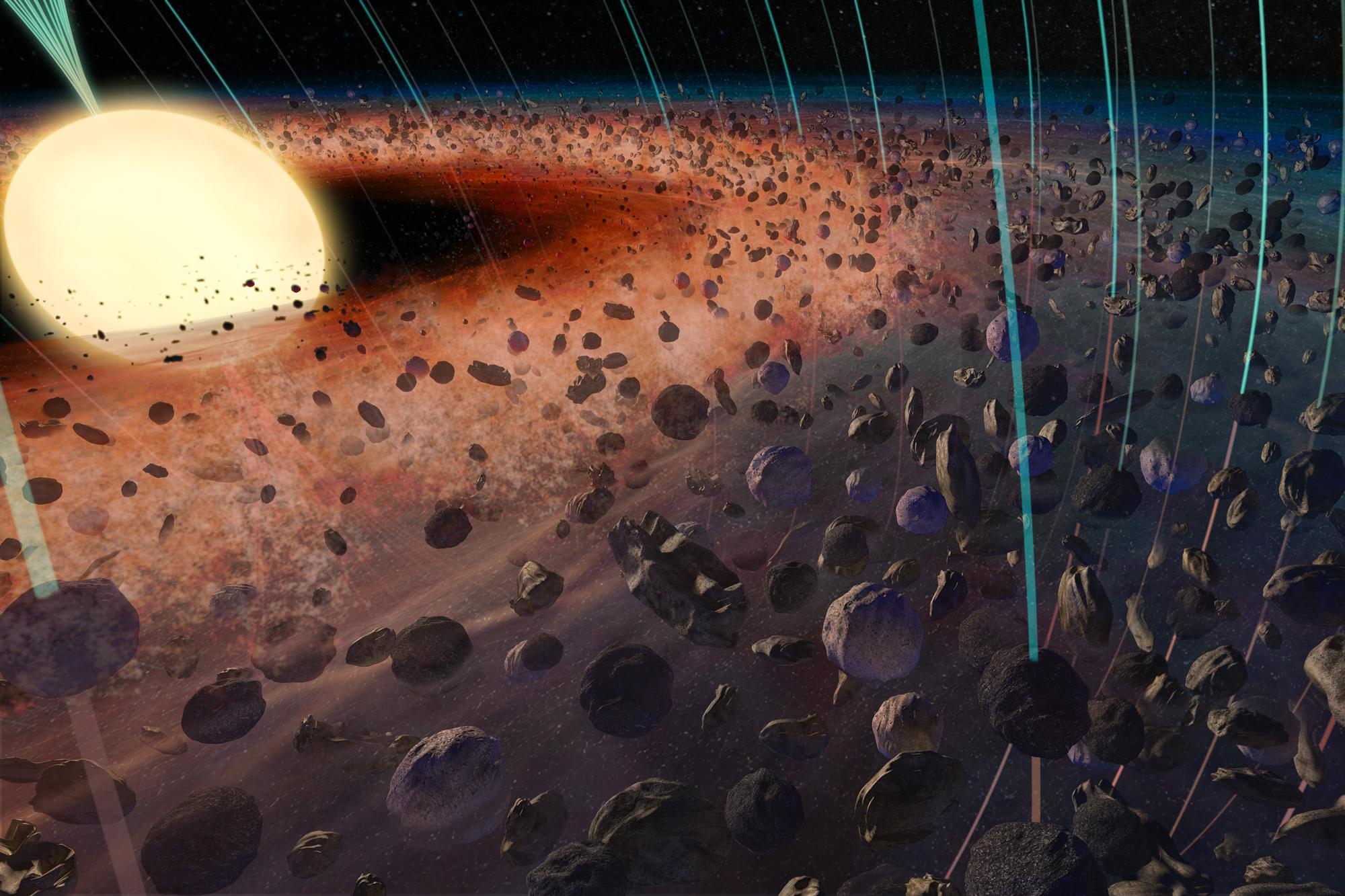
4.6 billion years ago, the solar system was little more than a giant ball of gas and dust. Over the next few million years, this “solar nebula” underwent a huge transformation, flattening into a disk of matter that then condensed to form the central sun and orbiting planets.
Scientists have assumed that the early solar system was shaped mainly through gravity. But a new study finds that magnetism also likely played a role.
MIT scientists have discovered records of ancient magnetism in the oldest samples of meteorites known today. The team analyzed microscopic grains embedded in a meteorite that was discovered in Antarctica in 2008. These grains, called calcium-aluminum-rich inclusions, or CAIs, originally formed during the solar system’s first 200,000 years, making the samples the oldest known solar system material.