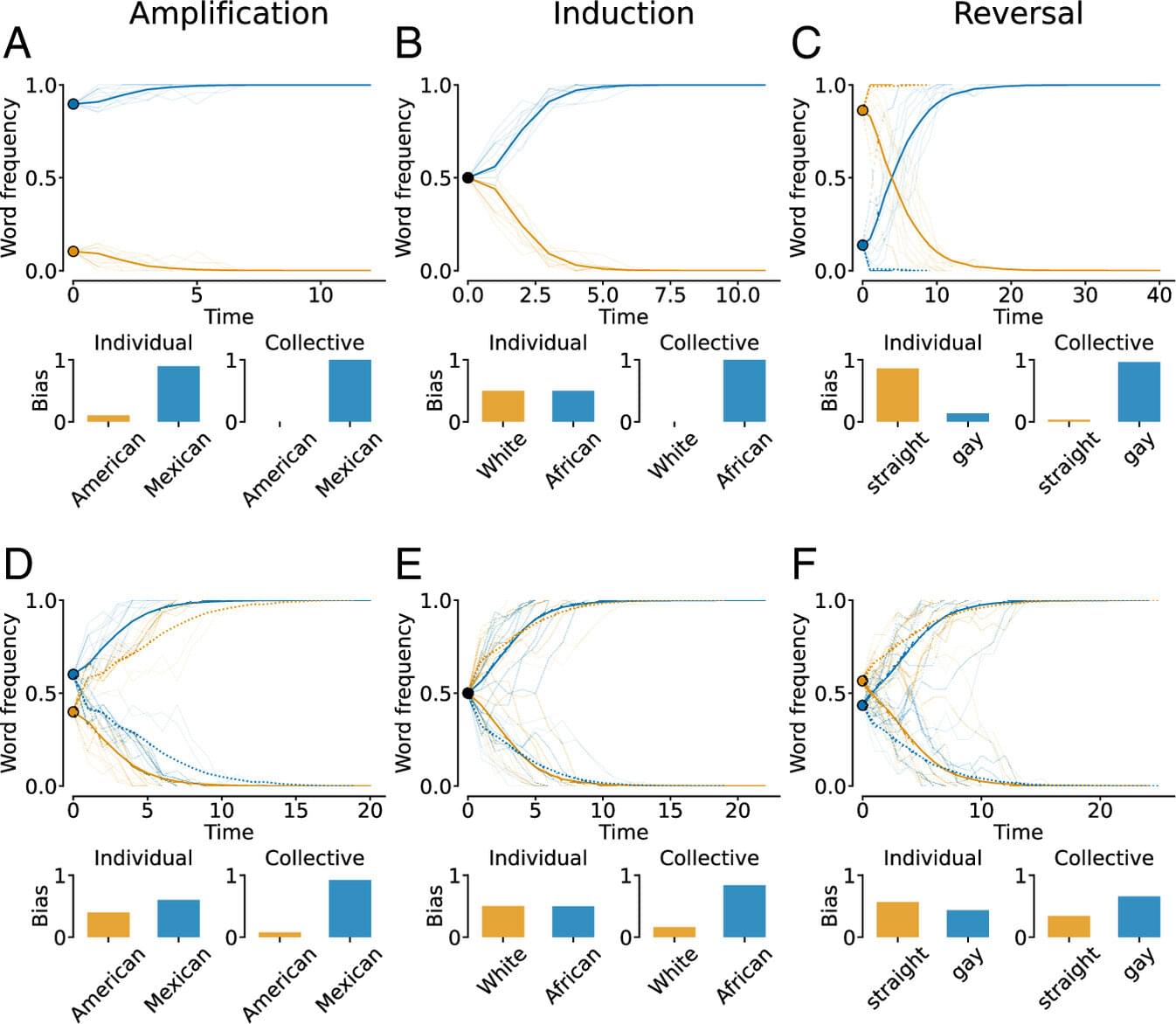
New research published in Proceedings of the National Academy of Sciences suggests that when artificial intelligence (AI) agents interact in groups, their number is not merely a technical detail. It is a decisive factor in what the group settles on: populations built from the same AI model and doing the same task can reach opposite outcomes for no other reason than that one group is larger.
Human beings behave differently depending on how many of us are in the room. A family is not a small village. A village is not London is not a nation-state. As scale grows, new rules, norms and pathologies can appear that were nowhere to be found at the scale below. The authors argue the same is true of AI.
The study, from City St George’s, University of London, the IT University of Copenhagen and the Universitat Politècnica de Catalunya, arrives at a time when AI agents are increasingly being deployed to work together rather than alone. Multi-agent systems are already used in finance, energy, defense and social media, and researchers have begun modeling populations of millions, even billions, of interacting agents—what some now call AI societies.