This professional drone builder built a drone he can fly in. 🆒.
Get the latest international news and world events from around the world.

New virus could help destroy cancer
A new study investigates the potential use of a virus against cancer. Researchers hope that the findings will be useful for different types of cancer.
Tiny device bends light to create radiation
Huge facilities, typically the size of several football stadiums, usually generate synchrotron radiation. The new device is smaller than a match.
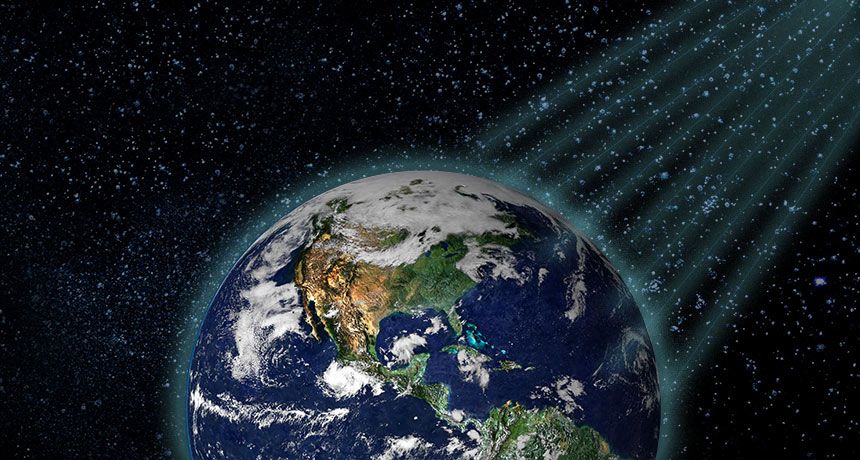
Physicists measured Earth’s mass using neutrinos for the first time
Counting tiny particles that can zip straight through the Earth reveals what the planet is like on the inside.
Transforming Robot Changes Shape at Will
Researchers have created a ‘modular’ robot which can analyze its environment and reconfigure itself to overcome obstacles and achieve tasks.
This video was reproduced with permission and was first published on October 31, 2018. It is a Nature Video production.
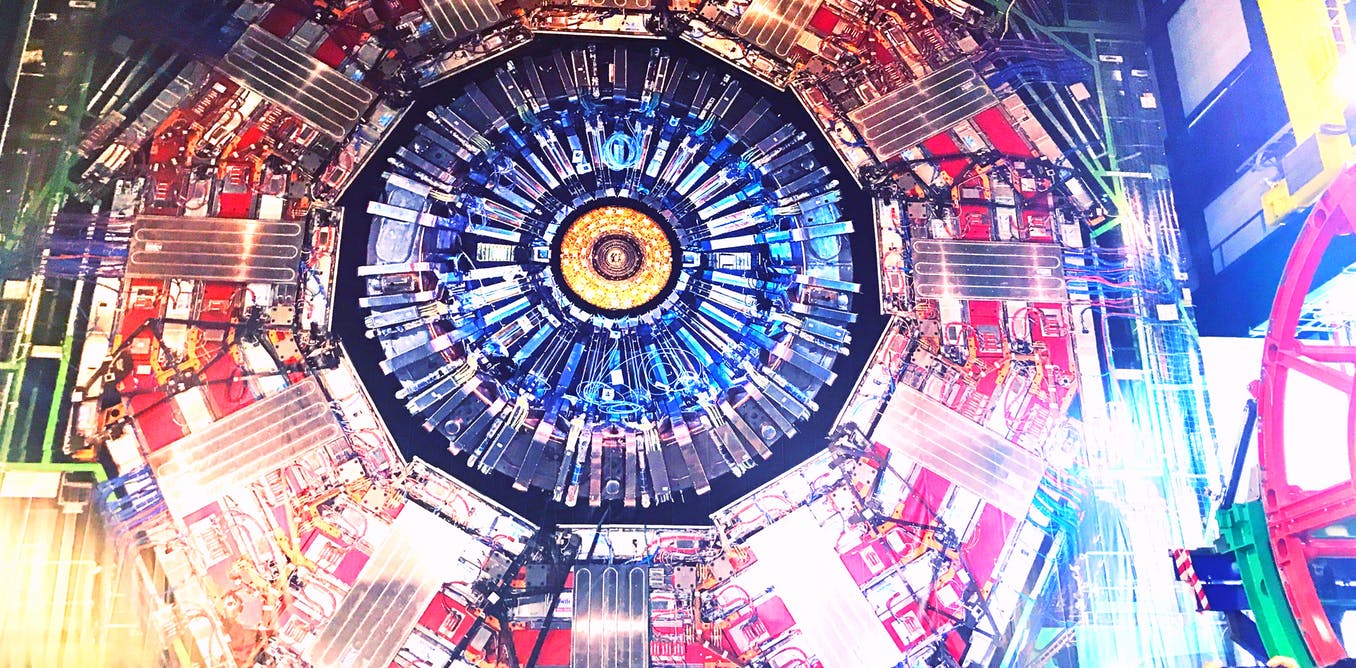
Mystery particle spotted? Discovery would require physics so weird that nobody has even thought of it
Scientists at Cern’s Large Hadron Collider have seen something that may force us to abandon everything we thought we knew about the world on the level of particles.

A Giant Space Laser on Earth Could Blast Messages at Alien Planets
And hey, it might work within “decades to centuries.”
Scientists want to equip Earth with some planetary porch lights.
The Future of AI with Kai-Fu Lee
Kai–Fu Lee who is a venture capitalist, technology executive, writer, and an artificial intelligence (AI) expert is speaking with Sebastian Thrun, founder of Udacity and Google’s self-driving cars program, about: ✅the realities of AI in business ✅which companies are leading AI development ✅how employees can adapt their skills for ever-changing technology.
Kai-Fu Lee is speaking with Sebastian Thrun, founder of Udacity and Google’s self-driving cars program, about:

‘Robots need human rights’: Why activists want a better life for machines
One of the UK’s biggest sites, Metro, has run a major story on the Transhumanist Bill of Rights.
We meet the campaigners calling for the UN to adopt a Bill of Rights which lets ‘digital entities’ pursue life, liberty and happiness.
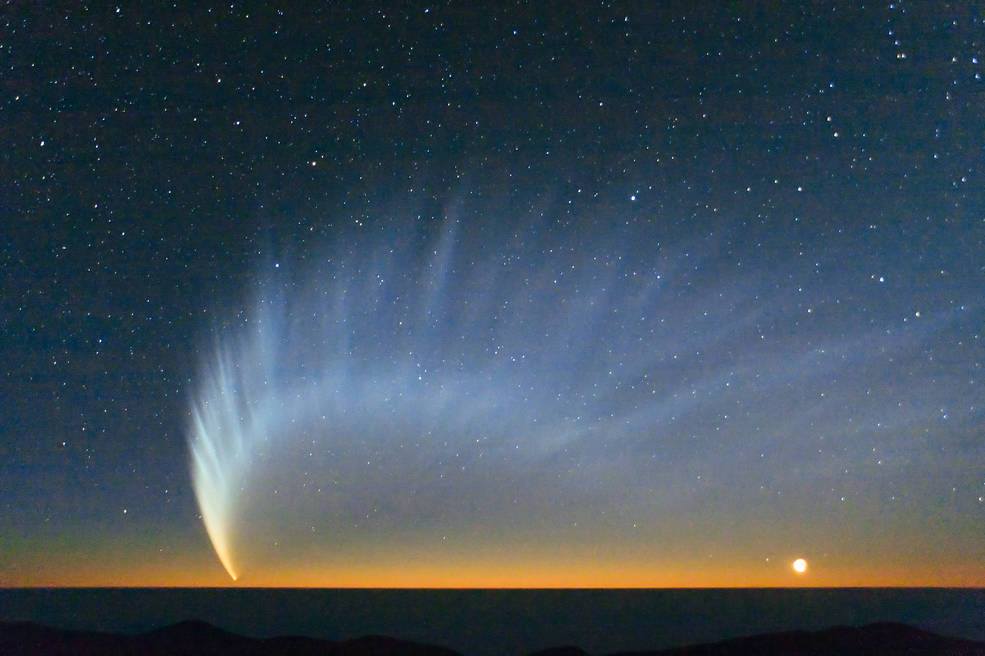
What do the six-tailed Great Comet of 1744 and Comet McNaught of 2007 have in common?
Aside from being comets, they both offer valuable insight about how solar wind affects the dust tail—the long stream of dust following in the comet’s path. Scientists used a temporal map, which layers information from multiple images, to discover that variations of solar wind push the dust around like a ruffled feather—suggesting that the dust is electronically charged. This discovery sheds light on the processes that formed dust into asteroids, moons, and planets in the early days of our solar system.