Category: transportation – Page 249
Bird’s-eye view improves safety of autonomous driving
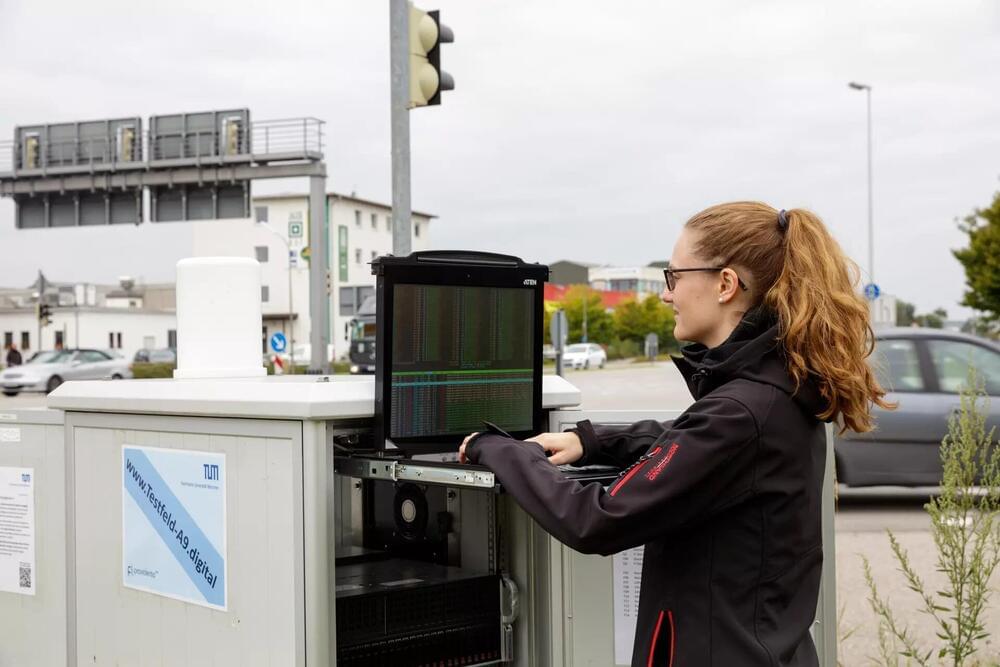
In the Providentia++ project, researchers at the Technical University of Munich (TUM) have worked with industry partners to develop a technology to complement the vehicle perspective based on onboard sensor input with a bird’s-eye view of traffic conditions. This improves road safety, including for autonomous driving.
The expectations for autonomous driving are clear: “Cars have to travel safely not only at low speeds, but also in fast-moving traffic,” says Jörg Schrepfer, the head of Driving Advanced Research Germany at Valeo. For example, when objects fall off a truck, the “egocentric” perspective of a car will often be unable to detect the hazardous debris in time. “In these cases, it will be difficult to execute smooth evasive action,” says Schrepfer.
Researchers in the Providentia++ project have developed a system to transmit an additional view of the traffic situation into vehicles. “Using sensors on overhead sign bridges and masts, we have created a reliable, real-time digital twin of the traffic situation on our test route that functions around the clock,” says Prof. Alois Knoll, project lead manager TUM. “With this system, we can now complement the vehicle’s view with an external perspective—a bird’s-eye view—and incorporate the behavior of other road users into decisions.”
This Canadian company wants to build a train-plane ‘hybrid’ that can go 620 miles per hour—take a look
Move over, Elon Musk and Richard Branson: A Canadian company wants to join the fight for better high-speed train travel.
Toronto-based TransPod recently unveiled plans for a “FluxJet,” a fully-electric transportation system that’s “a hybrid between an aircraft and a train.” The project, currently in the conceptual stage, would involve 82-foot-long, magnetically levitated trains that would carry passengers at roughly 621 miles per hour.
That’s faster than a commercial jet, and roughly three times the speed of most high-speed trains — with zero emissions, no less. The FluxJet would rely on “contactless power transmission,” where the train would pull power from the existing electric grid through magnetic fields, the company says.
New high-speed motor offers improved power density for use in electric vehicles
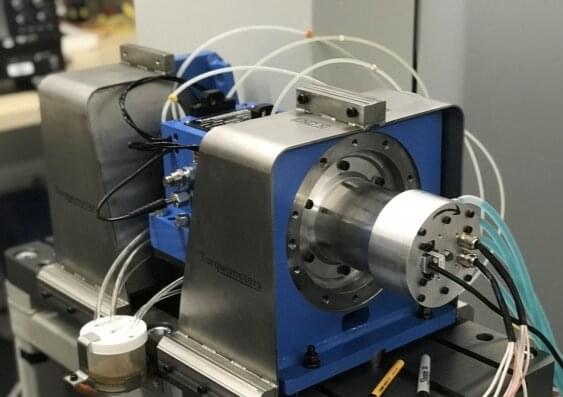
UNSW engineers have built a new high-speed motor which has the potential to increase the range of electric vehicles.
The design of the prototype IPMSM type motor was inspired by the shape of the longest railroad bridge in South Korea and has achieved speeds of 100,000 revolutions per minute.
The maximum power and speed achieved by this novel motor have successfully exceeded and doubled the existing high-speed record of laminated IPMSMs (Interior Permanent Magnet Synchronous Motor), making it the world’s fastest IPMSM ever built with commercialized lamination materials.
How the suburbs are restoring biodiversity back to America
Grass lawns need to be replaced.
The united states of America, is the 2nd highest co2 emitting country in the world and has the third largest population with approximately 330 million people.
According to US Department of Transportation. 276 million vehicles registered in the USA that means 91% of households have access to a vehicle.
This is largely attributed to the fact that 50% of the population live in low density suburban neighborhoods and therefore depend on a vehicle to be able to get around.
American Suburbia has grown exponentially since the post war era which was meant to elevate the housing crisis at the time, new building techniques made it fast & cheap to make mass produced homes.
Automatically optimizing execution of unfamiliar tensor operations
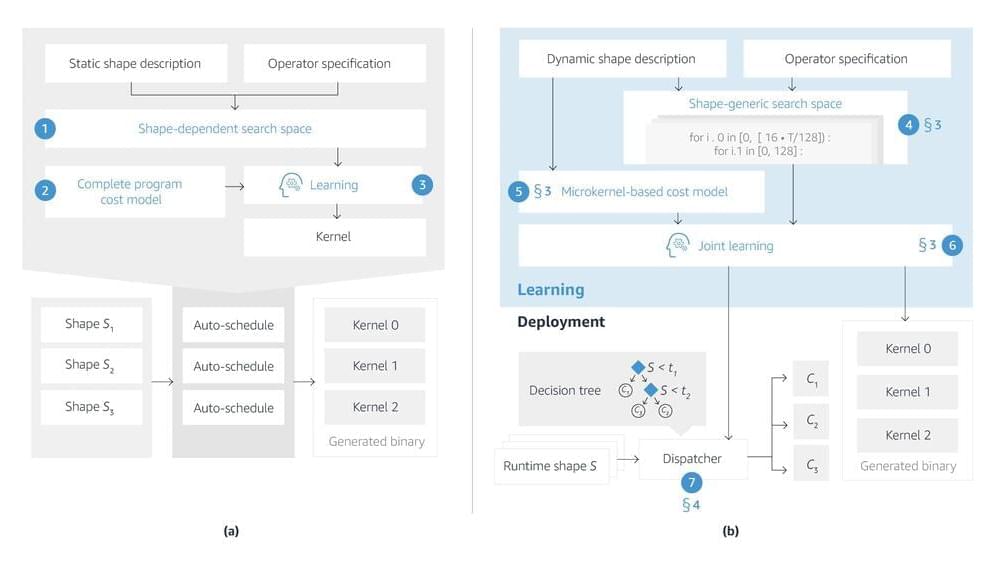
At this year’s Conference on Machine Learning and Systems (MLSys), we and our colleagues presented a new auto-scheduler called DietCode, which handles dynamic-shape workloads much more efficiently than its predecessors. Where existing auto-encoders have to optimize each possible shape individually, DietCode constructs a shape-generic search space that enables it to optimize all possible shapes simultaneously.
We tested our approach on a natural-language-processing (NLP) task that could take inputs ranging in size from 1 to 128 tokens. When we use a random sampling of input sizes that reflects a plausible real-world distribution, we speed up the optimization process almost sixfold relative to the best prior auto-scheduler. That speedup increases to more than 94-fold when we consider all possible shapes.
Despite being much faster, DietCode also improves the performance of the resulting code, by up to 70% relative to prior auto-schedulers and up to 19% relative to hand-optimized code in existing tensor operation libraries. It thus promises to speed up our customers’ dynamic-shaped machine learning workloads.

New AI enables autonomous vehicles to adapt to challenging weather conditions
Researchers at Oxford University’s Department of Computer Science, in collaboration with colleagues from Bogazici University, Turkey, have developed a novel artificial intelligence (AI) system to enable autonomous vehicles (AVs) achieve safer and more reliable navigation capability, especially under adverse weather conditions and GPS-denied driving scenarios. The results have been published today in Nature Machine Intelligence.
Yasin Almalioglu, who completed the research as part of his DPhil in the Department of Computer Science, said, “The difficulty for AVs to achieve precise positioning during challenging adverse weather is a major reason why these have been limited to relatively small-scale trials up to now. For instance, weather such as rain or snow may cause an AV to detect itself in the wrong lane before a turn, or to stop too late at an intersection because of imprecise positioning.”
To overcome this problem, Almalioglu and his colleagues developed a novel, self-supervised deep learning model for ego-motion estimation, a crucial component of an AV’s driving system that estimates the car’s moving position relative to objects observed from the car itself. The model brought together richly-detailed information from visual sensors (which can be disrupted by adverse conditions) with data from weather-immune sources (such as radar), so that the benefits of each can be used under different weather conditions.
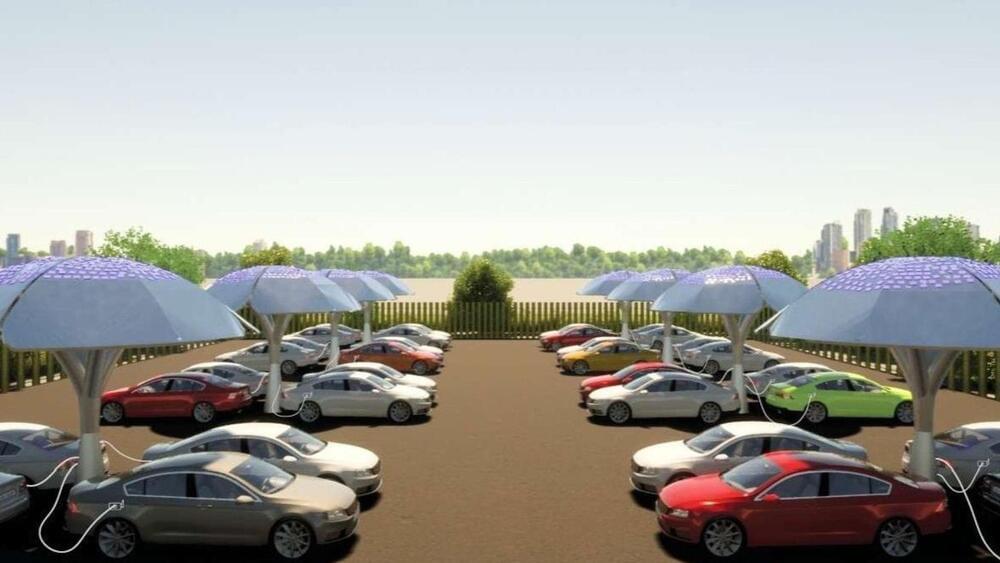
A tree-shaped solar EV charger is coming soon to a car park near you
It will be commercially available in early 2023.
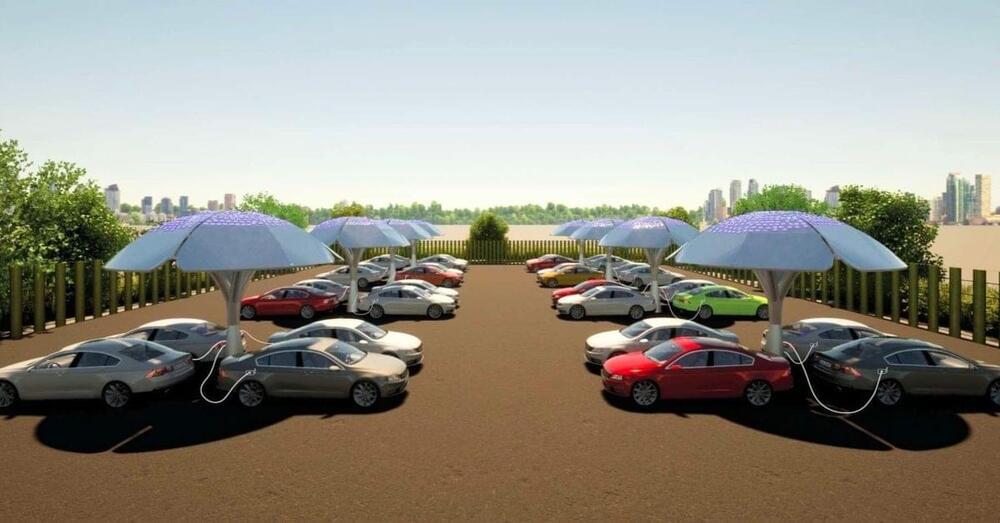
London-based SolarBotanic Trees (SBT) unveiled its solar and storage system that is shaped liked a tree. The company aims to deploy its technology to charge electric vehicles (EVs) to begin with, Electrek.
With the world moving towards less-carbon emissions, there is a rush toward harnessing renewable sources of energy. Not only do these technologies need improvements in their power generation efficiencies, but they also need to be aesthetically pleasing.
Elon’s Real World AI is the Real World Technological Singularity
Ray Kurzweil predicted Technological Singularity nearly 20 years ago. Elon Musk could enable a world of economic abundance with real world AI. Robotaxi and Teslabot will transform the world more than car and the first industrial revolution.
Tesla sells Model Ys for about $60000, but it currently costs them about $30000–40000 to make them. A Teslabot is 1/30th of the mass of a Model Y. It will use 1/30th of the batteries. The software is an overall cost of development. If billions of bots are produced then the cost would trend toward the cost of the hardware plus Apple iPhone-like margins including the software (say 40% gross margin). At Model Y cost of $30k then the hardware cost for Teslabot will go to $1000. $2000 with margins and software. A bot can work for 8,000 hours in a year. 8,760 hours in a year. $2000 divided by 8,000 hours is $0.25. If you add 10 cents per hour for electricity then it is $0.35 per hour. Going beyond that is bots can work in the factory and work cheaper than humans. Currently 15,000 workers in Tesla China factory. Replace all of them with $0.35 per hour bots. Reduce labor cost component. If a lot of bots can increase production rates. by 2X then all costs spread over more units. Bot-produced solar and batteries can lower the cost of energy by vastly increasing the supply. Those trends could get us to $500‑1000 per bot costs and lower energy costs. Having virtually unlimited labor costing less than 35 cents per hour will be transformational.
The Technological Singularity is a predicted point when technological growth becomes radically faster.
Real World AI would be general artificial human-level intelligence. Capabilities to provide broad levels of human jobs and tasks.
Teslabots able to perform loading and deliveries to massively boost the supply chain.
Teslabots able to perform manufacturing tasks in the factory.
Teslabots able to use machines built for humans.
Teslabots able to work in factories to make factories self replicating.
Teslabots able to perform mining.
These capabilities would make economic growth massively exponential.
A low-cost, viable solution for self-driving cars to spot hacked GPS
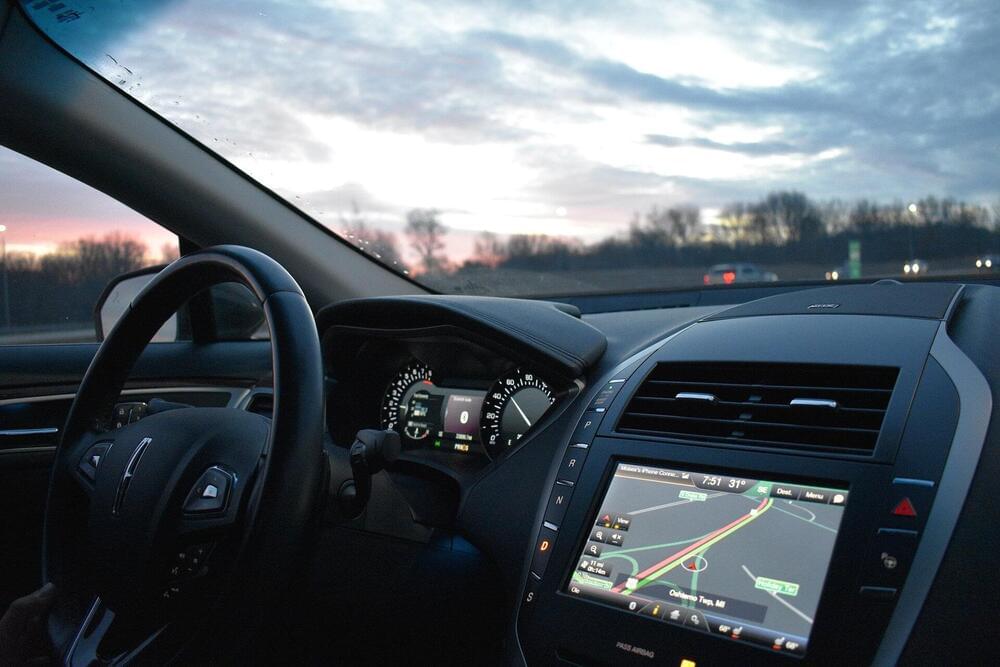
A lot of hurdles remain before the emerging technology of self-driving personal and commercial vehicles is common, but transportation researchers at The University of Alabama developed a promising, inexpensive system to overcome one challenge: GPS hacking that can send a self-driving vehicle to the wrong destination.
Initial research shows a self-driving vehicle can use already installed sensors to detect traveling the wrong route when passengers are unaware of the change, thwarting an attempt to spoof the GPS signal to the vehicle, according to findings outlined in recently published papers in the IEEE Transactions on Intelligent Transportation Systems and Transportation Research Record: Journal of the Transportation Research Board.
Relying on software code and in-vehicle sensors already part of the self-driving system would be cheaper for consumer and commercial vehicles to deny the hacked directions used to steer cargo or people away from their intended destination, said Dr. Mizanur Rahman, assistant professor of civil, construction and environmental engineering and affiliate researcher with the Alabama Transportation Institute.