Once again, it is that time of the year. The annual Tesla AI Day, a demonstration of the most cutting-edge technologies from all of the company’s operating divisions is tomorrow. While Tesla vehicles receive the majority of press attention, the company has a wide range of other applications and products that it is constantly developing and improving.
Tesla’s AI is growing in popularity over time and has a livestream that millions of people view.
Some people watch because they know Elon Musk’s penchant for spectacle.
Whatever the motivation, on September 30, 2022, we can anticipate some shocks and introduce fresh concepts.
We expect four announcements about what Tesla works on; below are our expectations from Tesla AI Day 2022.
📝 The paper “LM-Nav: Robotic Navigation with Large Pre-Trained Models of Language, Vision, and Action” is available below. Note that this is a collaboration between UC Berkeley, University of Warsaw, and Robotics at Google. https://sites.google.com/view/lmnav.
🙏 We would like to thank our generous Patreon supporters who make Two Minute Papers possible: Aleksandr Mashrabov, Alex Balfanz, Alex Haro, Andrew Melnychuk, Benji Rabhan, Bryan Learn, B Shang, Christian Ahlin, Eric Martel, Geronimo Moralez, Gordon Child, Ivo Galic, Jace O’Brien, Jack Lukic, John Le, Jonas, Jonathan, Kenneth Davis, Klaus Busse, Kyle Davis, Lorin Atzberger, Lukas Biewald, Matthew Allen Fisher, Michael Albrecht, Michael Tedder, Nevin Spoljaric, Nikhil Velpanur, Owen Campbell-Moore, Owen Skarpness, Rajarshi Nigam, Ramsey Elbasheer, Steef, Taras Bobrovytsky, Ted Johnson, Thomas Krcmar, Timothy Sum Hon Mun, Torsten Reil, Tybie Fitzhugh, Ueli Gallizzi. If you wish to appear here or pick up other perks, click here: https://www.patreon.com/TwoMinutePapers.
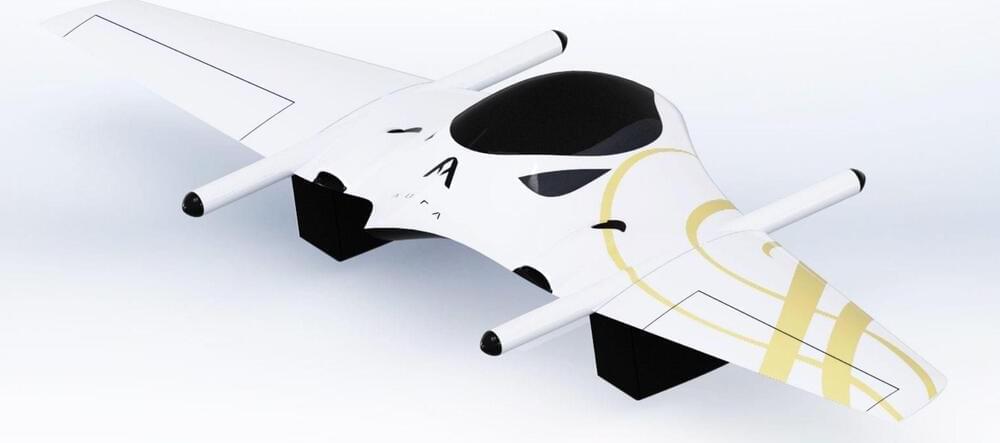
The AWWA Sky Whale concept represents luxurious and greener aviation.
AWWA Sky Whale, a large, intriguing-looking flying machine, is meant to represent the pinnacle of luxury, performance, and sustainability.
At a recent exhibition on future transportation hosted at Kuwait’s Sheikh Abdullah Al Salem Cultural Center, the design of Oscar Vinals was on display.
The Sky Whale concept focuses on the “green” aircraft designs of the future for the ordinary airliner planes of the twenty-first century, which might profit from technological solutions that are more eco-friendly, most efficient, and offer maximum performance.
As electric vehicles grow in popularity, the spotlight shines more brightly on some of their remaining major issues. Researchers at The University of Texas at Austin are tackling two of the bigger challenges facing electric vehicles: limited range and slow recharging.
The researchers fabricated a new type of electrode for lithium-ion batteries that could unleash greater power and faster charging. They did this by creating thicker electrodes—the positively and negatively charged parts of the battery that deliver power to a device—using magnets to create a unique alignment that sidesteps common problems associated with sizing up these critical components.
The result is an electrode that could potentially facilitate twice the range on a single charge for an electric vehicle, compared with a battery using an existing commercial electrode.
Regent’s electric seaglider successfully completed its first series of flights and demonstrated her ability to fully fulfill its “float-foil-fly” mission.
A video of Regent’s unique Seaglider prototype in flight testing has just been released. The machine offers breakthrough speed and range in coastal locations as the first to combine the efficiency benefits of ground effect with hydro-foiling in a single design.
Assets.
Although wing-in-ground effect (WIG) aircraft like the Soviet-era Ekranoplan had previously shown promise, they haven’t quite taken off as a standard mode of transportation. As long as they keep within their wingspan of the surface below, the air cushion between the wings and the surface gives these low-flying birds a significant lift and efficiency gain over ordinary planes flying higher in the air.
The electric vehicle also offers the first full-scenario driver assistance.
In an attempt to tackle range anxiety, Chinese automaker XPeng has revealed the fastest charging electric vehicle, G9, which also features industry-first full-scenario driver assistance.
The G9 model from XPeng features a brand-new powertrain system built on China’s first 800 V Silicon Carbide (SiC) mass production platform. The 4C version of the G9 can add up to 160 miles (200 km) of CLTC range in as little as five minutes, thanks to the company’s new 480 kW S4 supercharging stations, which means it can charge from 10–80 percent in just 15 minutes.
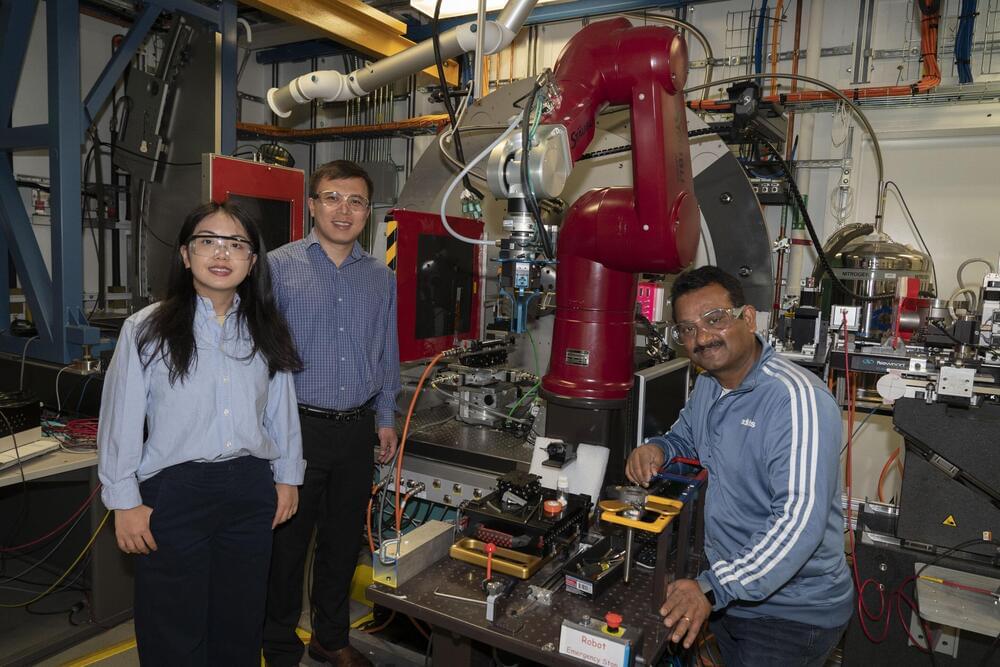
Researchers at the Department of Energy’s Oak Ridge National Laboratory and the University of Tennessee, Knoxville, discovered a key material needed for fast-charging lithium-ion batteries. The commercially relevant approach opens a potential pathway to improve charging speeds for electric vehicles.
Lithium-ion batteries, or LIBs, play an essential role in the nation’s portfolio of clean energy technologies. Most hybrid electric and all–electric vehicles use LIBs. These rechargeable batteries offer advantages in reliability and efficiency because they can store more energy, charge faster and last longer than traditional lead-acid batteries. However, the technology is still developing, and fundamental advances are needed to meet priorities to improve the cost, range and charge time of electric-vehicle batteries.
“Overcoming these challenges will require advances in materials that are more efficient and synthesis methods that are scalable to industry,” said ORNL Corporate Fellow and corresponding author Sheng Dai.
Robotic eyes on autonomous vehicles could improve pedestrian safety, according to a new study at the University of Tokyo. Participants played out scenarios in virtual reality (VR) and had to decide whether to cross a road in front of a moving vehicle or not.
When that vehicle was fitted with robotic eyes, which either looked at the pedestrian (registering their presence) or away (not registering them), the participants were able to make safer or more efficient choices.
DARPA’s Robotic Autonomy in Complex Environments with Resiliency (RACER) program has successfully completed one experiment and is now moving on to even more difficult off-road landscapes at Camp Roberts, California, for trials set for September 15–27, according to a press release by the organization published last week.
The program has stated that its aim is “to give driverless combat vehicles off-road autonomy while traveling at speeds that keep pace with those driven by people in realistic situations.”