Toggle light / dark theme

Scientists find new way to supercharge lasers by a million times

Scientists from the UK and South Korea have discovered a way to create laser pulses 1,000 times stronger than currently possible. Using computer simulations, they have discovered that a new way of compressing the light can drastically increase its intensity to such an extent that it can extract particles from a vacuum. This new technique could open up doors for important discoveries into the very nature of matter.

Uncover the nature of matter

Researchers from the University of Strathclyde, Ulsan National Institute of Science & Technology (UNIST), and Gwangju Institute of Science and Technology (GIST) have proposed a simple idea to revolutionize the next generation of lasers. They suggest using the gradient in the density of plasma, which is fully ionized matter, to cause photons to bunch together. This is similar to the way a group of cars bunches up as they encounter a steep hill. If this technique is successful, it could increase the power of lasers by more than one million times from what is currently achievable.

Laser pulse compression by a density gradient plasma for exawatt to zettawatt lasers

A new method of creating laser pulses, more than 1,000 times as powerful as those currently in existence, has been proposed by scientists in the UK and South Korea.

The scientists have used in joint research to demonstrate a new way of compressing light to increase its intensity sufficiently to extract particles from vacuum and study the nature of matter. To achieve this the three groups have come together to produce a very special type of mirror—one that not only reflects pulses of light but compresses them in time by a factor of more than two hundred times, with further compression possible.

The groups from the University of Strathclyde, UNIST and GIST propose a simple idea—to use the gradient in the density of plasma, which is fully ionized matter, to cause photons to “bunch,” analogous to the way a stretched-out group of cars bunch up as they encounter a steep hill. This could revolutionize the next generation of lasers to enable their powers to increase by more than one million times from what is achievable now.

Joby shows off electric air taxis in New York, targeting 2025 launch date

NEW YORK, Nov 13 (Reuters) — Electric air taxis could be transporting passengers from JFK Airport to downtown Manhattan by 2025 — on quiet, emissions-free journeys that take around seven minutes.

Manufacturer Joby Aviation (JOBY.N) carried out an exhibition flight at the Downtown Manhattan Heliport in New York on Sunday, the city’s first-ever electric air taxi flight and the first time Joby has flown in an urban setting.

The craft can recharge in about five minutes, while passengers are unloading and boarding, said CEO JoeBen Bevirt. The idea is that travelers will book their trip, similar to a rideshare app.

First 2D semiconductor with 1,000 transistors developed: Redefining energy efficiency in data processing

As information and communication technologies (ICT) process data, they convert electricity into heat. Already today, the global ICT ecosystem’s CO2 footprint rivals that of aviation. It turns out, however, that a big part of the energy consumed by computer processors doesn’t go into performing calculations. Instead, the bulk of the energy used to process data is spent shuttling bytes between the memory to the processor.

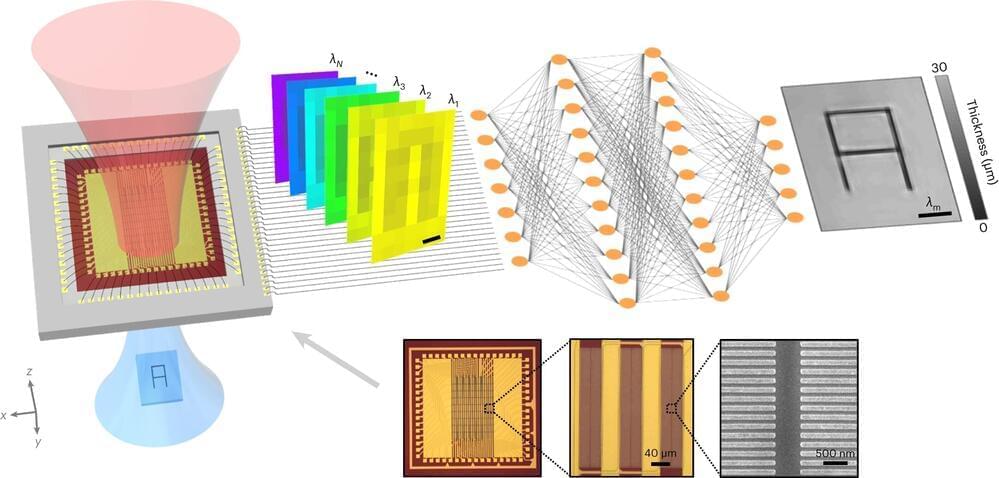
In a paper published in the journal Nature Electronics, researchers from EPFL’s School of Engineering in the Laboratory of Nanoscale Electronics and Structures (LANES) present a new processor that tackles this inefficiency by integrating data processing and storage onto a single device, a so-called in-memory processor.

They broke new ground by creating the first in-memory processor based on a two-dimensional to comprise more than 1,000 transistors, a key milestone on the path to industrial production.

AI-powered traffic signs can reduce emissions from vehicles

“This is the first project of its kind to incorporate a social component into a traffic control system.”

Vehicle pollution is a significant contributor to air pollution worldwide making it both a global and local problem.


A researcher is using machine learning to create traffic light management systems that are socially and environmentally conscious making them ideal at lessening emissions from vehicles.

Hyundai’s Supernal to build U.S. plant to make flying electric taxis

Hyundai Motor Group, the world’s third-biggest automaker by sales, plans to build a facility in the U.S. where its air mobility division Supernal will make flying electric taxis intended to be used by commuters.

A prototype of the electric vertical takeoff and landing craft will be shown at CES in Las Vegas in January, Supernal Chief Executive Officer Shin Jaiwon said.

The eVTOL taxi will be capable of flying at 120 miles an hour (190 kph) and have capacity for one pilot and four passengers. December 2024 is the target for a test flight, with ambitions to start commercial service four years later, Shin said in an interview this week with Bloomberg News in Singapore.

/* */