Tesla’s solar-powered house comes to life.

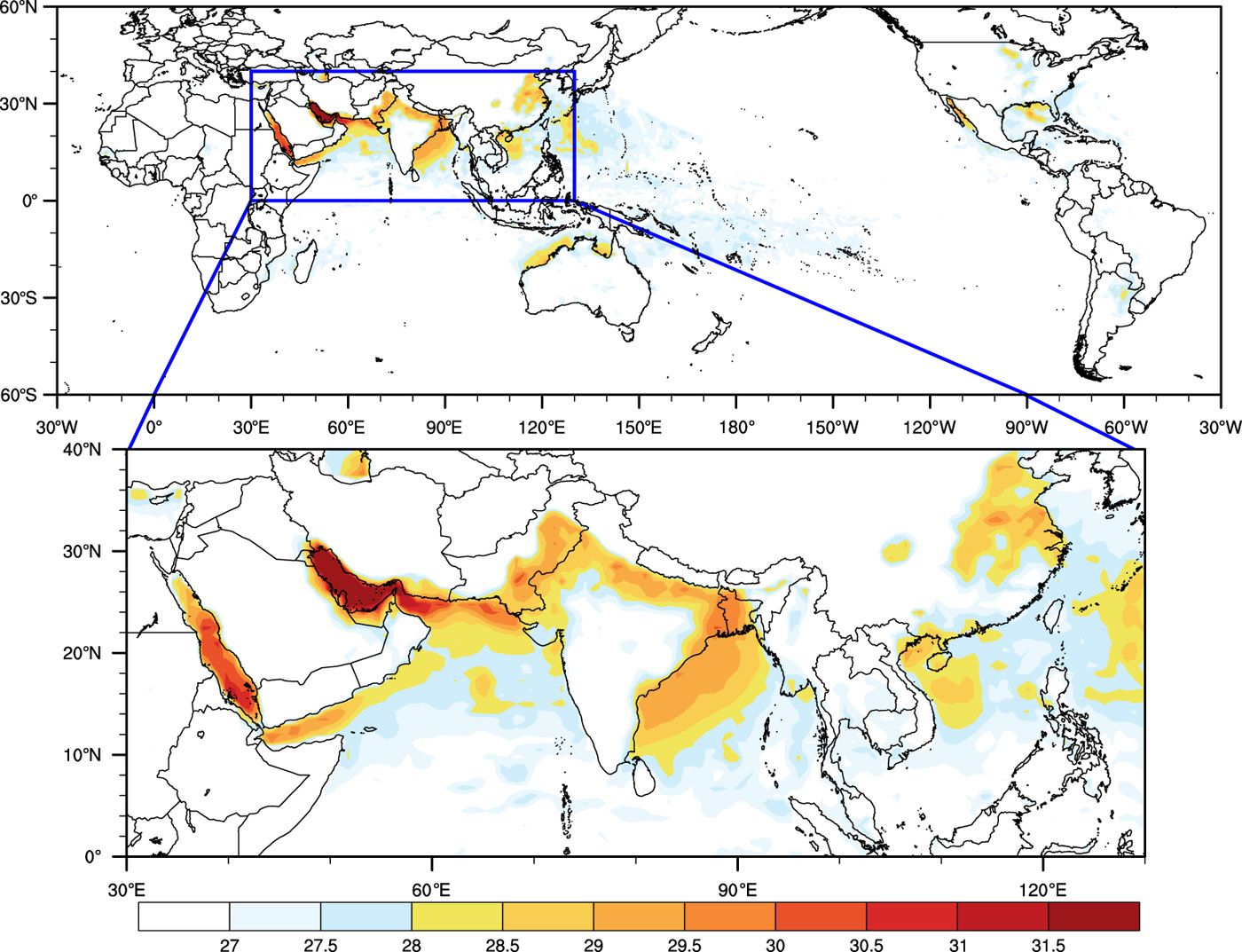
The risk associated with any climate change impact reflects intensity of natural hazard and level of human vulnerability. Previous work has shown that a wet-bulb temperature of 35°C can be considered an upper limit on human survivability. On the basis of an ensemble of high-resolution climate change simulations. we project that extremes of wet-bulb temperature in South Asia are likely to approach and. in a few locations. exceed this critical threshold by the late 21st century under the business-as-usual scenario of future greenhouse gas emissions. The most intense hazard from extreme future heat waves is concentrated around densely populated agricultural regions of the Ganges and Indus river basins. Climate change. without mitigation. presents a serious and unique risk in South Asia. a region inhabited by about one-fifth of the global human population. due to an unprecedented combination of severe natural hazard and acute vulnerability.
The risk of human illness and mortality increases in hot and humid weather associated with heat waves. Sherwood and Huber proposed the concept of a human survivability threshold based on wet-bulb temperature (TW). TW is defined as the temperature that an air parcel would attain if cooled at constant pressure by evaporating water within it until saturation. It is a combined measure of temperature [that is. dry-bulb temperature (T)] and humidity (Q) that is always less than or equal to T. High values of TW imply hot and humid conditions and vice versa. The increase in TW reduces the differential between human body skin temperature and the inner temperature of the human body. which reduces the human body’s ability to cool itself. Because normal human body temperature is maintained within a very narrow limit of ±1°C. disruption of the body’s ability to regulate temperature can immediately impair physical and cognitive functions.
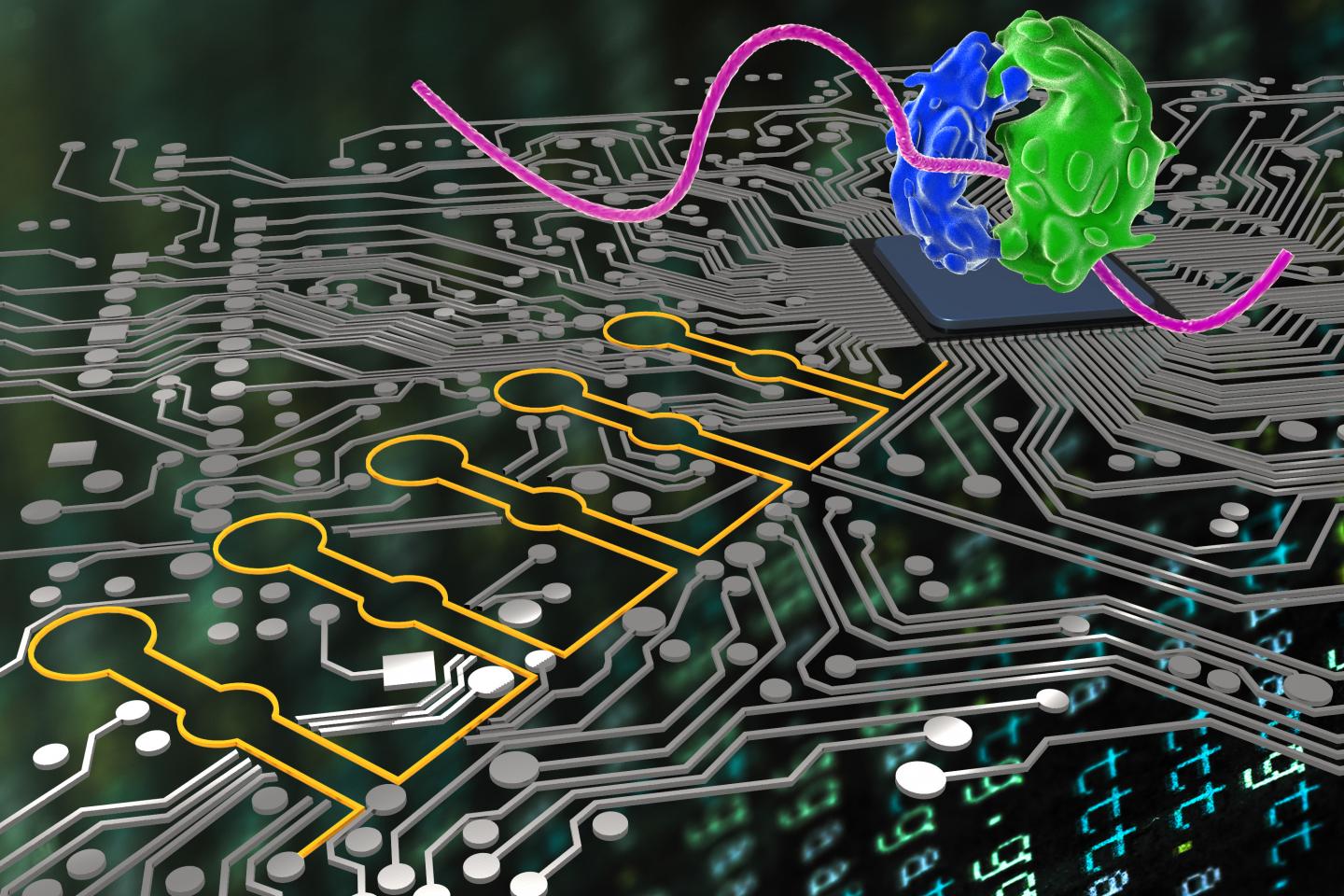
Synthetic biologists at Harvard’s Wyss Institute for Biologically Inspired Engineering and associates have developed a living programmable “ribocomputing” device based on networks of precisely designed, self-assembling synthetic RNAs (ribonucleic acid). The RNAs can sense multiple biosignals and make logical decisions to control protein production with high precision.
As reported in Nature, the synthetic biological circuits could be used to produce drugs, fine chemicals, and biofuels or detect disease-causing agents and release therapeutic molecules inside the body. The low-cost diagnostic technologies may even lead to nanomachines capable of hunting down cancer cells or switching off aberrant genes.
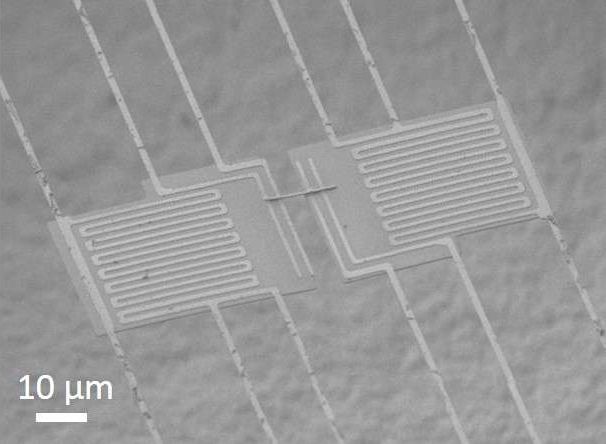
A newly discovered collective rattling effect in a type of crystalline semiconductor blocks most heat transfer while preserving high electrical conductivity — a rare pairing that scientists say could reduce heat buildup in electronic devices and turbine engines, among other possible applications.
A team led by scientists at the Department of Energy’s Lawrence Berkeley National Laboratory (Berkeley Lab) discovered these exotic traits in a class of materials known as halide perovskites, which are also considered promising candidates for next-generation solar panels, nanoscale lasers, electronic cooling, and electronic displays.
These interrelated thermal and electrical (or “thermoelectric”) properties were found in nanoscale wires of cesium tin iodide (CsSnI3). The material was observed to have one of the lowest levels of heat conductivity among materials with a continuous crystalline structure.
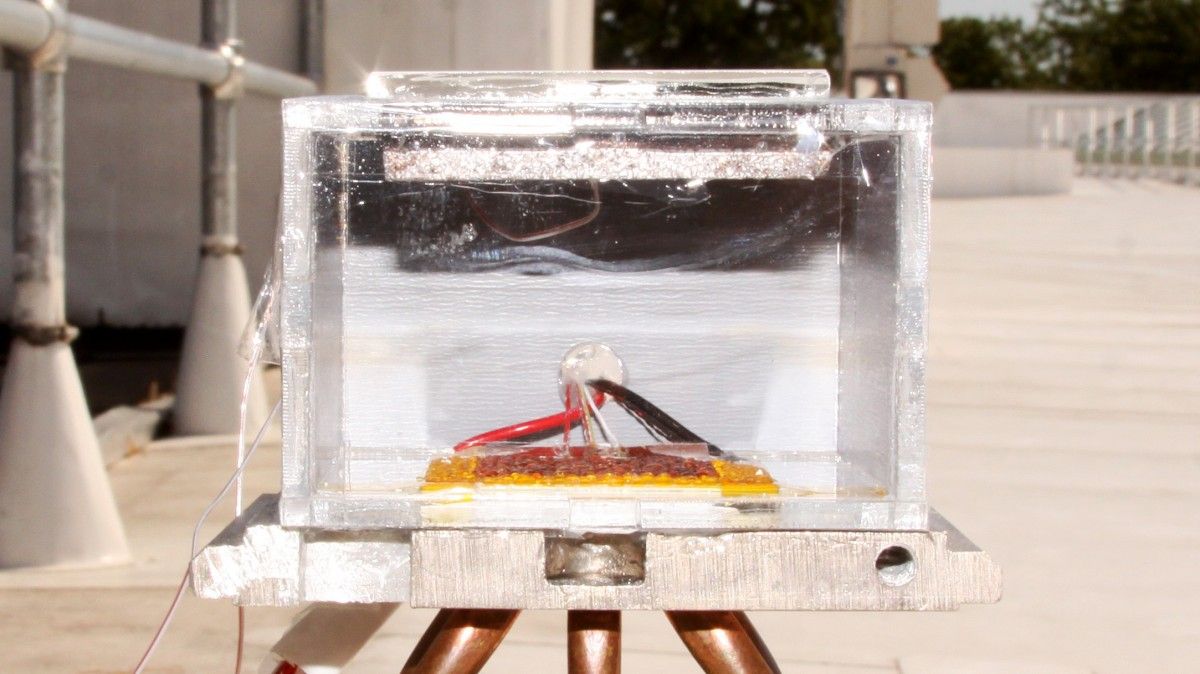

Paint these days is becoming much more than it used to be. Already researchers have developed photovoltaic paint, which can be used to make “paint-on solar cells” that capture the sun’s energy and turn it into electricity. Now in a new study, researchers have created thermoelectric paint, which captures the waste heat from hot painted surfaces and converts it into electrical energy.
“I expect that the thermoelectric painting technique can be applied to waste heat recovery from large-scale heat source surfaces, such as buildings, cars, and ship vessels,” Jae Sung Son, a coauthor of the study and researcher at the Ulsan National Institute of Science and Technology (UNIST), told Phys.org.
“For example, the temperature of a building’s roof and walls increases to more than 50 °C in the summer,” he said. “If we apply thermoelectric paint on the walls, we can convert huge amounts of waste heat into electrical energy.”

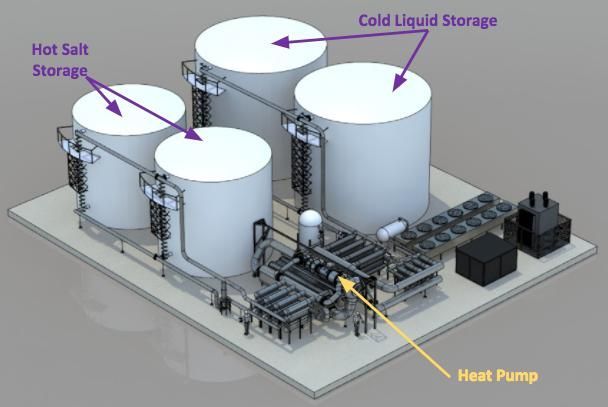
(A rendering of what X’s renewable energy storage plant would look like. X) X, the “moonshot” division of Google’s parent company Alphabet that has worked on everything from self-driving cars and delivery drones, has a new public project: storing renewable energy so it doesn’t go to waste.
The team working on the project is codenamed “Malta,” and it aims to efficiently store energy from solar and wind using salts. That way, renewable energy can still be used even if solar panels or wind turbines can’t collect energy.
Malta is part of X’s Foundry, which explores early-stage projects. It’s not an “official” project like Project Wing (drone delivery) or Project Loon (high-altitude balloons that beam the internet to the surface). X is announcing Malta now because it wants to build a prototype plant for testing how storing renewable energy can feed a power grid. It’s accepting applications for potential partners on its website.

FREMONT, Calif.—A first peek inside Tesla Inc.’s new Model 3 compact car revealed a starker, cozier interior than the more spacious and luxurious Model S. But as the sedan sped off, the experience felt similar.
On Friday, the Silicon Valley auto maker showed off details of the all-electric sedan’s interior for the first time, allowing a roughly 10-minute test ride around the factory.
The Model 3 represents a milestone for…