Toggle light / dark theme

Perseid meteor shower promises big show for stargazers

ST. LOUIS (KTVI) — The Perseid meteor shower is now underway and is about one week from its mid-August peak.

Considered the best meteor shower of the year, you can see up to 50 meteors per hour, according to NASA, and sometimes even more if conditions are right. The fast and bright meteors often leave long wakes of light behind them as they streak through the atmosphere, making them easy to see even for the casual astronomer.

The Perseids get their name from the constellation Perseus because they appear to radiate from that spot in the sky, but the constellation isn’t the source. When comets come around the sun, they leave a dusty trail behind them. This time each year, Earth passes by debris from the comet Swift-Tuttle, which burns up in our atmosphere.

Uncovering our solar system’s shape

Scientists have developed a new prediction of the shape of the bubble surrounding our solar system using a model developed with data from NASA missions.

All the planets of our are encased in a magnetic bubble, carved out in space by the Sun’s constantly outflowing material, the . Outside this bubble is the interstellar medium—the ionized gas and magnetic field that fills the space between stellar systems in our galaxy. One question scientists have tried to answer for years is on the shape of this bubble, which travels through space as our Sun orbits the center of our galaxy. Traditionally, scientists have thought of the as a comet shape, with a rounded leading edge, called the nose, and a long tail trailing behind.

Research published in Nature Astronomy in March and featured on the journal’s cover for July provides an alternative shape that lacks this long tail: the deflated croissant.

Valley formation on early Mars

The southern highlands of Mars are dissected by hundreds of valley networks, which are evidence that water once sculpted the surface.


Some valleys in the southern highlands of Mars may have formed by subglacial erosion, consistent with a cold and icy early Mars, according to a statistical analysis of valley morphometry.

Professor’s milestone in nuclear physics seeks to understand the universe itself

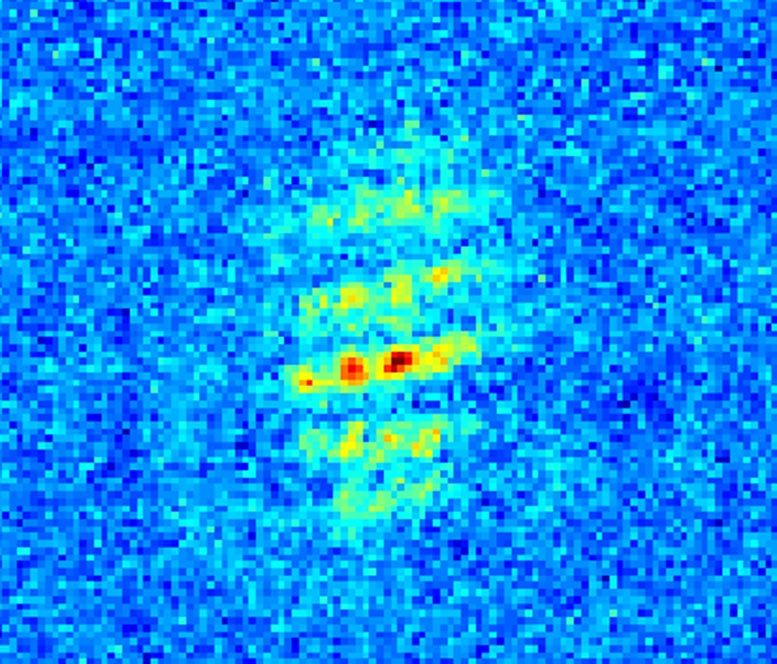
A nuclear physics professor from Florida International University was among a team of researchers that proposed something so out of this world, colleagues first hesitated to accept it was possible.

In 1993, they boldly predicted how the densest materials in the universe—known to exist only in rare neutron —could be made here on Earth. Ultimately, their research was published in Physical Review C, a leading focused on nuclear .

It spawned a wave of follow up research that in 2006 confirmed their prediction was true. For the tiniest sliver of a second, researchers at the Thomas Jefferson National Accelerator Facility in Virginia were able to briefly create the material that exists inside a neutron star.

Propelling Exploration: Drones Are Going Interplanetary

face_with_colon_three circa 2019.


Drones have already conquered Earth, and now they’re heading out into the solar system.

NASA announced yesterday (June 27) that it will launch a life-hunting rotorcraft called Dragonfly toward Saturn’s huge moon Titan in 2026. If all goes according to plan, Dragonfly will land on the hazy, frigid satellite in 2034 and then spend several years flying around, gathering a variety of data and snapping amazing photos of the exotic landscape.

U.S. Air Force cadets study idea of Space Force bases on the Moon

In December 2019, Donald Trump signed the U.S. Space Force Act, peeling off an orbit-and-beyond branch of the military, much as the Air Force grew out of the Army in the 1940s.

For now, the Space Force still resides within the Air Force, but nearly 90 of this year’s approximately 1000 Air Force Academy graduates became the first officers commissioned straight into the new organization. Some of those graduates were members of an academy group called the Institute for Applied Space Policy and Strategy (IASPS). Featuring weekly speakers and formalized research projects the students hope to turn into peer-reviewed papers, the group aims to game out the policies and philosophies that could guide military space activity when they are old enough to be in charge. In particular, these young cadets are interested in whether the Space Force might someday have a military presence on the Moon, and how it might work with civilians.

That activity could put the Space Force in conflict with scientists, who typically view the cosmos as a peaceful place for inquiry. But part of the club’s mission is speculating about that interplay—between the military and civilian scientists, civil space agencies, and private companies. Cadet J. P. Byrne, who will graduate in 2021, is the group’s current president. He chatted with ScienceInsider about the institute’s work. This interview has been edited for length and clarity.

Q: What does IASPS hope to accomplish?

A: Our main goal is to develop space-minded cadets not just for the Air Force, but also for the Space Force. It’s really important to know how space works, and we like to think we drive the conversation for space information in an unclassified setting.

Q: What, as an Air Force Academy cadet, interests you about space?

A: I actually wanted to be a pilot originally. But going into my junior year, seeing all the developments, I started really enjoying space. You hear this idea of a “new space era” a lot. When I think about that, it reminds me of the early excitement about the powered aircraft of the early 20th century, in that we get to explore ideas that haven’t been thought of yet. A lot of people say it’s human destiny to explore space. To me, it’s more adventuring into the unknown, or at least the less known.

/* */