“LISA Pathfinder (the acronym stands for Laser Interferometer Space Antenna) is intended to demonstrate the technology needed to detect waves of gravity, rather than light, X-rays or gamma rays.”
How an innocent plea for collegial comments turned into a global news flap about a possible Super-Earth on our solar system’s outer fringes.
The odds that our solar system harbors a super-Earth on its outer fringes are longer than the chances of winning a state lottery (or at least 200 million to one), says a University of Hawaii planetary scientist. In fact, the recent news flap over the potential detection of a rocky planet in a very long solar orbit was greatly exaggerated, the lead author of the scientific paper which resulted in the controversy now says.
“We never claim a super-Earth; we state it can’t necessarily be ruled out on the basis of our data alone, but the much more likely explanation is a much more nearby icy-body,” Wouter Vlemmings, a radio and submillimeter astronomer at Sweden’s Chalmers University of Technology, told me.
But Jonathan Williams, a longtime submillimeter astronomer and planetary scientist at the University of Hawaii in Manoa, who was not involved in the observations, couldn’t disagree more, particularly since super-Earths are thought to have masses that range from between 1 to 10 times that of Earth.
While the science and technologies behind the franchise are firmly rooted in fantasy, their enduring appeal has served as inspiration for many real-life scientists and engineers. Here are some of the most notable attempts to turn “Star Wars’” science fiction into science fact.
Exoplanets
Due for release in June 2016, No Man’s Sky will allow you to visit and explore a virtual universe of trillions of planets, each one a unique world.
China wants to be the leading force in manned space exploration, and is exploring sending people to the far side of the moon, Mars, asteroids, and further into deep space.
Becoming the second largest economy in the world and an emerging superpower of its own, China wishes to add deep space exploration into its achievement portfolio. Besides the ongoing moon exploration, its scientists are considering going deeper into the solar system, including Mars, asteroids, and even manned deep-space mission. Liu Jizhong, director of the lunar exploration program and space engineering center, pointed out that China has to be more pioneering, tackling problems such as high speed deep space exploration, energy and power generation, space robot development, and more. He also said that China must cooperate with others as space exploration is an undertaking shared by the entire human species.
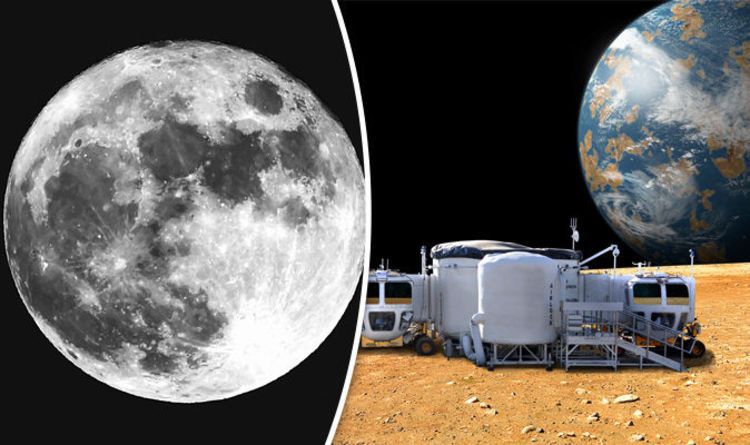
China currently intends to explore the far side of the moon, something that has never been done before. It would require a relay satellite for communication and navigation on Lagrange point, where the satellite could orbit within the combined gravitational pull of the Earth-moon system, as said by Zhang Lihua of China Spacesat Co. While China believes that robots are critical to the mission, it also believes that these trips must be manned in order to effectively leverage human decision-making. China also says they are designing footed robots to explore asteroids and better understand their material composition.
Knock Knock.
Who’s there?
A type 3 civilization.
A type 3 what?!
Since when have animals in this zoo been allowed to speak?
A simulation of the orbital configuration of the Wolf 1061 system. Wolf 1061 is an inactive red dwarf star, smaller and cooler than our sun, 14 light years away. The planetary habitable zone around the star is marked in green — the colors grade from red (where a planet would be too hot), through green (where the surface of a planet could sustain liquid water), through to blue (where a planet would be too cold). (credit: Made using Universe Sandbox 2 software)
UNSW Australia astronomers have discovered the closest potentially habitable planet found outside our solar system so far, orbiting a star just 14 light years away.
NASA has a long history of seeing its technology turned around after spaceflight for some more earthbound purposes. (Enjoy that scratch-resistant coating on your glasses? Well, it began life as an ‘80s-era spacecraft water filtration system.) What some people miss is that it’s still happening today.
Every year, NASA puts out what it calls a “spinoff report.” No, this is not a list of ideas for a series of zany, roommate comedies set aboard the ISS. (Although this is an excellent idea. Call me, NASA TV!) The spinoff report is actually a list of all the ways NASA’s tech has been repurposed into new products, ranging from the inevitable to the surprising to the bizarre.
Here are a few of highlights from this year’s version:
Merry Christmas, my friends. wink
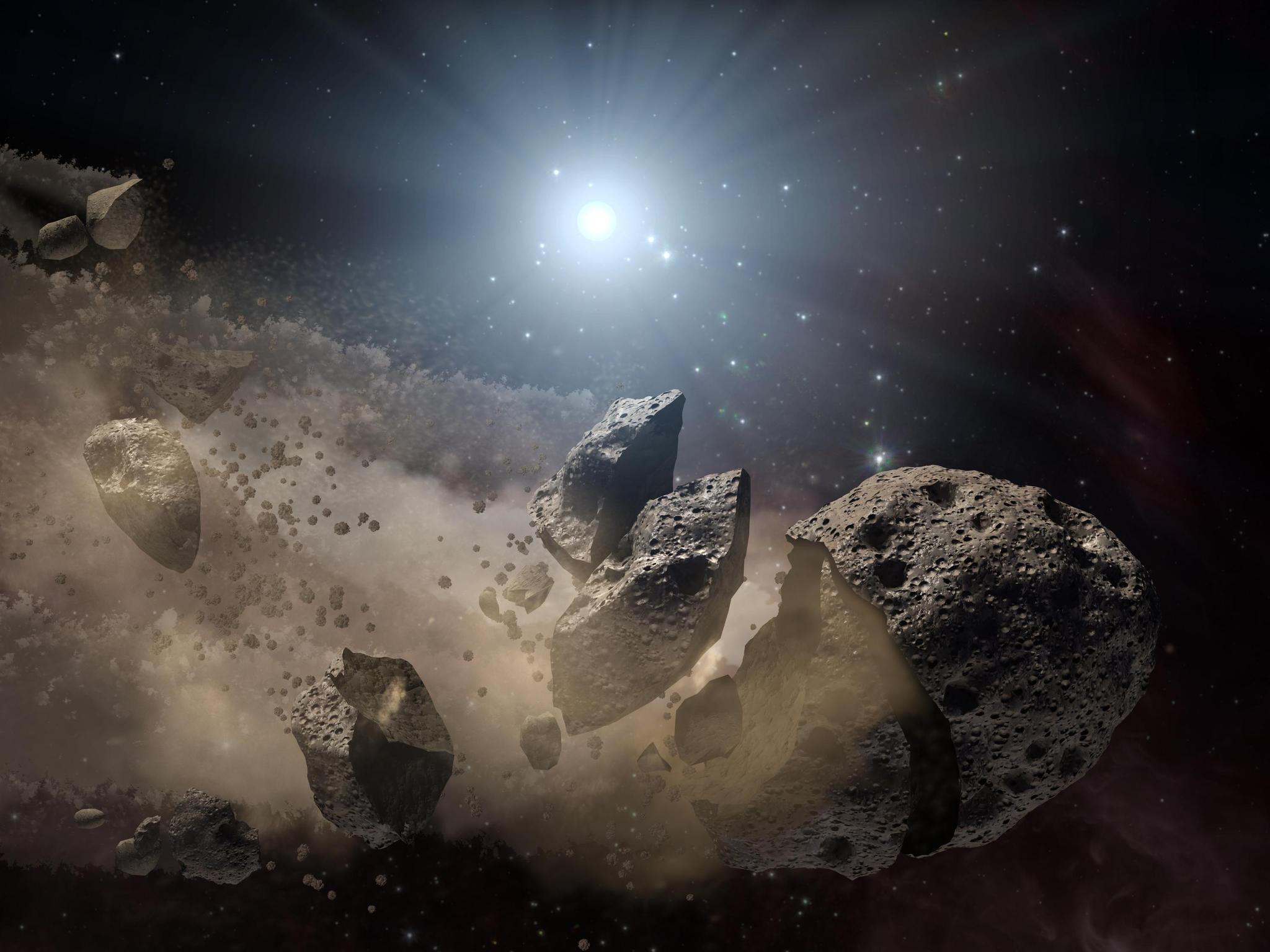
A massive asteroid flying by Earth on 2015 Christmas Eve has scientists on edge. While NASA is downplaying the threat to human life and property, conspiracy theorists and several experts say space rock 2003 SD220 is larger than believed and has the potential to cause deadly earthquakes and eruptions from dormant volcanoes.
According to a Sun report, the Christmas Eve asteroid is one of at least 10 rocky bodies in space that are considered “potentially hazardous” to Earth. According to an internal report, NASA officials say it measures about 1.5 miles wide and is moving at 5 miles per second.
“Little is known about the remaining 10 high-priority targets other than the absolute magnitudes and their heliocentric orbits that make six of them potentially hazardous to Earth.”