Toggle light / dark theme

Bitcoins in Space: Hacker to Fire Digital Currency Into Orbit

By Robert McMillan

One of the top software engineers behind the Bitcoin digital currency wants to launch it into space.

Last month, Jeff Garzik floated the idea of Bitcoin in space on an internet discussion forum, pitching it as a way to always keep the system up and running — even if it’s attacked by malicious hackers.

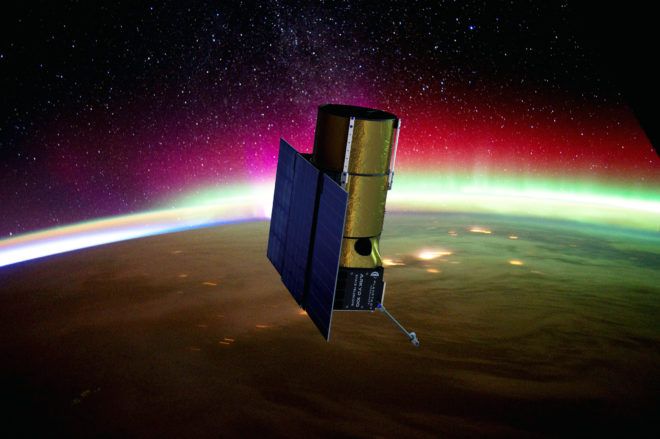
The plan is to send up a Bitcoin computer on a tiny inexpensive satellite and have this machine communicate with terrestrial Bitcoin computers via radio. Garzik — who works at Bitcoin payment processor Bitpay and helps shape the open source software that drives the digital currency on thousands of machines across the internet — says that the satellite node could help the Bitcoin network fight back something known as a Sibyl attack. This is where malicious computers flood a node on the peer-to-peer network with bad data. It could give criminals a way of spending their bitcoins more than once, and it’s also part of the so-called selfish miner scenario that Cornell University researchers described last month, saying it could bring down the entire system.

Read more

China lands rover on moon’s surface, a first for the country

By

Computerworld - China’s lunar probe, and the moon rover it carried, landed successfully Saturday night, marking a major accomplishment for the country’s space efforts.

This is the first time a spacecraft from China has landed on an extraterrestrial body. China becomes the third country, after the United States and Russia, to land a spacecraft on the moon.

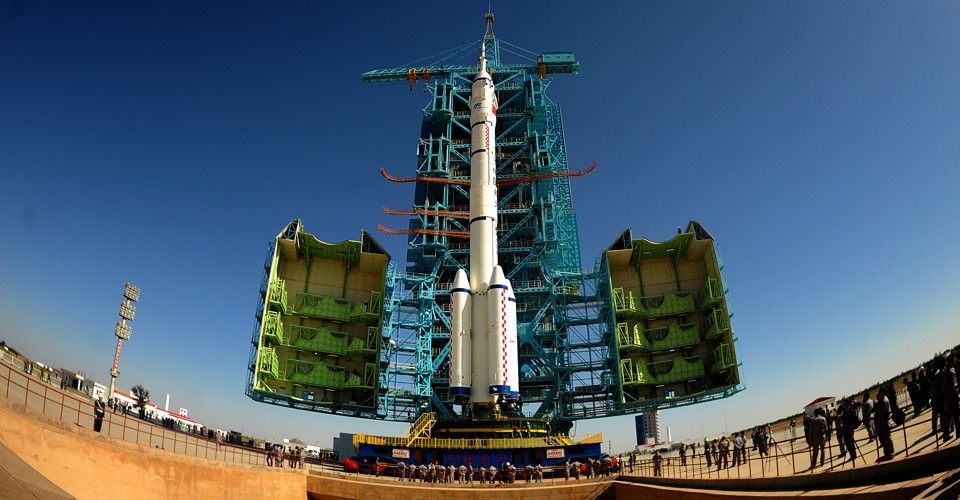
China’s Chang’e-3 craft lifted off early on Dec. 2 on top of an enhanced Long March-3B rocket from the Xichang Satellite Launch Center in southwest China.

Read more

How Will Space Commuters Navigate A Thicket Of Air Traffic?

“When space traffic becomes routine, there’s going to be significant conflict between commercial air traffic and space traffic,” says Juan Alonso, a Stanford professor of aeronautics and astronautics.

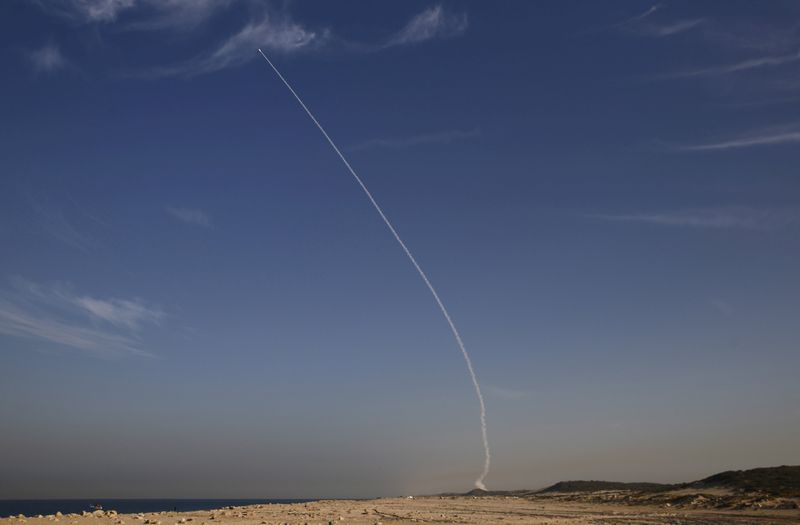
Right now, orbital launches are infrequent — about 70 per year around the world. So if there is, say, a SpaceX Falcon 9 launch scheduled from Cape Canaveral, the FAA decrees the area to be a “special use airspace” and bars plane traffic from the area for hours to accommodate it.

But Alonso is thinking 5 to 7 years into the future. With space tourism carriers like Virgin Galactic and XCOR planning multiple suborbital flights per day, and orbital flyers like SpaceX, Sierra Nevada, and Bigelow sending people and material into orbit, the skies will be getting crowded. The suborbital “up-and-down” space tourism flights offered by carriers like Virgin Galactic and XCOR may number anywhere from several hundred to multiple thousands a year – from zero today. Airline passengers will be less than thrilled to accept a lengthy delay so a rock star can sing in space or a billionaire can hang out in a “space hotel.” Also, airlines lose money from delays, or from re-routing around special-use airspace, requiring extra fuel burn.

Read more

DARPA designs giant foldable satellite capable of surveiling 40% of Earth (VIDEO)

Allen McDuffee

Spying could become much easier if a new lightweight, folding satellite concept gets off the ground.

Darpa, the military’s futuristic research agency, says it has plans to “break the glass ceiling” of space telescopes by shooting a new design into orbit that’s made of plastic and unfolds into a mammoth satellite that would dwarf the world’s most famous telescopes.

Darpa’s Membrane Optical Imager for Real-Time Exploitation (MOIRE) program redesigns the traditional glass telescope into an orbital telescope that’s bigger and lighter than previous imaging satellites, making it easier to spy on larger areas and for longer periods of time.

Launched as a tightly packed cluster of petals 20 feet in diameter, MOIRE stretches to 68 feet across once it reaches 22,000 miles above the earth. From orbit, MOIRE could view approximately 40 percent of the earth’s surface at once while recording high resolution images and video, making it the ultimate spying satellite (Darpa notes that it could also be beneficial in weather forecasting and disaster response).

Read more

Skunkworks

The Future of Skunkworks Management, Now! By Mr. Andres Agostini

This is an excerpt from the conclusion section of, “…The Future of Skunkworks Management, Now!…” that discusses some management theories and practices and strategies. To view the entire piece, just click the link at the end of this post:
SOLUTION
Peter Drucker asserted, “…In a few hundred years, when the story of our [current] time is written from a long-term perspective, it is likely that the most important event those historians will see is not technology, not the Internet, not e-commerce [not so-called ‘social media’]. IT is an unprecedented change in the human condition. For the first time ─ literally ─ substantial and growing numbers of people have choices. for the first time, they will have to manage themselves. And society is totally unprepared for it…”
SYSTEM
Please see the full presentation at http://goo.gl/FnJOlg

Applied Omniscience in Transformative and Integrative Risk Management!

Applied Omniscience in Transformative and Integrative Risk Management! By Mr. Andres Agostini

This is an excerpt from the presentation, “…Applied Omniscience in Transformative and Integrative Risk Management!…” that discusses some management theories and practices. To read the entire piece, just click the link at the end of article:

Please see the graphic at http://lnkd.in/dUstZEk

NASA’s Managerial and Leadership Methodology

This is an excerpt from the conclusion section of, “…NASA’s Managerial and Leadership Methodology, Now Unveiled!..!” by Mr. Andres Agostini, that discusses some management theories and practices. To read the entire piece, just click the link at the end of this illustrated article and presentation:


In addition to being aware and adaptable and resilient before the driving forces reshaping the current present and the as-of-now future, there are some extra management suggestions that I concurrently practice:

1. Given the vast amount of insidious risks, futures, challenges, principles, processes, contents, practices, tools, techniques, benefits and opportunities, there needs to be a full-bodied practical and applicable methodology (methodologies are utilized and implemented to solve complex problems and to facilitate the decision-making and anticipatory process).

The manager must always address issues with a Panoramic View and must also exercise the envisioning of both the Whole and the Granularity of Details, along with the embedded (corresponding) interrelationships and dynamics (that is, [i] interrelationships and dynamics of the subtle, [ii] interrelationships and dynamics of the overt and [iii] interrelationships and dynamics of the covert).

DETAIL    DETAIL    DETAILBoth dynamic complexity and detail complexity, along with fuzzy logic, must be pervasively considered, as well.

To this end, it is wisely argued, “…You can’t understand the knot without understanding the strands, but in the future, the strands need not remain tied up in the same way as they are today…”

For instance, disparate skills, talents, dexterities and expertise won’t suffice ever. A cohesive and congruent, yet proven methodology (see the one above) must be optimally implemented.

Subsequently, the Chinese proverb indicates, “…Don’t look at the waves but the currents underneath…”

2. One must always be futurewise and technologically fluent. Don’t fight these extreme forces, just use them! One must use counter-intuitiveness (geometrically non-linearly so), insight, hindsight, foresight and far-sight in every day of the present and future (all of this in the most staggeringly exponential mode). To shed some light, I will share two quotes.

The Panchatantra (body of Eastern philosophical knowledge) establishes, “…Knowledge is the true organ of sight, not the eyes.…” And Antonio Machado argues, “… An eye is not an eye because you see it; an eye is an eye because it sees you …”

Managers always need a clear, knowledgeable vision. Did you already connect the dots stemming from the Panchatantra and Machado? Did you already integrate those dots into your big-picture vista?

As side effect, British Prime Minister W. E. Gladstone considered, “…You cannot fight against the future…”

PARALLEL     PARALLEL      PARALLEL
3. In all the Manager does, he / she must observe and apply, at all times, a sine qua non maxim, “…everything is related to everything else…”

4. Always manage as if it were a “project.” Use, at all times, the “…Project Management…” approach.

5. Always use the systems methodology with the applied omniscience perspective.

In this case, David, I mean to assert: The term “Science” equates to about a 90% of “…Exact Sciences…” and to about 10% of “…Social Sciences…” All science must be instituted with the engineering view.

6. Always institute beyond-insurance risk management as you boldly integrate it with your futuring skill / expertise.

BEYOND     BEYOND       BEYOND
7. In my firmest opinion, the following must be complied this way (verbatim): the corporate strategic planning and execution (performing) are a function of a grander application of beyond-insurance risk management. It will never work well the other way around. Transformative and Integrative Risk Management (TAIRM) is the optimal mode to do advanced strategic planning and execution (performing).

TAIRM is not only focused on terminating, mitigating and modulating risks (expenses of treasure and losses of life), but also concentrated on bringing under control fiscally-sound, sustainable organizations and initiatives.

TAIRM underpins sensible business prosperity and sustainable growth and progress.

8. I also believe that we must pragmatically apply the scientific method in all we manage to the best of our capacities.

If we are “…MANAGERS…” in a Knowledge Economy and Knowledge Era (not a knowledge-driven eon because of superficial and hollow caprices of the follies and simpletons), we must do therefore extensive and intensive learning and un-learning for Life if we want to succeed and be sustainable.

As a consequence, Dr. Noel M. Tichy, PhD. argues, “…Today, intellectual assets trump physical assets in nearly every industry…”

Consequently, Alvin Toffler indicates, “…In the world of the future, THE NEW ILLITERATE WILL BE THE PERSON WHO HAS NOT LEARNED TO LEARN…”

We don’t need to be scientists to learn some basic principles of advanced science.

Accordingly, Dr. Carl Sagan, PhD. expressed, “…We live in a society exquisitely dependent on science and technology, in which hardly anyone knows about science and technology…” And Edward Teller stated, “…The science of today is the technology of tomorrow …”

And it is also crucial this quotation by Winston Churchill, “…If we are to bring the broad masses of the people in every land to the table of abundance, IT CAN ONLY BE BY THE TIRELESS IMPROVEMENT OF ALL OF OUR MEANS OF TECHNICAL PRODUCTION…”

I am not a scientist but I tirelessly support responsible scientists and science. I like scientific and technological knowledge and methodologies a great deal.

Chiefly, I am a college autodidact made by his own self and engaged into extreme practical and theoretical world-class learning for Life.

APPROACH    APPROACH     APPROACH9. In any management undertaking, and given the universal volatility and rampant and uninterrupted rate of change, one must think and operate in a fluid womb-to-tomb mode.

The manager must think and operate holistically (both systematically and systemically) at all times.

The manager must also be: i) Multidimensional, ii) Interdisciplinary, iii) Multifaceted, iv) Cross-functional, and v) Multitasking.

That is, the manager must now be an expert state-of-the-art generalist and erudite. ERGO, THIS IS THE NEWEST SPECIALIST AND SPECIALIZATION.

Managers must never manage elements, components or subsystems separately or disparately (that is, they mustn’t ever manage in series).

Managers must always manage all of the entire system at the time (that is, managing in parallel or simultaneously the totality of the whole at once).

10. In any profession, beginning with management, one must always and cleverly upgrade his / her learning and education until the last exhale.

An African proverb argues, “…Tomorrow belongs to the people who prepare for it…” And Winston Churchill established, “…The empires of the future are the empires of the mind…” And an ancient Chinese Proverb: “…It is not our feet that move us along — it is our minds…”
DESTINY       DESTINY       DESTINY
And Malcolm X observed, “…The future belongs to those who prepare for it today…” And Leonard I. Sweet considered, “…The future is not something we enter. The future is something we create…”

And finally, James Thomson argued, “…Great trials seem to be a necessary preparation for great duties …”

AGE       AGE         AGE
Consequently, Dr. Gary Hamel, PhD. indicates, “…What distinguishes our age from every other is not the world-flattening impact of communications, not the economic ascendance of China and India, not the degradation of our climate, and not the resurgence of ancient religious animosities. RATHER, IT IS A FRANTICALLY ACCELERATING PACE OF CHANGE…”

Please see the full presentation at http://goo.gl/8fdwUP

Virgin’s space passengers can pay with Bitcoin

Good news, future space travelers: Now you can enter the void without bringing your wallet.

U.K. business magnate Richard Branson announced Friday that his commercial space travel venture, Virgin Galactic, will allow customers to pay for their flights with the digital currency Bitcoin.

“Virgin Galactic is a company looking into the future, so is Bitcoin. So it makes sense we would offer Bitcoin as a way to pay for your journey to space.” Branson wrote in a blog post.

“A lot of the people who have joined Bitcoin are tech-minded people, as are many of our current future astronauts.”

Read more

Havens over Hell — Ecosystems of the Venusian Tropopause

In our on-going ambitions to colonise space — and our search for exo-planets in goldilocks zones, it is often overlooked that the most Earth-like area known to us is in our own Solar System, and very nearby — the upper reaches of the Venusian troposphere.

Whilst the surface of Venus invokes classical images of Hell — a dark sea of fire and brimstone, where temperatures raise to an incredible 450°C — hot enough to melt lead, tin and zinc, and pressurised to such an extent (92 bar) that in these conditions the atmosphere ghosts in and out of an ocean of supercritical carbon dioxide — sulphur dioxide tints the air, and sulphuric acid rains down on volcanic plains. One just needs to look to the skies…

At about 50 km to 60 km above the surface, the upper reaches of the Venusian troposphere, the environment is quite different. At these high altitudes the temperature is in our comfort zone of 0°C to 50°C, and the air pressure similar as habitable regions of Earth.

An atmosphere rich in carbon dioxide (96.5%) and abundant solar radiation, the conditions are ideal for photosynthesis. One could imagine solar energy powered crafts could easily sustain ecosystems where the ideal conditions for photosynthesis ensure an abundant source of food and oxygen for inhabitants. The solar energy here is abundant and in all directions — the high reflectivity of clouds below causes the amount of light reflected upward to be nearly the same as that coming in from above, with an upward solar intensity of 90% — so aircraft would not need to concern about electricity or energy consumption. Indeed, that energy would not even be needed to keep the craft airborne — as the oxygen store would also double up as a natural lifting agent for such aircrafts, as in the Venusian atmosphere of carbon dioxide, oxygen is a lifting gas — in the same way helium is a lifting gas on Earth. With temperature, pressure, gravity, and a constant source of food and oxygen via plant growth all accounted for, not to mention close proximity to Earth, waste & water recycling would be the main challenge for the permanence of such Venusian aircraft — where the initial establishment of a balanced ecosystem is key. The engineering challenge would be far less than that of establishing a colony or base on Mars. Just don’t look down!

100YSS A Success

I am very pleased to say that the 2013 100YSS conference held in Houston, TX, was a success. I met a lot of like minded people — people who want to make interstellar travel a reality — though we differ in our opinions of when.

I was especially pleased to be able to visit with Mae Jemison, Jill Tarter and Pamela Contag. These three are amazing, shepherding us along. Shepherding us? Yes, are a loose collection of visionaries going every which way.

Mae Jemison
Jill Tarter
Pamela Contag
/* */