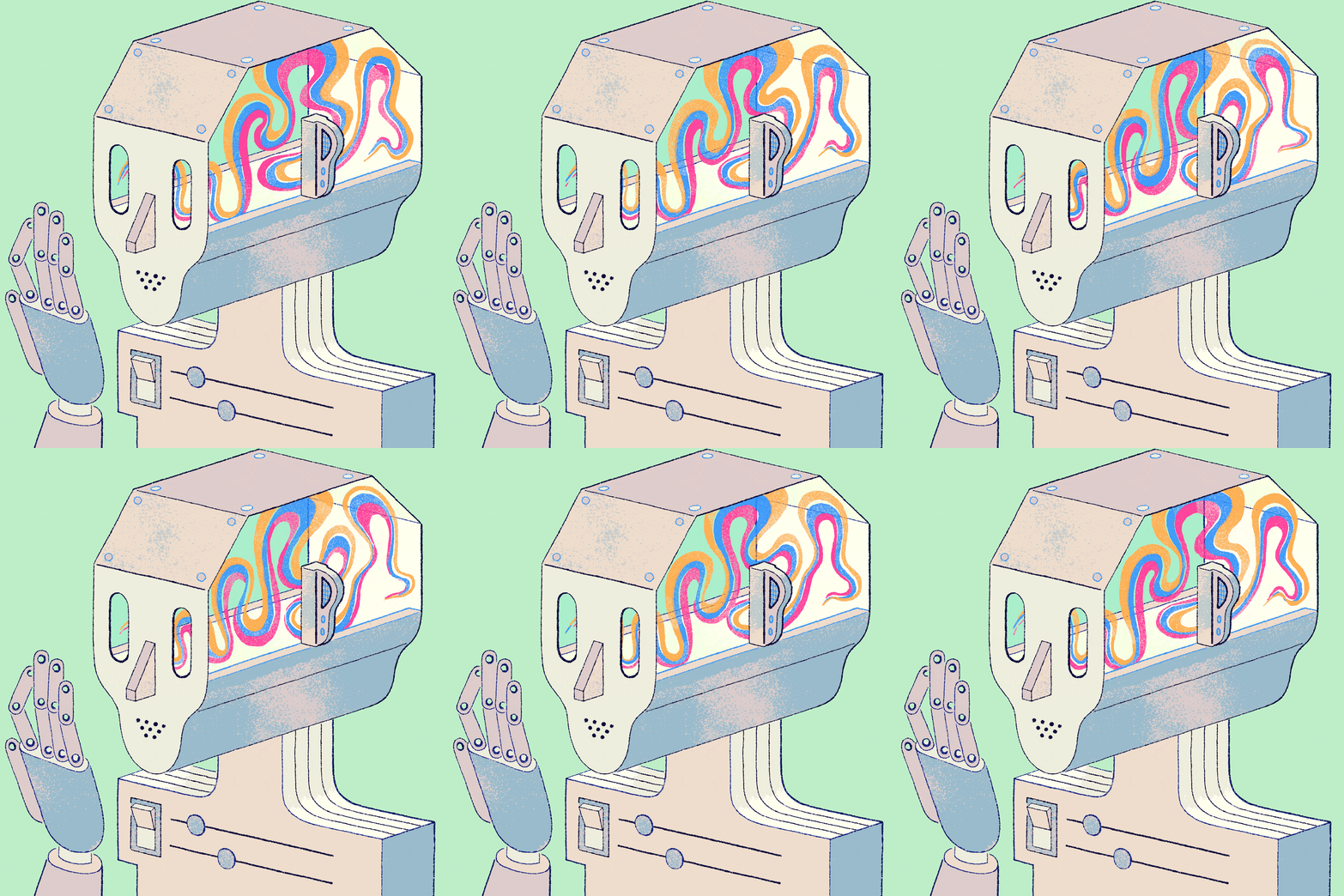
By reinventing the neural network, the company hopes to help computers make the leap from processing words and symbols to comprehending the real world.
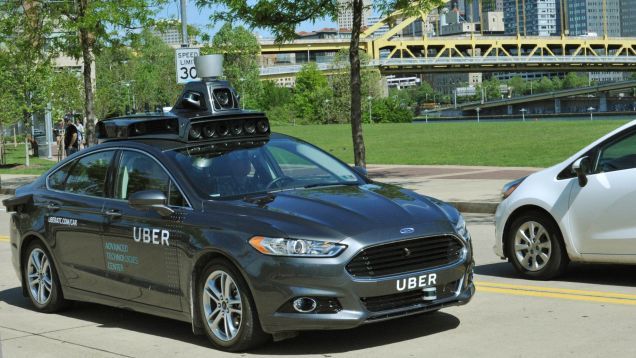
In a blog post today, Uber showed off the self-driving car that’s been stealthily cruising around Pittsburgh. The car is a hybrid Ford Fusion and is currently in early stages of safety testing. This particular Uber test vehicle was first spotted almost a year ago by local Pittsburgh media, but this is Uber’s first acknowledgement of such tests.
Uber and Google (among others) have been racing to be the first to develop self-driving taxis for over a year now. Uber “cleaned out” Carnegie Mellon and the National Robotics Engineering Center to be part of its Advanced Technology Center in Pittsburgh, the research arm responsible for developing this “look ma, no hands” technology. This heavy hiring out of Carnegie Mellon could give Uber a big boost. The Pittsburgh-based university considers itself the birthplace of self-driving cars, and it probably is. CMU researchers were testing autonomous vehicles before Google even existed.
In March, Uber also joined a coalition, this time in partnership with Google, to advocate for self-driving adoption.
This new SF Weekly story is one of the best long features on transhumanism I’ve ever read. It covers a myriad of futurist subjects. It’s out in print today too.
When John Lennon released “Imagine” in 1971, his lyrics about a brotherhood of man living life in peace struck many people as a simple, even anodyne, response to the Vietnam War. Although politically liberal, Lennon was no doctrinal Marxist — only three years earlier, his song “Revolution” had shrugged off people who “go carrying pictures of Chairman Mao.” But the song struck many evangelical Christians as ghoulish, and for some, “Imagine” eventually came to be a sort of national anthem for the repressively secular, globalist state that was thought to be emerging: the anti-Christian New World Order that later became talk-radio conspiracy theorist Alex Jones’ fever dream.
Left Behind, a series of 16 books written between 1995 and 2007 that details a possible end-of-the-world scenario, starting from when all good Christians go to heaven in an instant (the Rapture) until the Second Coming of Jesus Christ, specifically calls out “Imagine” as a weapon in Satan’s arsenal of seductive propaganda. The Antichrist in Left Behind is a suave, cosmopolitan Romanian named Nicolae Carpathia — the product of the fused sperm of two gay atheist academics, as it happens — who uses the global confusion in the aftermath of the Rapture to become Secretary General of the U.N. and eventually dictator of a world government that tattoos its citizens with the Mark of the Beast, damning them for eternity.
However clumsily written, Left Behind was for a time the best-selling adult fiction in the United States (partly because megachurches bought copies in bulk to distribute among their congregations) and a major cultural artifact whose high-water mark coincided with the 2004 election. Muscular, evangelical-inflected Republicanism has declined somewhat, as libertarians and later xenophobic populists gained ground in the party, but the anxieties that Left Behind played off of are very real: secularization, cultural dissolution, and the loss of something innately human to encroaching technology.
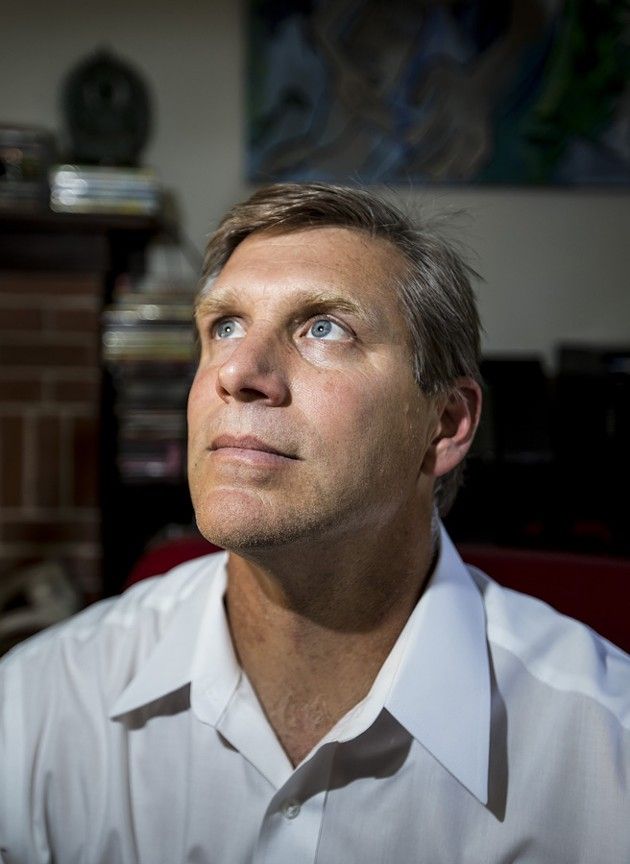
Zoltan Istvan of the Transhumanist Party is the closest thing to the Antichrist — as imagined in Left Behind, anyway — whom I’ve ever met. Telegenic, articulate, and blond, the 43-year-old Marin technologist who formerly worked in real estate cheerfully advocates for a post-capitalist future of artificial intelligence, DIY genetic modification, and the eventual demise of death itself. To put science and technology to the fore of the national agenda, he’s running for president.
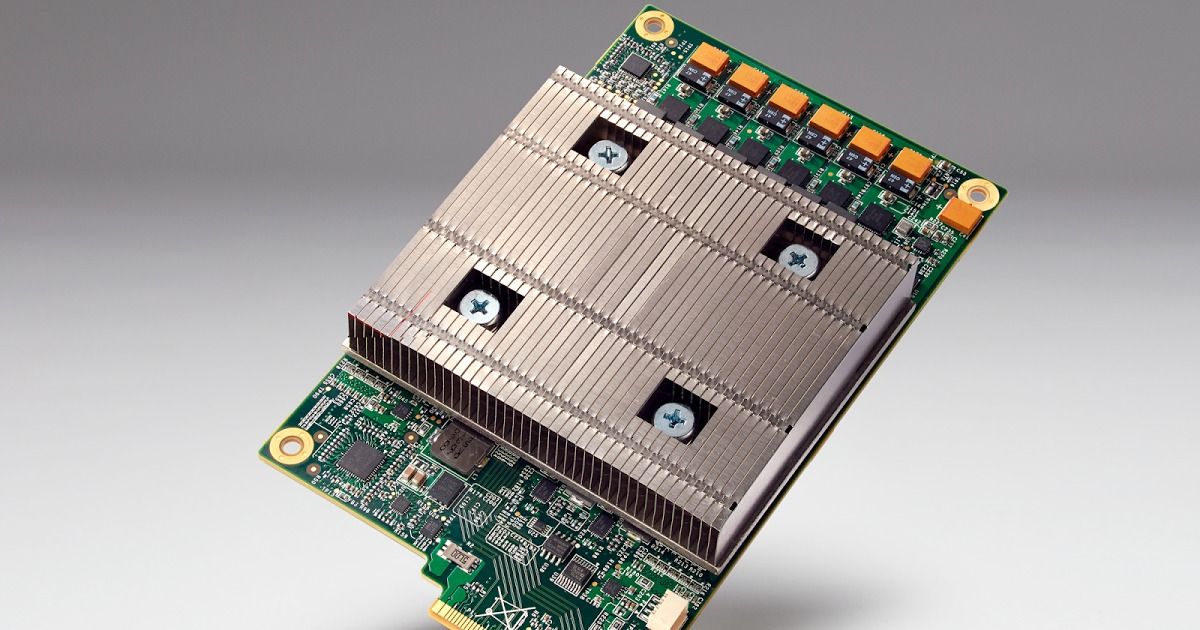
Posted by norm jouppi, distinguished hardware engineer, google.
Machine learning provides the underlying oomph to many of Google’s most-loved applications. In fact, more than 100 teams are currently using machine learning at Google today, from Street View, to Inbox Smart Reply, to voice search.
But one thing we know to be true at Google: great software shines brightest with great hardware underneath. That’s why we started a stealthy project at Google several years ago to see what we could accomplish with our own custom accelerators for machine learning applications.
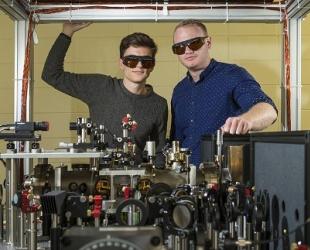
Australian physicists’ team has developed a new research assistant to carry out experiments in quantum mechanics in an artificial intelligence (AI) algorithm form, which quickly took control of the experiment, learned the job tasks and even innovated. In a statement, co-lead researcher Paul Wigley from the Australian National University (ANU) Research School of Physics and Engineering, said he didn’t expect that the machine would be able to conduct the experiment itself from scratch within an hour.
He added that in case a simple computer program had been used, it would have taken much more time than the age of the universe to go through all the combinations and work on it.
Scientists were looking forward to reconstruct an experiment that was awarded the 2001 Nobel Prize in Physics, which included very cold gas trapped in a laser beam called a Bose-Einstein condensate.
US Navy paying D-Wave to train them on QC.
A division of the U.S. Navy intends to pay Canadian company D-Wave $11 million to learn how to use its quantum computing infrastructure, according to a federal filing posted online on Monday.
The unit seeking this training is the Navy’s Space and Naval Warfare Systems Center Pacific, known as SPAWAR or SSC-PAC for short, which is headquartered in San Diego and has previously researched amphibious throwable robots, unmanned aerial vehicles, virtual reality, and many other technologies. The filing does not actually cover the cost of quantum computing hardware. But NASA has been allowing SPAWAR scientists to learn how to use the D-Wave machine that it operates with Google at the NASA Ames Research Center, the San Diego Union-Tribune reported last month.
Quantum computers employ quantum bits, or qubits, each of which can be zero or one or both, unlike the regular bits in classical computers. The superposition of qubits lets machines perform great numbers of computations at once, making a quantum computer highly desirable for certain types of processes. Google recently found that quantum annealing with D-Wave hardware is 100 times faster than simulated annealing on a classic computer chip.
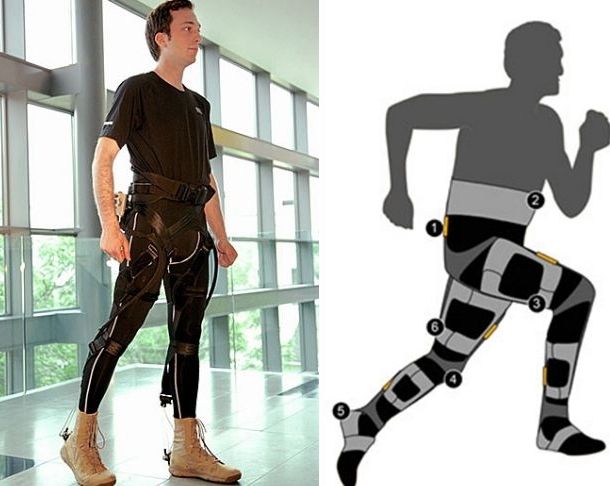
Pressure is on DARPA by US Military to speed up on completing the soft Exosuit.
The clothing-like Soft Exosuit has been described as a “Wearable Robot” by the U.S. Defense Advanced Projects Research Agency (DARPA) that’s commissioning universities and research institutions to advance this military technology. The DARPA Soft Exosuit is part of the agency’s Warrior Web program.
A prototype Soft Exosuit had a series of webbing straps around the lower half of the body with a low-power microprocessor and a network of flexible strain sensors. These electronics act as the “brain” and “nervous system” of the Soft Exosuit. They continuously monitor data signals, including suit tension, wearer position (walking, running, crouched) and more.
In 2014, DARPA awarded $2.9 million to The Wyss Institute for Biologically Inspired Engineering at Harvard University to further develop its Soft Exosuit, other versions of which might eventually help persons (military and civilian) with limited mobility.

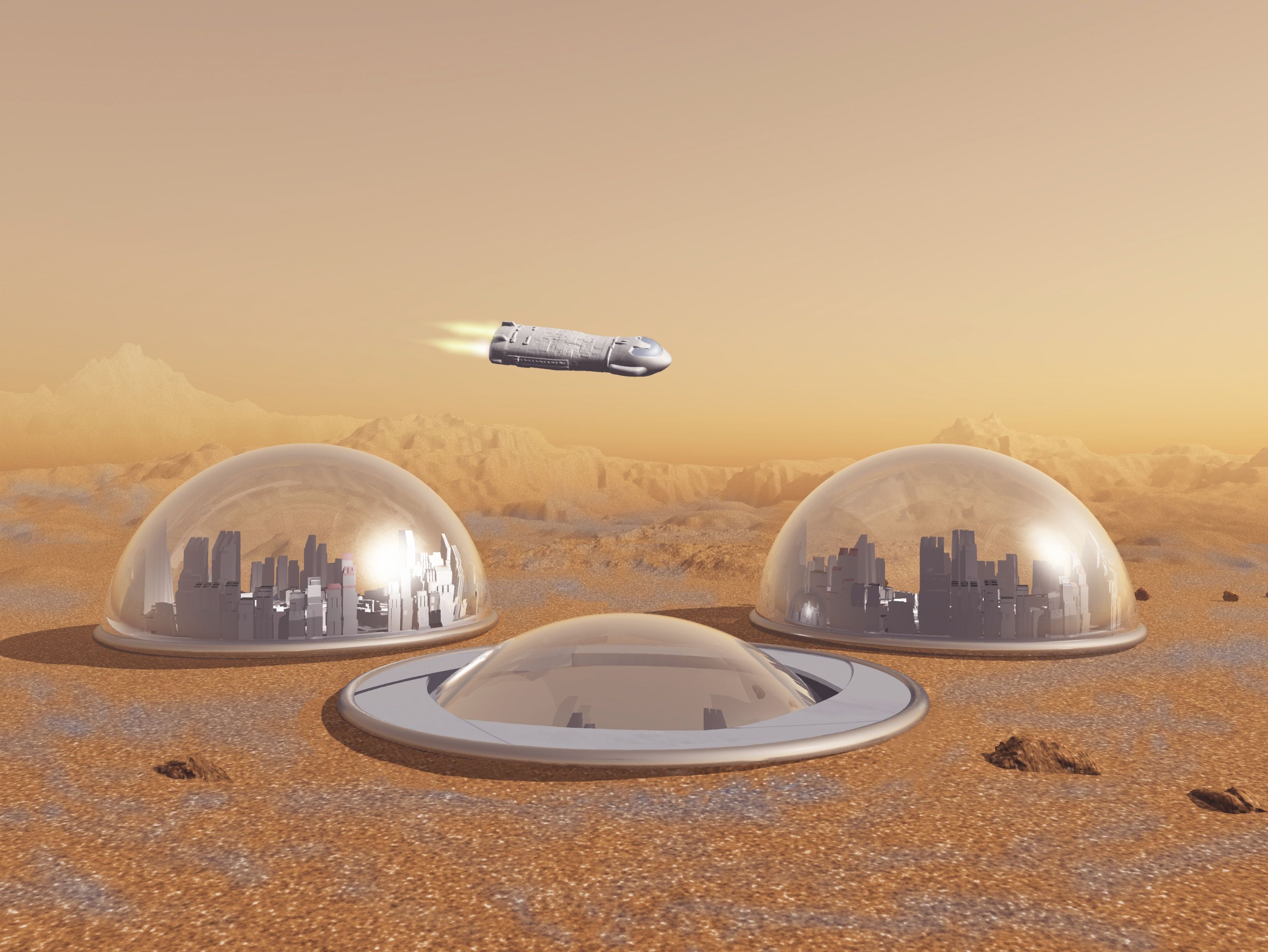
Friends have been asking me to write something on space exploration and my campaign policy on it, so here it is just out on TechCrunch:
When people think about rocket ships and space exploration, they often imagine traveling across the Milky Way, landing on mysterious planets and even meeting alien life forms.
In reality, humans’ drive to get off Planet Earth has led to tremendous technological advances in our mundane daily lives — ones we use right here at home on terra firma.
I recently walked through Boston’s Logan International Airport; a NASA display reminded me that GPS navigation, anti-icing systems, memory foam and LED lights were all originally created for space travel. Other inventions NASA science has created include the pacemaker, scratch-resistant lenses and the solar panel.
These types of advancements are one of the most important reasons I am hoping our next U.S. president will try to jump-start the American space program — both privately and publicly. Unfortunately, it doesn’t appear any of them are talking about the issue. But they should be. As we enter the transhumanist age — the era of bionic limbs, brain implants and artificial intelligence — space exploration might once again dramatically lead us forward in discovering the most our species can become.

I do see delays of self-driving 18 wheelers across the US. Too many laws & regulations would need to change, consumer safety & protection advocacy groups, etc. will delay this in the US.
SAN FRANCISCO – Picture an 18-wheel truck barreling down the highway with 80,000 pounds of cargo and no one but a robot at the wheel.
To many, that might seem a frightening idea, even at a time when a few dozen of Google’s driverless cars are cruising city streets in California, Texas, Washington and Arizona.
But Anthony Levandowski, a robot-loving engineer who helped steer Google’s self-driving technology, is convinced autonomous big rigs will be the next big thing on the road to a safer transportation system.
