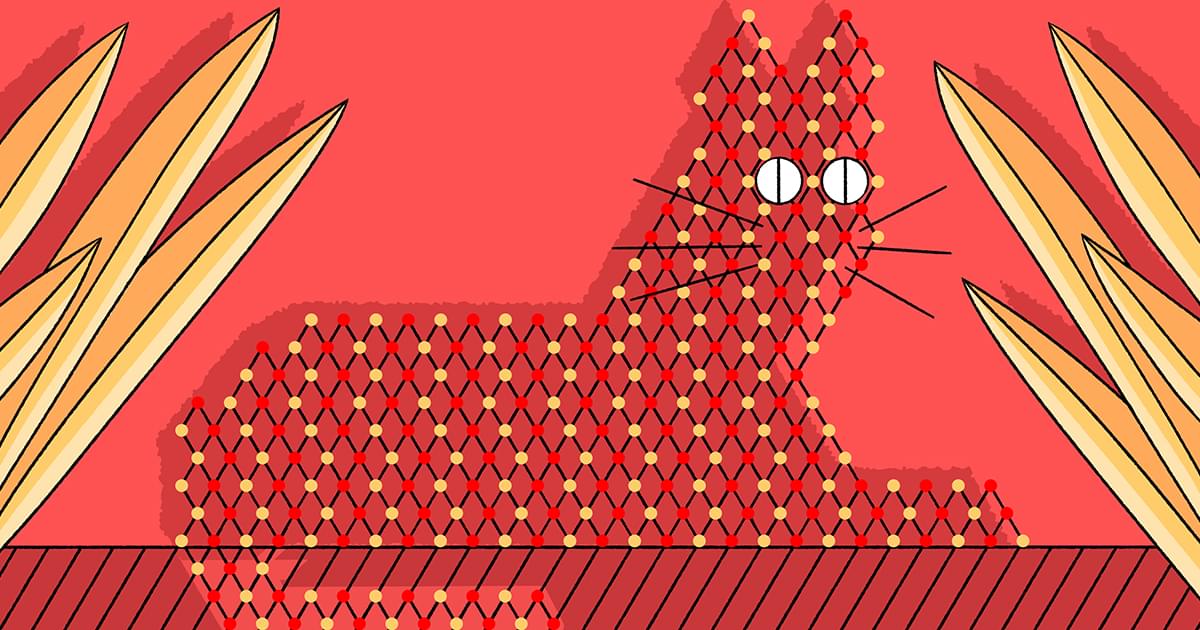
Neural networks power today’s AI boom. To understand them, all we need is a map, a cat and a few thousand dimensions.
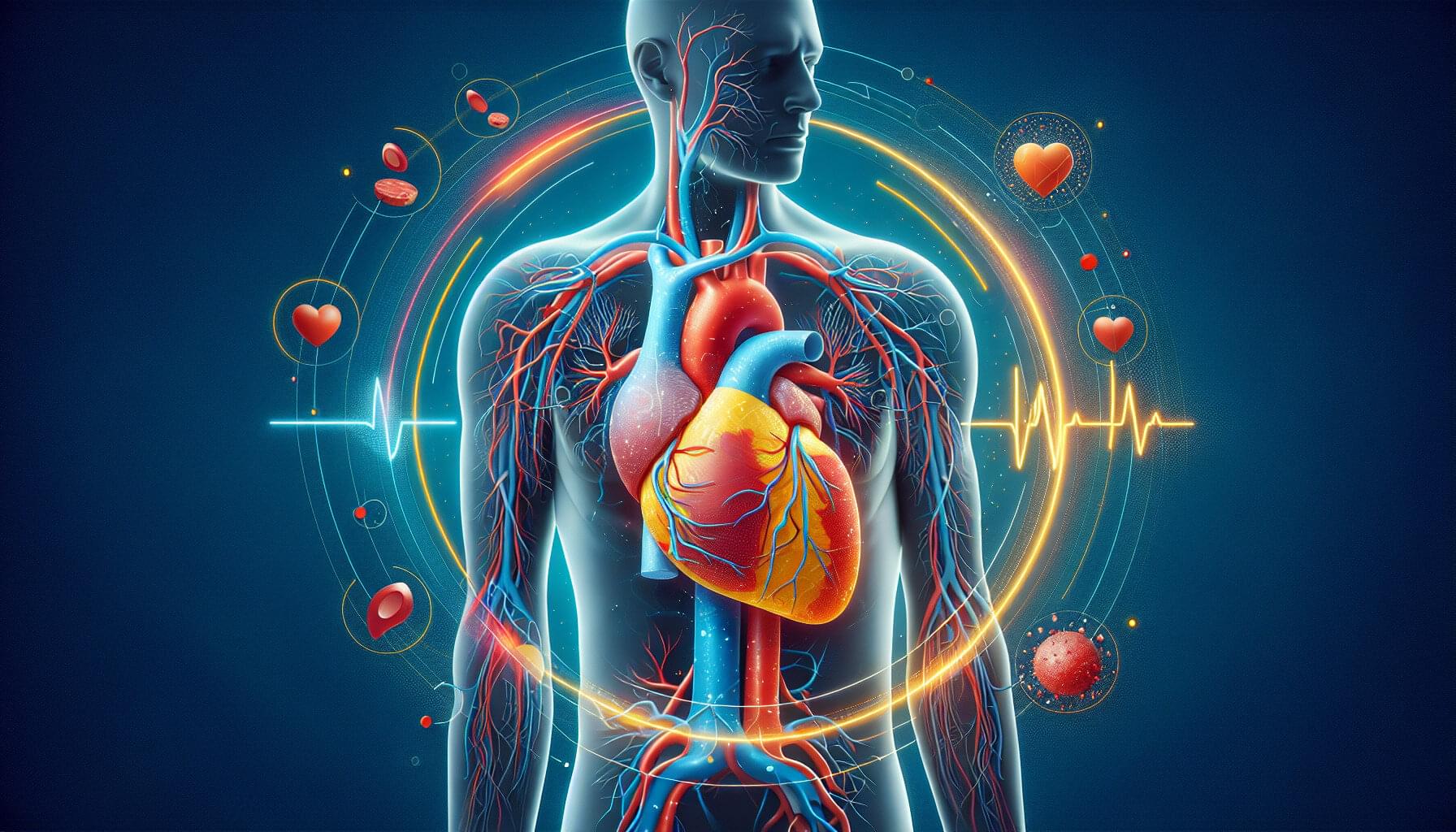
Reduced coronary blood flow, measured with an artificial intelligence-based imaging tool, predicted future cardiovascular events in patients with suspected stable coronary artery disease. These findings were presented at EACVI 2025, the congress of the European Association of Cardiovascular Imaging (EACVI).
Stable coronary artery disease (CAD) refers to the common syndrome of recurrent, transient episodes of chest symptoms, often manifesting as angina. Coronary computed tomography angiography (CCTA) is a noninvasive heart scan that is used as the first-line investigation for patients with suspected stable CAD.
AI tools and FFR-CT explained While CCTA clearly shows blockages in coronary arteries, it is limited in its ability to estimate reduced blood flow, which is necessary to diagnose angina. An artificial intelligence-based tool has been developed that analyzes CCTA images and provides an estimate of blood flow, termed CT-derived fractional flow reserve (FFR-CT).
Questions to inspire discussion.
Launch Economics & Viability.
🚀 Q: What launch cost makes space data centers economically competitive? A: Space data centers become cost-competitive with ground systems when launch costs drop to approximately $200/kg, according to Google’s Suncatcher paper, making the economics viable for moving compute infrastructure off-Earth.
💰 Q: Why might SpaceX pursue a $1.5 trillion IPO valuation? A: The projected $1.5 trillion SpaceX IPO valuation is speculated to fund the capital-intensive race to establish space-based data centers and secure the best orbital positions before competitors.
🏢 Q: Which companies can realistically build space data centers first? A: Vertically integrated organizations like SpaceX, Relativity Space, and Blue Origin lead because they control launch infrastructure, can self-fund deployment, and serve as their own customers for space compute capacity.
🛰️ Q: How would space data centers physically connect GPUs across satellites? A: Multiple free-flying satellites in formation (like 20+ Starlink satellites) use inter-satellite optical connections to enable communication between GPUs, creating high-density computing clusters in orbit.
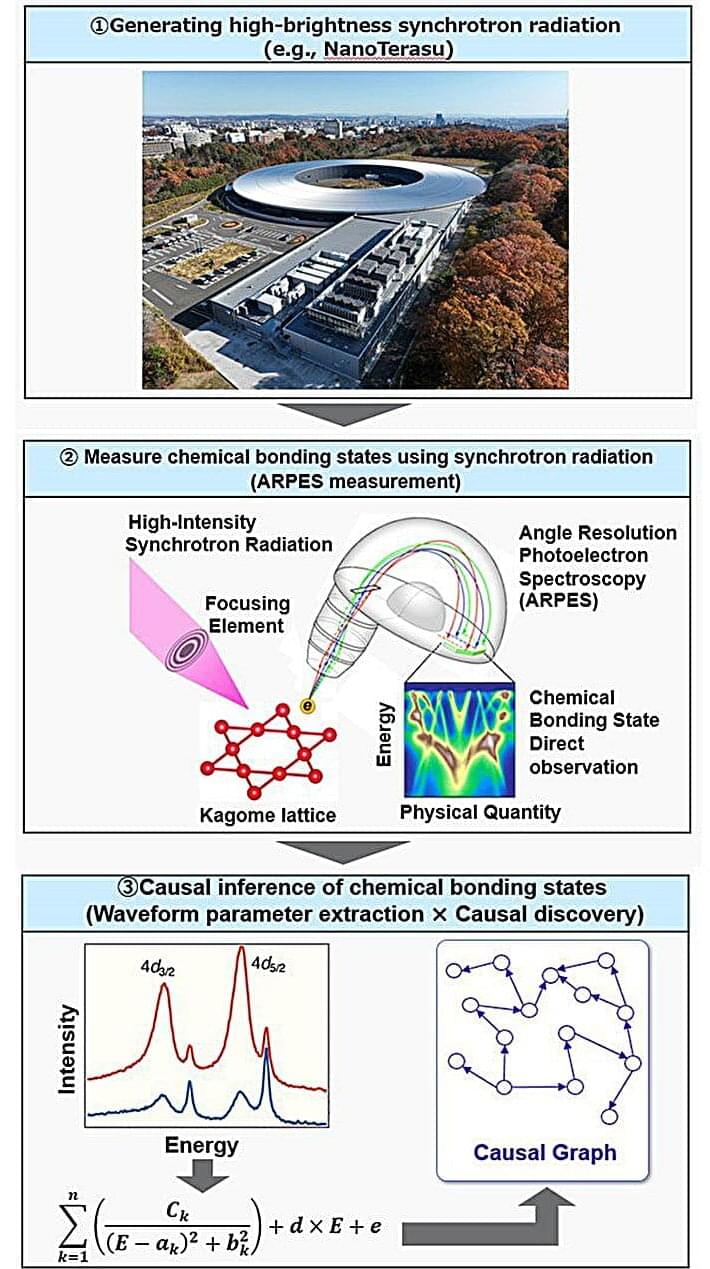
Tohoku University and Fujitsu Limited have successfully used AI to derive new insights into the superconductivity mechanism of a new superconducting material.
Their findings demonstrate an important use case for AI technology in new materials development and suggest that the technology has the potential to accelerate research and development. This could drive innovation in various industries such as the environment and energy, drug discovery and health care, and electronic devices.
The AI technology was used to automatically clarify causal relationships from measurement data obtained at NanoTerasu Synchrotron Light Source. This achievement was published in Scientific Reports.
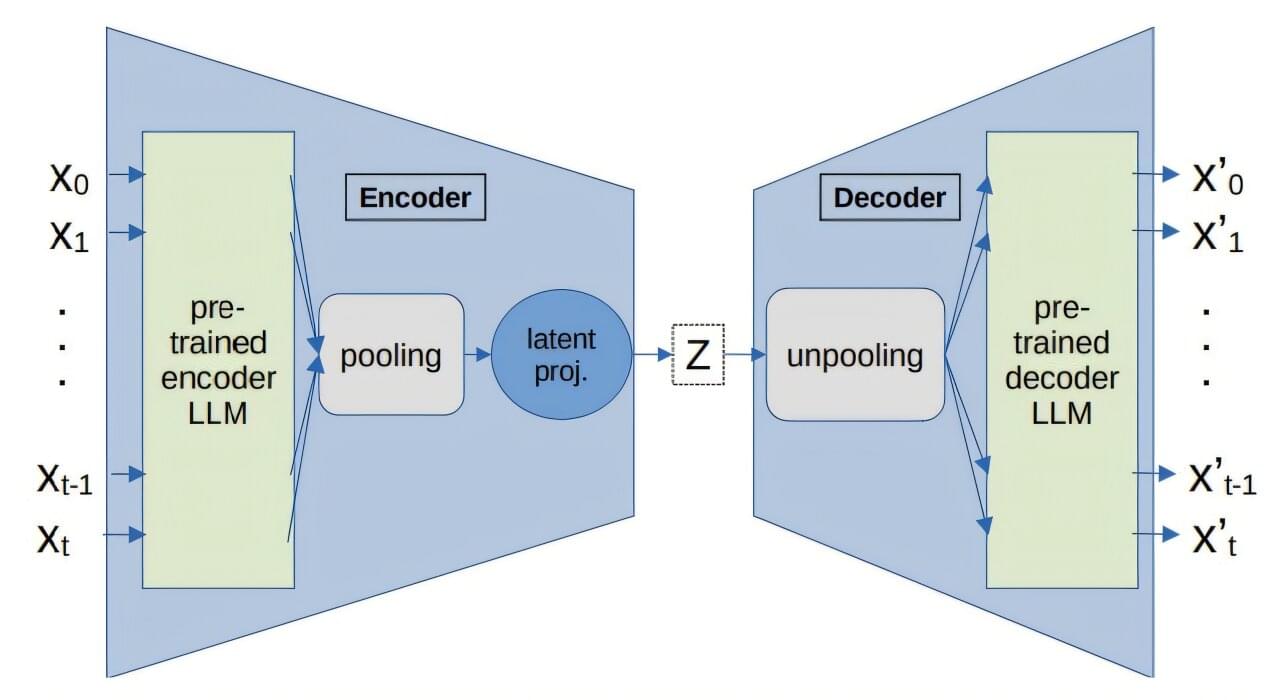
Large language models (LLMs) such as GPT and Llama are driving exceptional innovations in AI, but research aimed at improving their explainability and reliability is constrained by massive resource requirements for examining and adjusting their behavior.
To tackle this challenge, a Manchester research team led by Dr. Danilo S. Carvalho and Dr. André Freitas have developed new software frameworks—LangVAE and LangSpace—that significantly reduce both hardware and energy resource needs for controlling and testing LLMs to build explainable AI. Their paper is published on the arXiv preprint server.
Their technique builds compressed language representations from LLMs, making it possible to interpret and control these models using geometric methods (essentially treating the model’s internal language patterns as points and shapes in space that can be measured, compared and adjusted), without altering the models themselves. Crucially, their approach reduces computer resource usage by more than 90% compared with previous techniques.
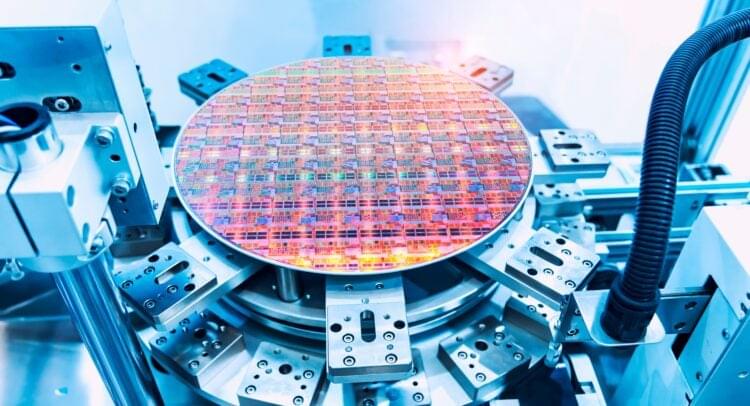
Advanced Micro Devices AMD-0.09% ▼ and Alphabet GOOGL +1.61% ▲ are in talks with Samsung Electronics SSNLF +54.05% ▲ to build next-gen chips in Texas. Both companies are exploring the use of Samsung’s new factory in Taylor, Texas, to manufacture 2-nanometer chips. These chips are expected to be the most advanced available when the plant is ready in 2026.

This paper develops a thermodynamic framework for understanding the coherence of both biological and artificial cognition. We formalize thermodynamic coherence as an expression of information processing constrained by entropy and temperature, establishing a quantitative link between physical energy states and cognitive stability. Building on foundational concepts from statistical mechanics, quantum biology, and information theory, we argue that intelligence emerges as an ordered process, one that locally resists entropy through orderly reasoning work that generates coherent structure. The resulting framework is applied to wave function collapse, consciousness models, and machine reasoning, showing that coherence serves as a universal condition for stable cognition across domains.
Ray Kurzweil is an acclaimed inventor, futurist and author. In his newest book, “The Singularity is Nearer,” he dives into the future date where humans and machines eventually merge. Jeff Glor has more from their conversation. “CBS Saturday Morning” co-hosts Jeff Glor, Michelle Miller and Dana Jacobson deliver two hours of original reporting and breaking news, as well as profiles of leading figures in culture and the arts. Watch “CBS Saturday Morning” at 7 a.m. ET on CBS and 8 a.m. ET on the CBS News app. Subscribe to “CBS Mornings” on YouTube: / cbsmornings Watch CBS News 24/7: https://cbsnews.com/live/ Download the CBS News app: https://cbsnews.com/mobile/ Follow “CBS Mornings” on Instagram:
/ cbsmornings Like “CBS Mornings” on Facebook:
/ cbsmornings Follow “CBS Mornings” on Twitter:
/ cbsmornings Subscribe to our newsletter: https://cbsnews.com/newsletters/ Try Paramount+ free: https://paramountplus.com/?ftag=PPM-0… For video licensing inquiries, contact: [email protected]