Toggle light / dark theme

DARPA Launches Contest to Make AI-powered Military Radios that are Really Smart

Got to love this stuff.


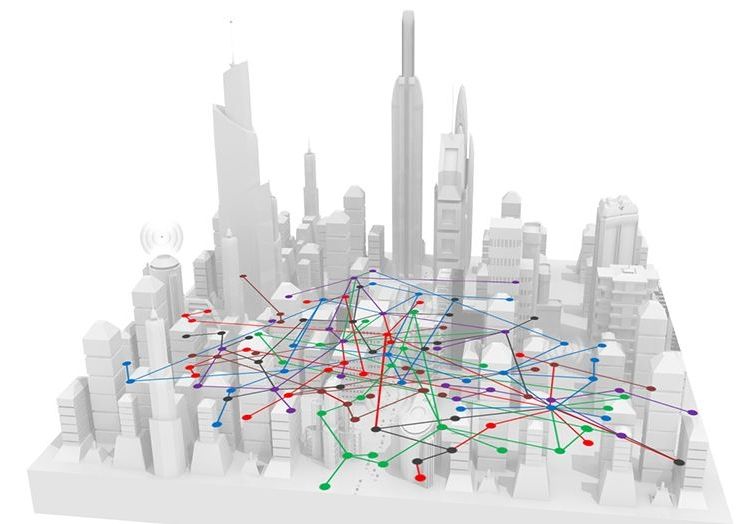
Teams that join this DARPA program, the “Spectrum Collaboration Challenge (SC2),” will have to demonstrate new technologies that represent a “paradigm shift” with both military and commercial applications.

“The real crux of the problem is — when you look at users of the spectrum, whether they are commercial users of the spectrum, whether they’re consumers or they’re the military — the thing that is ubiquitously true is we all are placing more and more and more demand on the spectrum. And all of that demand is really adding up and going to stress the way that we actually manage the spectrum,” said Paul Tilghman, program manager.

“Where do we put our communications systems? Where do we put our radars? Where do we put our (electronic warfare) systems?”


Turing’s new phone: Too good to be true in reality

Turing Robot Industries (TRI) has huge plans regarding its new phone. The third in the series phone, has such high-tech plans lined up for it that these plans itself make you cringe on the grounds of practicality and reality. The plans of the company for this phone include an 18 GB RAM, three Snapdragon 830’s, 6.4-inch 4K display, 1.2 TB storage 60MP iMAX 6K Quad Rear Camera Triplet Lens at f/1.2, and a 20MP front camera.

It will have 4G VoLTE enabled 4 Nano SIMs, support Parallel Tracking and Mapping API. This entire package will be powered by a 120wh battery which will also use a triple power source. This would be in the form of a supercooled 3,600mAh graphene battery and a pair of 2,600mAh Li-Ion Hydrogen Fuel cells powering your device (and maybe also your home).

AVIA Provides Systematic Test and Evaluation for Autonomy Systems

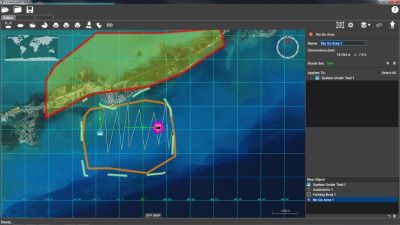
For vessels operating at sea, avoiding collisions is a basic operational requirement. When those vessels are operated by humans, collision avoidance is part of basic operator training. And when those vessels become highly autonomous, collision avoidance must be incorporated into complex autonomy algorithms that must be thoroughly tested before the vessels enter the water.

Machine-Learning Algorithm Generates Videos From Stills

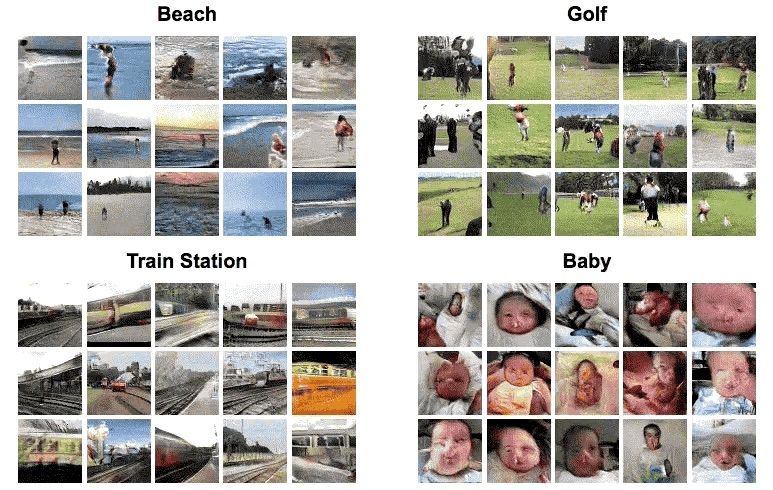
MIT has used machine learning to create video from still images, and the results are pretty impressive. As you can see from the above image, there’s a lot of natural form to the movement in the videos.

The system “learns” types of videos (beach, baby, golf swing…) and, starting from still images, replicates the movements that are most commonly seen in those videos. So the beach video looks like it has crashing waves, for instance.

But like other machine-generated images, these have limitations. The first is size: what you see above is the extent to which the program can render its video. Length is also an issue: only about a second of video gets produced.

Why Artificial Intelligence Needs Some Sort of Moral Code

Whether you believe the buzz about artificial intelligence is merely hype or that the technology represents the future, something undeniable is happening. Researchers are more easily solving decades-long problems like teaching computers to recognize images and understanding speech at a rapid space, and companies like Google goog and Facebook fb are pouring millions of dollars into their own related projects.

What could possibly go wrong?

For one thing, advances in artificial intelligence could eventually lead to unforeseen consequences. University of California at Berkeley professor Stuart Russell is concerned that powerful computers powered by artificial intelligence, or AI, could unintentionally create problems that humans cannot predict.

/* */