
Intel just spent approximately $2 billion to acquire Israel-based AI firm Habana Labs. The partnership will “turbo-charge” Intel’s AI offerings for data centers, Intel said in a press release.
Category: robotics/AI – Page 2,527

Future tech: 3 inventions bigger than the internet that will change our world
From lab grown meat to object-manipulating robots, the tech that will transform our future is bound to be much bigger than the internet or smart phone.

5 areas of focus when adopting AI in your organization
Too many corporate AI pilot programs fail. Here are the five areas you should focus on to get your company’s AI initiatives soaring.

Lofty promises for autonomous cars unfulfilled
The first driverless cars were supposed to be deployed on the roads of American cities in 2019, but just a few days before the end of the year, the lofty promises of car manufacturers and Silicon Valley remain far from becoming reality.
Recent accidents, such as those involving Tesla cars equipped with Autopilot, a driver assistance software, have shown that “the technology is not ready,” said Dan Albert, critic and author of the book “Are We There Yet?” on the history of the American automobile.
He questioned the optimistic sales pitch that autonomous cars would help reduce road deaths — 40,000 every year in the United States, mostly due to human error — because these vehicles themselves have caused deaths.

Google’s AI Chief Wants to Do More With Less (Data)
Jeff Dean says the company is trying to build systems that have general smarts, rather than highly specialized intelligence.

European Space Agency To Launch Craft to Grab Space Debris
The European Space Agency (ESA) is launching the first mission to remove a piece of space debris, set for 2025. The ClearSpace-1 mission will collect a piece of the Vespa (Vega Secondary Payload Adapter) second stage which was left by an ESA mission in 2013, which weighs approximately 100 grams and is the size of a small satellite.
The ESA selected a Swiss startup called ClearSpace to lead the mission. “This is the right time for such a mission,” Luc Piguet, founder and CEO of ClearSpace, said in a statement. “The space debris issue is more pressing than ever before. Today we have nearly 2000 live satellites in space and more than 3000 failed ones. And in the coming years, the number of satellites will increase by an order of magnitude, with multiple mega-constellations made up of hundreds or even thousands of satellites planned for low Earth orbit to deliver wide-coverage, low-latency telecommunications and monitoring services. The need is clear for a ‘tow truck’ to remove failed satellites from this highly trafficked region.”
The problem of space debris is becoming increasingly urgent, with more and more potentially hazardous objects in orbit around the planet, some at extremely high speeds. Debris can pose a risk to manned missions and the International Space Station as well as satellites and other unmanned missions.
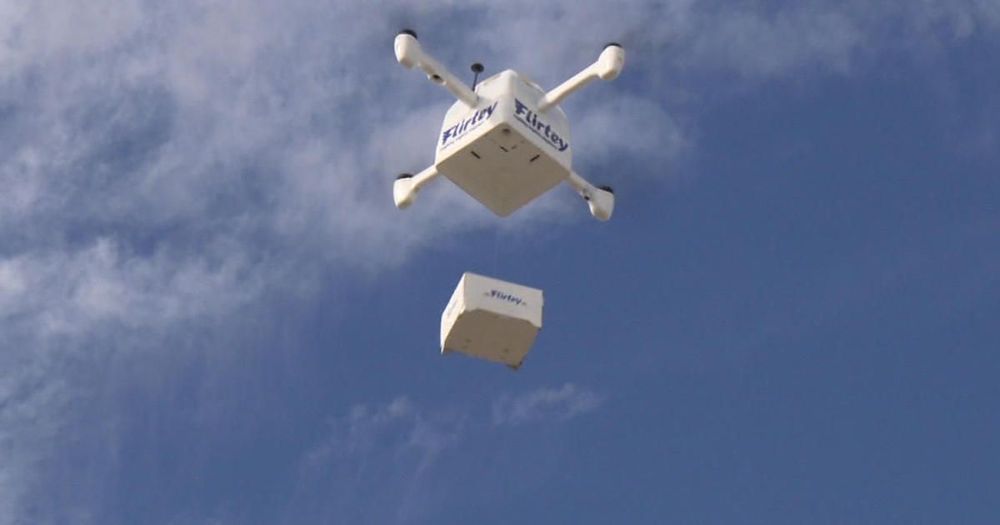
Delivering the goods: Drones and robots are making their way to your door
With companies offering free shipping to gain a competitive edge, radical new technologies are being tested to cut the cost of the supply chain’s expensive “last mile”.
A robot read 3.5 million books to see how we describe men and women differently
About AI bias.
Yet AI bias is by itself a biased term, as if the machine/algorithm were to blame for human bias and/or an incorrect data set.
The History of Artificial Intelligence [Documentary]
This video is the culmination of documentaries that cover the history and origins of computing-based artificial intelligence.
[0:44–52:22] — The Thinking Machine
[52:22–59:26] — In Their Own Worlds (Claude Shannon)
[59:26–1:13:47] — The Thinking Machines
[1:13:47–2:07:42] — The Machine That Changed The World.
[2:07:42–2:34:36] — John McCarthy Interview.
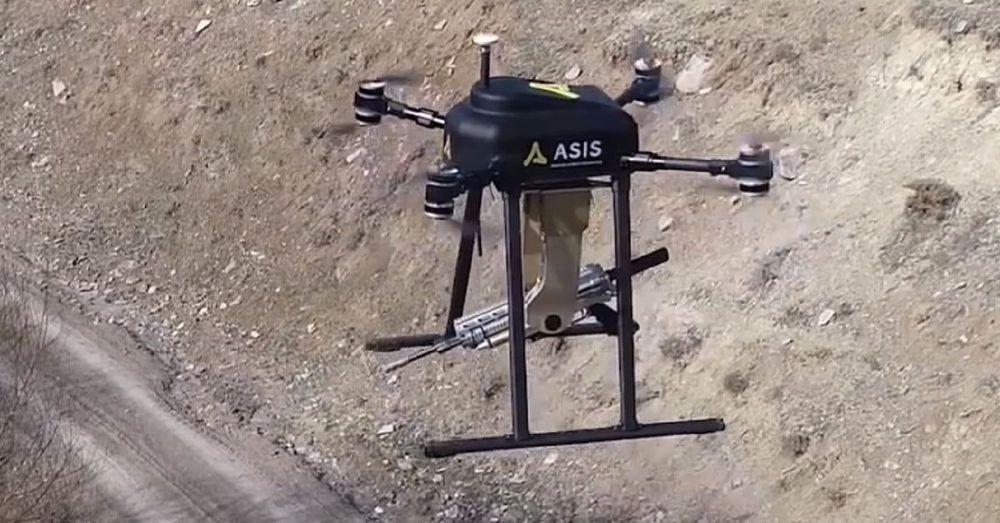
Machine Gun Drones Are Proof That We Live in a Cyberpunk Dystopia
The Songar drone is a regular unmanned aerial vehicle — that just so happens to come with a mounted machine gun and 200 rounds of ammunition for riddling targets with bullets from the sky. Here’s how it works, and how its aerial targeting capabilities could shape up on the battlefield.