AI is already being used in the legal field. Is it really ready to be a lawyer?
Machine learning automates the control of a large and highly connected array of semiconductor quantum dots.
Even the most compelling experiment can become boring when repeated dozens of times. Therefore, rather than using artificial intelligence to automate the creative and insightful aspects of science and engineering, automation should focus instead on improving the productivity of researchers. In that vein, Justyna Zwolak of the National Institute of Standards and Technology in Maryland and her colleagues have demonstrated software for automating standard parts of experiments on semiconductor quantum-dot qubits [1]. The feat is a step toward the fully automated calibration of quantum processors. Larger and more challenging spin and quantum computing experiments will likely also benefit from it [2].
Semiconductor technology enables the fabrication of quantum-mechanical devices with unparalleled control [3], performance [4], reproducibility [5], and large-scale integration [6]—exactly what is needed for a highly scalable quantum computer. Classical digital logic represents bits as localized volumes of high or low electric potential, and the semiconductor industry has developed efficient ways to control such potentials—exactly what is needed for the operation of qubits based on quantum dots. Silicon or germanium are nearly ideal semiconductors to host qubits encoded in the spin state of electrons or electron vacancies (holes) confined in an electric potential formed in a quantum dot by transistor-like gate electrodes.
AI is slated to disrupt traditional jobs, but could also give all people previously unthinkable leverage.
Mark Zuckerberg, CEO of Meta Platforms, has shared some compelling thoughts on the future of artificial intelligence. On a podcast, he posited that AI will eventually surpass individual human intelligence, but, interestingly, argued that this is already happening in a certain sense. His core idea revolves around the combined intelligence of large organizations already functioning as a form of “superintelligence” that individuals can tap into, a power he believes AI will democratize.
“I think that we’re going to get general intelligence,” Zuckerberg stated. “We’re going to have systems that are smarter than any individual, and I think it’s mostly going to be very empowering for people.”
Autism spectrum disorder (ASD) is a complex neurodevelopmental condition in which affected individuals experience difficulties in social communication and exhibit restricted, repetitive patterns of behavior or interests.
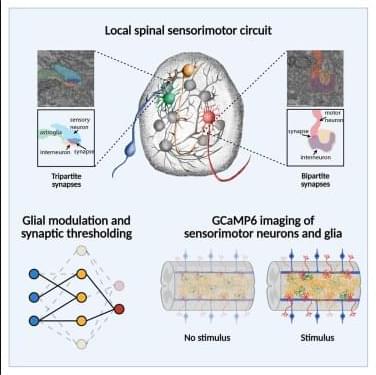
A growing body of research suggests that neurobiological changes, particularly abnormalities in dendritic spines, tiny protrusions on nerve cells where synapses form, may be a hallmark of ASD. In particular, studies have found an unusually high number of these spines in individuals with autism. This overabundance of synaptic connections could disrupt normal communication pathways in the brain, potentially contributing to the behavioral and cognitive features seen in ASD.
Under normal circumstances, the brain undergoes synaptic pruning, a process involving the removal of unnecessary or weak synaptic connections to make way for more efficient neural networks. This pruning is crucial during early development and adolescence.
An accurate diagnosis of ADHD is crucial in bringing clarity and the right support to people who need it, but current diagnosis methods are time-consuming and inconsistent. A new study suggests AI could help.
Researchers in South Korea trained machine learning models to connect characteristics in photos of the fundus at the back of the eye to a professional diagnosis of ADHD (attention deficit hyperactivity disorder).
Of four machine learning models tested in the study, the best achieved a 96.9 percent score for predicting ADHD accurately, based on image analysis alone.
NVIDIA’s AI Blueprint combines Black Forest Labs’ FLUX.1-dev as an NVIDIA NIM microservice, ComfyUI and Blender in a prebuilt workflow optimized for RTX AI PCs.
Fish are masters of coordinated motion. Schools of fish have no leader, yet individuals manage to stay in formation, avoid collisions, and respond with liquid flexibility to changes in their environment. Reproducing this combination of robustness and flexibility has been a long-standing challenge for human-engineered systems like robots.