The qubits are similar enough to those used by the likes of Google and IBM that they could slot into existing processors in the future.



In 1980, Stephen Hawking gave his first lecture as Lucasian Professor at the University of Cambridge. The lecture was called “Is the end in sight for theoretical physics?”
Hawking, who later became my Ph.D. supervisor, predicted that a theory of everything—uniting the clashing branches of general relativity, which describes the universe on large scales, and quantum mechanics, which rules the microcosmos of atoms and particles— might be discovered by the end of the 20th century.
Forty-five years later, there is still no definitive theory of everything. The main candidate is string theory, a framework that describes all forces and particles including gravity. String theory proposes that the building blocks of nature are not point-like particles like quarks (which make up particles in the atomic nucleus) but vibrating strings.
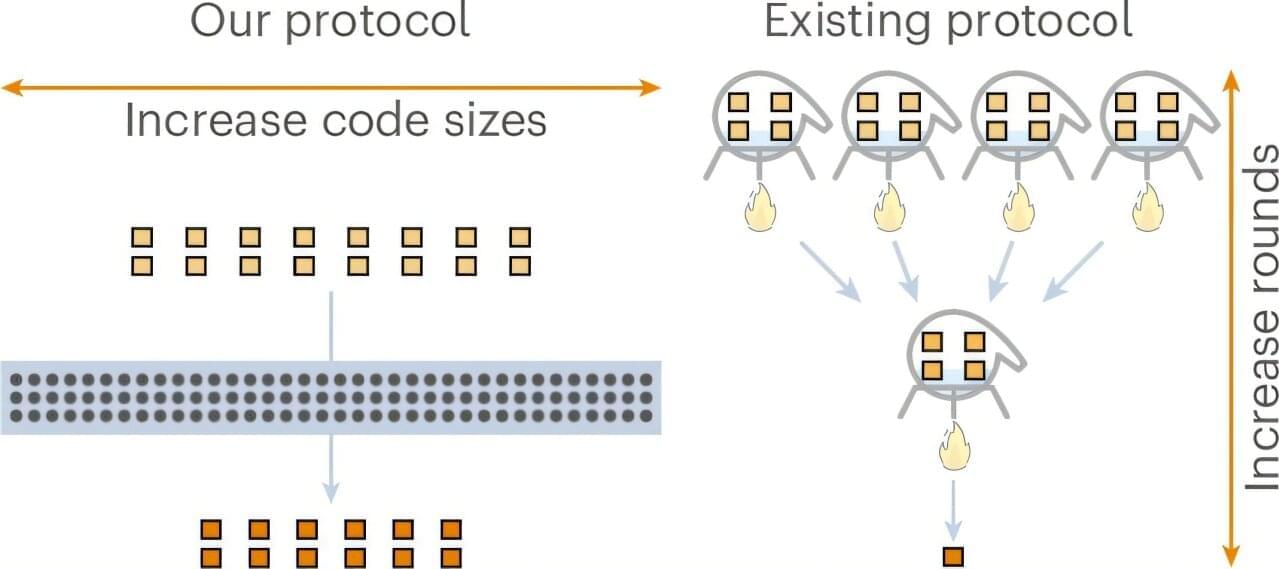
Researchers have demonstrated that the theoretically optimal scaling for magic state distillation—a critical bottleneck in fault-tolerant quantum computing—is achievable for qubits, improving on the previous best result by reaching a scaling exponent of exactly zero.
The work, published in Nature Physics, resolves a fundamental open problem that has persisted in the field for years.
“Broadly, I think that building quantum computers is a wonderful and inspiring goal,” Adam Wills, a Ph.D. student at MIT’s Center for Theoretical Physics and lead author of the study, told Phys.org.
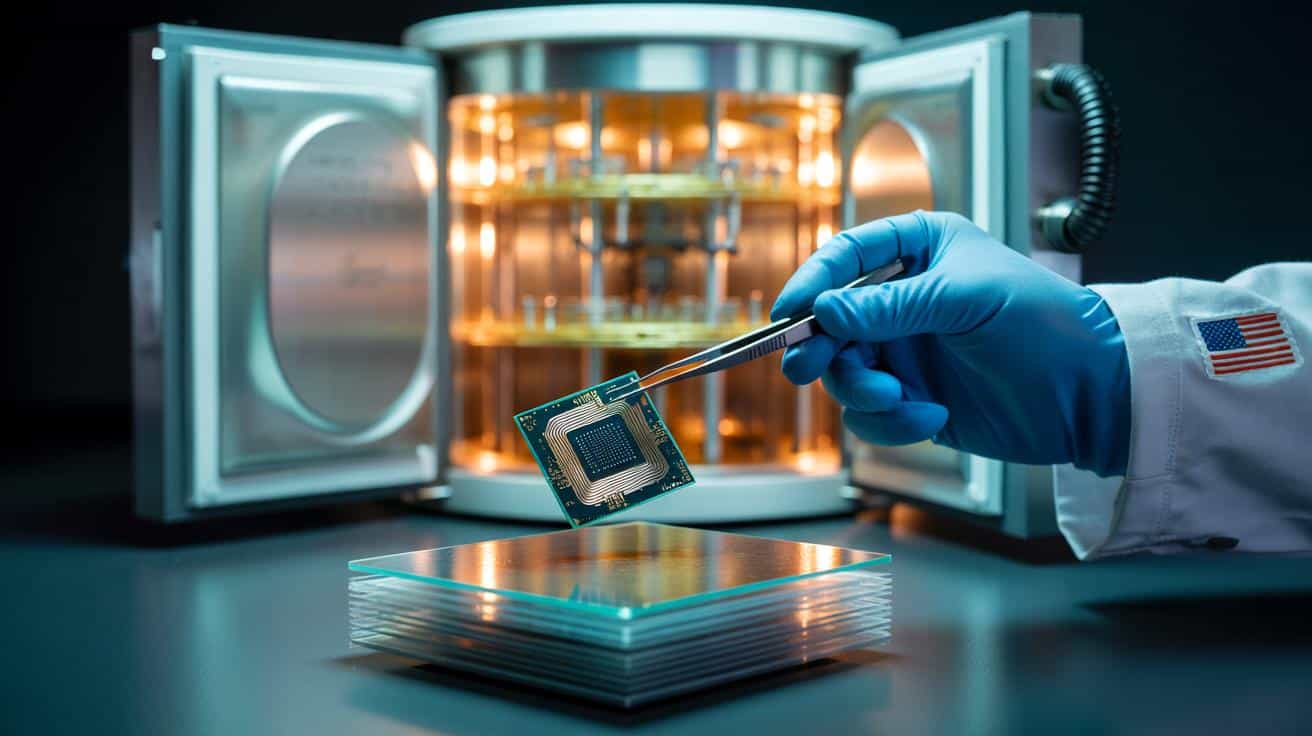
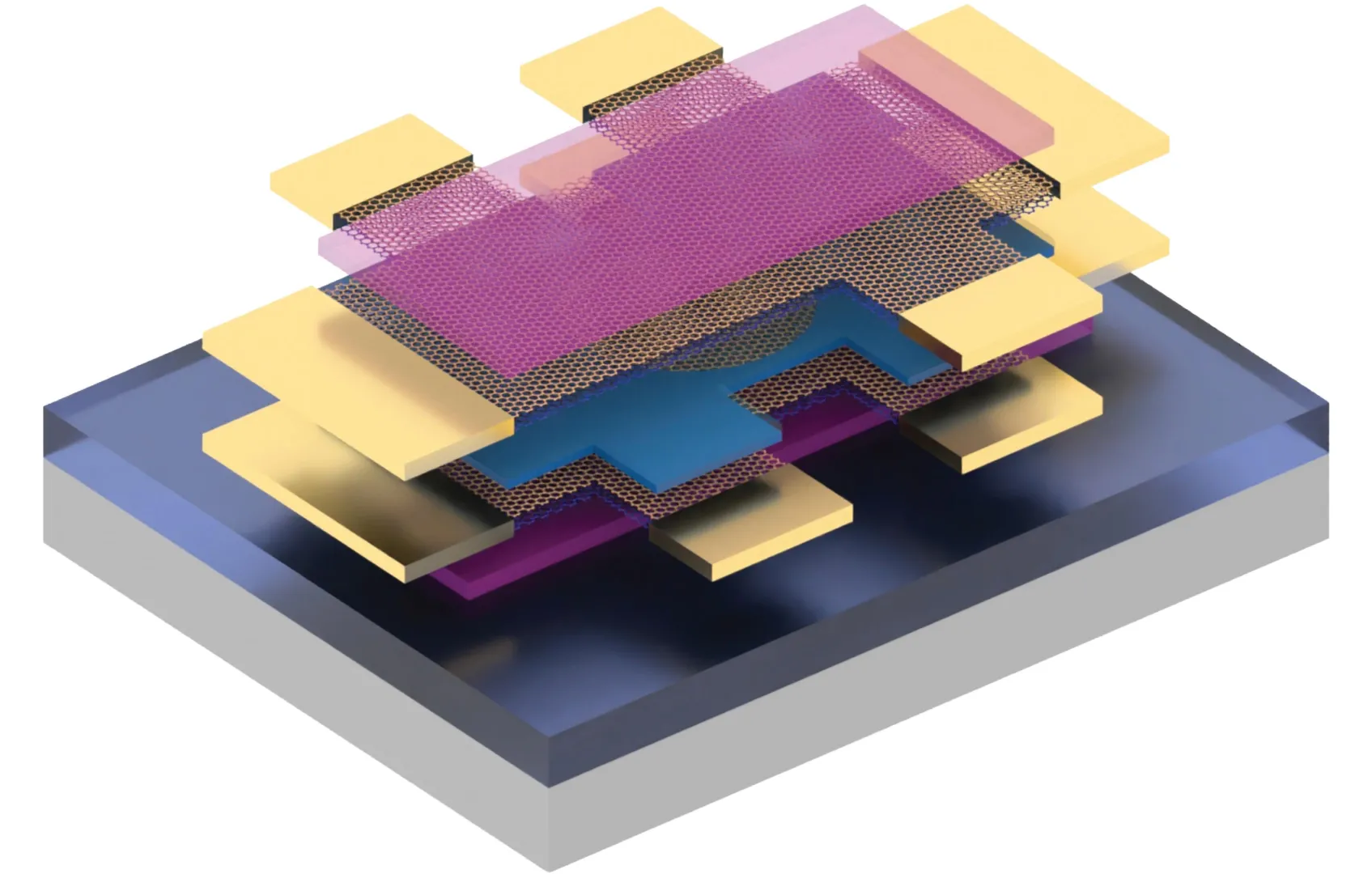
Engineers have coaxed them into lasting longer, using a smarter materials stack and some painstaking fabrication.
Researchers in the United States say a superconducting qubit now holds its state for more than a millisecond, long enough to change how we think about useful quantum circuits. The result pushes lab records and nudges industrial roadmaps toward designs that look manufacturable rather than bespoke.

Dark energy may be evolving—hinting that the universe’s ultimate destiny could be far stranger than we ever imagined. Astronomers are rethinking one of cosmology’s biggest mysteries: dark energy. New findings show that evolving dark energy models, tied to ultra-light axion particles, may better fit the universe’s expansion history than Einstein’s constant model. The results suggest dark energy’s density could be slowly declining, altering the fate of the cosmos and fueling excitement that we may be witnessing the universe’s next great revelation.
Dark energy, the mysterious force thought to drive the universe’s accelerating expansion, remains one of the deepest puzzles in modern physics. For years, the leading explanation has been that this energy is constant – an unchanging property of empty space responsible for cosmic acceleration. But recent evidence has scientists rethinking that assumption.
Last year, results from the Dark Energy Survey (DES) and the Dark Energy Spectroscopic Instrument (DESI) caught the attention of cosmologists by suggesting that dark energy might not be fixed after all. “This would be our first indication that dark energy is not the cosmological constant introduced by Einstein over 100 years ago but a new, dynamical phenomenon,” explained Josh Frieman, Professor Emeritus of Astronomy and Astrophysics.

IBM Quantum Nighthawk is IBM’s most advanced quantum processor to date, engineered specifically to achieve “quantum advantage” by the end of 2026—when a quantum computer can solve a practical problem better than any classical-only method. Key capabilities.
An inside look at how IBM® is using state-of-the-art 300mm semiconductor fabrication technology to build the future of quantum hardware.
What if watching a video didn’t just change your mind — but erased your existence?
In this speculative science deep dive, we explore SCP-4076, the infamous “Video Hurt System”, a VHS tape that destroys anything that observes it.
Through the lens of quantum collapse, memetic contagion, and information physics, we examine how a piece of analog media could defy the laws of reality itself.
Is SCP-4076 proof that knowledge can have mass? Could perception itself carry the power to rewrite existence?
Join us as we investigate the intersection of cognitive hazards, quantum theory, and metaphysical information, where curiosity becomes a weapon and observation erases the observer.
📅 New speculative science essays every weekday at 6 p.m. PST / 9 p.m. EST
🔔 Subscribe and turn on notifications — explore the edge of what’s possible.
💬 Tell us: would you play the tape?

The rapidly growing field of research on chiral phonons is giving researchers new insights into the fundamental behaviors and structures of materials. The chirality of phonons could pave the way for new methods to control material properties and to encode information at the quantum level, which has implications for, among other areas, quantum technologies, electronics, energy transport, and sensor technology.
A recently published perpsective article in Nature Physics describes the development of this emerging research area, presents a framework for the classification of phonons, and provides a comprehensive overview of the materials in which chiral phonons have been studied or may be discovered in the future. This work is helping accelerate progress in one of today’s fastest-growing areas of quantum materials.
Matthias Geilhufe, Assistant Professor at the Department of Physics, conducts research on chiral phonons and is one of the main authors of the article.