Toggle light / dark theme

How Quantum Mechanics Is Changing Everything We Know About Our Lives

Quantum physics is the new physics that is pointing to something far greater than the materialistic world that we once believed to be the basis of our existence. Not only is it disproving our original perception of space and time, but it is opening the doors to the possibility of time travel, telepathy, and consciousness creating our reality.

Researchers apply quantum theory and Einstein’s special relativity to plasma physics issues

Among the intriguing issues in plasma physics are those surrounding X-ray pulsars—collapsed stars that orbit around a cosmic companion and beam light at regular intervals, like lighthouses in the sky. Physicists want to know the strength of the magnetic field and density of the plasma that surrounds these pulsars, which can be millions of times greater than the density of plasma in stars like the sun.

Researchers at the U.S. Department of Energy’s (DOE) Princeton Plasma Physics Laboratory (PPPL) have developed a theory of waves that can infer these properties in greater detail than in standard approaches. The new research analyzes the plasma surrounding the pulsar by coupling Einstein’s theory of relativity with , which describes the motion of subatomic particles such as the atomic nuclei—or ions—and electrons in plasma. Supporting this work is the DOE Office of Science.

Quantum field theory

The key insight comes from , which describes charged particles that are relativistic, meaning that they travel at near the speed of light. “Quantum theory can describe certain details of the propagation of waves in plasma,” said Yuan Shi, a graduate student in the Princeton Program in Plasma Physics and lead author of a paper published July 29 in the journal Physical Review A. Understanding the interactions behind the propagation can then reveal the composition of the plasma.

New device steps us towards quantum computing

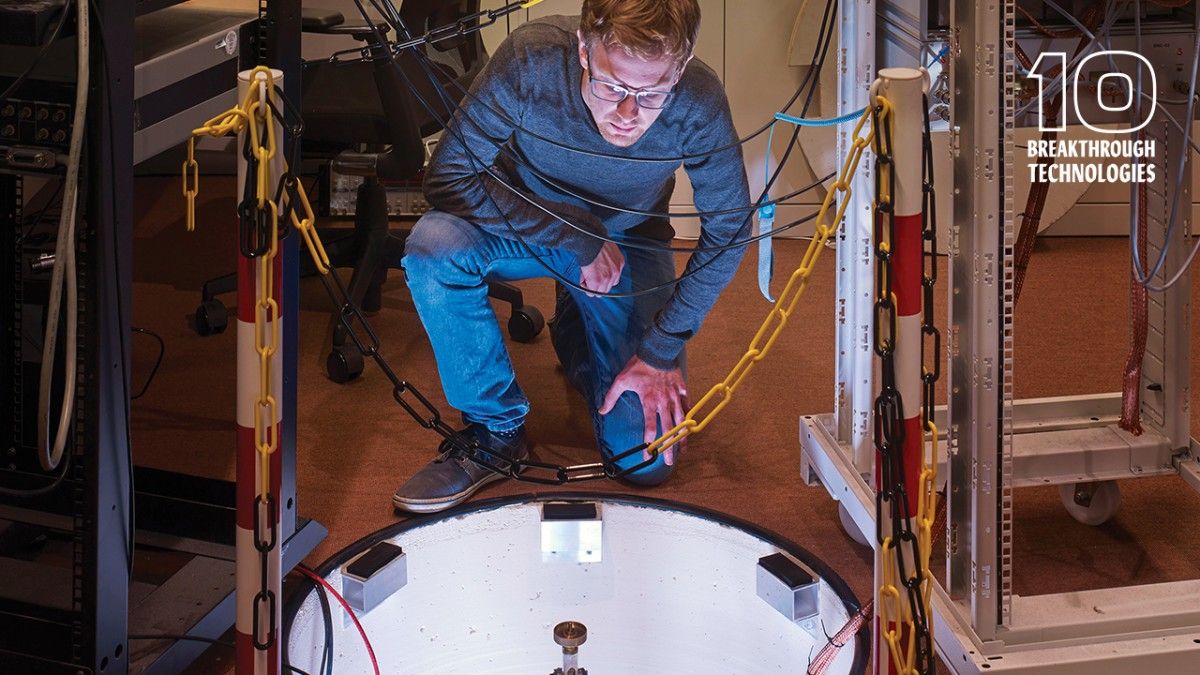
If biochemists had access to a quantum computer, they could perfectly simulate the properties of new molecules to develop drugs in ways that would take today’s fastest computers decades. A new device takes us closer to providing such a computer. The device successfully traps, detects, and manipulates an ensemble of electrons above the surface of superfluid helium. The system integrates a nanofluidic channel with a superconducting circuit.

Because they are so small, electrons normally interact weakly with electrical signals. The new device, however, gives the electron more time to interact, and it is this setup that makes it possible to build a qubit, the quantum computing equivalent of a bit. Quantum computers could provide the necessary computing power to model extremely large and complex situations in physics, biology, weather systems and many others.

While isolated electrons in a vacuum can store quantum information nearly perfectly, in real materials, the movements of surrounding atoms disturbs them, eventually leading to the loss of information. This work is a step towards realizing isolated, trapped single electrons by taking advantage of the unique relationship existing between electrons and superfluid helium. Electrons will levitate just above the surface of helium, about 10 nanometers away, insensitive to the atomic fluctuations below. While this effect has been known, holding them in a superconducting device structure has not been demonstrated before this work. At the heart of this new technology is a resonator based on circuit quantum electrodynamics (cQED) architecture, which provides a path to trap electrons above helium and detect the spins of the electrons. Because they are so small, electrons normally interact only very weakly with electrical signals.

Physicists say time travel could be a reality

Interesting…


However, new research carried out at the University of Waterloo and University of Lethbridge, in Canada, argues there is a much longer measureable minimum unit of time.

If true, the existence of such a minimum time changes the basic equations of quantum mechanics.

This means our understanding of how the universe operates on a very small scale may need to reconsidered.

Physicists Just Observed a Brand-New State of Matter Where We Thought It Was Impossible

Physicists assert that they have observed quantum spin liquid state again; however, this time, they have done so in a material where it was thought to be impossible. If verified, it could transform how we understand quantum computing.

Back in April, the physics world freaked out when scientists confirmed that they’d made the first direct observation of a brand-new state of matter – known as quantum spin liquid – for the first time.

But now a team of physicists has just announced that they’ve observed quantum spin liquid state again… and this time in a material where it should be impossible.

China’s new quantum satellite paves the way for unhackable satellite internet

All that I can say is “WOW!”


CHINA is on the brink of launching a groundbreaking new satellite capable of conducting quantum experiments in space, leading some to predict it will usher in the beginning of a new space race.

The world will be watching very closely after the Chinese-led satellite launches in August. If it proves successful in carrying out the quantum experiments, China is expected to follow it with many more in a bid to create a super secure network that uses an encryption technique based on the principles of quantum communication.

The reason world powers will be paying such close attention is that quantum-enabled spacecrafts are able to provide communication pathways that are completely unhackable. While the technology has been trialled on the ground over short distances, the capability to do so across the globe would be a huge game changer — it holds the promise of a world with completely secure digital communication.

Apple Advances Work on Quantum Dot Displays for Future Macs, iOS Devices & Possible TV

Apple and Q-Dots.


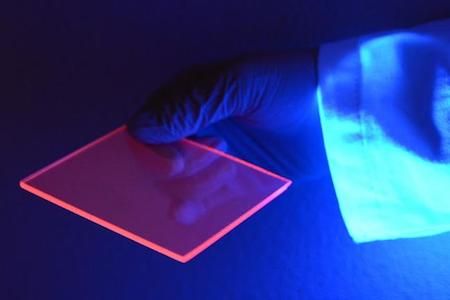
While we know that Apple’s next display shift will be to OLED for their 2017 Anniversary edition iPhone, Apple is always looking to the next wave technology just on the horizon. So what’s beyond OLED? At the moment, many think the next trend points to Quantum Dot LED or QDLED. While the structure of a QLED is very similar to OLED technology, the difference is that the light emitting centers are cadmium selenide nanocrystals, or quantum dots. Theoretically, the advantages to this type of display is that it could reportedly deliver brighter ‘pure color’ and consumes less power, in fact close to 50% less power. The technology is also ideal for consumer devices that demand a flexible display. When Apple first introduced their vision of an Apple Watch in 2013, they presented it with a ‘continuous’ display that completely wraps around a users wrist as noted in the patent figure below. A QDLED type of display would allow such a form factor to come to market.

2AA 88 CONTINUOUS DISPLAY COMMUNICATION BRACELET

While Quantum Dot based displays are no doubt many years out, Apple is already on record having explored the technology in a string of four patent filings that we covered back in 2014 in a report titled “Quantum Dots Could Take the Retina Display to the Next Level.” Today, another Quantum Dot invention came to light.

/* */