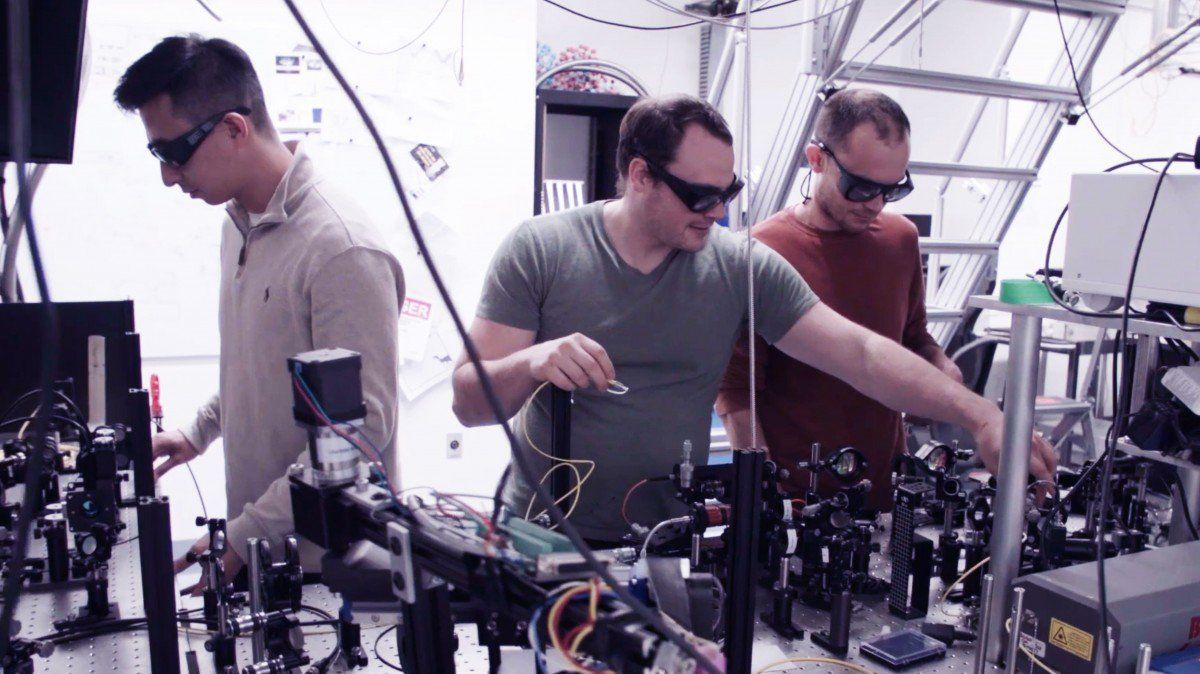
The fiber-optic cables carrying data across the internet are vulnerable to hacking. Two US initiatives aim to fix that by creating super-secure quantum transmissions.
Category: quantum physics – Page 1,082

Tomorrow’s telescopes will be planet-sized quantum teleportation devices
A team of Harvard physicists recently published research showing how future telescopes will rely on quantum entanglement to see across the universe.

How Quantum Mechanics Lets Us See, Smell and Touch
How the science of the super small affects our everyday lives.
Quatum Computing: It’s Not Just the Qubits
In his talk, Bob Sutor will discuss the basics of the quantum computing technology, the motivation for quantum computing, and the outlook for the future.
EVENT:
Open FinTech Forum 2018
SPEAKER:
Bob Sutor
PERMISSIONS:
Original video was published with the Creative Commons Attribution license (reuse allowed).
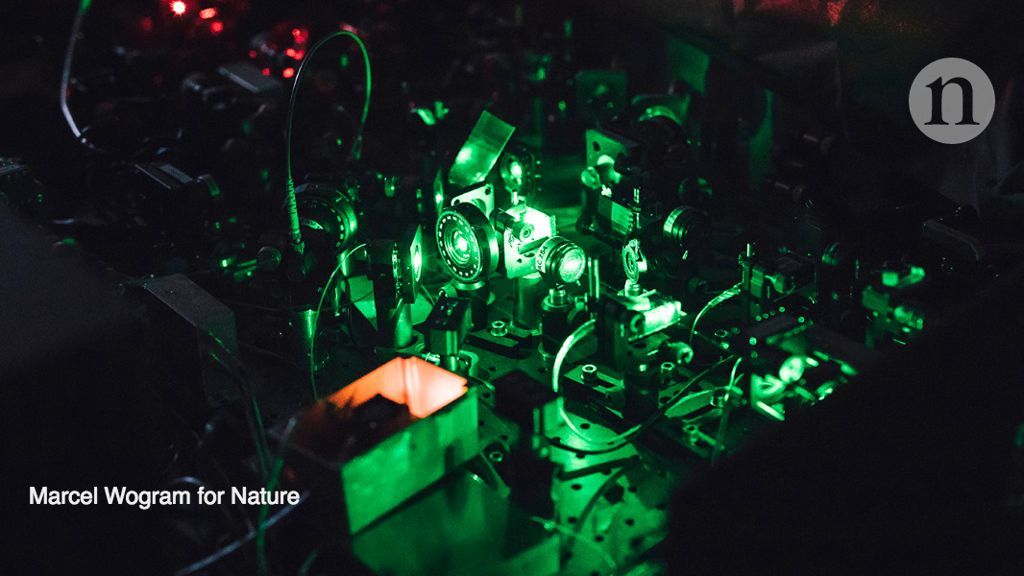
Here’s what the quantum internet has in store
A future ‘quantum internet’ could find use long before it reaches technological maturity, a team of physicists predicts.
Such a network, which exploits the unique effects of quantum physics, would be fundamentally different to the classical Internet we use today, and research groups worldwide are already working on its early stages of development. The first stages promise virtually unbreakable privacy and security in communications; a more mature network could include a range of applications for science and beyond that aren’t possible with classical systems, including quantum sensors that can detect gravitational waves.
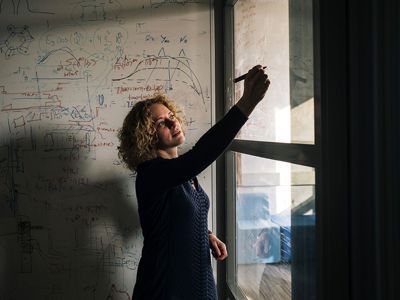
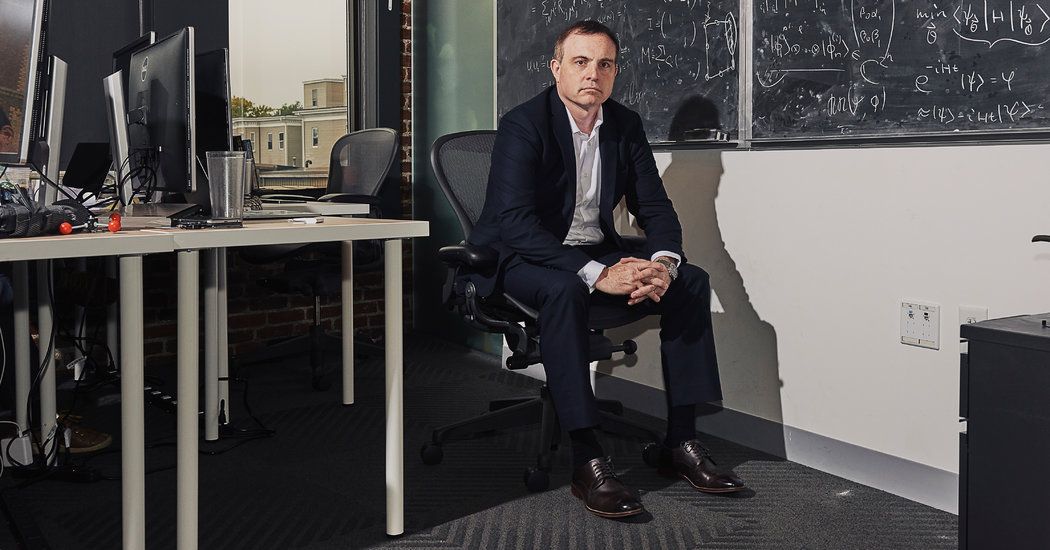
The Next Tech Talent Shortage: Quantum Computing Researchers
By some estimates, only 1,000 or so researchers can claim to understand the technology. Finding more could become a national security issue.
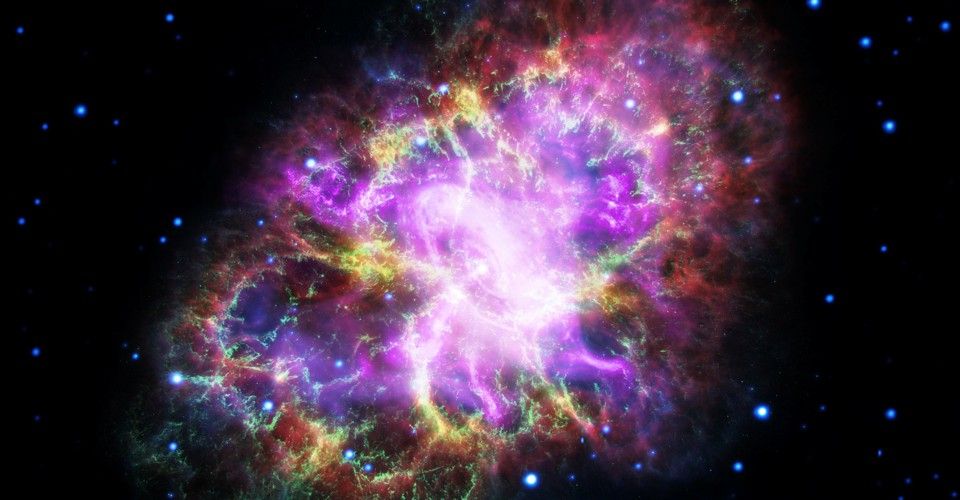
The Universe Is Always Looking
Yay… another person who gets it 👀.
The one thing you probably understand about quantum physics is actually a poor metaphor for the modern state of the field.
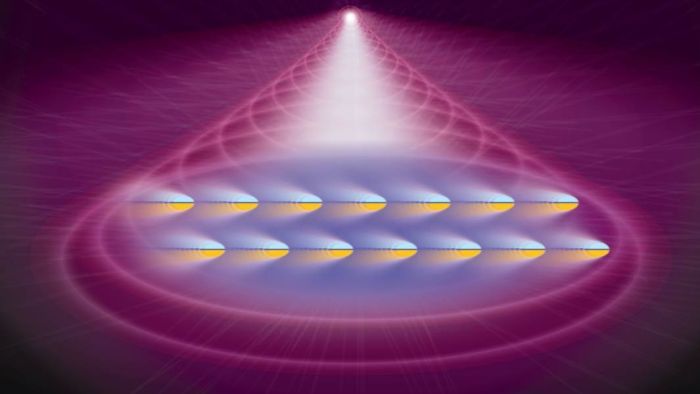
Artificial intelligence better than physicists at designing quantum science experiments
Perhaps physicists should leave human intuition at the laboratory door when designing quantum experiments too.
An Australian crew enlisted the help of a neural network — a type of artificial intelligence — to optimise the way they capture super-cold atoms.
Usually, physicists smoothly tune lasers and magnetic fields to gradually coax atoms into a cloud, according to study co-author Ben Buchler from the Australian National University.

Crypto Quantique claims launch of first quantum-driven secure chip on silicon to strengthen IoT security
UK-based Crypto Quantique has announced the launch of what is being claimed as the world’s most advanced security product for IoT devices – with a quantum edge.
The technology behind this solution includes world’s first quantum driven secure chip (QDSC) on silicon which, when combined with cryptographic APIs, provides highly scalable, easy-to-implement and seamless end-to-end security for any connected device.
Quantum computing differs from classical computing in that it has the potential to find patterns and insights based on data which does not exist, rather than finding patterns in vast amounts of existing data. Its potential applications include improving security through quantum physics and enhancements to machine learning and artificial intelligence.
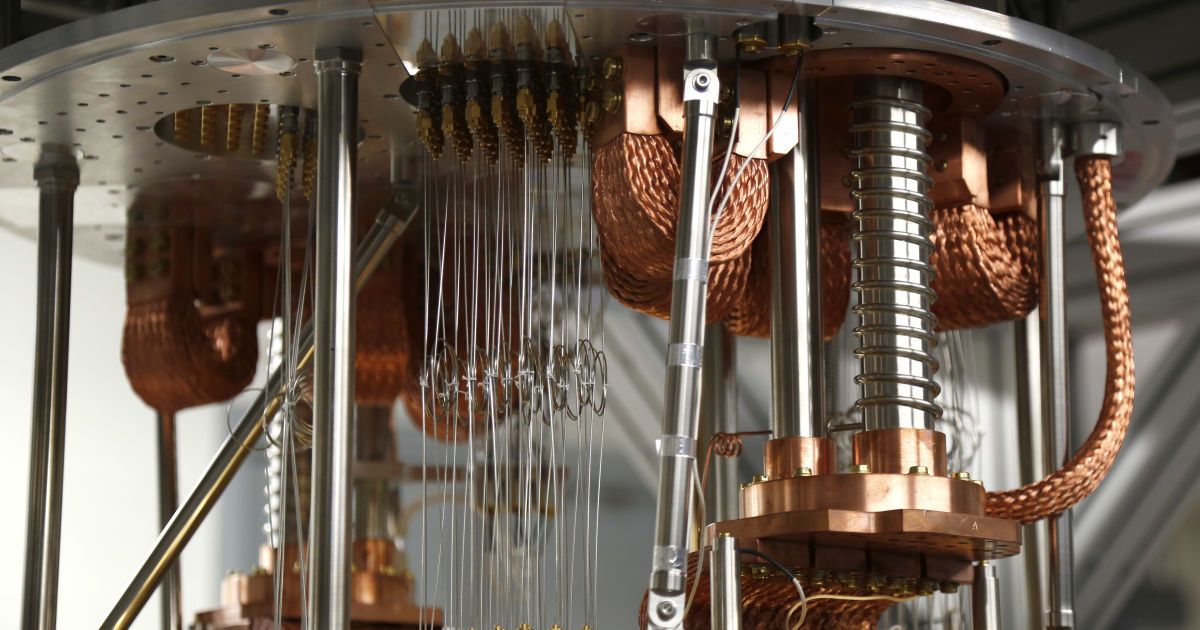
IBM finally proves that quantum systems are faster than classicals
IBM researchers provide mathematical proof to Shor’s Algorithm.