Everyone keeps saying quantum computers are going to change everything, but how come we’re still buying regular ones? Chances are, the quantum revolution will happen behind the scenes.
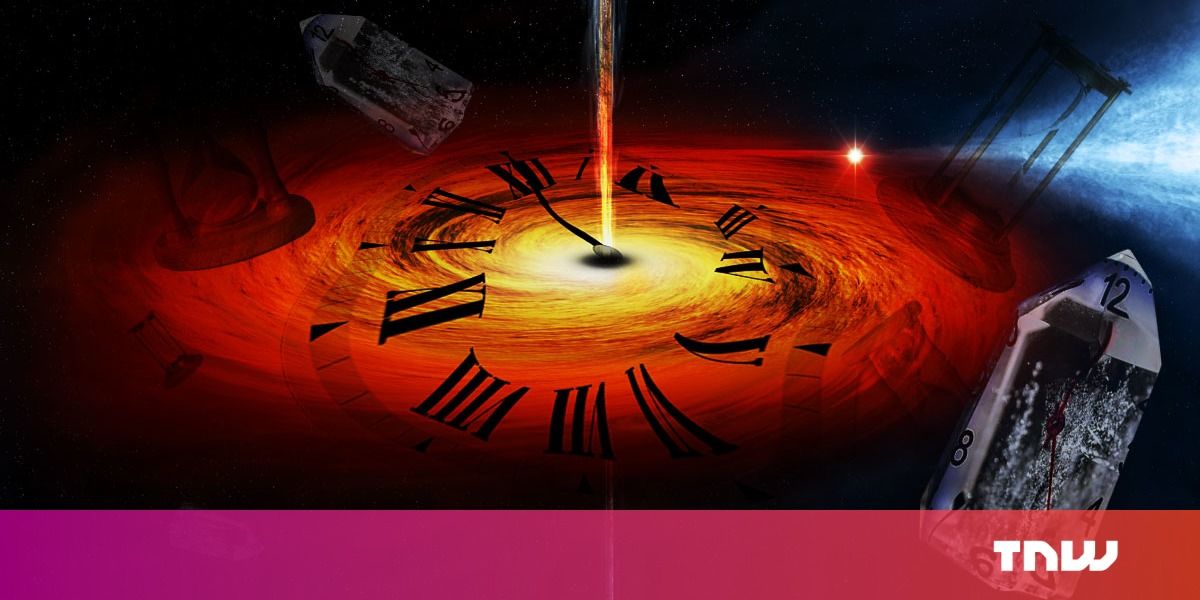
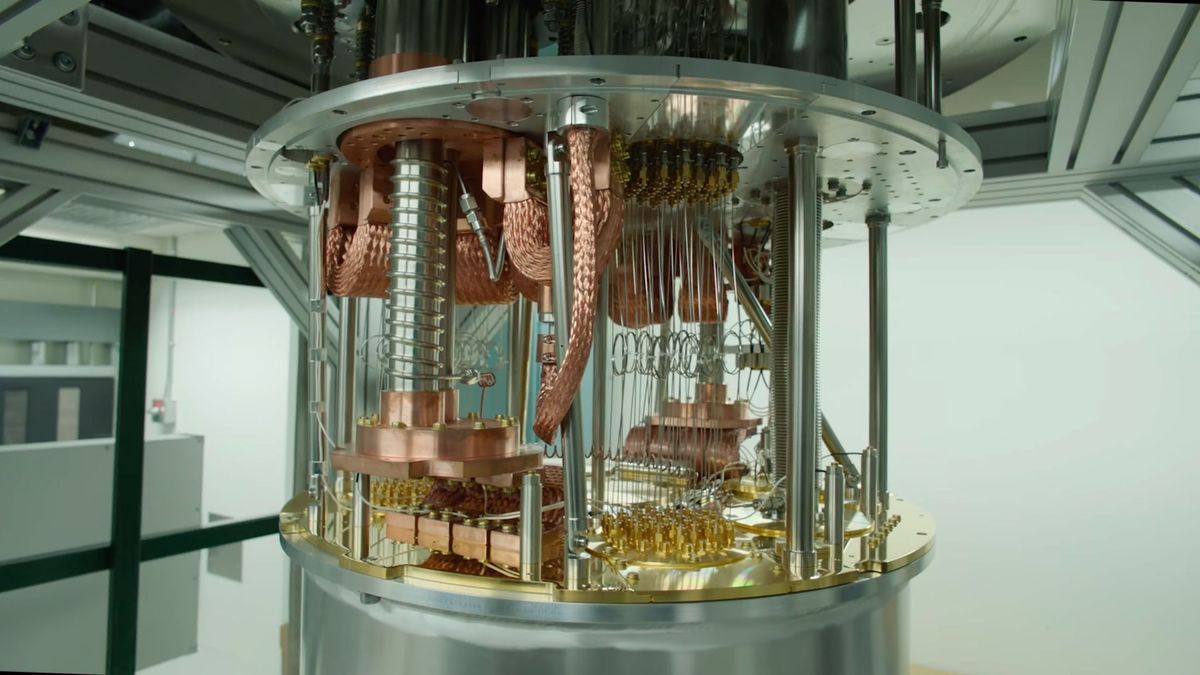
Satya Nadella, the chief executive officer of Microsoft Corp., calls quantum computing one of three emerging technologies that will radically reshape the world, along with artificial intelligence and augmented reality. But it’s easier to describe quantum computing’s importance — that is, its potential importance, because it barely exists now — than to say what it is. Understanding quantum mechanics, whose principles underpin quantum computing, involves a lot of mental mountain climbing. Someth.
A good intro to QUANTUM COMPUTERS, at 5 levels of explanations — from kid-level to expert.
WIRED has challenged IBM’s Dr. Talia Gershon (Senior Manager, Quantum Research) to explain quantum computing to 5 different people; a child, teen, a college student, a grad student and a professional.
Still haven’t subscribed to WIRED on YouTube? ►► http://wrd.cm/15fP7B7
ABOUT WIRED
WIRED is where tomorrow is realized. Through thought-provoking stories and videos, WIRED explores the future of business, innovation, and culture.
Quantum computing expert explains one concept in 5 levels of difficulty | WIRED.
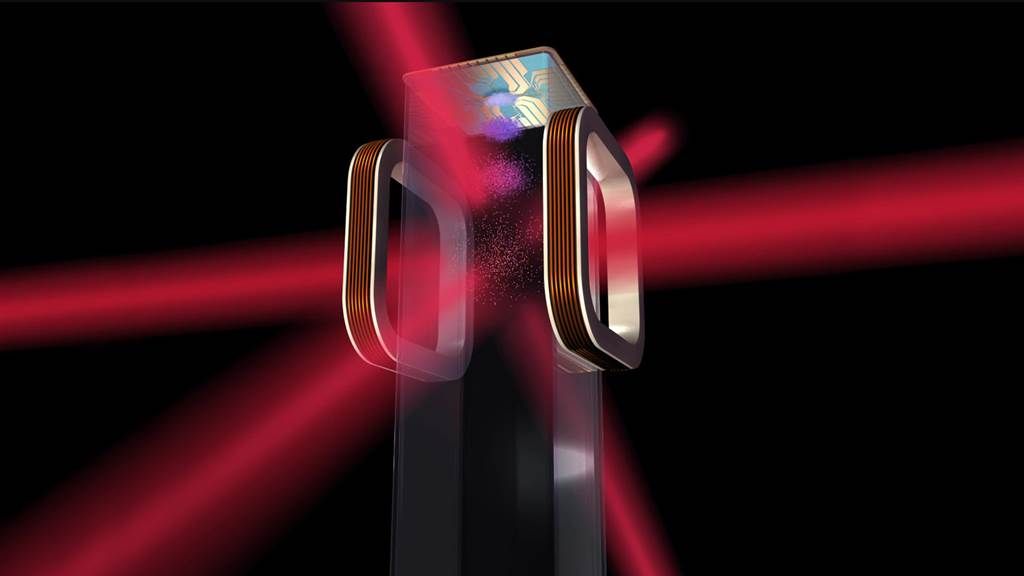
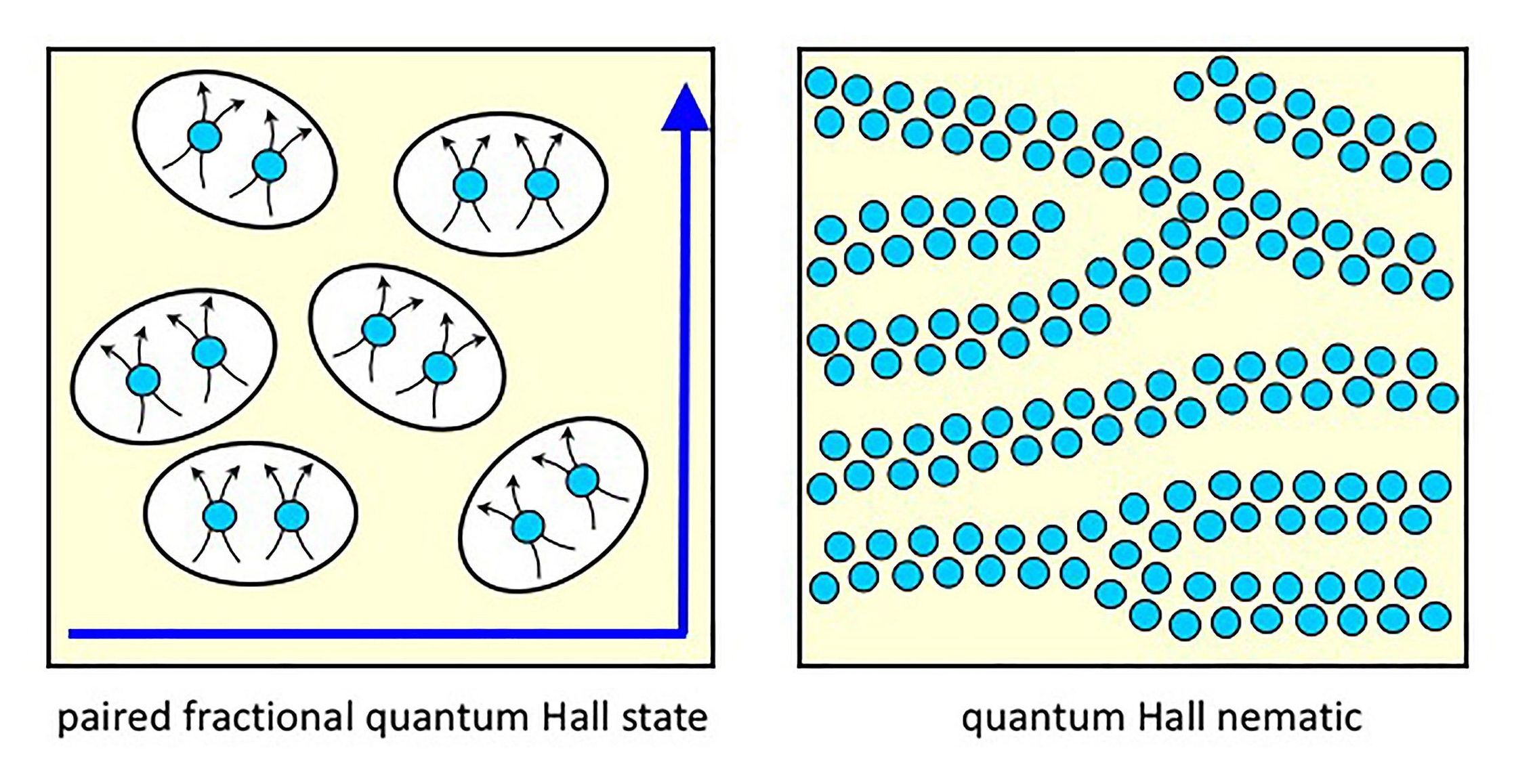
The way that electrons paired as composite particles or arranged in lines interact with each other within a semiconductor provides new design opportunities for electronics, according to recent findings in Nature Communications.
What this means for semiconductor components, such as those that send information throughout electronic devices, is not yet clear, but hydrostatic pressure can be used to tune the interaction so that electrons paired as composite particles switch between paired, or “superconductor-like,” and lined-up, or “nematic,” phases. Forcing these phases to interact also suggests that they can influence each other’s properties, like stability – opening up possibilities for manipulation in electronic devices and quantum computing.
“You can literally have hundreds of different phases of electrons organizing themselves in different ways in a semiconductor,” said Gábor Csáthy, Purdue professor of physics and astronomy. “We found that two in particular can actually talk to each other in the presence of hydrostatic pressure.”
Recommended Books ➤
📖 Life 3.0 — http://azon.ly/ij9u
📖 The Master Algorithm — http://azon.ly/excm
📖 Superintelligence — http://azon.ly/v8uf
This video is the ninth in a multi-part series discussing computing and the second discussing non-classical computing. In this video, we’ll be discussing what quantum computing is, how it works and the impact it will have on the field of computing.
[0:28–6:14] Starting off we’ll discuss, what quantum computing is, more specifically — the basics of quantum mechanics and how quantum algorithms will run on quantum computers.
[6:14–9:42] Following that we’ll look at, the impact quantum computing will bring over classical computers in terms of the P vs NP problem and optimization problems and how this is correlated with AI.
[9:42–14:00] To conclude we’ll discuss, current quantum computing initiatives to reach quantum supremacy and ways you can access the power of quantum computers now!
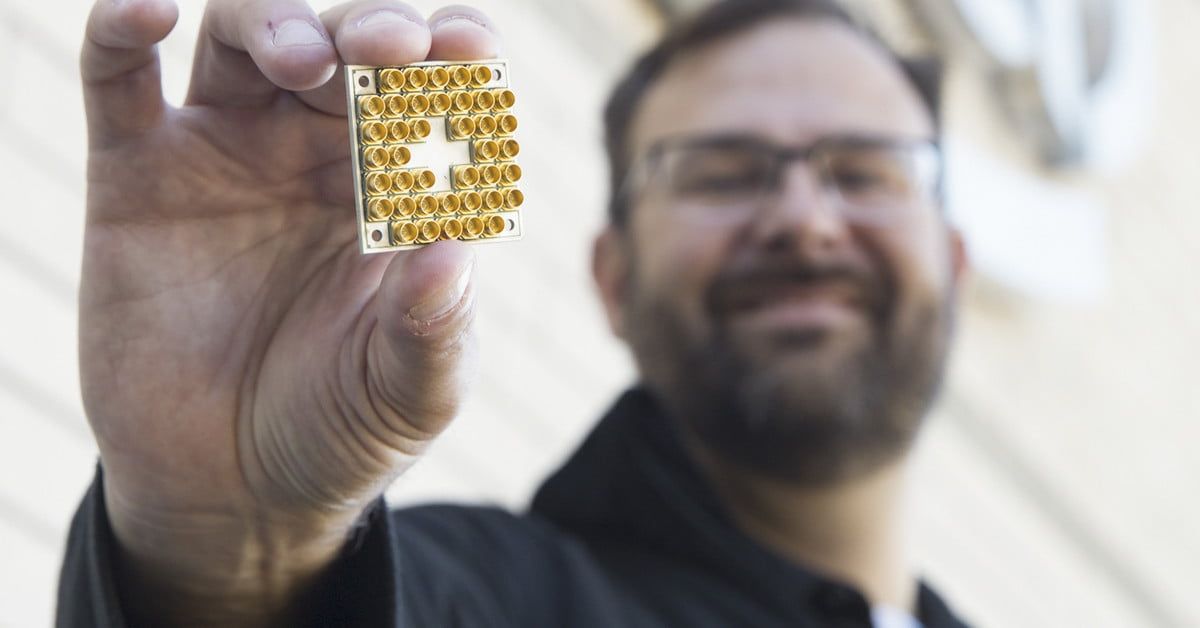
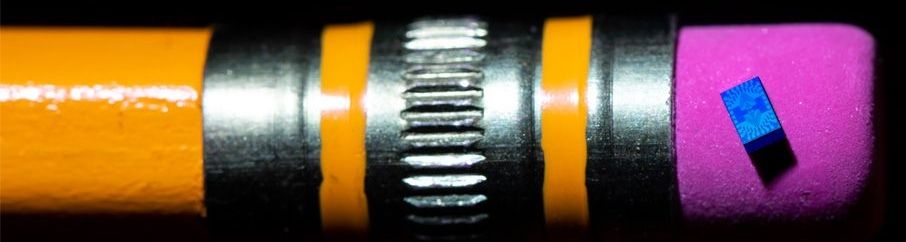
Intel researchers are taking new steps toward quantum computers by testing a tiny new “spin qubit” chip. The new chip was created in Intel’s D1D Fab in Oregon using the same silicon manufacturing techniques that the company has perfected for creating billions of traditional computer chips. Smaller than a pencil’s eraser, it is the tiniest quantum computing chip Intel has made.
The new spin qubit chip runs at the extremely low temperatures required for quantum computing: roughly 460 degrees below zero Fahrenheit – 250 times colder than space.
The spin qubit chip does not contain transistors – the on/off switches that form the basis of today’s computing devices – but qubits (short for “quantum bits”) that can hold a single electron. The behavior of that single electron, which can be in multiple spin states simultaneously, offers vastly greater computing power than today’s transistors, and is the basis of quantum computing.
Microsoft is “all-in” on building a quantum computer and is making advancements “every day”, according to one of the company’s top experts on the technology.
Julie Love (above), Director of Quantum Computing, called the firm’s push to build the next generation of computer technology “one of the biggest disruptive bets we have made as a company”.
Quantum computing has the potential to help humans tackle some of the world’s biggest problems in areas such as materials science, chemistry, genetics, medicine and the environment. It uses the physics of qubits to create a way of computing that can work on specific kinds of problems that are impossible with today’s computers. In theory, a problem that would take today’s machines billions of years to solve could be completed by a quantum computer in minutes, hours or days.

If you think our best theory of reality is weird you ain’t seen nothing yet, says physicist Ciarán Lee – it could be a fuzzy version of something bigger.
By Ciarán Lee
I HAVE a confession to make: I’m bored of quantum mechanics. This is an odd thing for a physicist to admit, but the most successful theory of modern physics has started to leave me cold. Perhaps I have just grown too used to its spooky predictions and its love of randomness. Or it might be the fact that, despite its many successes and the way it has captured popular imagination, there are hints that quantum mechanics isn’t as accurate a picture of reality as some would have you believe.