From cytoskeletal learning to the information architecture of consciousness
From cytoskeletal learning to the information architecture of consciousness
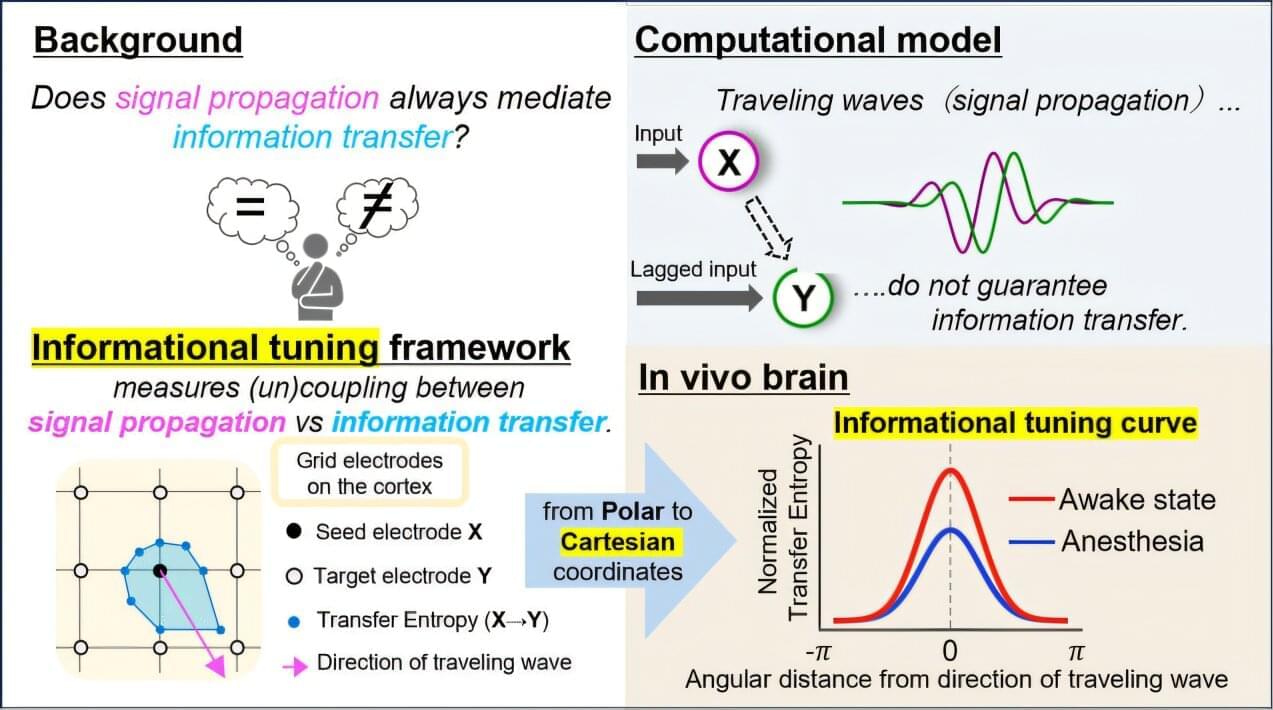
How and why we experience consciousness is a question that has long plagued philosophers and scientists alike. We have come to understand that, when awake, our brains organize neural information for perception, yet we completely lose this organization under anesthesia. Why this happens is a longstanding mystery in neuroscience, as simple changes in the activity levels of specific brain regions fail to explain this disappearance of consciousness.
Theories have hypothesized that conscious perception arises from two core pillars: the brain’s ability to encode external features and its ability to transmit information across different cortical regions. While the former has been well supported, direct physical evidence of the latter has remained elusive. A team of researchers at Kyoto University set out to bridge this critical gap between neural signals and information dynamics.
The paper is published in the journal iScience.

Autosomal dominant Alzheimer’s disease (ADAD) is a genetically inherited form of Alzheimer’s disease that accounts for only about 1% of Alzheimer’s disease cases. However, because individuals with the gene mutations are extremely likely to develop Alzheimer’s disease at an early age, and because the mutation is highly heritable, ADAD is widely studied by Alzheimer’s disease researchers.
A new study by WashU Medicine researchers and collaborators, published in The Lancet Neurology, identified variants in three other genes that seem to change how Alzheimer’s disease presents in people with ADAD mutations. Pinpointing these and other genetic factors that affect Alzheimer’s disease development and progression may allow investigators to provide more effective genetic counseling for families, design clinical trials and develop new treatments to prevent or slow Alzheimer’s disease in the larger population.
Previous studies had already identified three key genes—amyloid precursor protein (APP), presenilin 1 (PSEN1) and presenilin 2 (PSEN2)—that are associated with ADAD, as well as 279 variants in those genes that lead to Alzheimer’s disease. What remains unclear, however, is what leads to differences in disease onset and progression among individuals who have a disease-causing variant. For instance, even if a person carries an APP, PSEN1 or PSEN2 mutation and is therefore very likely to develop early-onset Alzheimer’s, there is variability in when symptoms of cognitive decline might begin, even among individuals who have the same disease-causing mutation.
Love this excellent primer on a fascinating, important, and underexplored topic in brain aging: the extracellular matrix! An Amaranth Foundation guest post by Dr. Joshua Crapser. Substack link.
The brain extracellular matrix — what is it and who cares?

Researchers used brain imaging and behavioral tests to examine mescaline’s effects in rodents. Mescaline altered cerebellar activity and sensory gating while increasing brain connectivity.

Psychedelics profoundly alter subjective experience and brain dynamics. Brain oscillations express signatures of near-critical dynamics, relevant for healthy function. Alterations in the proximity to criticality have been suggested to underlie the experiential and neurological effects of psychedelics. Here, we investigate the effects of a psychedelic substance (DMT) on the criticality of brain oscillations, and in relation to subjective experience, in humans of either sex. We find that DMT shifts the dynamics of brain oscillations away from criticality in alpha and adjacent frequency bands. In this context, entropy is increased while complexity is reduced. We find that the criticality-shifts observed in alpha and theta bands correlate with the intensity ratings of self-dissolution, a hallmark of psychedelic experience. Finally, using a recently developed metric, the functional excitatory-inhibitory ratio, we find that the DMT-induced criticality-shift in brain oscillations is toward subcritical regimes. These findings have major implications for the neuronal understanding of the self and psychedelics, as well as for the neurological basis of altered states of consciousness.
Keywords: DMT; EEG; brain oscillations; criticality; self-dissolution.
Copyright © 2025 Irrmischer et al.
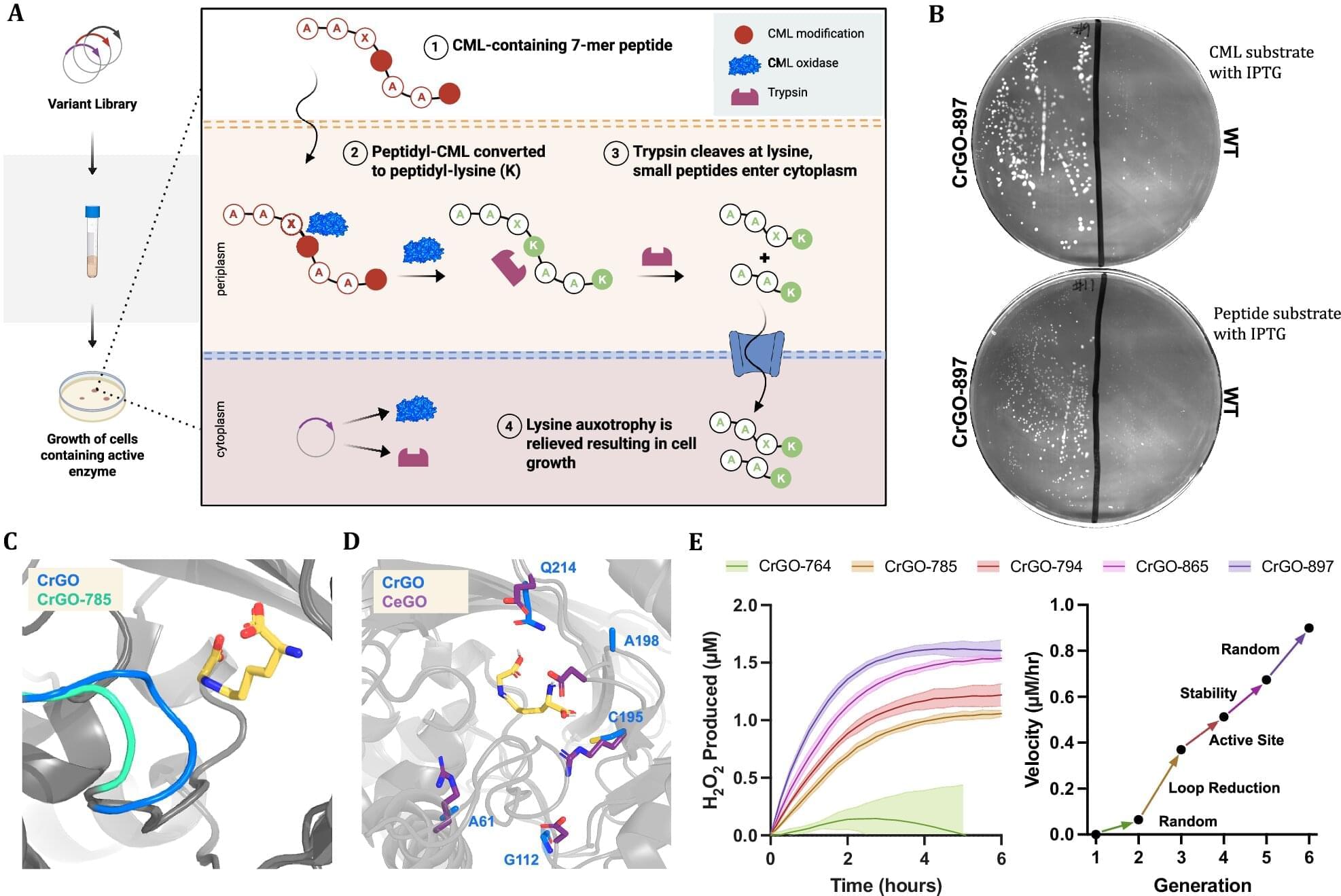
A biotech company called Revel Pharmaceuticals is looking into ways to reverse aging, and the company’s science team, along with researchers from the company Calico and the University of Colorado, may be a step closer to realizing the so-called fountain of youth. The team recently published their study in Nature Communications detailing how they engineered an enzyme capable of reversing a particular form of age-related damage and demonstrated its competence with test results.
One common sign of aging in the cells of living organisms is a type of protein damage called Nε-carboxymethyl-lysine (CML). CML is part of a group of harmful compounds aptly named “AGEs” (or advanced glycation and lipoxidation end products). Oddly enough, it is also part of the Maillard reaction, known for causing the browning in cooked food that creates rich, savory flavors, complex aromas and golden-brown crusts. In living organisms, CML builds up on long-lived proteins, like those in skin, blood vessels and the eye. This stiffens tissues and can fuel chronic inflammation through an immune-signaling receptor called “RAGE.”
“The engagement of the CML-RAGE axis triggers a signaling cascade that activates NF-κB and stimulates the release of pro-inflammatory cytokines and profibrotic growth factors. In the context of the central nervous system, CML accumulation has been linked to oxidative stress and mitochondrial damage in microglia, further disrupting brain homeostasis during aging,” the authors of the new study explain.
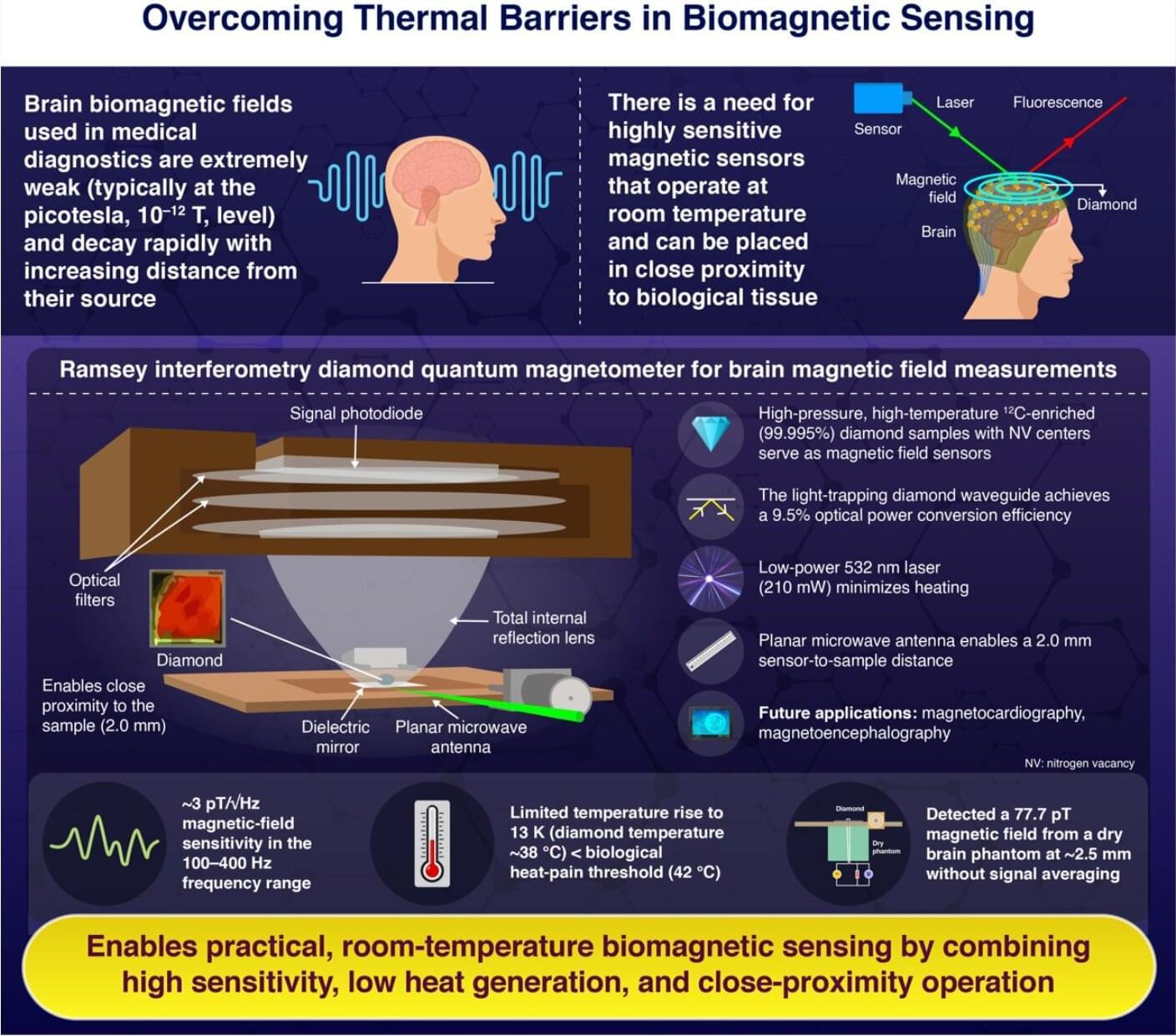
Our bodies generate extremely weak magnetic fields as electric currents flow through the heart, brain and other tissues. These signals are used in magnetocardiography and magnetoencephalography to assess heart function and brain activity, respectively. These fields can be detected at room temperature using diamond sensors containing nitrogen-vacancy (NV) centers, in which a carbon atom is replaced by a nitrogen atom adjacent to an empty lattice site.
However, conventional NV-center sensors typically require watt-level lasers to detect the extremely weak biomagnetic fields, which are usually below the picotesla level. These high-power lasers generate significant heat, limiting how close the sensor can be placed to biological tissue. Since biomagnetic fields rapidly weaken with distance, overcoming thermal and close-proximity challenges is essential for practical biomagnetic sensing.
A research team led by Professor Takayuki Iwasaki from the Department of Electrical and Electronic Engineering, School of Engineering, Institute of Science Tokyo, Japan, has developed a diamond quantum magnetometer using a low-power laser of just 210 mW, a light-trapping diamond waveguide and a compact microwave antenna. The new sensor limits its temperature rise to only 13 K while allowing it to be placed just 2 mm (0.08 inches) from the sample, enabling close-proximity biomagnetic measurements without compromising thermal safety.
A large genetic analysis suggests that Phelan-McDermid syndrome may affect far more people than previously recognized.

Neuroscientists found that logical reasoning does not rely on the brain regions involved in language processing.