We know little about how brains produce happiness or anger. One scientist’s work is helping to explain why, revealing a possible link between sex and violence.

David Pearce — The Anatomy of Happiness
“While researching epilepsy, neuroscientist Itzhak Fried stumbled on a ‘mirth’ center in the brain — given this, what ought we be doing to combat extreme suffering and promote wellbeing?”
David Pearce — The Anatomy of Happiness… While researching epilepsy, neuroscientist Itzhak Fried stumbled on a ‘mirth’ center in the brain — given this, what ought we be doing to combat extreme suffering and promote wellbeing?
If one finds oneself viscerally hostile to the idea of universal happiness, and if by contemporary standards one falls within the statistically normal range in one’s emotional repertoire, then just how seriously should one contemplate the following possibility? Today we are the victims of what our successors will reckon an atavistic mood disorder. This disorder infects all our thoughts as well as all our feelings and volitions. It is a historical condition no less epistemically defective than are dream-psychoses from the perspective of the waking state.
Is the worry one might be locked in such an affective psychosis just the product of idle scepticism? Given the cognitive inaccessibility of most of the generically ecstatic states alluded to here, perhaps one wouldn’t know if one were so afflicted. After all, damaged and disfigured minds may have limited self-insight. Nor would one necessarily have the conceptual resources even to grasp what was at stake if one suffered from such a neural deficit. Pure, “unearned”, genetically-driven bliss of even the mildest flavour detracted from the inclusive fitness of one’s genes in the ancestral environment. Constitutionally happy freaks-of-nature got eaten or outbred. Hence unipolar euphoric mania today is vanishingly rare; unipolar melancholic depression and chronic dysthymia are all too common. Is one’s potential unease, if not revulsion, at the prospect of paradise-on-earth an incidental cultural by-product of natural selection? Or has selection pressure ensured that one is genetically predisposed to be biased against the idea of enduring bliss in the first instance?
Oct. 29 is World Stroke Day. Sometimes called a brain attack, stroke is the second leading cause of death worldwide and the fifth leading cause of death in the U.S. Men and women are at risk of a stroke, but women are more likely to have – and die – of a stroke than men. Dr. Kara Sands, a Mayo Clinic neurologist, says stroke kills twice as many women as breast cancer. The good news is that strokes are preventable, treatable and beatable.
Journalists: Broadcast-quality video (0:59) is in the downloads at the end of this post. Please “Courtesy: Mayo Clinic News Network. ”Read the script.
One of the most intriguing developments in the so-called golden age of neuroscience has been the growing understanding of “neuroplasticity”: the brain’s ability to constantly reshape itself and constantly learn new things by forging new connections throughout one’s lifetime — to grow proportions of gray matter and even shift brain activity to different regions of the brain.
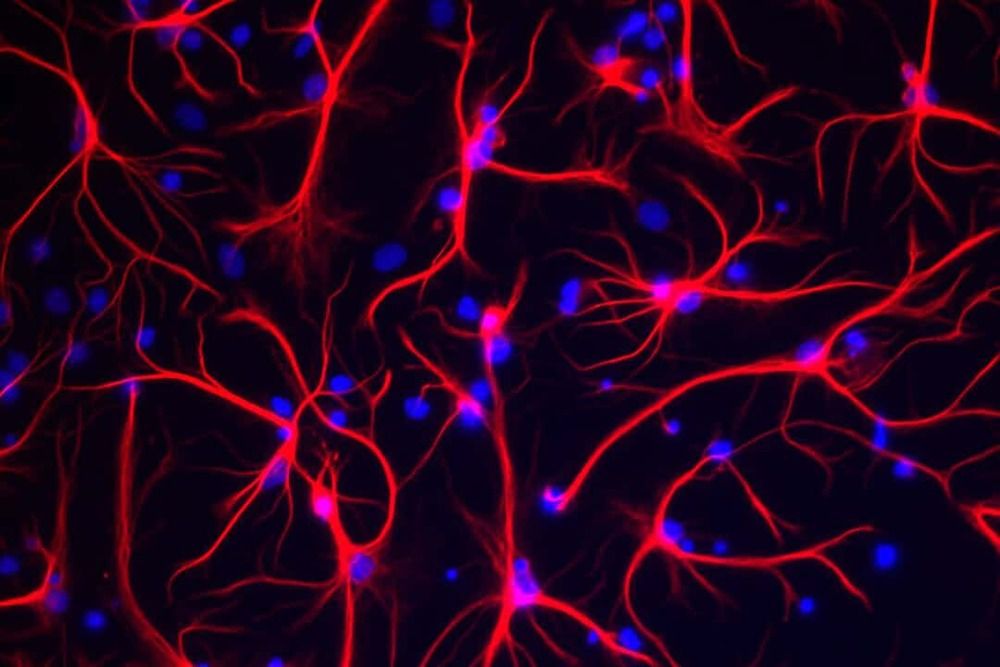
Now a new research effort is taking the concept of neuroplasticity further — looking at diseased and injured brains that have permanently lost neurons. The effort, led by neuroscientist Magdalena Götz, explores whether “astrocytes” — non-neuronal, structural cells in the brain, can be reprogrammed to take up the tasks the neurons once performed.
“Everybody is astonished, at the moment, that it works,” says Nicola Mattugini, a neurobiologist at the Ludwig Maximilian University of Munich, Germany, when she presented her team’s results at the annual meeting of the Society for Neuroscience in San Diego, California. Their team reprogrammed the astrocytes in lab mice.
By the age of eight, a new study has shown.
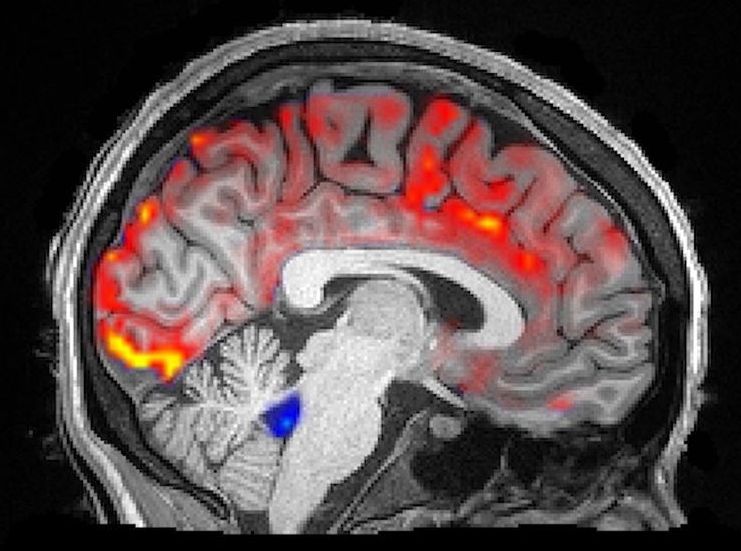
Scientists at University College London (UCL) tested the memory and thinking skills of Britons in their late 60s and 70s and compared the results to similar cognitive tests that they took as schoolchildren in 1954.
They found that someone whose cognitive performance was in the top 25 percent as a child, was likely to remain in the top 25 percent at age 70.

After reading the new book “The Case Against Reality: Why evolution hid the truth from our eyes” by cognitive scientist Donald D. Hoffman, many academics and general readers alike may conclude that the Interface Theory of Perception well might be regarded as the most advanced theory of consciousness to date. If you dare to glance outside the paradigmatic square of neuroscience and neurophilosophy, then this book opens up a brand new perspective shedding light on the most probable future venue of scientific endeavor for the theory of everything with computational underpinnings and revolving around phenomenal consciousness.
Challenging the orthodoxy of still-predominant physicalism with undeniable logic and recent epistemological discoveries, Donald Hoffman crafts out his new Interface Theory of Perception which, for some inexplicable reason has been overlooked for so long and is but self-evident: Each conscious agent inhabits their own virtual bubble-universe while using species-specific sensory-cognitive modality in interfacing with objective reality.
In my recently-published book The Syntellect Hypothesis: Five Paradigms of the Mind’s Evolution (2019) I go a step further by submitting to you that “that something in objective reality” (in the words of Hoffman) is nothing less than non-local consciousness, or the Universal Mind if you prefer, co-creating each and every observer timeline. My ‘Experiential Realism’ is Hoffman’s Conscious Realism.

Higher serum levels of elaidic acid, an objective biomarker for industrial trans fat, are associated with an increased risk for developing all-cause dementia and Alzheimer disease, according to a study published online Oct. 23 in Neurology.
Takanori Honda, Ph.D., from Kyushu University in Fukuoka, Japan, and colleagues examined the prospective correlation between serum elaidic acid (trans 18:1 n-9) levels and incident dementia in 1,628 Japanese community residents aged 60 years and older without dementia. Participants underwent screening examination in 2002 to 2003 and were followed prospectively to November 2012.
The researchers found that 377 participants developed some type of dementia during follow-up. After adjustment for traditional risk factors, significant correlations were seen for higher serum elaidic acid levels with greater risk for developing all-cause dementia and Alzheimer disease. After adjustment for dietary factors, including total energy intake and intakes of saturated and polyunsaturated fatty acids, these associations remained significant. There was no significant correlation noted for serum elaidic acid levels and vascular dementia.

Here’s something you don’t hear every day: two theories of consciousness are about to face off in the scientific fight of the century.
Backed by top neuroscientist theorists of today, including Christof Koch, head of the formidable Allen Institute for Brain Research in Seattle, Washington, the fight hopes to put two rival ideas of consciousness to the test in a $20 million project. Briefly, volunteers will have their brain activity scanned while performing a series of cleverly-designed tasks targeted to suss out the brain’s physical origin of conscious thought. The first phase was launched this week at the Society for Neuroscience annual conference in Chicago, a brainy extravaganza that draws over 20,000 neuroscientists each year.
Both sides agree to make the fight as fair as possible: they’ll collaborate on the task design, pre-register their predictions on public ledgers, and if the data supports only one idea, the other acknowledges defeat.
