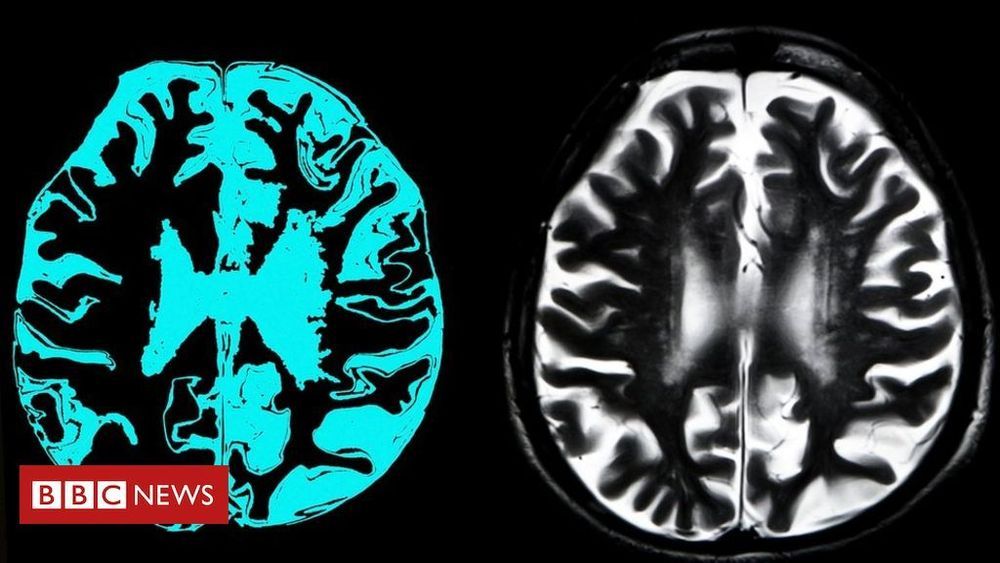
Experts are still discovering exactly how our brains make, sort, and store memories. Here’s what we know so far—and a few tips to keep your mind sharp.


By contemplating the full spectrum of scenarios of the coming technological singularity many can place their bets in favor of the Cybernetic Singularity which is a sure path to digital immortality and godhood as opposed to the AI Singularity when Homo sapiens is retired as a senescent parent. This meta-system transition from the networked Global Brain to the Gaian Mind is all about evolution of our own individual minds, it’s all about our own Self-Transcendence. https://www.ecstadelic.net/top-stories/the-ouroboros-code-br…etaphysics #OuroborosCode
All AI & Cybernetics Cognitive Science Complexity Consciousness Cosmology Digital Philosophy Digital Physics Economics Emergence Environment Epigenetics Ethics Evolution Evolutionary Biology Experiential Realism Experimental Science Fermi Paradox Free Will Vs. Determinism Futurism Gaia 2.0 Global Brain Immortality Machine Learning Mathematics Memetics Mind Uploading Nanotechnology Neo Transcendentalism Neural Networks Neurophilosophy Neuroscience Phenomenology Philosophy Of Mind Physics Of Time Psychedelics Psychology Quantum Computing Quantum Gravity Quantum Physics Sci Fi Simulation Hypothesis Sociology Spirituality Technological Singularity Theology Transhumanism Virtual Reality

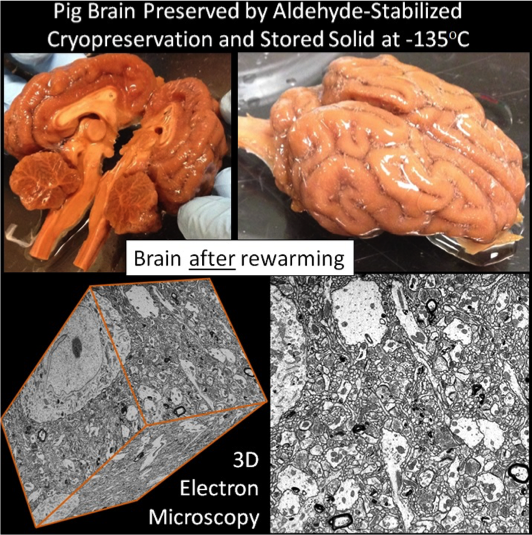
A technology designed to preserve synapses across the whole brain of a large mammal is successful
Using a combination of ultrafast glutaraldehyde fixation and very low temperature storage, researchers have demonstrated for the first-time ever a way to preserve a brain’s connectome (the 150 trillion synaptic connections presumed to encode all of a person’s knowledge) for centuries-long storage in a large mammal. This laboratory demonstration clears the way to develop Aldehyde-Stabilized Cryopreservation into a ‘last resort’ medical option, one that would prevent the destruction of the patient’s unique connectome, offering at least some hope for future revival via mind uploading. You can view images and videos demonstrating the quality of the preservation method for yourself at the evaluation page.
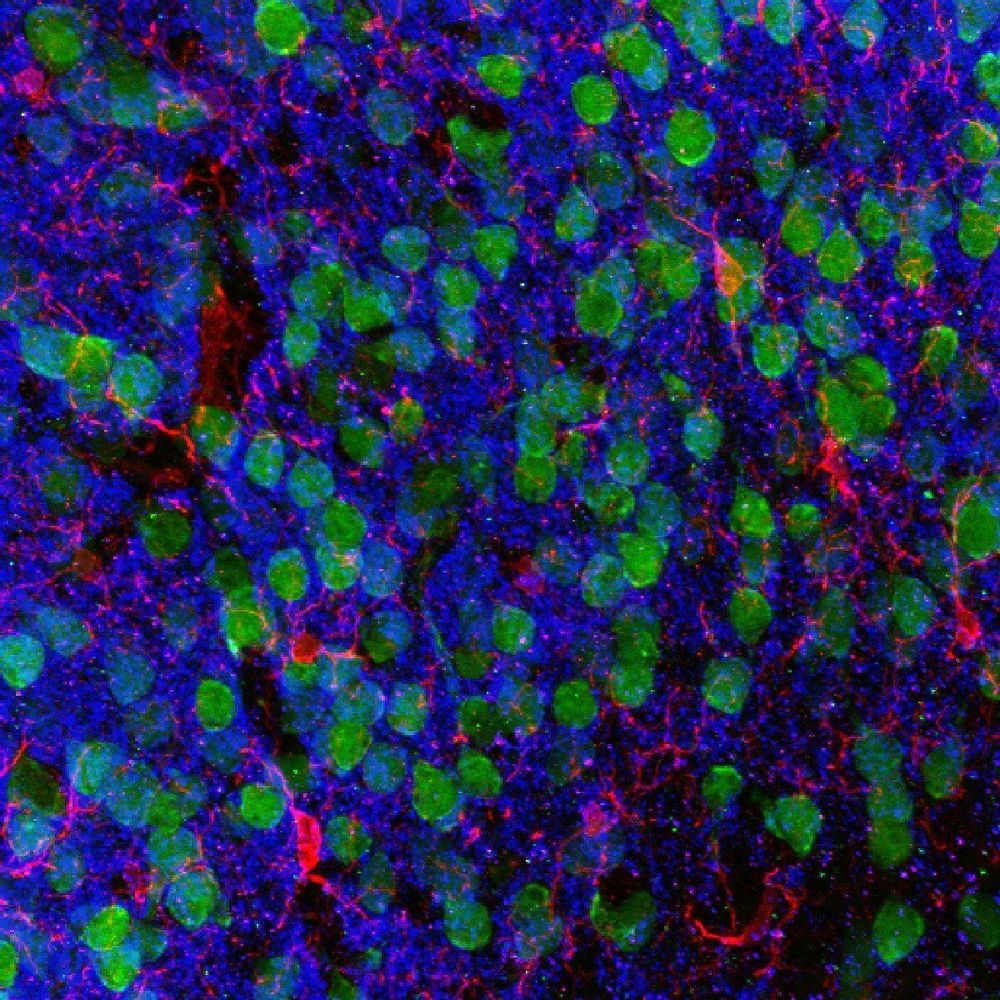
New cellular and molecular processes underlying communication between gut microbes and brain cells have been described for the first time by scientists at Weill Cornell Medicine and Cornell’s Ithaca campus.
Over the last two decades, scientists have observed a clear link between autoimmune disorders and a variety of psychiatric conditions. For example, people with autoimmune disorders such as inflammatory bowel disease (IBD), psoriasis and multiple sclerosis may also have depleted gut microbiota and experience anxiety, depression and mood disorders. Genetic risks for autoimmune disorders and psychiatric disorders also appear to be closely related. But precisely how gut health affects brain health has been unknown.
“Our study provides new insight into the mechanisms of how the gut and brain communicate at the molecular level,” said co-senior author Dr. David Artis, director of the Jill Roberts Institute for Research in Inflammatory Bowel Disease, director of the Friedman Center for Nutrition and Inflammation and the Michael Kors Professor of Immunology at Weill Cornell Medicine. “No one yet has understood how IBD and other chronic gastrointestinal conditions influence behavior and mental health. Our study is the beginning of a new way to understand the whole picture.”

Many advanced artificial intelligence projects say they are working toward building a conscious machine, based on the idea that brain functions merely encode and process multisensory information. The assumption goes, then, that once brain functions are properly understood, it should be possible to program them into a computer. Microsoft recently announced that it would spend US$1 billion on a project to do just that.
So far, though, attempts to build supercomputer brains have not even come close. A multi-billion-dollar European project that began in 2013 is now largely understood to have failed. That effort has shifted to look more like a similar but less ambitious project in the U.S., developing new software tools for researchers to study brain data, rather than simulating a brain.
Some researchers continue to insist that simulating neuroscience with computers is the way to go. Others, like me, view these efforts as doomed to failure because we do not believe consciousness is computable. Our basic argument is that brains integrate and compress multiple components of an experience, including sight and smell – which simply can’t be handled in the way today’s computers sense, process and store data.

Say this about the kinds of molecular mayhem that we know underlie aging: Mechanisms like whether the ends of chromosomes fray (bad) and whether genes’ on-off status breaks down (really bad) at least sound like plausible ways to impair vital organs, from skin to brains and hearts, and produce the whole sorry mess known as aging.
On Wednesday, scientists reported a driver of aging that, in contrast, even the lead researcher diplomatically calls “counterintuitive”: neuronal activity. Aging, of course, affects the brain. But the brain seems to affect aging, too, they found: In creatures from worms to mice to people, high levels of neuronal firing spell a shorter life span. Lower levels — naturally, or due to drugs that dampen neurons’ activity — increase longevity.
The discovery4 was so surprising that it’s taken two years to be published (in Nature) because of how much additional data the outside scientists reviewing the study requested. Geneticist Bruce Yankner of Harvard Medical School, who led the research, understood their skepticism. “If you say you have a cat in your backyard, people believe you,” he said. “If you say you have a zebra, they want more evidence.”